

Are you ready to make perfect rice every time without the hassle? Your rice cooker can be your best kitchen helper, but only if you know how to use it right.
Imagine saving time, avoiding sticky messes, and enjoying fluffy, delicious rice with ease. You’ll discover simple tips that will turn your rice cooker into a magic tool. Keep reading, and you’ll never worry about cooking rice again!
Choosing The Right Rice Cooker
A rice cooker makes cooking rice easy and consistent. Choosing the right one helps you save time and get perfect rice every time.
Consider your needs and kitchen space before buying a rice cooker. This guide helps you pick the best model.
Capacity And Size
Rice cookers come in different sizes. Choose a size that fits your family and cooking habits.
Small cookers work for one or two people. Larger ones are better for big families or meal prep.
- 1-3 cups for singles or couples
- 4-6 cups for small families
- 7 cups or more for large families
Type Of Rice Cooker
There are basic, fuzzy logic, and induction cookers. Each type offers different cooking control and features.
Basic cookers are simple and affordable. Fuzzy logic models adjust cooking time automatically. Induction cookers heat faster and cook evenly.
- Basic: simple and budget-friendly
- Fuzzy Logic: adjusts heat for better results
- Induction: fast, even cooking
Features And Functions
Look for features that match your cooking style. Some cookers have timers, keep-warm mode, and multiple cooking settings.
These features can make cooking more convenient and help you prepare different types of rice.
- Keep-warm to keep rice fresh
- Delay timer for ready-to-eat rice
- Settings for white, brown, or sushi rice
Ease Of Cleaning
Choose a rice cooker with a non-stick inner pot. This makes cleaning fast and easy.
Removable lids and steam vents also help keep the cooker clean and prevent odors.
- Non-stick inner pot for easy cleaning
- Removable lid for washing
- Detachable steam vent to avoid clogs
Price And Warranty
Rice cookers come in a wide price range. Pick one that fits your budget but has good quality.
Check the warranty to protect your purchase. A longer warranty shows confidence in the product.
- Set a budget before shopping
- Compare features at different prices
- Look for at least one-year warranty

Credit: www.youtube.com
Understanding Rice Types
Rice cookers work best when you know the type of rice you use. Different rice types need different water and cook times. Knowing rice types helps you get perfect rice every time.
This guide explains common rice types and how to cook them in your rice cooker.
White Rice Varieties
White rice is the most common type. It has the husk, bran, and germ removed. This makes it soft and quick to cook.
There are many white rice types. Each has a different texture and taste.
- Long-grain white rice stays separate and fluffy.
- Medium-grain white rice is a bit stickier and tender.
- Short-grain white rice is sticky and clumps together.
- Basmati rice has a nutty flavor and long grains.
- Jasmine rice smells sweet and is soft when cooked.
Brown Rice Options
Brown rice keeps the bran and germ layers. This makes it more nutritious but slower to cook. It has a chewy texture and nutty taste.
Use more water and a longer cook time for brown rice in your cooker.
- Long-grain brown rice cooks fluffy and separate.
- Short-grain brown rice is stickier and chewy.
- Red and black brown rice have extra antioxidants and color.
Specialty Grains
Specialty grains include types other than standard white or brown rice. They add variety and nutrition to meals.
These grains may need different water amounts and cooking times in your rice cooker.
- Wild rice is not true rice but cooks like it. It has a chewy texture and earthy flavor.
- Arborio rice is short and round. It is used for creamy dishes like risotto.
- Sushi rice is sticky and short-grain, perfect for sushi rolls.
- Black rice is rich in antioxidants and turns purple when cooked.
Proper Rice-to-water Ratio
Using the right rice-to-water ratio is key to cooking perfect rice in a rice cooker. The amount of water changes how soft or firm the rice will be.
Knowing the right ratio helps you avoid mushy or dry rice. It also saves time and energy.
Standard Guidelines
The usual rice-to-water ratio for white rice is 1 cup of rice to 1.5 cups of water. For brown rice, use 1 cup of rice to 2 cups of water.
These ratios work well with most rice cookers and produce good results for everyday cooking.
- White rice: 1 cup rice to 1.5 cups water
- Brown rice: 1 cup rice to 2 cups water
- Sushi rice: 1 cup rice to 1.3 cups water
Adjusting For Altitude
At higher altitudes, water boils at a lower temperature. This can affect how rice cooks in a rice cooker.
Add a little more water than usual to help rice cook fully and stay soft.
- For every 1,000 feet above sea level, add 1-2 tablespoons of water per cup of rice
- Check rice texture after cooking and add more water next time if needed
- Use the rice cooker’s keep-warm function to let rice steam longer
Customizing For Texture
You can change the rice-to-water ratio to make rice softer or firmer. More water makes softer rice; less water makes firmer rice.
Adjust the water amount by small steps to find your favorite texture.
- Soft rice: Add 10-15% more water than standard
- Firm rice: Use 10-15% less water than standard
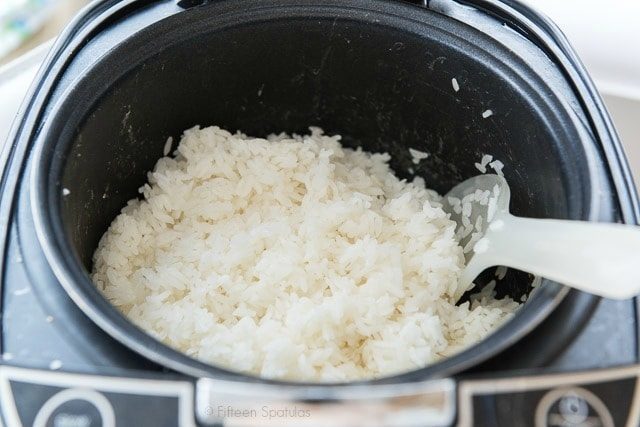
- Fluffy rice: Use the standard ratio and let rice rest after cooking
Credit: www.fifteenspatulas.com
Prepping The Rice
Preparing rice before cooking helps improve its texture and flavor. Simple steps can make your rice fluffier and tastier.
Focus on rinsing, soaking, and adding flavor to get the best results from your rice cooker.
Rinsing Techniques
Rinsing removes excess starch and dust from the rice. This prevents rice from becoming sticky or gummy.
- Place rice in a bowl or pot.
- Fill with cold water and swirl the rice gently.
- Drain the cloudy water carefully.
- Repeat rinsing 2 to 3 times until water runs clear.
- Drain well before cooking.
Soaking Tips
Soaking rice helps it absorb water evenly. This shortens cooking time and improves texture.
- After rinsing, place rice in a bowl.
- Add enough water to cover the rice by one inch.
- Let it soak for 20 to 30 minutes for white rice.
- For brown rice, soak for 45 minutes to 1 hour.
- Drain the water before cooking.
Adding Flavor Enhancers
Adding simple ingredients can boost the taste of your rice. Use natural flavor enhancers before cooking.
| Flavor Enhancer | How to Use | Effect on Rice |
|---|---|---|
| Salt | Add 1/2 tsp per cup of rice to the water | Enhances natural taste |
| Butter or Oil | Add 1 tbsp before cooking | Makes rice richer and less sticky |
| Bay Leaf | Place 1 leaf in the rice cooker pot | Adds a mild, aromatic flavor |
| Garlic | Add 1 crushed clove with rice | Infuses subtle savory notes |
Using The Rice Cooker Features
A rice cooker is more than just a pot to cook rice. It has many features to make cooking easier. Learning these features helps you cook better meals every time.
Using the rice cooker’s settings can save time and improve the taste. This guide explains how to use key features like settings, delay timers, and keep warm functions.
Understanding Settings
Rice cookers have different settings for types of rice and cooking styles. Common options include white rice, brown rice, and quick cook. Each setting changes cooking time and heat.
Choosing the right setting helps your rice cook evenly and taste better. Follow your cooker’s manual to know what each button does.
- White rice: cooks regular white rice perfectly
- Brown rice: uses longer time for tougher grains
- Quick cook: speeds up cooking for busy days
- Steam: cooks vegetables or fish with steam
Utilizing Delay Timers
The delay timer lets you set when cooking will start. This is useful if you want rice ready at a specific time. You can add ingredients before and set the timer.
For example, set the timer at night to have fresh rice in the morning. Always check that the cooker’s clock is correct for the timer to work well.
- Set the clock on your rice cooker first
- Add water and rice to the pot
- Choose the cooking setting
- Set delay timer to start cooking later
- Rice will be hot and ready when you want
Exploring Keep Warm Functions
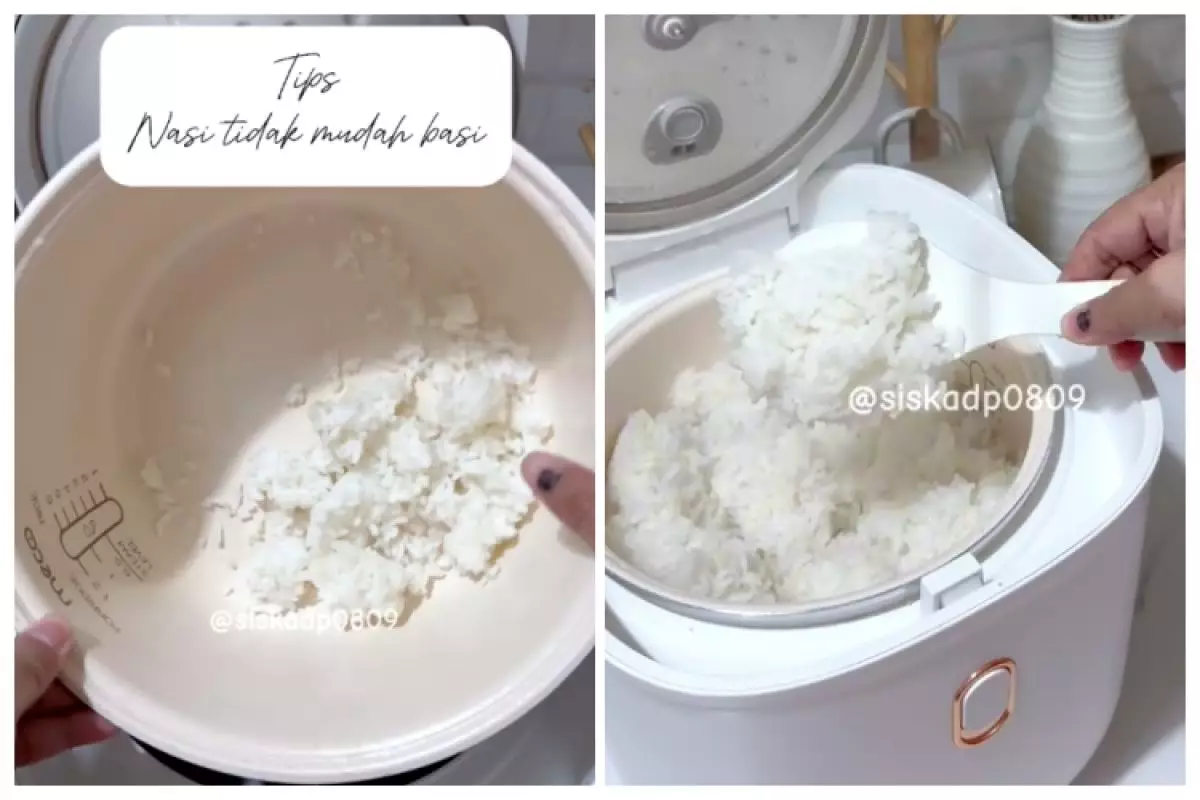
The keep warm function keeps rice hot after cooking. It keeps rice fresh and ready to eat for hours. This function prevents rice from drying out or burning.
Use keep warm if you are not eating right after cooking. Most rice cookers switch to keep warm automatically once cooking ends.
- Rice stays warm without overcooking
- Maintains moisture and texture
- Good for serving rice later
- Switch off keep warm if rice is not eaten soon
Credit: en.brilio.net
Troubleshooting Common Issues
Using a rice cooker is easy, but sometimes problems happen. You may find rice sticky, undercooked, or overcooked.
Here are simple tips to fix these common rice cooker issues. These tips help you get perfect rice every time.
Fixing Sticky Rice
Sticky rice can happen if you use too much water or stir the rice after cooking. It can also mean the rice cooker is too hot.
To fix sticky rice, rinse the rice before cooking to remove extra starch. Use the right water amount for the rice type.
- Rinse rice with cold water until clear
- Use correct water-to-rice ratio
- Avoid stirring rice while cooking
- Let rice sit in cooker for 10 minutes after cooking
Addressing Undercooked Grains
Undercooked rice means some grains are hard or crunchy. This often happens if there is not enough water or cooking time.
Add a little more water and run the cooker for a few more minutes. Check the rice after extra cooking and repeat if needed.
- Use enough water for the rice type
- Run rice cooker longer if grains are hard
- Let rice rest in cooker to absorb steam
Dealing With Overcooked Rice
Overcooked rice is soft and mushy. It happens if there is too much water or cooking time is too long.
Use less water next time and check the rice a few minutes before the cooker finishes. Fluff the rice gently to cool it down.
- Measure water carefully
- Check rice before cooking ends
- Fluff rice with a fork to release steam
Innovative Rice Cooker Recipes
A rice cooker is not just for cooking plain rice. It can make many dishes with little effort. Using this appliance, you can prepare meals that are tasty and easy to clean up.
Try new recipes that use your rice cooker for more than rice. This guide shows you ideas for meals, desserts, and steamed vegetables.
One-pot Meals
One-pot meals save time and dishes. You add all ingredients to the rice cooker and cook them together. This method blends flavors well and keeps the meal moist.
- Chicken and rice with vegetables
- Beef stew with potatoes and carrots
- Vegetable curry with chickpeas
- Seafood paella with peas and peppers
- Quinoa with mushrooms and spinach
Dessert Creations
You can make sweet treats in a rice cooker. It gently cooks desserts without burning or overcooking. Try rice pudding or steamed cakes for a soft texture.
| Dessert | Main Ingredients | Cooking Time |
| Rice Pudding | Rice, milk, sugar, cinnamon | 45 minutes |
| Steamed Cake | Flour, eggs, sugar, baking powder | 40 minutes |
| Fruit Compote | Mixed fruits, sugar, lemon juice | 30 minutes |
Steaming Vegetables
Use your rice cooker to steam vegetables while cooking rice. Steaming keeps nutrients and color. It is fast and easy.
Try these simple tips for steaming:
- Add water to the rice cooker pot below the steaming tray.
- Place chopped vegetables on the steaming tray.
- Cover and cook until vegetables are tender.
- Mix steamed vegetables with rice for a healthy meal.
Maintaining Your Rice Cooker
Keeping your rice cooker clean and well-maintained helps it work better. It also lasts longer and cooks rice evenly every time.
Regular care prevents damage and makes sure your rice cooker stays safe to use. Follow simple tips to keep it in top shape.
Cleaning Best Practices
Clean your rice cooker after every use. Remove the inner pot and wash it with warm, soapy water. Wipe the lid and outer body with a damp cloth.
- Do not use abrasive sponges that can scratch the surface.
- Dry all parts before putting them back together.
- Check the steam vent for any blockages and clean if needed.
- Never immerse the main unit in water.
Descaling Procedures
Mineral buildup can affect your rice cooker’s performance. Descale it regularly to remove limescale and deposits. Use a mixture of water and vinegar to clean inside the cooker.
- Fill the inner pot with one part vinegar and two parts water.
- Run a cooking cycle without rice.
- Let the solution sit for 30 minutes after the cycle ends.
- Discard the solution and rinse the pot thoroughly.
- Run another cycle with clean water to remove vinegar smell.
Ensuring Longevity
| Tip | Why It Helps |
|---|---|
| Use the right amount of water | Prevents overflows and damage to heating elements |
| Avoid metal utensils | Protects the non-stick surface inside the pot |
| Store in a dry place | Reduces risk of rust and electrical problems |
| Check the power cord regularly | Prevents electrical hazards and keeps cooker safe |
Frequently Asked Questions
How Do I Clean My Rice Cooker Properly?
Clean your rice cooker after each use to prevent residue buildup. Use a soft sponge and mild detergent. Avoid abrasive materials to protect the non-stick surface. Remove and wash the inner pot, lid, and steam vent separately. Dry all parts thoroughly before reassembling.
Can I Cook Other Grains Besides Rice?
Yes, rice cookers can cook various grains like quinoa, barley, and oats. Adjust water ratios and cooking times according to the grain type. Check your rice cooker’s manual for specific instructions. This versatility makes rice cookers useful for diverse meals.
What Is The Best Water-to-rice Ratio?
Typically, use 1. 5 to 2 cups of water per cup of rice. This ratio varies by rice type; jasmine rice needs less water. Follow your rice cooker’s guidelines for optimal results. Proper ratios ensure fluffy, perfectly cooked rice every time.
Can I Keep Rice Warm In The Cooker?
Yes, most rice cookers have a “keep warm” feature. This function maintains rice temperature without overcooking. Use it to serve rice fresh for hours after cooking. Avoid leaving rice too long to prevent drying out or spoilage.
Conclusion
Using a rice cooker makes cooking easy and fast. Follow these simple tips to get perfect rice every time. Clean the cooker well after use to keep it working longer. Measure rice and water carefully for best results. Try different settings for various rice types.
Enjoy tasty, fluffy rice without any hassle. Practice a few times to find what works best for you. A rice cooker saves time and effort in the kitchen. Simple steps can make your meals better and more enjoyable.