
Are you tired of your cutting board slipping, staining, or wearing out too quickly? Using your cutting board efficiently can save you time, keep your kitchen cleaner, and even protect your knives.
You’ll discover simple yet powerful tips that anyone can use to make the most out of their cutting board. Whether you’re a beginner or a kitchen pro, these easy tricks will change the way you prepare food every day. Keep reading to learn how to work smarter, not harder, with your cutting board.
Choosing The Right Cutting Board
Choosing the right cutting board makes food preparation easier and safer. It helps protect your knives and keeps your kitchen clean.
There are many types of cutting boards. Picking the best one depends on the material, size, and shape.
Materials And Their Benefits
Cutting boards come in wood, plastic, bamboo, and glass. Each material has good points and limits.
- Wood:Gentle on knives and lasts long. It can absorb moisture, so clean it well.
- Plastic:Easy to clean and dishwasher safe. It may get scratches faster than wood.
- Bamboo:Hard and eco-friendly. It is less porous than wood but can dull knives quicker.
- Glass:Very easy to clean and looks nice. It can damage knives and cause them to dull fast.
Size And Shape Considerations
Cutting boards come in many sizes and shapes. Choose one that fits your kitchen space and cooking needs.
Big boards give more room to cut and prepare food. Small boards are easy to store and good for quick tasks.
- Rectangular boards are common and fit most counters well.
- Round boards look nice and work for serving food too.
- Thicker boards are more stable and last longer.
- Thin boards are lightweight but may move around during use.

Credit: www.youtube.com
Preparing Your Cutting Board
Using a cutting board properly helps keep your kitchen safe and clean. It also protects your knives and food.
Before you start cutting, it is important to prepare your cutting board the right way. This makes food preparation easier and safer.
Cleaning And Sanitizing
Always clean your cutting board before and after use. This stops germs from spreading between foods.
Use warm water and soap to wash your board well. Rinse it and dry with a clean towel.
- Scrub the board with soap and warm water
- Rinse thoroughly to remove soap
- Use a sanitizing solution for extra safety
- Let the board dry completely before use
Proper Board Placement
Place your cutting board on a flat, stable surface. This prevents it from slipping while you cut.
Use a damp cloth or a non-slip mat under the board. This keeps the board steady and safe.
- Find a flat countertop or table
- Put a damp cloth under the board
- Use a non-slip mat if available
- Keep the board away from edges
Knife Techniques For Efficiency
Using a knife properly on a cutting board saves time and effort. Good knife skills make cooking safer and easier.
Learn simple knife techniques to cut food quickly and cleanly. This helps keep your cutting board neat and efficient.
Safe Cutting Practices
Keep your fingers safe by using the right grip and cutting style. Always hold the knife handle firmly and keep your fingers curled on the other hand.
Use a stable cutting board to stop it from slipping. Place a damp towel under the board if needed to keep it steady.
- Hold knife handle firmly with your dominant hand
- Curl fingers of the other hand to hold the food safely
- Keep the cutting board on a flat, stable surface
- Use a damp towel under the board to prevent slipping
- Cut slowly at first until you feel comfortable
Speed And Precision Tips
Use smooth, even strokes when cutting to move faster. Avoid chopping too hard or fast, which can cause mistakes or injury.
Practice basic cuts like slicing, dicing, and chopping. Keeping your knife sharp helps you cut cleanly and quickly.
- Use a rocking motion with the knife tip on the board
- Keep the knife blade sharp for easier cutting
- Practice uniform cuts for even cooking
- Work steadily to avoid slips and mistakes
- Keep your non-cutting hand steady and safe

Credit: finance.yahoo.com
Maintaining Your Cutting Board
Keeping your cutting board in good shape helps it last longer. Proper care prevents damage and keeps it safe for food.
Regular maintenance is simple and keeps your board looking new. Small habits make a big difference over time.
Regular Oil Treatments
Oiling your cutting board stops it from drying out and cracking. It also makes the surface smooth and easy to clean.
Use food-safe mineral oil or special cutting board oil. Apply the oil evenly and let it soak in for a few hours.
- Clean the board before oiling
- Apply a thin layer of oil with a cloth
- Let the oil absorb overnight if possible
- Wipe off any extra oil the next day
- Repeat oiling once a month or more often if needed
Repairing Cuts And Scratches
Small cuts and scratches can harbor bacteria and cause stains. Fixing them keeps your board safe and clean.
Use fine sandpaper to smooth out rough spots. Sand in the direction of the wood grain for the best results.
- Clean and dry the board before sanding
- Gently sand the damaged area with fine-grit sandpaper
- Remove dust with a damp cloth
- Apply oil after sanding to protect the surface
Preventing Cross-contamination
Cross-contamination happens when germs spread from one food to another. This can cause food poisoning and illness.
Using your cutting board properly helps keep food safe. It stops bacteria from moving between foods.
Using Separate Boards
Use different boards for raw meat, vegetables, and cooked food. This avoids mixing harmful bacteria.
Wash boards well after each use. Clean boards reduce the risk of germs spreading.
- One board for raw meat and poultry
- One board for vegetables and fruits
- One board for cooked foods or bread
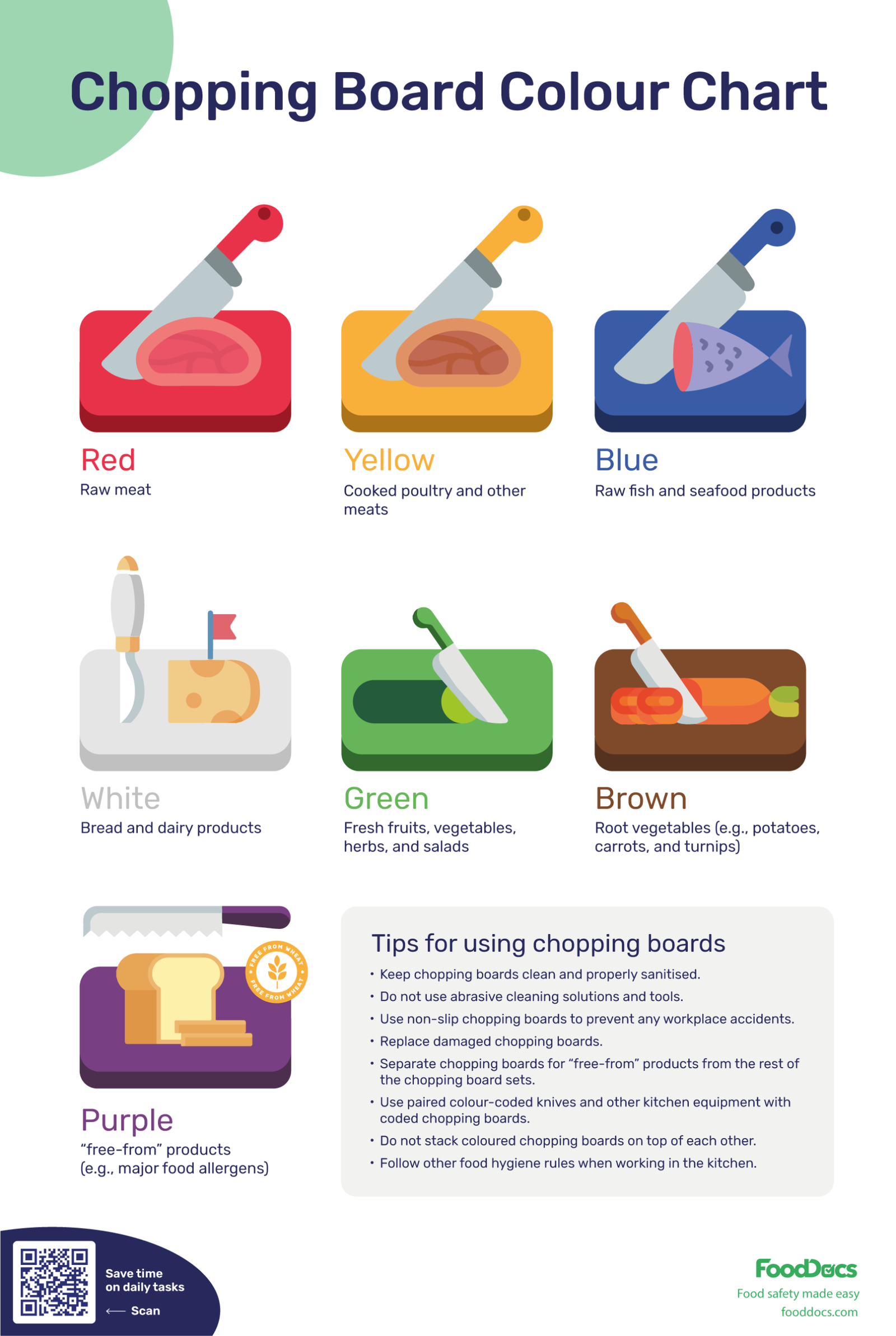
Color-coding Systems
Color coding helps you quickly choose the right board. Each color stands for a type of food.
This system lowers mistakes and stops cross-contamination in busy kitchens.
- Red for raw meat
- Green for vegetables and fruits
- Blue for fish and seafood
- Yellow for cooked food
- White for bakery or dairy products
Storage And Care
Taking care of your cutting board helps it last longer. Proper storage keeps it clean and safe.
Good care prevents damage like cracks and warping. It also keeps your board hygienic.
Proper Drying Techniques
Always dry your cutting board right after washing. Leaving it wet can cause bacteria to grow.
Use a clean towel to dry both sides. Stand the board upright to let air flow around it.
- Wipe off water with a dry cloth
- Place the board on its edge, not flat
- Keep it in a well-ventilated area
Avoiding Warping And Cracking
Do not soak your cutting board in water. Too much water causes the wood to swell and crack.
Keep the board away from direct heat or sunlight. Heat can dry out the wood and cause warping.
- Wash by hand with mild soap and water
- Do not put the board in a dishwasher
- Apply food-safe oil regularly to keep wood healthy
Innovative Uses For Cutting Boards
Cutting boards are not just for chopping food. They can serve many purposes in your kitchen.
Using cutting boards in creative ways can save space and add style to your kitchen tasks.
Serving Platters
Cutting boards make great serving platters for snacks and appetizers. Their sturdy surface holds cheese, fruits, and bread nicely.
Wooden boards add a rustic look to your table. You can arrange food items in a neat and inviting way.
- Use small boards for individual servings.
- Place different types of cheese with labels.
- Add small bowls for dips and sauces.
- Use a large board for a variety of snacks.
Creative Kitchen Hacks
Cutting boards can help organize your kitchen and speed up tasks. They work well as temporary trays or holders.
Try using your cutting board for rolling dough or as a heat protector under hot pots. They also make good surfaces for craft projects.
- Use a board as a tray to carry ingredients.
- Place a damp cloth under the board to stop slipping.
- Use a large board as a base for food photography.
- Turn a board into a stand for your tablet or recipe book.

Credit: www.everydayhealth.com
Frequently Asked Questions
What Is The Best Material For A Cutting Board?
Wood and plastic are popular cutting board materials. Wood is durable and gentle on knives. Plastic is lightweight and dishwasher safe. Choose based on your cleaning preference and usage frequency for efficient cutting.
How To Prevent Cross-contamination On Cutting Boards?
Use separate boards for raw meat, vegetables, and cooked foods. Clean boards thoroughly with hot, soapy water after each use. This prevents bacteria transfer and keeps food safe.
How Often Should I Replace My Cutting Board?
Replace your cutting board when deep grooves or cracks appear. Damaged boards harbor bacteria and become unsafe. Regular inspection ensures hygiene and efficient use.
Can I Use One Cutting Board For All Foods?
It’s best to use multiple boards for different food types. This reduces cross-contamination risks and maintains food safety. Color-coded boards help keep your kitchen organized.
Conclusion
Using a cutting board well saves time and keeps your kitchen clean. Choose the right board for your task. Clean it properly after each use to avoid germs. Keep your knives sharp to cut easily and safely. Organize your workspace to work faster.
Small habits like these make cooking easier and more fun. Try these tips and see the difference today.