
Are you tired of pizza dough that turns out tough and chewy instead of soft and fluffy? You’re not alone.
Getting that perfect, pillowy texture can feel tricky, but it doesn’t have to be. Imagine biting into a slice where the crust melts in your mouth, making every bite a delight. You’ll discover simple, proven tips to make your pizza dough irresistibly soft every time.
Keep reading, and soon you’ll be baking pizza that tastes just like your favorite pizzeria—right in your own kitchen.

Credit: amybakesbread.com
Choosing The Right Flour
Picking the right flour is key to soft pizza dough. Flour affects texture and taste.
Understanding types of flour and protein content helps you make better dough.
Types Of Flour
Different flours have unique features. Some make dough soft, others make it chewy.
- All-Purpose Flour:Good for soft dough with moderate chewiness.
- Bread Flour:Higher protein, makes dough firmer and chewier.
- 00 Flour:Fine texture, creates very soft and smooth dough.
- Whole Wheat Flour:Adds flavor but can make dough dense and less soft.
Protein Content Importance
Protein in flour forms gluten. Gluten gives dough its structure and stretch.
| Flour Type | Protein Content | Effect on Dough |
| All-Purpose | 10-12% | Soft with some chewiness |
| Bread Flour | 12-14% | Chewy and strong dough |
| 00 Flour | 8-12% | Very soft and elastic dough |
| Whole Wheat | 13-14% | Dense, less soft dough |
Balancing Hydration Levels
Soft pizza dough depends a lot on hydration. Hydration means how much water you add to the flour.
Getting the water to flour ratio right helps the dough stay soft and easy to work with.
Water To Flour Ratio
The water to flour ratio is the amount of water compared to flour in the dough. It is shown as a percentage of flour weight.
- Low hydration (50%-55%) means less water. Dough will be firm and dry.
- Medium hydration (60%-65%) is common. Dough feels soft but not sticky.
- High hydration (70% and above) means more water. Dough will be very soft and sticky.
Impact Of Hydration On Texture
| Hydration Level | Texture | Handling Tips |
| Low (50%-55%) | Firm and dry | Use more kneading for softness |
| Medium (60%-65%) | Soft and elastic | Easy to shape and stretch |
| High (70%+) | Very soft and sticky | Use wet hands and gentle folding |
The Role Of Yeast
Yeast is a key ingredient in pizza dough. It helps the dough rise and become soft.
Understanding yeast can improve the texture of your pizza crust.
Active Vs. Instant Yeast
Active yeast and instant yeast are common types for pizza dough. They work differently but both help dough rise.
- Active yeastneeds warm water to wake up before use.
- Instant yeastmixes directly with dry ingredients without activation.
- Active yeast usually takes longer to rise than instant yeast.
- Instant yeast can give a quicker rise but may affect dough softness.
Yeast Activation Techniques
Activating yeast properly helps make dough soft and airy.
| Technique | Description | Tip |
| Proofing | Mix yeast with warm water and sugar. | Water should be 100°F to 110°F (38°C to 43°C). |
| Direct Mixing | Add instant yeast directly to dry ingredients. | No need to dissolve first. |
| Temperature Control | Keep dough warm to help yeast grow. | Cover dough and rest in a warm place. |
Kneading Techniques
Kneading pizza dough is key to making it soft and stretchy. It helps develop gluten, which gives dough its texture.
There are two common ways to knead dough: by hand and with a stand mixer. Both methods have tips to get the best results.
Hand Kneading Tips
Use your hands to fold and press the dough. This lets you feel its texture and control the process.
- Start with a clean, lightly floured surface to prevent sticking.
- Push the dough away with the heels of your hands.
- Fold the dough back over itself.
- Turn the dough a quarter turn and repeat the process.
- Knead for about 8 to 10 minutes until smooth and elastic.
- If dough is sticky, sprinkle a little flour, but avoid adding too much.
- Rest the dough if it feels too tight, then continue kneading.
Using A Stand Mixer
A stand mixer saves time and effort. Use the dough hook attachment for best results.
| Tip | Description |
| Speed Setting | Use low to medium speed to avoid overheating the dough. |
| Kneading Time | Mix for 5 to 7 minutes until dough is smooth. |
| Check Texture | Stop and check if dough pulls away from the bowl. |
| Resting | Let dough rest if it feels tight, then knead again. |
Proper Fermentation
Fermentation is key to making pizza dough soft and tasty. It helps the dough rise and develop flavor.
Choosing the right fermentation method changes the dough’s texture and softness.
Room Temperature Fermentation
Fermenting dough at room temperature usually takes 1 to 2 hours. The yeast grows faster in warm conditions.
This quick process makes the dough rise well and stay soft. It is good when you need dough fast.
- Keep dough covered to prevent drying out
- Use a warm spot, around 70°F (21°C)
- Check dough regularly to avoid over-proofing
Cold Fermentation Benefits
Cold fermentation happens in the fridge for 12 to 72 hours. This slower process builds better flavor.
Cold fermentation also helps the dough keep moisture. This makes the pizza crust soft and chewy.
- Store dough in an airtight container
- Let dough warm up before shaping
- Improves taste with longer fermentation time
Incorporating Fats
Adding fats to pizza dough makes it soft and tender. Fats coat the flour proteins, reducing gluten development.
Fats also improve the dough’s texture and flavor. Olive oil and butter are common fats used in pizza dough.
Olive Oil Benefits
Olive oil adds moisture and richness to pizza dough. It keeps the dough soft during baking.
- Improves dough elasticity
- Prevents drying out
- Enhances flavor with a mild fruitiness
- Creates a crisp crust edge
Butter And Other Fats
| Type of Fat | Effect on Dough | Flavor Profile |
| Butter | Softens dough, adds flakiness | Rich, creamy |
| Vegetable Oil | Keeps dough moist, neutral taste | Mild |
| Lard | Creates tender texture | Subtle savory |
| Coconut Oil | Softens dough, unique texture | Slightly sweet |
Optimal Resting Times
Resting dough is key to soft pizza crust. The dough needs time to relax and develop.
Proper resting helps gluten settle and yeast work, improving texture and flavor.
Initial Rest Period
The first rest lets the dough rise and expand. This step creates air pockets inside.
- Mix the dough ingredients well.
- Cover the dough with a damp cloth or plastic wrap.
- Let it sit in a warm place for 1 to 2 hours.
- The dough should double in size before moving on.
Second Rise Importance
The second rise makes the dough softer and easier to shape. It also adds flavor.
| Second Rise Time | Effect on Dough |
|---|---|
| 30 minutes | Softens dough, improves texture |
| 1 hour | Light and airy crust |
| 2 hours | Stronger flavor and very soft dough |
Credit: sallysbakingaddiction.com
Stretching And Shaping Dough
Stretching and shaping pizza dough is a key step to get a soft texture. Doing it right helps keep the dough light and airy.
Good technique protects the dough’s structure. This makes the pizza crust soft after baking.
Avoiding Overstretching
Overstretching pizza dough can tear it. This lets air escape and makes the dough tough.
Stretch the dough slowly and gently. Use your hands or knuckles, not a rolling pin.
- Work from the center outwards
- Lift and rotate the dough often
- Stop stretching if the dough feels too thin
- Let the dough rest if it shrinks back
Creating The Perfect Crust
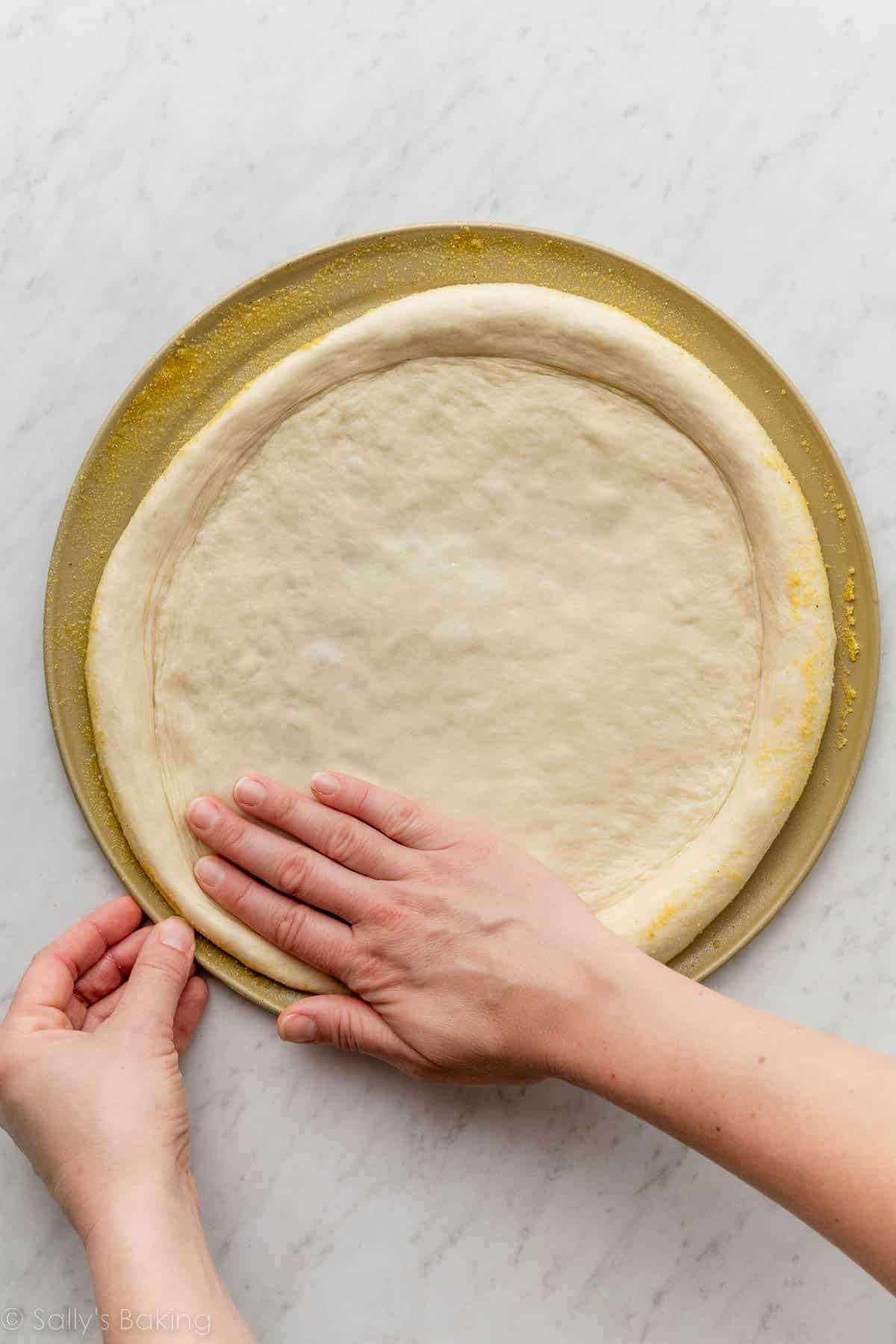
Shape the dough to form a thicker edge around the pizza. This edge traps air and keeps the crust soft.
Do not press the edge too hard. Keep it puffy to hold the toppings without getting hard.
- Push dough from the center toward the edge
- Leave a raised border for the crust
- Use your fingers to pinch the edge gently
- Avoid flattening the crust edge
Baking Techniques For Softness
Making pizza dough soft depends a lot on how you bake it. The oven settings and tools you use affect the crust texture. This guide covers two key baking tips to keep your pizza dough soft.
These tips help you get a tender, chewy crust that feels fresh and delicious every time you bake.
Choosing The Right Oven Temperature
Baking temperature controls how fast the dough cooks and how soft it stays. Too hot makes the crust hard. Too low makes it dry and chewy.
- Set your oven between 450°F and 500°F for soft crust.
- Preheat the oven fully before baking.
- Bake for about 10 to 12 minutes to keep softness.
- Watch the dough color to avoid burning.
Adjust the time and temperature based on your oven’s heat and pizza size. A steady medium-high heat works best for softness.
Using Baking Stones Or Steel
Baking stones and steel plates help heat the dough evenly. They keep the base warm without drying it out. This keeps the crust soft and chewy.
| Tool | Benefit | Tip |
|---|---|---|
| Baking Stone | Retains heat evenly | Place in oven when preheating |
| Baking Steel | Heats up faster and stays hot | Use on middle rack for best results |
Use these tools for a soft base that cooks quickly but stays tender. Avoid placing dough directly on cold metal pans.

Credit: sallysbakingaddiction.com
Common Mistakes To Avoid
Making soft pizza dough is easy if you avoid some common mistakes. These errors can make the dough tough or dry.
Knowing what to watch out for helps you get soft and fluffy pizza every time.
Overworking The Dough
When you knead dough too much, it becomes hard and chewy. The gluten tightens, making the dough tough.
Stop kneading once the dough is smooth and elastic. This keeps it soft and easy to stretch.
- Knead dough for about 8-10 minutes by hand
- Use a gentle folding motion instead of hard pressing
- Let the dough rest to relax gluten before shaping
Incorrect Ingredient Measurements
Using too much flour makes the dough dry and stiff. Too little water also causes dryness.
Measure ingredients carefully for the right dough texture. Use a kitchen scale if possible.
- Use the exact flour amount called for in the recipe
- Add water slowly to get the right dough consistency
- Measure salt and yeast to control dough rise and flavor
Frequently Asked Questions
How Can I Make Pizza Dough Softer At Home?
Use high-protein flour, add olive oil, and hydrate well. Let the dough rest and rise properly for softness.
What Ingredient Keeps Pizza Dough Soft Longer?
Olive oil helps retain moisture and keeps dough soft longer. Avoid overbaking to maintain softness.
Why Is My Pizza Dough Tough Instead Of Soft?
Tough dough often results from over-kneading or too little hydration. Proper kneading and enough water make dough soft.
Does Resting Pizza Dough Improve Its Softness?
Yes, resting allows gluten to relax, making dough easier to stretch and softer after baking.
Conclusion
Soft pizza dough makes every slice better. Use warm water and avoid too much flour. Let the dough rest and rise properly. Knead gently to keep it light and airy. These small steps create a tender crust you will enjoy.
Practice often, and your dough will improve. Fresh ingredients and care bring the best results. Soft, tasty pizza starts with simple dough tips. Try these ideas to make your pizza dough soft and delicious every time.