
Your kitchen cabinets are more than just storage—they set the tone for your entire kitchen. But keeping them clean can feel like a never-ending task.
What if you could maintain spotless cabinets without spending hours scrubbing? Imagine opening your cabinets to find them looking fresh and inviting every day. You’ll discover simple, practical tips that make cleaning easy and effective. Ready to transform your kitchen cabinets and enjoy a cleaner, more organized space?
Let’s dive in!

Credit: www.youtube.com
Choosing The Right Cleaning Products
Keeping kitchen cabinets clean helps your kitchen look fresh and neat. Picking the right cleaning products is key to protect the cabinet surface.
Some products can damage wood or finishes. Use safe cleaners made for your cabinet type to keep them looking good longer.
Know Your Cabinet Material
Cabinets come in wood, laminate, metal, or painted finishes. Each needs different cleaning products to avoid damage.
Wood cabinets need gentle cleaners. Laminate can handle mild detergents. Metal needs non-abrasive products.
Avoid Harsh Chemicals
Strong chemicals can strip finishes and cause discoloration. Avoid bleach, ammonia, and abrasive powders on cabinets.
Use mild soap and water or cleaners labeled safe for kitchen surfaces. This keeps cabinets intact and clean.
Test Cleaning Products First
Try any new cleaner on a hidden cabinet spot. Wait to see if it changes color or damages the finish before full use.
Testing prevents accidental damage and keeps cabinets looking new for longer.
Choose Products That Remove Grease
Kitchen cabinets often get greasy from cooking. Pick cleaners that dissolve grease without harming cabinet surfaces.
- Use dish soap diluted in warm water for light grease
- Try vinegar and water mix for tougher grease spots
- Avoid oily or wax-based cleaners that leave residue
Use Soft Cloths Or Sponges
Pair the right cleaner with soft cloths or sponges. Avoid scrub brushes or rough pads that scratch cabinets.
Microfiber cloths work well. They clean gently and absorb dirt without harming surfaces.
Effective Daily Maintenance
Keeping kitchen cabinets clean every day helps them last longer. Small daily actions stop dirt and stains from building up.
Daily care takes little time but keeps your kitchen looking fresh and neat. Use simple habits to keep cabinets spotless.
Wipe Cabinets After Cooking
Cooking can cause splashes and grease on cabinets. Wipe them with a soft cloth right after cooking to avoid stains.
Use a damp cloth and mild soap if needed. Dry the surface with a clean towel to prevent water marks.
Use Gentle Cleaners
Strong chemicals can damage cabinet finishes. Choose mild cleaners or soap mixed with water for daily cleaning.
Test any cleaner on a small hidden area first to avoid unwanted damage or discoloration.
Keep Hands Clean Before Touching Cabinets
Dirty hands transfer oils and dirt to cabinet surfaces. Wash your hands before using the kitchen to reduce grime buildup.
- Use soap and warm water
- Dry hands completely
- Avoid touching cabinets with sticky or oily hands
Regularly Clean Cabinet Handles And Knobs
Handles and knobs collect fingerprints and grease quickly. Clean them daily to keep the whole cabinet looking clean.
Use a soft cloth with mild soap. Dry handles to prevent rust or damage to metal finishes.
Avoid Excess Moisture On Cabinets
Too much water can warp or damage wood cabinets. Use a damp cloth, not a wet one, and dry surfaces immediately.
Fix leaks or spills near cabinets quickly to protect them from water damage.
Deep Cleaning Techniques
Keeping kitchen cabinets clean is important for a fresh kitchen look. Deep cleaning helps remove dirt and grime that regular wipes miss.
Use the right tools and methods to make your cabinets shine and last longer.
Removing Stubborn Stains
Some stains stay on cabinets even after regular cleaning. These need special care to avoid damage.
Use a soft cloth and gentle cleaner to treat stains without scratching the surface.
- Mix baking soda with water to make a paste
- Apply the paste on the stain and let it sit for 10 minutes
- Gently rub with a soft cloth or sponge
- Wipe clean with a damp cloth
- Dry the area with a clean towel
Polishing And Protecting Surfaces
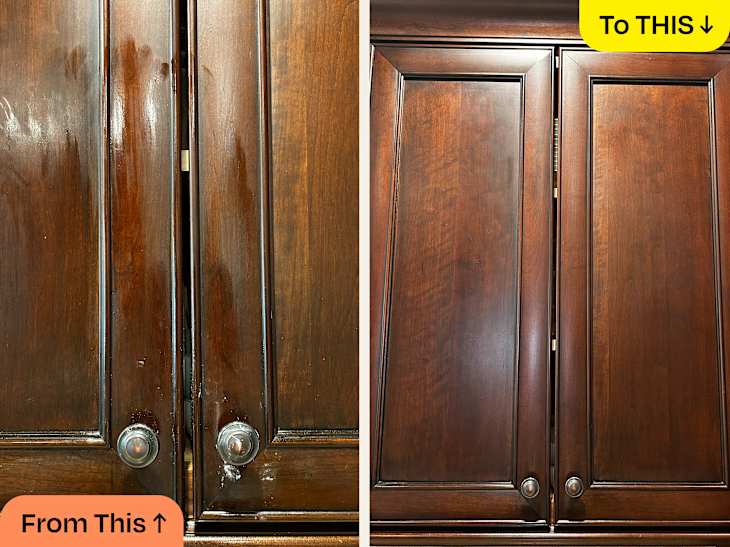
Polishing cabinets restores their shine and protects them from wear. Use products that match your cabinet finish.
Regular polishing keeps wood and laminate surfaces looking new and guards against moisture.
- Choose polish made for wood or laminate cabinets
- Apply a small amount with a soft cloth
- Rub gently in circular motions
- Buff with a clean cloth to remove excess polish
- Polish cabinets every few months for best results
Credit: www.thekitchn.com
Preventing Grease Build-up
Grease can quickly build up on kitchen cabinets. It makes them look dirty and hard to clean.
Taking simple steps can keep grease away and protect your cabinets. This keeps your kitchen fresh.
Clean Spills Immediately
Wipe spills as soon as they happen. Grease hardens if left for a long time.
Use a soft cloth and warm soapy water. This stops grease from sticking to the surface.
Use Proper Ventilation
Turn on the kitchen fan or open windows when cooking. This helps remove grease particles in the air.
Good airflow reduces the chance of grease settling on cabinets and other surfaces.
Choose The Right Cleaning Products
Use cleaners made for grease removal. Avoid harsh chemicals that damage cabinet finishes.
Mild soap or vinegar mixed with water can also remove grease safely.
Regular Dusting And Wiping
Dust cabinets regularly to stop grease build-up. Wipe them with a damp cloth once a week.
This simple habit keeps cabinets clean and prevents dirt from mixing with grease.
Avoid Using Oily Hands
Try not to touch cabinets with oily or greasy hands. This adds grease to the surface.
Wash your hands before opening or closing cabinets during cooking.
Organizing For Cleaner Cabinets
Keeping kitchen cabinets clean starts with good organization. A tidy cabinet helps stop dirt and clutter.
Organizing your cabinets makes cleaning easier and keeps your kitchen neat every day.
Utilizing Storage Solutions
Use storage tools to make the most of your cabinet space. These tools help keep items in place.
Shelf risers, clear bins, and lazy Susans keep things easy to find and stop messes.
- Shelf risers add extra layers for more storage
- Clear bins group similar items together
- Lazy Susans spin to reach items quickly
- Drawer dividers separate utensils and small tools
Decluttering Strategies
Remove items you rarely use to free space. This makes cabinets easier to clean.
Sort your kitchen items and keep only what you need daily or weekly.
- Donate or recycle old kitchen tools
- Throw away expired or unused food containers
- Keep only one or two of each item
- Regularly check and clear out clutter

Credit: 417forged.com
Natural Cleaning Alternatives
Keeping kitchen cabinets clean is important for a fresh kitchen. Natural cleaning options can help you do this safely.
These alternatives avoid harsh chemicals and keep your cabinets looking great.
Vinegar And Water Solution
Mix equal parts of vinegar and water in a spray bottle. This solution cleans dirt and grease well.
Spray on cabinets and wipe with a soft cloth. Avoid using on natural wood finishes as vinegar can dull them.
Baking Soda Paste
Baking soda gently removes stains and grime without scratching. Make a paste with water for tough spots.
Apply the paste, let it sit a few minutes, then wipe clean with a damp cloth.
Lemon Juice Cleaner
Lemon juice acts as a natural bleach and deodorizer. It removes stains and leaves a fresh scent.
Mix lemon juice with water and apply with a cloth. Test on a small area first to avoid damage.
Olive Oil Polish
Olive oil helps shine and protect wooden cabinets. Use it sparingly to avoid buildup.
Apply a small amount to a cloth and rub gently on the surface to restore shine.
Castile Soap Cleaner
Castile soap is a gentle cleaner made from vegetable oils. It removes dirt without harsh chemicals.
Mix a few drops with water and wipe cabinets with a soft cloth, then rinse with clean water.
Protecting Cabinet Finishes
Keeping kitchen cabinets clean helps them look new for longer. Protecting their finish is key to avoid damage and stains.
Proper care stops the finish from fading or peeling. It also keeps your kitchen cabinets strong and shiny.
Clean Gently With Soft Cloths
Use soft cloths to wipe your cabinets. Rough materials can scratch the finish and cause dull spots.
Microfiber cloths work best because they trap dust without rubbing hard. Avoid scrubbing too much to protect the surface.
Use Mild Cleaners Only
Strong chemicals can break down cabinet finishes. Use mild soap mixed with water for cleaning.
Test any cleaner on a small hidden spot first. This helps you check that it does not harm the finish.
Avoid Excess Water
Water can seep into wood and damage the finish. Wipe spills quickly and dry the surface with a clean cloth.
Do not soak cabinets or use dripping wet cloths. Keeping them dry helps prevent warping and peeling.
Apply Protective Wax Or Polish
Using a wax or polish can add a shield to your cabinet finish. This helps stop scratches and water marks.
Choose products made for your cabinet material. Apply them as the instructions say, usually once every few months.
Keep Heat And Sunlight Away
Heat and sunlight can fade and crack cabinet finishes. Keep cabinets away from direct heat sources like stoves.
Use curtains or blinds to protect cabinets from strong sunlight. This helps keep colors bright and finish smooth.
Frequently Asked Questions
How Often Should I Clean Kitchen Cabinets?
Clean kitchen cabinets at least once a month to prevent grease buildup. Wipe spills immediately to avoid stains. Regular maintenance keeps cabinets looking fresh and extends their life.
What Is The Best Cleaner For Kitchen Cabinets?
Use a mild detergent mixed with warm water for most cabinets. Avoid harsh chemicals that can damage finishes. For wooden cabinets, use a wood-safe cleaner or a vinegar-water solution.
How Do I Remove Grease From Kitchen Cabinets?
Mix equal parts vinegar and water, then spray on greasy areas. Wipe with a soft cloth or sponge. For stubborn grease, use baking soda paste gently to scrub without damaging surfaces.
Can I Use Natural Products To Clean Cabinets?
Yes, natural products like vinegar, baking soda, and lemon work well. They are safe, eco-friendly, and effective for removing dirt and grease. Always test on a small area first.
Conclusion
Keeping kitchen cabinets clean takes regular care and simple steps. Wipe spills quickly to stop stains and damage. Use gentle cleaners to protect the cabinet finish. Organize items to avoid clutter and dust buildup. Small efforts add up to a neat kitchen space.
Clean cabinets look fresh and last longer. A tidy kitchen makes cooking more pleasant and easy. Stick to these tips for a clean, bright kitchen every day.