
Your bread knife is more than just a kitchen tool—it’s the secret to perfect, clean slices every time. But without proper care, it can quickly lose its sharpness and become frustrating to use.
If you want to keep your bread knife sharp, safe, and ready for action, you’re in the right place. You’ll discover simple, effective tips that anyone can follow to maintain your bread knife like a pro. Keep reading, and you’ll never struggle with dull blades or uneven slices again.
Choosing The Right Bread Knife
Choosing the right bread knife is important for cutting bread easily and safely. A good knife makes slicing smooth and keeps bread from crushing.
Pick a knife that feels right in your hand and has a sharp, strong blade. This helps you cut bread with less effort.
Material Considerations
Bread knives come in different materials. The blade material affects sharpness and how long the knife lasts.
Stainless steel blades resist rust and stay sharp longer. High-carbon steel blades are very sharp but need more care to avoid rust.
- Stainless steel is easy to clean and durable
- High-carbon steel cuts very well but needs drying after use
- Ceramic blades are sharp but can chip easily
Handle Design And Comfort
The handle should feel comfortable and secure in your hand. A good grip helps you cut safely and with control.
Look for handles made from materials that do not slip when wet. Some have ergonomic shapes to reduce hand fatigue.
- Wood handles offer a classic look and good grip
- Plastic handles are easy to clean and often non-slip
- Rubberized grips improve safety when hands are wet
- Ergonomic designs reduce wrist strain
Credit: oishya.com
Proper Cleaning Techniques
Keeping your bread knife clean helps it last longer and work better. Dirt and food can build up on the blade and handle if not cleaned properly.
Using the right cleaning methods protects the sharp edge and prevents rust. Always clean your bread knife carefully after each use.
Hand Washing Guidelines
Wash your bread knife by hand instead of using a dishwasher. Dishwashers can damage the blade and handle over time.
Use warm water and mild dish soap. Gently scrub the blade with a soft sponge or cloth to remove crumbs and food.
- Hold the knife by the handle to avoid cutting yourself
- Clean both sides of the blade carefully
- Do not soak the knife for long periods
- Rinse well to remove all soap residue
Drying And Storage Tips
Dry your bread knife immediately after washing. Leaving it wet can cause rust and damage the blade.
Use a soft towel to dry the blade and handle completely. Store the knife in a dry place away from moisture.
- Store the knife in a knife block or magnetic strip
- Avoid storing loose in a drawer where it can get damaged
- Keep the blade covered or sheathed if possible
- Make sure the storage area is clean and dry
Sharpening And Honing
Keeping your bread knife sharp makes cutting easier and safer. Sharpening and honing help keep the blade in good shape.
Sharpening fixes the blade edge by removing small metal pieces. Honing straightens the edge without removing metal.
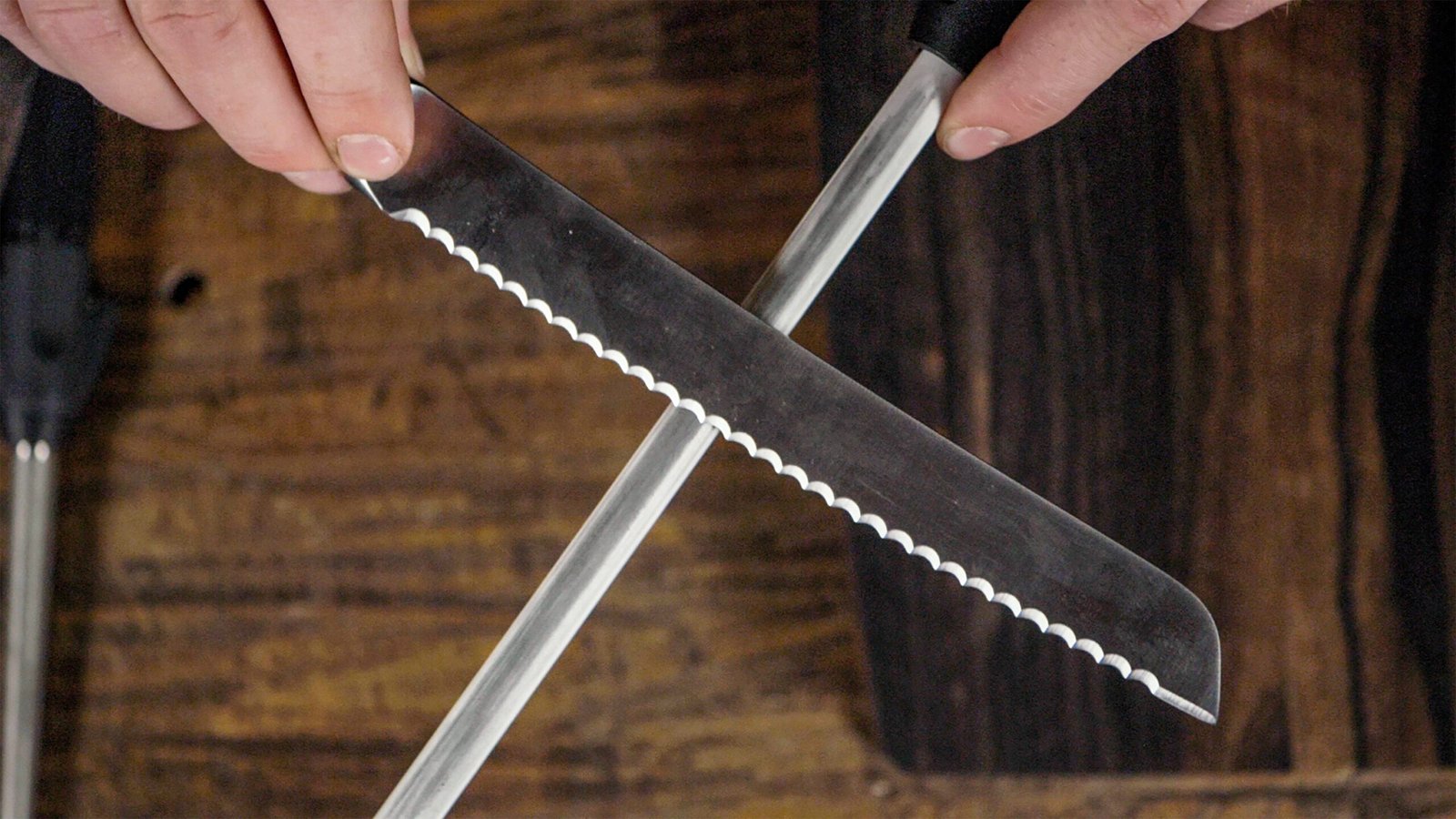
Using A Sharpening Rod
A sharpening rod helps realign your bread knife’s edge. Use a ceramic or steel rod made for serrated knives.
Hold the rod steady and run each serration of the blade along it. Use gentle strokes to avoid damaging the teeth.
- Hold the rod vertically on a stable surface
- Place each serration on the rod’s tip
- Pull the knife down the rod with light pressure
- Repeat for every serration
- Wipe the blade clean after honing
Professional Sharpening Services
Some bread knives need professional sharpening. Experts use special tools to sharpen serrated edges properly.
Take your knife to a professional if home sharpening does not improve the edge. This service can restore sharpness safely.

Credit: nobliecustomknives.com
Safe Handling Practices
Using a bread knife safely is important to avoid accidents. Always focus on how you hold and use the knife.
Proper handling keeps you safe and helps the knife stay sharp longer.
Cutting Techniques
Use a gentle sawing motion when cutting bread. Avoid pressing down hard to keep control.
Hold the bread firmly with your other hand, but keep fingers away from the blade.
- Start cutting at the crust edge
- Use long, smooth strokes
- Keep the knife at a slight angle
- Let the blade do the work, don’t force it
Safety Tips
Always store your bread knife in a safe place. Use a knife block or sheath to cover the blade.
Keep the knife clean and dry to avoid slipping during use. Check the handle for a secure grip.
- Cut on a stable surface like a cutting board
- Never try to catch a falling knife
- Keep knives out of reach of children
- Wear cut-resistant gloves if needed
Storage Solutions
Proper storage keeps your bread knife sharp and safe. It also stops damage to the blade and your fingers.
Choose storage that fits your kitchen and protects your knife well.
Knife Blocks And Magnetic Strips
Knife blocks keep knives in one place and protect blades from bumps. Magnetic strips hold knives on the wall, saving counter space.
- Use knife blocks with slots that fit your bread knife’s length and width.
- Keep the blade dry before placing it in the block to avoid rust.
- Magnetic strips must be strong enough to hold the knife securely.
- Place magnetic strips out of reach of children for safety.
- Clean blocks and strips regularly to prevent dust buildup.
Protective Sheaths
Protective sheaths cover the blade for safe storage and travel. They stop the blade from dulling and protect your hands.
| Type of Sheath | Material | Benefits |
| Plastic | Hard Plastic | Lightweight, easy to clean |
| Leather | Genuine Leather | Durable, stylish |
| Silicone | Flexible Silicone | Soft, protects blade edges |
Avoiding Common Mistakes
Keeping a bread knife sharp and safe is important. Many people make simple errors that damage the blade.
Learning what to avoid helps the knife last longer and work better every time.
Cutting On Hard Surfaces
Cutting bread on hard surfaces like glass or stone can hurt the knife’s edge. These surfaces wear down the blade quickly.
Use wooden or plastic cutting boards to protect the knife. These materials are softer and kinder to the blade.
- Hard surfaces dull the blade faster
- Wood and plastic reduce blade damage
- Replace worn cutting boards regularly
Improper Use
Using a bread knife for tasks like chopping bones or hard vegetables can ruin the blade. Bread knives are made for slicing soft bread only.
Avoid twisting or forcing the knife. This can bend or break the serrated teeth.
- Do not use the bread knife as a general kitchen knife
- Use gentle slicing motions only
- Keep the knife dry and clean after use

Credit: www.youtube.com
Frequently Asked Questions
How Often Should I Sharpen My Bread Knife?
Sharpen your bread knife every 6 to 12 months. Frequent sharpening keeps the blade effective for slicing bread smoothly. Avoid over-sharpening to maintain blade integrity and extend its lifespan.
What Is The Best Way To Clean A Bread Knife?
Hand wash your bread knife with warm, soapy water immediately after use. Avoid dishwashers as they can dull the blade. Dry the knife thoroughly to prevent rust and maintain sharpness.
Can I Use A Sharpening Stone For A Serrated Bread Knife?
Yes, use a sharpening stone or a ceramic rod designed for serrated blades. Sharpen each serration carefully to keep the knife’s cutting performance. Regular maintenance enhances longevity and efficiency.
How Should I Store My Bread Knife Safely?
Store your bread knife in a knife block or magnetic strip. Avoid loose drawers to prevent blade damage and accidents. Proper storage preserves sharpness and ensures safe handling.
Conclusion
Taking care of your bread knife keeps it sharp and safe. Clean it gently after each use to avoid rust. Store it in a dry place to protect the blade. Regular sharpening helps the knife cut smoothly every time. A well-maintained knife makes baking easier and more enjoyable.
Small efforts lead to long-lasting tools. Keep these tips in mind for best results. Your bread knife will serve you well for many years. Simple care makes a big difference in the kitchen.