
Lighting can make or break your kitchen’s look and feel. If you’ve ever struggled with shadows while chopping or felt your kitchen is too dull or too bright, you’re not alone.
Getting the placement of your kitchen lights just right can transform your space into a warm, functional, and inviting area. You’ll discover simple yet powerful tips to position your kitchen lighting perfectly. By the end, you’ll know exactly how to light up your kitchen to boost both style and efficiency.
Ready to make your kitchen shine like never before? Let’s dive in!
Importance Of Kitchen Lighting
Good kitchen lighting makes cooking safer and easier. It helps you see clearly while preparing food.
Proper lighting also creates a warm and inviting space. It can make your kitchen look bigger and cleaner.
Task Lighting For Cooking Areas
Task lighting shines directly on places where you cook and prepare food. This lighting reduces shadows.
Use bright lights under cabinets or above countertops. This helps you chop and cook safely.
- Install LED strips under cabinets
- Use adjustable spotlights on the ceiling
- Place lights near the stove and sink
Ambient Lighting For Overall Brightness
Ambient lighting fills the whole kitchen with soft light. It makes the room comfortable and easy to use.
Ceiling lights or recessed lights work well for ambient lighting. They create an even light across the space.
- Use ceiling-mounted fixtures
- Choose warm or neutral white bulbs
- Place lights evenly for no dark spots
Accent Lighting To Highlight Features
Accent lighting draws attention to kitchen details. It can highlight cabinets, shelves, or decor.
Use small spotlights or LED strips for accent lighting. This adds style and depth to the kitchen.
- Install lights inside glass cabinets
- Place spotlights on artwork or plants
- Use dimmers to adjust light levels
Avoiding Shadows And Glare
Shadows and glare make cooking hard and unsafe. Position lights to reduce these problems.
Place lights at different heights and angles. Use diffusers or frosted bulbs to soften light.
- Combine overhead and task lighting
- Use shaded fixtures to prevent glare
- Test lighting by standing in kitchen work areas
:strip_icc()/BHGMargauxChristiansonHomeB_1659_preview-7a67d3ec45be4af2ba99ace510b7707f.jpg)
Credit: www.bhg.com
Types Of Kitchen Lighting
Good kitchen lighting helps you cook safely and creates a warm space. There are three main types of lighting. Each type has a different role in your kitchen.
Understanding these types helps you place lights correctly. This makes your kitchen both useful and inviting.
Ambient Lighting
Ambient lighting gives overall light to your kitchen. It fills the room with soft, even light. This lighting helps you see clearly without harsh shadows.
Common sources include ceiling fixtures, flush mounts, or recessed lights. You want enough light to move safely and do basic tasks.
Task Lighting
Task lighting focuses on places where you do work. It brightens areas like countertops, sinks, and stoves. This light helps you see details when chopping or cooking.
- Under-cabinet lights shine directly on counters.
- Pendant lights work well over kitchen islands.
- Adjustable track lights let you aim light where needed.
Accent Lighting
Accent lighting adds style and highlights features. It draws attention to things like shelves, artwork, or glass cabinets.
| Type | Use | Effect |
| LED strip lights | Under shelves | Soft glow |
| Spotlights | Artwork | Focus light |
| Cabinet lights | Glass doors | Showcase items |
Choosing The Right Fixtures
Good kitchen lighting makes cooking safer and easier. Picking the right fixtures helps you see clearly.
Each fixture type has a special job. Use a mix for the best kitchen light.
Pendant Lights
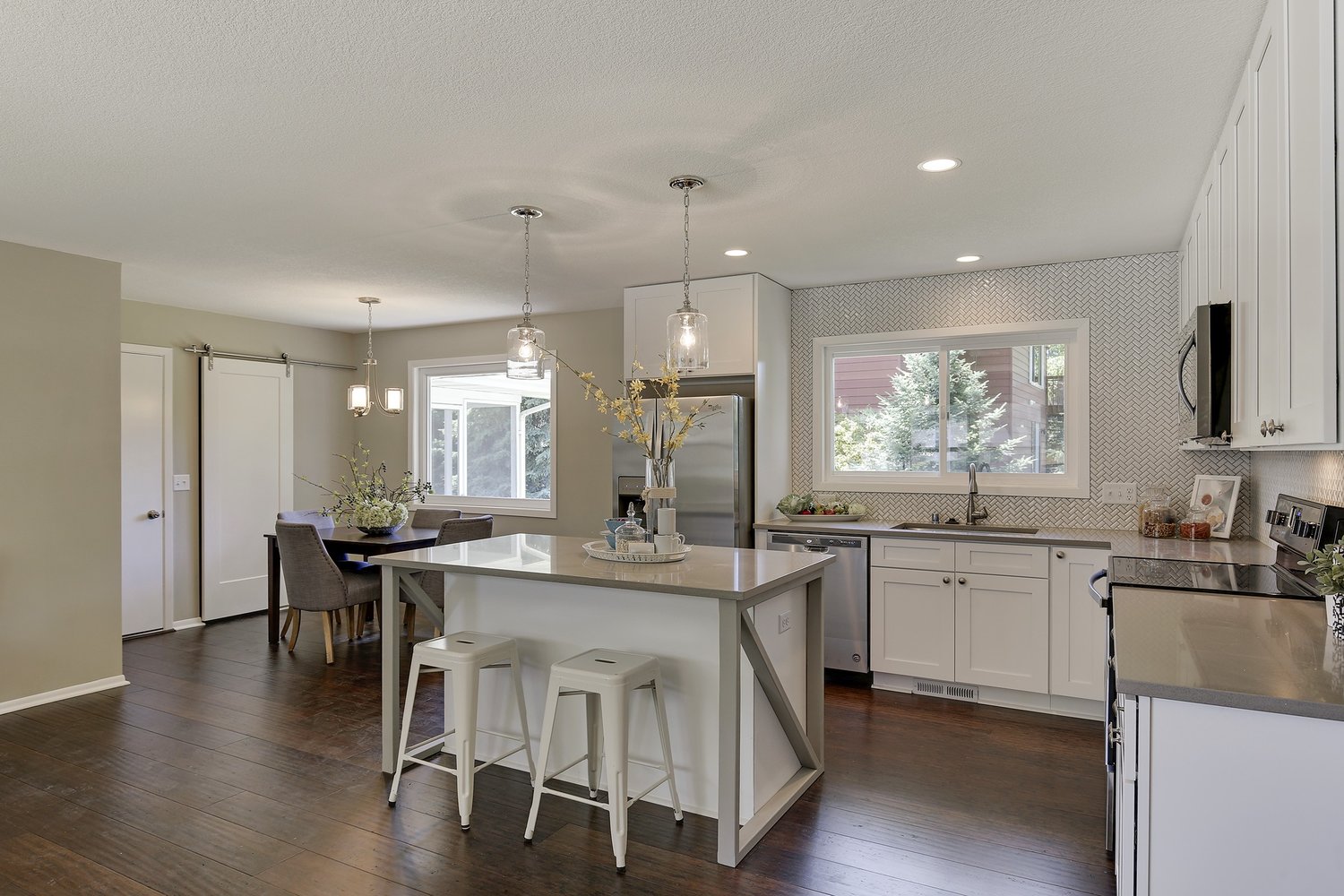
Pendant lights hang from the ceiling. They add style and focused light over islands or tables.
Choose pendants with shades that soften bright bulbs. Pick the right height to avoid glare.
- Hang 30 to 36 inches above the surface
- Use dimmable bulbs for mood control
- Pick styles that match your kitchen design
Recessed Lighting
Recessed lights sit flush in the ceiling. They give general light without blocking views.
Place them evenly for uniform brightness. Use adjustable trims to direct light where needed.
- Space lights about 4 to 6 feet apart
- Use LED bulbs for energy savings
- Install near work areas like counters and sinks
Under-cabinet Lights
Under-cabinet lights brighten counters below cabinets. They help you see while chopping and cooking.
Choose slim fixtures that hide under cabinets. LED strips work well and last a long time.
- Mount lights at the cabinet front edge
- Pick warm white light for a cozy feel
- Use switches or motion sensors for easy control
Credit: trubuildconstruction.com
Optimal Light Placement Strategies
Good kitchen lighting helps you see clearly and work safely. Proper light placement also makes the kitchen look nice.
Use different lights for different kitchen parts. This guide covers the best spots for overhead lights, counters, and dining areas.
Overhead Lighting Placement
Ceiling lights brighten the whole kitchen. Place them evenly to avoid shadows and dark spots. Use recessed lights or flush mounts for a clean look.
- Space lights about 4 to 6 feet apart
- Use dimmers to adjust brightness
- Choose bright white bulbs for clear visibility
Countertop And Task Areas
Task lighting on counters helps you prepare food safely. Place lights where you do most chopping and mixing. Avoid placing lights behind you to reduce shadows.
| Area | Recommended Light Type | Placement Tips |
| Under Cabinets | LED Strip or Puck Lights | Install under cabinet edges to light counters directly |
| Above Sink | Pendant or Spot Light | Center light above sink for clear visibility |
| Cooking Range | Range Hood Light | Use built-in hood lights for focused illumination |
Islands And Dining Areas
Islands and dining spots need both task and ambient lighting. Pendant lights add style and focus light on these areas.
- Hang pendants 30 to 36 inches above island counters
- Choose fixtures with wide light spread for dining tables
- Use adjustable lights to change mood and brightness
Balancing Natural And Artificial Light
Good kitchen lighting helps you see clearly and makes the space feel inviting. Balancing natural and artificial light is key to a bright kitchen.
Natural light saves energy and lifts your mood. Artificial light fills in when natural light is low or uneven.
Maximize Natural Light Sources
Use windows and skylights to bring in daylight. Keep window areas clear of heavy curtains or blinds.
Place work areas like the sink or countertop near windows. This helps you use natural light for tasks.
- Choose sheer curtains or blinds that open fully
- Keep windows clean to let in more light
- Use reflective surfaces to bounce light around
Layer Artificial Lighting
Combine different light types to cover all kitchen needs. Use overhead lights, task lights, and accent lights.
Task lighting helps with cooking and prep. Ambient lighting brightens the whole room. Accent lighting adds style.
- Install under-cabinet lights for countertops
- Use ceiling lights for overall brightness
- Add pendant lights over islands or dining areas
Control Light With Dimmers And Zones
Dimmers let you adjust light strength. This saves energy and sets the right mood.
Divide your kitchen lighting into zones. Control each area separately for flexibility.
- Use dimmer switches on main lights
- Install separate controls for task and ambient lights
- Adjust light levels based on time of day
Choose The Right Light Temperature
Light temperature affects kitchen mood and visibility. Use warm light for comfort and cool light for clarity.
Match artificial light color with natural light for a balanced look. Avoid harsh or dim lighting.
- Warm white (2700K-3000K) for cozy areas
- Cool white (3500K-4100K) for workspaces
- Daylight (5000K-6500K) if your kitchen lacks windows
Avoid Shadows And Glare
Position lights to reduce shadows on work surfaces. Use multiple light sources to cover dark spots.
Choose fixtures with diffusers to soften glare. Proper light placement improves safety and comfort.
- Place task lights directly above counters
- Use pendant lights with shades to reduce glare
- Test lighting at different times to check shadows
Color Temperature And Bulb Choices
Lighting is very important in the kitchen. The right color temperature and bulb type help you see clearly.
Good lighting makes cooking safer and more enjoyable. Choose bulbs that match your kitchen’s needs.
Understanding Color Temperature
Color temperature tells you if light looks warm or cool. It is measured in Kelvins (K).
Warm light feels cozy and yellowish. Cool light looks bright and white or blue.
- 2700K to 3000K: Warm light, good for relaxing areas
- 3500K to 4100K: Neutral light, ideal for kitchens
- 5000K to 6500K: Cool light, best for detail work
Choosing The Right Bulbs
Pick bulbs that suit your kitchen tasks. Brightness and color affect how you see food and surfaces.
LED bulbs save energy and last longer. They come in many color temperatures and brightness levels.
- LED bulbs: Energy efficient and bright
- Incandescent bulbs: Warm light but use more energy
- Fluorescent bulbs: Cost-effective but may flicker
Mixing Color Temperatures
Use different color temperatures for different kitchen zones. This creates a balanced look.
Warm light suits dining areas. Cooler light works well over workspaces.
- Warm lights for eating and relaxing
- Neutral or cool lights for cooking and prep
- Task lighting with bright, cool bulbs for clear visibility
Energy Efficiency Considerations
Lighting uses a lot of energy in the kitchen. Smart placement helps save power and money. Choosing the right lights also lowers energy bills.
Good lighting placement can make the kitchen brighter with less energy. It also reduces the need for extra lights or high power bulbs.
Use Led Lighting
LED lights use less energy than traditional bulbs. They last longer and give off less heat. This makes them a smart choice for kitchens.
Placing LED lights under cabinets or over counters helps focus light where you need it. This reduces the need for overhead lights.
Maximize Natural Light
Natural light saves energy by reducing the use of electric lights. Place lights near windows to blend with daylight.
Use sheer curtains or blinds that open fully. This lets in more sunlight and lowers the need for artificial light.
Install Task Lighting
Task lighting focuses light on areas where you cook or prepare food. This means less overall lighting is needed.
- Place lights under cabinets
- Use pendant lights over work areas
- Choose adjustable fixtures to direct light
Task lighting saves energy by lighting only where you work. It helps avoid wasting light in unused areas.
Use Dimmers And Smart Controls
Dimmers lower light levels and save energy. You can adjust brightness based on your needs.
Smart controls let you turn lights on and off remotely. They can also set schedules to avoid leaving lights on.
Choose Energy Star Rated Fixtures
Energy Star rated lights use less power and meet energy-saving standards. They work well without sacrificing brightness.
Look for these labels when buying kitchen lighting. They help reduce your kitchen’s energy use over time.
Common Mistakes To Avoid
Good kitchen lighting makes cooking safe and fun. Poor lighting can cause problems and discomfort.
Avoid these common mistakes to get the best light in your kitchen space.
Placing Lights Too Close To Walls
Lights placed too near walls create harsh shadows. This makes countertops harder to see clearly.
Move lights away from walls to spread light evenly across work areas.
Using Only One Type Of Lighting
Relying on just overhead lights makes the kitchen look flat and dull. Different tasks need different light types.
Combine ambient, task, and accent lighting for a balanced and functional kitchen.
Ignoring Task Lighting
Not having lights directly above prep areas makes cooking harder and unsafe. Task lighting brightens these spots.
Add focused lights under cabinets or over islands to improve visibility where you work.
Installing Bright Lights Without Dimmer Switches
Bright lights can be too harsh at times. Without dimmers, you cannot adjust light for different moods or needs.
Use dimmer switches to control brightness for comfort and energy savings.
Overlooking Natural Light Sources
Failing to use windows and skylights wastes natural daylight. This increases electric light use and costs.
Arrange kitchen layout to maximize natural light during the day.
Choosing The Wrong Bulb Color Temperature
Bulbs that are too cool or too warm change how food and surfaces look. This can affect your kitchen’s feel.
Use bulbs with a neutral white color temperature around 3000K to 4000K for the best look.
Credit: arcadium3d.com
Frequently Asked Questions
How To Choose The Best Kitchen Lighting Placement?
Choose lighting based on kitchen zones. Use task lights over work areas and ambient lights for overall brightness. Layer different lights for function and style.
What Lighting Is Ideal For Kitchen Countertops?
Install bright, focused task lighting above countertops. Under-cabinet LED strips or puck lights work best for clear visibility while prepping food.
Where Should Kitchen Island Lights Be Placed?
Place pendant lights evenly over the island. Center them 30-36 inches above the surface for optimal illumination and aesthetic balance.
How To Avoid Shadows In Kitchen Lighting?
Use multiple light sources from different angles. Combine overhead lights with task and accent lighting to minimize shadows.
Conclusion
Good kitchen lighting makes cooking and cleaning easier. Place lights where you need the most help. Use bright lights for work areas and softer lights for dining spots. Mix different light types to create a warm, inviting space. Remember, good lighting also makes your kitchen look bigger and cleaner.
Try these tips to brighten your kitchen the right way. Simple changes can bring big improvements. Your kitchen will feel more comfortable and functional every day.