
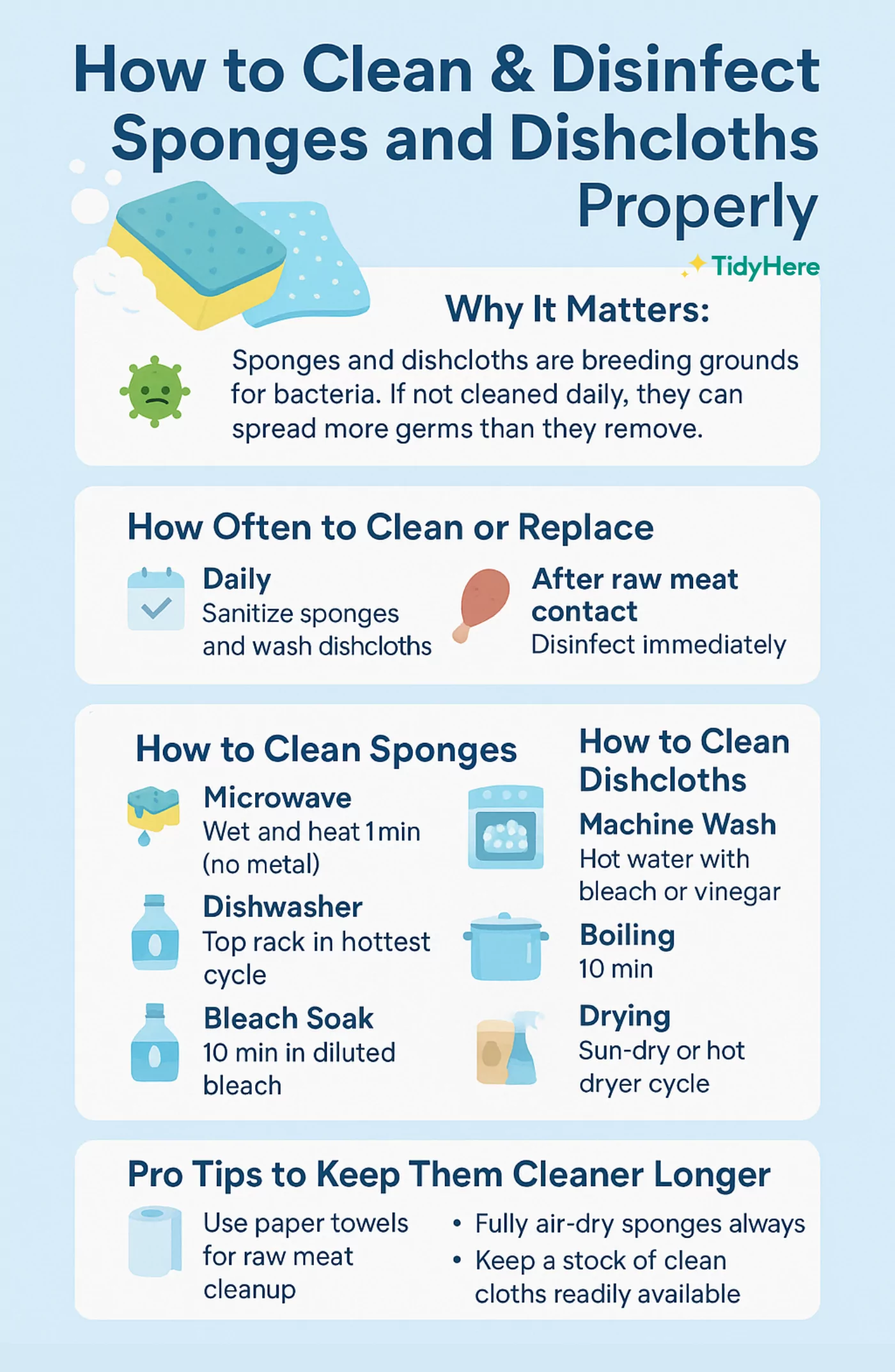
Your kitchen sponge is one of the dirtiest items in your home, even if it looks clean. Every time you use it, germs and bacteria multiply quickly, turning it into a breeding ground for illness.
But don’t worry—disinfecting your sponge properly can keep your kitchen safer and your family healthier. You’ll discover simple, effective tips that anyone can use to clean and sanitize kitchen sponges. Keep reading to learn how to protect your home with easy habits that make a big difference.

Credit: tidyhere.com
Why Disinfect Kitchen Sponges
Kitchen sponges are used daily to clean dishes and surfaces. They can collect germs and bacteria over time.
Disinfecting sponges helps keep your kitchen clean and safe. It reduces the risk of spreading germs and illnesses.
Common Germs In Sponges
Sponges are a breeding ground for germs. Warm, damp conditions help bacteria grow.
Some common germs found in sponges include E. coli and Salmonella. These germs can cause food poisoning.
- E. coli: Found in raw meat and vegetables
- Salmonella: Found in raw eggs and poultry
- Staphylococcus: Can cause skin infections
Health Risks Of Dirty Sponges
Using dirty sponges can lead to health problems. Germs can transfer from the sponge to your hands and surfaces.
This can cause stomach aches, diarrhea, and other illnesses. Keeping sponges clean helps protect your health.
| Risk | Illness |
| Food poisoning | Caused by E. coli and Salmonella |
| Infections | Caused by Staphylococcus |
Daily Sponge Care Tips
Kitchen sponges can hold many germs if not cleaned properly. Daily care helps keep them safe to use.
Simple habits can make your sponge last longer and reduce bacteria growth in your kitchen.
Rinsing And Squeezing
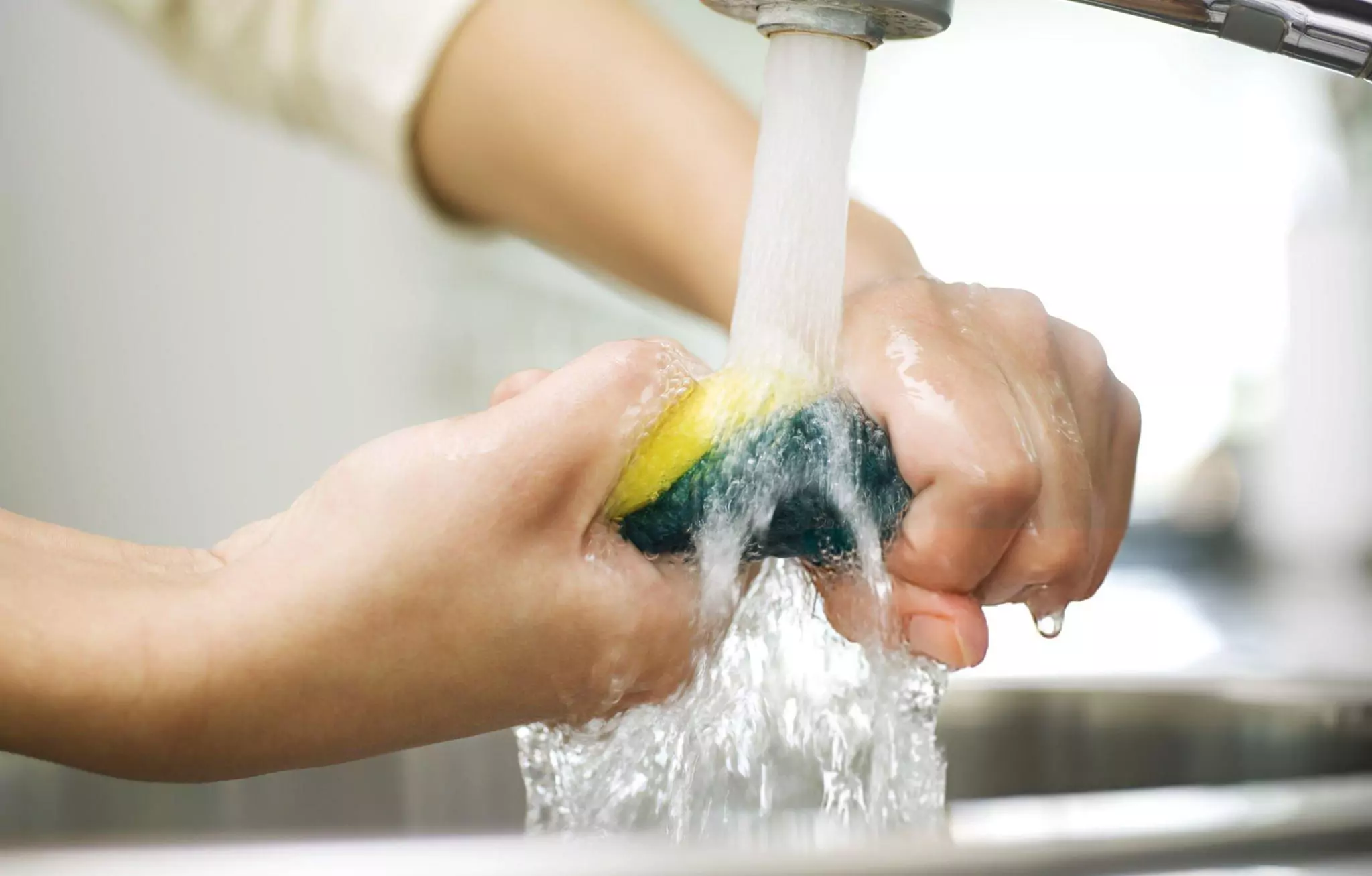
Rinse your sponge well after each use to remove food and soap. Use warm water to help clear away dirt.
Squeeze the sponge tightly to push out water and trapped particles. This stops germs from growing inside.
- Rinse under warm running water
- Squeeze until no water drips
- Repeat if sponge feels very dirty
Proper Drying Techniques
Dry your sponge completely between uses. A dry sponge lowers the chance of bacteria growth.
Place the sponge in a spot with good air flow. Avoid leaving it in the sink or damp areas.
- Use a sponge holder with drainage
- Store sponges in an open area
- Change sponges every 1-2 weeks
Microwave Disinfection
Kitchen sponges hold many germs. Disinfecting them helps keep your kitchen clean and safe.
Microwaving sponges is a fast way to kill bacteria and germs. It uses heat to disinfect sponges deeply.
Step-by-step Microwave Method
First, soak the sponge in water. This stops it from catching fire in the microwave.
Next, place the wet sponge in the microwave. Heat it on high for two minutes.
- Make sure the sponge is wet before microwaving
- Set the microwave to high power
- Heat the sponge for two minutes
- Let it cool before touching
Safety Precautions
Always wet the sponge well before microwaving. Dry sponges may catch fire.
Use a microwave-safe plate or container to hold the sponge. Avoid metal objects inside the microwave.
- Do not microwave a dry sponge
- Handle the sponge carefully after microwaving
- Keep the microwave door closed while heating
- Check the sponge for damage before use
Credit: tidyhere.com
Boiling Method
Kitchen sponges can hold many germs and bacteria. Boiling is a simple way to disinfect them. This method uses hot water to kill most microbes.
Boiling sponges can help reduce odors and keep your kitchen cleaner. It is a natural and chemical-free way to sanitize.
How To Boil Sponges
Start by filling a pot with enough water to cover the sponge. Bring the water to a rolling boil on the stove.
Place the sponge carefully into the boiling water. Let it boil for about 5 minutes to kill germs. Remove the sponge with tongs and let it cool.
- Use a clean pot and fresh water
- Boil the sponge for 5 minutes
- Handle the hot sponge carefully
- Let the sponge dry completely before use
Effectiveness And Limitations
Boiling kills many bacteria and viruses in sponges. It also reduces bad smells and food residue.
Boiling may not remove all germs or deep dirt. Sponges can still break down after many uses. Replace sponges regularly for best hygiene.
- Kills most common germs and bacteria
- Reduces odors
- Does not remove all dirt or debris
- Sponges wear out over time
- Not a complete substitute for regular replacement
Dishwasher Cleaning
Kitchen sponges can hold many germs and bacteria. Cleaning them often helps keep your kitchen safe.
Using a dishwasher is a simple way to disinfect sponges. It uses heat and water to kill germs effectively.
Using High Heat Cycles
High heat cycles in dishwashers kill most bacteria on sponges. Heat helps remove germs better than cold water.
Make sure to place the sponge on the top rack to avoid damage. The heat dries the sponge and kills germs.
- Use the hottest setting available
- Place sponges on the top rack
- Run a full wash cycle
- Let the sponge dry completely after washing
Best Practices For Dishwasher Cleaning
Clean your sponge regularly, at least once a week. Avoid washing sponges with sharp items that may tear them.
Check your dishwasher filter and clean it often. A clean dishwasher works better to disinfect sponges.
- Run the dishwasher on the highest heat setting
- Use a full wash cycle for better cleaning
- Place sponges away from sharp utensils
- Clean the dishwasher filter regularly
- Allow sponges to dry fully after cleaning
Using Chemical Disinfectants
Kitchen sponges can hold many germs and bacteria. Using chemical disinfectants helps kill these harmful microbes.
It is important to choose the right chemicals and use them safely. This keeps your kitchen clean and safe.
Safe Cleaning Agents
Some chemical disinfectants work well and are safe for kitchen use. These agents kill germs without damaging the sponge.
Common safe disinfectants include bleach solutions, hydrogen peroxide, and vinegar mixtures. These are effective when used correctly.
- Bleach diluted with water (about 1 tablespoon bleach per quart of water)
- 3% Hydrogen peroxide applied and rinsed
- White vinegar soaked sponges for 5 minutes
- Commercial disinfectants labeled safe for kitchen use
Avoiding Harmful Chemicals
Not all chemicals are safe for kitchen sponges. Some can leave harmful residues or damage the sponge.
Avoid using harsh chemicals like ammonia or undiluted bleach. These can irritate your skin and contaminate food surfaces.
- Do not use ammonia or mixing bleach with ammonia
- Avoid undiluted bleach that can wear out sponges
- Skip harsh chemical cleaners not made for kitchen use
- Never mix different chemicals together
Natural Disinfection Alternatives
Kitchen sponges can hold many germs. Cleaning them often helps keep your kitchen safe.
Natural options like vinegar and lemon juice can kill bacteria without chemicals.
Vinegar Soak
Vinegar is a natural disinfectant. It can help clean your sponge and remove odors.
To use vinegar, soak your sponge in a cup of white vinegar for 5 minutes. Then rinse it well with water.
- Use white vinegar for best results
- Soak the sponge for at least 5 minutes
- Rinse well to remove vinegar smell
- Let the sponge dry before using again
Lemon Juice Treatment
Lemon juice has natural acids that kill bacteria. It also leaves a fresh scent.
Apply lemon juice directly to the sponge or soak it in lemon water for 5 minutes. Rinse and dry after treatment.
- Squeeze fresh lemon juice on the sponge
- Or soak sponge in lemon water mixture
- Wait 5 minutes for full effect
- Rinse and air dry completely

Credit: tidyhere.com
When To Replace Kitchen Sponges
Kitchen sponges are useful but can hold many germs. It is important to know when to replace them.
Replacing sponges regularly helps keep your kitchen clean and safe from bacteria.
Signs Of Wear And Tear
Look for changes in your sponge to know if it needs replacing. Old sponges break down and collect dirt.
Common signs include bad smell, discoloration, and pieces falling apart.
- Foul or sour smell that does not go away
- Visible tears, holes, or crumbling edges
- Color fading or dark stains
- Loss of texture and softness
Recommended Replacement Frequency
Replace kitchen sponges often to reduce germs. Frequency depends on use and cleaning habits.
Experts suggest changing sponges every one to two weeks for best hygiene.
- Daily use: replace every 1 week
- Light use: replace every 2 weeks
- If sponge smells or looks worn, replace immediately
- Clean sponges often but still replace regularly
Frequently Asked Questions
How Often Should I Disinfect Kitchen Sponges?
Disinfect kitchen sponges daily or after heavy use. Frequent cleaning prevents bacteria buildup and keeps sponges safe. Replace sponges every one to two weeks for best hygiene.
What Is The Best Method To Disinfect Kitchen Sponges?
Microwaving damp sponges for 1-2 minutes kills most bacteria. Alternatively, soak sponges in diluted bleach or run them through a dishwasher cycle for effective disinfection.
Can Vinegar Effectively Disinfect Kitchen Sponges?
Vinegar has mild antibacterial properties but is less effective than bleach or microwaving. Use vinegar as a natural option but combine it with regular sponge replacement for safety.
Is It Safe To Microwave All Kitchen Sponges?
Only microwave damp, non-metallic sponges safely. Dry or metallic sponges can catch fire or damage the microwave. Always monitor sponges while microwaving.
Conclusion
Keeping kitchen sponges clean helps stop germs from spreading. Regularly disinfect them using simple methods like microwaving or soaking in vinegar. Replace sponges often to keep your kitchen safe and fresh. Clean sponges work better and last longer. Small steps make a big difference in kitchen hygiene.
Stay mindful and keep your sponge bacteria-free. Your health and home will thank you.