
Cooking eggs over medium might sound simple, but getting them just right can be tricky. You want that perfect balance—yolk creamy but not runny, whites fully cooked but still tender.
If you’ve ever ended up with eggs that are too dry or too runny, you’re not alone. The good news? With a few easy tips, you can master this classic technique every time. Keep reading, and you’ll learn how to cook eggs over medium that look great and taste even better.
Your breakfast game is about to level up!
Choosing The Right Eggs
Cooking eggs over medium needs the right eggs to get a perfect texture. The taste and cooking time depend on the eggs you choose.
Two main factors affect your choice: freshness and size. Picking the right eggs helps your dish turn out better.
Freshness Matters
Fresh eggs hold their shape well and have a richer taste. They are less likely to spread too much in the pan.
- Look for eggs with the latest pack date on the carton.
- Store eggs properly in the fridge to keep them fresh longer.
- Use eggs within three weeks of the pack date for best results.
Size Considerations
Egg size changes cooking time and portion size. Medium or large eggs work best for cooking eggs over medium.
| Egg Size | Weight Range (grams) | Cooking Time Impact |
| Small | 38 – 43 | Shorter cooking time |
| Medium | 44 – 49 | Standard cooking time |
| Large | 50 – 56 | Standard cooking time |
| Extra Large | 57 – 63 | Longer cooking time |
Ideal Cooking Tools
Cooking eggs over medium needs the right tools. Using proper equipment helps cook eggs evenly.
Good tools make cooking easier and keep eggs from sticking or breaking. Choose tools that last long and are safe.
Best Pan Selection
Pick a pan with a non-stick surface. It helps eggs cook without sticking or tearing.
Choose a pan with low sides. This lets you flip eggs easily without breaking the yolk.
- Non-stick skillet or frying pan
- 8 to 10-inch size for easy handling
- Heavy-bottomed pan for even heat
- Low sides for easy flipping
Essential Utensils
Use a thin, flexible spatula to flip eggs gently. A wide spatula supports the egg well.
Choose utensils that won’t scratch the pan. Silicone or plastic spatulas are good choices.
- Thin, flexible spatula for flipping
- Wide spatula to support eggs
- Silicone or plastic to protect pans
- Heat-resistant handles for safety
Preparing The Eggs
Cooking eggs over medium needs careful preparation for good texture. Preparing eggs well helps them cook evenly and taste great.
This guide covers cracking and whisking techniques. These tips make your eggs fluffy and smooth before cooking.
Cracking Techniques
Crack eggs gently to avoid shell pieces in the bowl. Use a flat surface for cleaner cracks.
- Tap the egg on a flat counter, not the edge of a bowl.
- Hold the egg over a bowl and pull the shell apart with your thumbs.
- Check for shell bits and remove them with a spoon or fingers.
- Crack eggs one at a time to avoid spoiling the whole batch.
Whisking For Fluffiness
Whisk eggs well to add air and make them fluffy. Use a fork or whisk to blend yolks and whites.
| Whisking Tips | Why It Helps |
| Beat quickly in a circular motion | Incorporates air for fluffiness |
| Whisk until mixture is smooth | Ensures even cooking |
| Do not overbeat | Prevents tough texture |
| Add a pinch of salt | Helps break down egg proteins |
Perfect Heat Settings
Cooking eggs over medium requires the right heat. Too hot or too cold can spoil the texture.
Setting the perfect heat helps cook eggs evenly. It keeps the yolk creamy and the whites firm.
Stove Temperature
Use medium to medium-low heat for eggs over medium. This heat cooks eggs gently without burning.
High heat cooks too fast. It makes eggs tough and dry. Low heat takes too long and may not cook eggs well.
- Set stove dial between medium and medium-low
- Use a non-stick pan for even cooking
- Adjust heat if eggs cook too fast or slow
Avoiding Hot Spots
Hot spots are areas on the pan that get hotter than others. They can burn parts of the eggs.
Use a pan that heats evenly. Spread butter or oil across the pan to avoid sticking and hot spots.
- Choose heavy-bottomed pans for even heat
- Preheat pan on medium heat before adding eggs
- Move eggs gently to avoid burning one side
Timing For Perfection
Cooking eggs over medium needs careful timing. The goal is a firm white and a soft yolk.
Knowing the right time helps you get perfect eggs every time.
Monitoring Cooking Time
Start by heating your pan on medium heat. Crack the egg into the pan once hot.
Cook the egg for about 3 to 4 minutes on the first side. Then, flip it carefully.
After flipping, cook for another 2 to 3 minutes. Watch the time closely to avoid overcooking.
- Heat pan on medium
- Cook first side for 3-4 minutes
- Flip gently
- Cook second side for 2-3 minutes
Signs Of Doneness
The egg white should be fully set and firm. It should not be runny or jiggly.
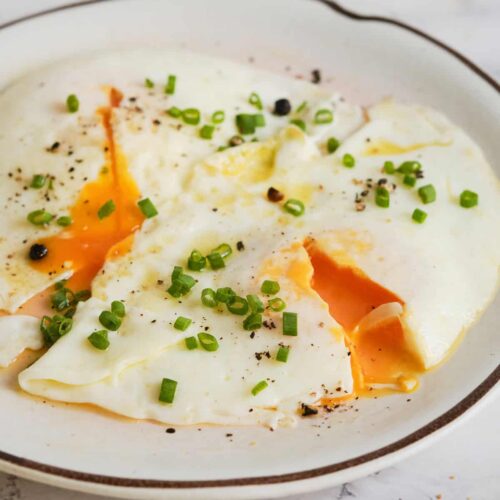
The yolk should still be slightly soft in the center. It should not be hard or dry.
- Firm, opaque whites
- Edges may be slightly crispy
- Yolk has a little jiggle but not liquid
- Yolk surface looks set but soft inside

Credit: themodernnonna.com
Flipping Techniques
Cooking eggs over medium needs careful flipping. It helps keep the yolk soft and the whites firm.
Good flipping stops the egg from breaking or sticking to the pan. It makes cooking easier and cleaner.
Gentle Handling
Handle eggs gently to avoid breaking the yolk. Use a thin spatula to slide under the egg.
Lift the egg slowly and flip it with a smooth motion. Quick or harsh moves can damage the egg.
- Use a non-stick pan for easy flipping
- Wait until the edges look set before flipping
- Keep your spatula close to the pan surface
- Flip with one quick and smooth motion
Ensuring Even Cooking
Flip the egg at the right time to cook it evenly. The whites should be mostly firm before flipping.
After flipping, cook the egg for a short time to keep the yolk soft but warm through.
- Cook on medium heat for steady cooking
- Flip when whites are firm but not brown
- Cook the flipped side for about 30 seconds
- Remove from heat when yolk is slightly runny
Seasoning For Flavor
Cooking eggs over medium is simple. The right seasoning brings out their best taste.
Using salt, pepper, herbs, and spices makes eggs more delicious and enjoyable.
Salt And Pepper Tips
Salt and pepper are classic seasonings for eggs. They enhance the natural flavor without overpowering it.
- Use fine salt to sprinkle evenly over eggs.
- Try freshly ground black pepper for stronger aroma.
- Add salt just after cooking to keep eggs tender.
- Mix pepper into eggs before cooking for even taste.
Adding Herbs And Spices
Herbs and spices add new layers of flavor. They make eggs exciting without much effort.
| Herb/Spice | Best Use | Flavor Notes |
| Chives | Sprinkle fresh on top | Mild onion taste |
| Paprika | Sprinkle before cooking | Smoky and sweet |
| Basil | Chop fresh, add after cooking | Sweet and peppery |
| Cumin | Add in small amounts before cooking | Warm and earthy |
Credit: www.foodfaithfitness.com
Serving Suggestions
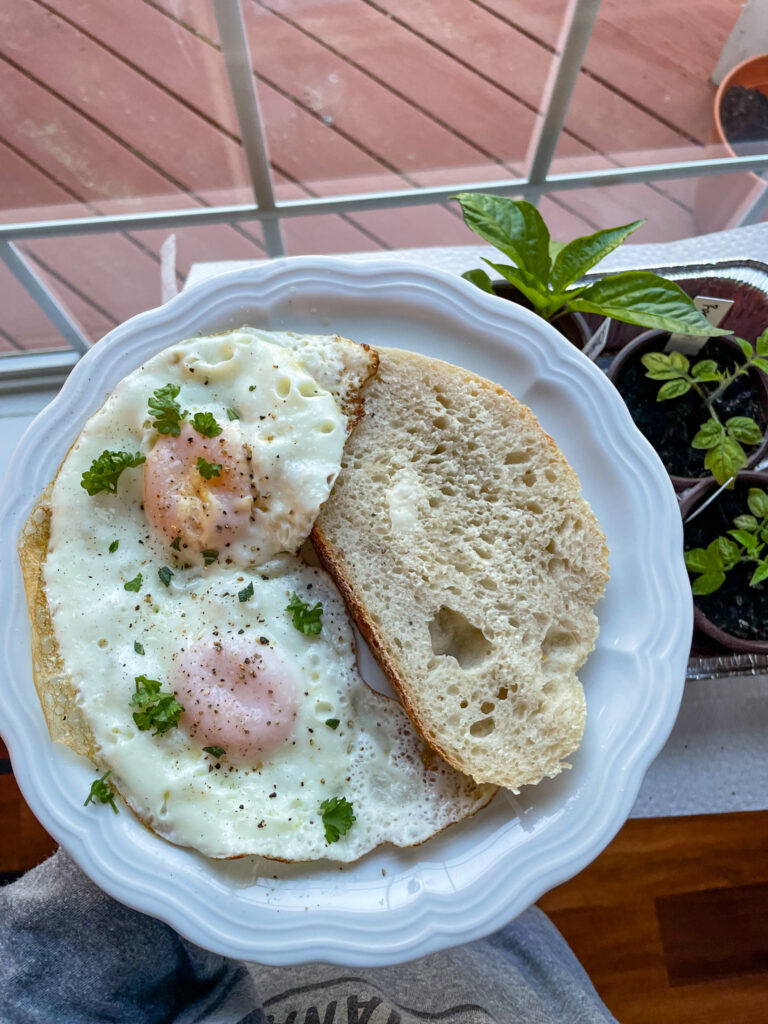
Eggs cooked over medium have a soft yolk and firm white. They taste great on their own. You can also serve them with many sides to make a full meal.
Choosing the right sides and presentation can make your eggs more enjoyable. This guide helps you find good pairings and ways to serve eggs over medium.
Pairing With Sides
Eggs over medium go well with many classic and fresh sides. Pick sides that add texture and flavor to your plate.
- Toast or crusty bread to soak up the yolk
- Fresh fruit like berries or orange slices for sweetness
- Crispy bacon or sausage for a savory touch
- Avocado slices for creaminess and healthy fats
- Light salad with greens and vinaigrette for freshness
Presentation Ideas
Serving eggs over medium can be simple or creative. Presentation makes the meal look inviting and tasty.
| Presentation Style | Description | Tip |
| Classic Plate | Eggs with toast and bacon | Use a white plate for contrast |
| Open Sandwich | Eggs on toasted bread with avocado | Add a sprinkle of chili flakes |
| Breakfast Bowl | Eggs with salad and fruit | Arrange ingredients in sections |
| Stacked Style | Eggs on top of hash browns or veggies | Use a ring mold to shape sides |
Troubleshooting Common Issues
Cooking eggs over medium can be tricky. Many cooks face problems like overcooking or eggs sticking to the pan.
This guide helps you fix these common issues. You will learn how to keep eggs tender and easy to flip.
Avoiding Overcooking
Overcooked eggs become rubbery and dry. It ruins their soft texture and taste.
- Use medium heat to cook eggs slowly and evenly.
- Watch the eggs closely; remove them as soon as whites are set but yolks still jiggle.
- Flip the eggs gently to avoid breaking yolks.
- Turn off heat just before eggs look fully cooked; residual heat will finish cooking.
- Practice timing to get the perfect over medium eggs.
Dealing With Stickiness
Eggs can stick when the pan is too hot or not greased well. This makes flipping hard and breaks the eggs.
| Cause | Solution |
| Pan too hot | Lower the heat to medium or medium-low |
| No oil or butter | Add a small amount of butter or oil before cooking |
| Using old or damaged pan | Use a non-stick or well-seasoned pan |
| Flipping too soon | Wait until edges set before flipping |
Credit: www.ahealthysliceoflife.com
Frequently Asked Questions
How Long To Cook Eggs Over Medium?
Cook eggs over medium for about 3-4 minutes. Flip gently after whites set but yolks are still soft. This timing creates a firm white with a slightly runny yolk.
What Temperature Is Best For Over Medium Eggs?
Use medium to medium-low heat for over medium eggs. Too high heat can burn whites and undercook yolks. Moderate heat ensures even cooking without toughening the eggs.
How To Flip Eggs Without Breaking Yolks?
Use a thin, flexible spatula to gently lift eggs. Slide spatula fully under the egg before flipping carefully. This technique keeps yolks intact while cooking evenly.
Can I Cook Over Medium Eggs Without Oil?
Yes, use a non-stick pan or butter for cooking. Avoid sticking by heating the pan first. Cooking without oil needs careful temperature control to prevent sticking.
Conclusion
Cooking eggs over medium is simple with the right steps. Keep the heat low and watch the yolk carefully. Use fresh eggs for the best taste and texture. Practice makes perfect, so try often and adjust to your liking. Enjoy a delicious, balanced egg every time.
Eggs over medium add variety to your meals and boost protein intake. Give these tips a try and enjoy your cooking journey.