
Dealing with a clogged grease trap can be frustrating and messy. But did you know that regular cleaning can save you from costly repairs and unpleasant odors?
If you want to keep your kitchen running smoothly and avoid unexpected problems, learning the right tips for cleaning grease traps is essential. You’ll discover easy steps and smart tricks that anyone can follow. Ready to make grease trap maintenance simple and hassle-free?
Let’s dive in!
Importance Of Regular Grease Trap Maintenance
Grease traps catch fats, oils, and grease before they enter the sewer system. Regular cleaning keeps them working well.
Without proper care, grease traps can clog pipes and cause bad smells. This can lead to expensive repairs.
Prevents Blockages And Overflows
Grease builds up over time and can block pipes. This causes water to back up and flood kitchens or drains.
- Regular cleaning removes grease deposits
- Prevents pipe clogs and backups
- Reduces risk of costly water damage
Protects The Environment
Grease that escapes into sewers harms water quality. Cleaning traps stops grease from polluting rivers and lakes.
| Maintenance Action | Environmental Benefit |
|---|---|
| Regular grease trap cleaning | Reduces water pollution |
| Proper grease disposal | Protects aquatic life |
| Routine inspections | Prevents sewer blockages |
Extends Equipment Life
Grease traps work better longer if cleaned often. This stops damage and keeps equipment safe.
Ignoring maintenance can cause parts to wear out fast. Replacing these parts costs more money.
Ensures Compliance With Health Codes
Many local laws require grease trap cleaning. Following these rules avoids fines and business closures.
- Keep cleaning records for inspections
- Follow recommended cleaning schedules
- Hire professionals if needed
Credit: johnsewer.com
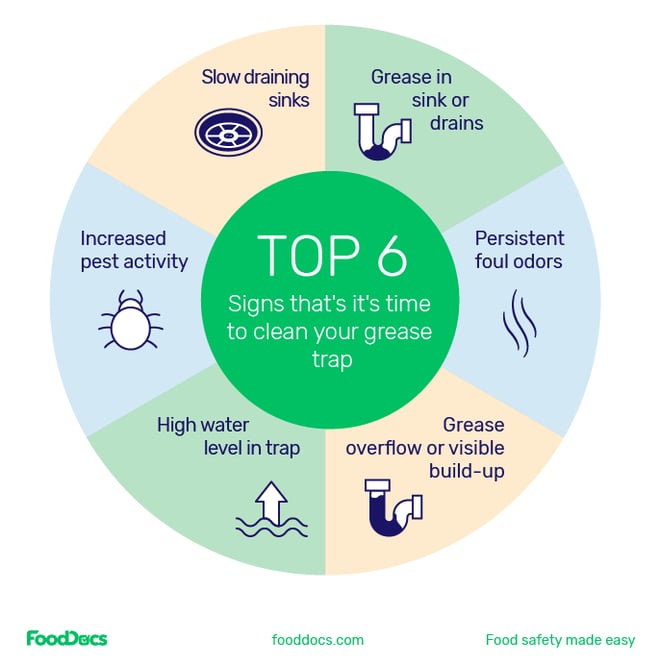
Signs Your Grease Trap Needs Cleaning
Grease traps collect fats, oils, and grease from kitchen wastewater. Over time, these substances build up and block the system. Knowing the signs helps avoid costly repairs and bad odors.
Regular checks keep your grease trap working well. Watch for these common signals that cleaning is needed soon.
Slow Draining Sinks
If water drains slowly from kitchen sinks, the grease trap may be clogged. Grease buildup blocks pipes and slows flow. This is an early sign that cleaning is required.
Unpleasant Odors
Foul smells around sinks or drains often mean trapped grease is decomposing. These odors signal a full or dirty grease trap that needs attention.
Grease Overflow
Visible grease on the floor or around the trap shows overflow. This happens when the trap cannot hold more grease and must be cleaned immediately.
Frequent Backups
Backups in kitchen drains cause water to rise or spill. This means the grease trap is blocked and needs prompt cleaning to prevent damage.
Scheduled Maintenance Indicators
Many grease traps have a recommended cleaning schedule. Following this schedule helps avoid signs of problems before they appear.
- Check manufacturer’s guidelines for cleaning frequency
- Set reminders to inspect the trap regularly
- Keep cleaning records to track maintenance
Visual Inspection Results
| Condition | What It Means |
|---|---|
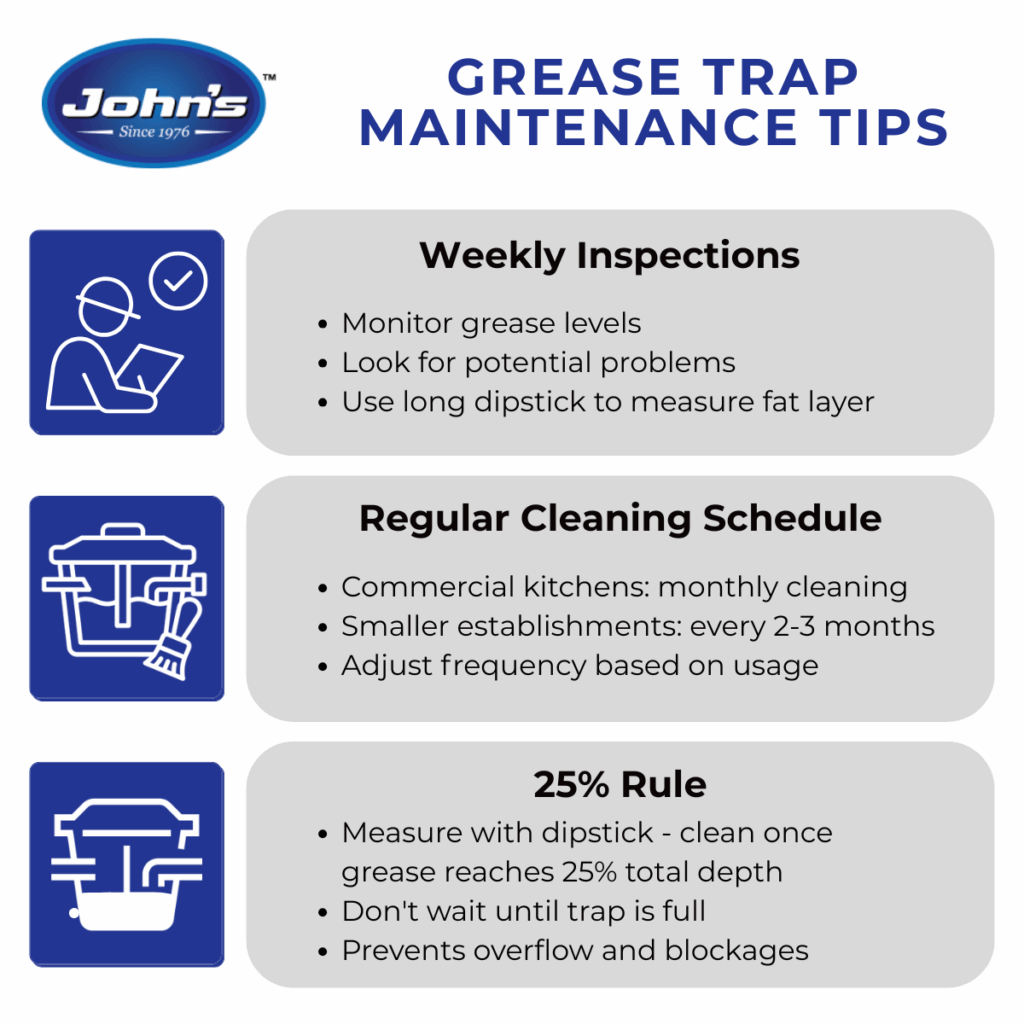
| More than 25% full of grease | Time to clean the trap |
| Grease layer is thick and solid | Trap is clogged and inefficient |
| Trap walls coated with residue | Needs thorough cleaning |
Essential Tools And Supplies
Cleaning grease traps needs the right tools and supplies. Using proper items makes the job easier and safer.
These tools help remove grease and keep the trap working well. You can clean traps faster with the right supplies.
Protective Gloves
Grease traps hold dirty water and grease. Gloves protect your hands from germs and chemicals.
Use heavy-duty gloves that resist water and grease. They keep your hands clean and safe during cleaning.
Scraper Or Putty Knife
A scraper helps remove thick grease layers stuck inside the trap. It loosens grease for easier removal.
Choose a sturdy scraper with a comfortable handle. This tool makes cleaning faster and more effective.
Bucket Or Container
You need a bucket to hold grease and debris removed from the trap. This keeps your area clean.
Use a container with a lid to prevent spills. It helps with safe disposal of waste materials.
Brush Or Scrub Pad
A brush helps scrub the grease trap walls and parts. It removes stuck grease and dirt.
Choose a stiff brush or scrub pad. It cleans hard-to-reach areas inside the trap well.
Cleaning Solution
Use a safe cleaning solution to break down grease and remove odors. It helps sanitize the trap.
Choose solutions made for grease trap cleaning. Avoid harsh chemicals that can damage pipes.
Credit: www.fooddocs.com
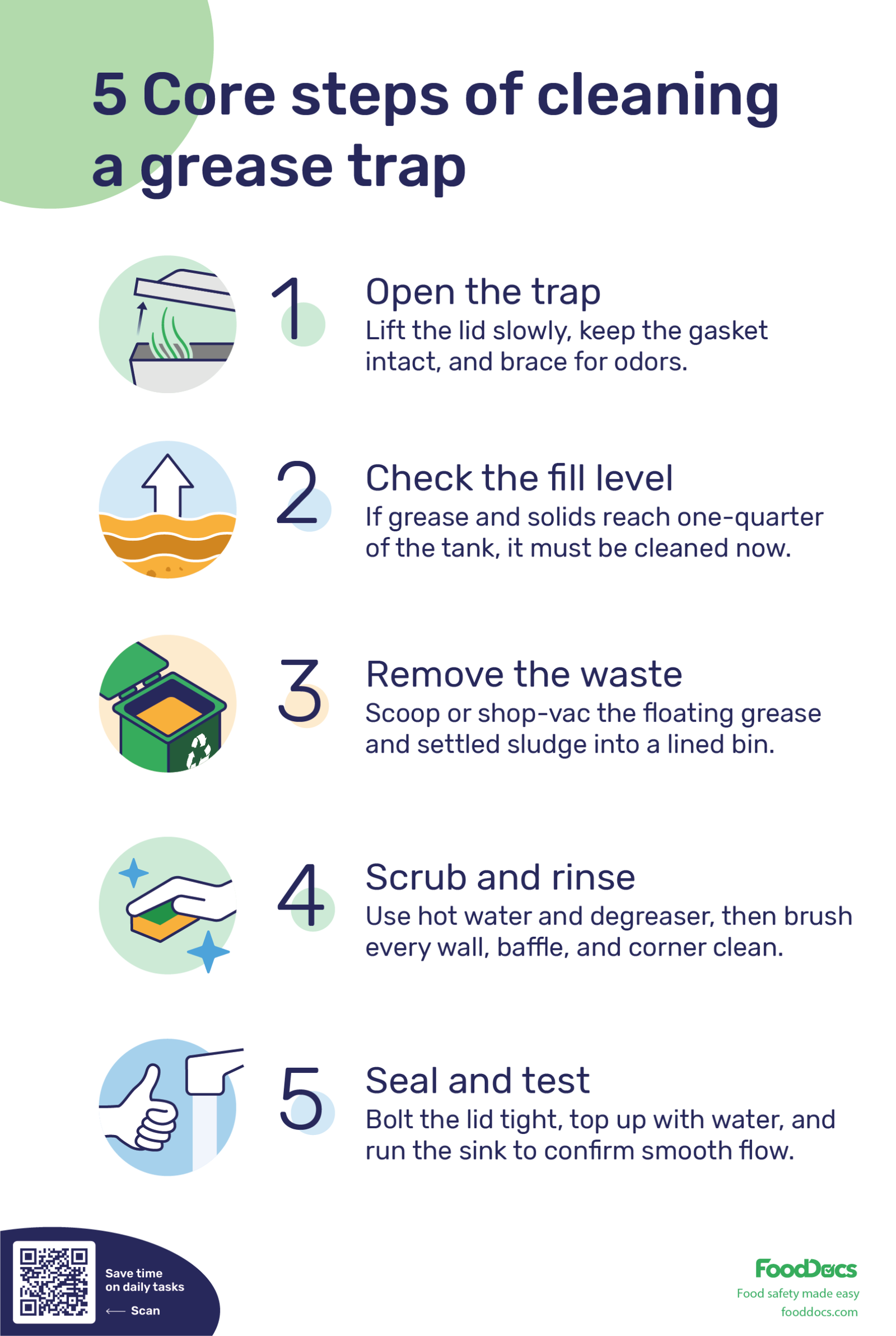
Step-by-step Cleaning Process
Cleaning grease traps is important to keep your kitchen running well. Grease traps stop fats and oils from clogging pipes.
Follow these steps to clean a grease trap safely and effectively. This will help avoid bad smells and blockages.
Preparation And Safety Measures
Before you start cleaning, gather all the tools you need. Wear gloves and safety glasses to protect yourself.
Make sure the area is well ventilated. Turn off any electrical equipment near the grease trap to avoid accidents.
- Wear rubber gloves and eye protection
- Have a bucket and scraper ready
- Keep cleaning cloths nearby
- Ensure good air flow in the workspace
- Turn off nearby electrical devices
Removing Grease And Solids
Open the grease trap lid carefully. Use a scoop or a small shovel to remove floating grease and solids.
Place the waste into a sealable container. Do not pour grease down the drain or into the sink.
- Open the trap lid slowly
- Scoop out the grease and solids
- Put waste in a secure container
- Do not dump grease in sinks
Scrubbing And Sanitizing
Scrub the inside walls of the trap with a stiff brush. Use warm water and a mild detergent to clean well.
Rinse the trap with clean water. After scrubbing, apply a sanitizer safe for kitchen use to kill germs.
- Use a brush with firm bristles
- Clean with warm water and detergent
- Rinse thoroughly with clean water
- Apply a kitchen-safe sanitizer
Proper Disposal Of Waste
Dispose of the grease and solids according to local rules. Many places require special grease waste collection.
Never pour grease into drains or on the ground. Use approved containers and labels for safe transport.
- Check local waste disposal laws
- Use approved containers for grease waste
- Label containers clearly
- Do not pour grease into drains
- Take waste to authorized disposal sites
Common Mistakes To Avoid
Cleaning grease traps is important for kitchen safety and hygiene. Many people make errors that cause blockages or damage.
Avoiding common mistakes can save money and keep your grease trap working well for a long time.
Ignoring Regular Cleaning Schedule
One major mistake is not cleaning the grease trap often enough. Grease builds up quickly and blocks pipes.
Using Harsh Chemicals
Some people use strong chemicals to clean traps. These can harm the trap and the environment.
Incorrect Removal Of Grease
Removing grease the wrong way can cause leaks or spills. Always follow safe removal steps.
- Wear protective gloves and clothes
- Use proper tools like scrapers and buckets
- Dispose of grease in approved containers
- Never pour grease down drains or toilets
Neglecting Trap Inspection
People often forget to check traps for cracks or damage. Small problems can grow and cause costly repairs.
| Common Problem | Effect | Solution |
| Grease buildup | Clogs pipes | Clean trap regularly |
| Using chemicals | Trap damage | Use natural cleaners |
| Improper grease disposal | Leaks and spills | Follow safe removal |
| Ignoring damage | Costly repairs | Inspect trap often |
Natural Cleaning Alternatives
Cleaning grease traps without chemicals helps protect the environment. Natural methods are safer for your pipes and surrounding areas.
These natural options break down grease and reduce odors. They keep your grease trap working well without harsh products.
Using Baking Soda And Vinegar
Baking soda and vinegar create a natural reaction that helps dissolve grease. This combination cleans the trap gently but effectively.
Pour half a cup of baking soda into the trap. Follow with one cup of white vinegar. Let it sit for 15 minutes, then flush with hot water.
Lemon Juice As A Deodorizer
Lemon juice cuts through grease and leaves a fresh scent. It works well to remove odors from your grease trap naturally.
Mix lemon juice with warm water and pour it into the trap. Let it sit for 10 minutes before rinsing. This also helps break down fats.
Enzyme Cleaners
Natural enzymes eat away grease and organic waste. Enzyme cleaners are safe and boost the cleaning process without chemicals.
- Look for enzyme-based products made from natural sources.
- Use regularly to prevent grease buildup.
- Follow product instructions for best results.
Hot Water Flush
Flushing with hot water helps melt and move grease inside the trap. It is a simple way to keep the trap cleaner between deep cleans.
| Method | How It Works | Benefits |
| Baking Soda and Vinegar | Cleans and dissolves grease | Safe and easy to use |
| Lemon Juice | Deodorizes and breaks down fats | Natural scent, non-toxic |
| Enzyme Cleaners | Digest grease and waste | Eco-friendly and effective |
| Hot Water Flush | Melts grease for easier removal | Simple and chemical-free |
Benefits Of Professional Cleaning Services
Cleaning grease traps is important for kitchens and restaurants. Grease traps stop fats and oils from clogging pipes. Professional cleaning keeps these traps working well.
Experts use the right tools and methods to clean grease traps safely. They save time and prevent damage to the system. Here are key benefits of using professional cleaning services.
Improved Efficiency Of Grease Traps
Professional cleaners remove all buildup inside grease traps. This makes the trap work better. Clean traps reduce the risk of blockages and backups in pipes.
Compliance With Health And Safety Rules
Experts know local health codes for grease trap cleaning. They ensure traps meet all safety standards. This helps businesses avoid fines and closures.
Time And Cost Savings
Cleaning grease traps takes skill and time. Professional service saves business owners from doing it themselves. It also lowers repair costs by preventing damage.
- Quick and thorough cleaning
- Regular maintenance plans
- Prevention of costly repairs
- Proper disposal of waste
Use Of Specialized Equipment
Professional cleaners have tools made for grease trap cleaning. They remove grease without harming the system. This leads to longer trap life and better performance.
| Equipment | Purpose |
| Vacuum Trucks | Remove solid waste and liquids |
| High-Pressure Water Jets | Clean pipes and trap walls |
| Inspection Cameras | Check trap condition inside |
Preventive Measures For Longer Lasting Traps
Grease traps need regular care to work well for a long time. Preventive steps help avoid clogs and damage. Knowing what to do can save money and time.
Simple daily habits keep grease traps clean and efficient. Follow these tips to protect your system and keep it running smoothly.
Regular Cleaning Schedule
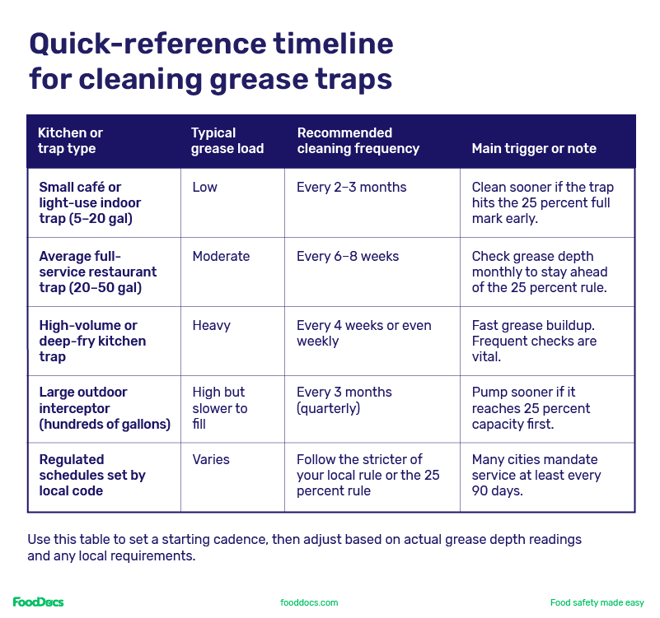
Clean your grease trap at set times to stop grease build-up. This stops blockages and keeps water flowing well.
- Check trap every 1 to 3 months
- Remove grease and solids carefully
- Use professional help if needed
Proper Disposal Of Grease
Never pour grease or oil down drains. This causes clogs and harms the trap. Collect grease in containers for disposal.
Use Of Hot Water And Detergents
Hot water helps move grease but avoid too much. Use mild detergents to break grease gently without harming trap parts.
Monitor Trap Condition
| Check Area | What to Look For | Action Needed |
| Trap Lid | Cracks or Damage | Replace or Repair |
| Grease Level | Above Recommended Mark | Clean Trap |
| Drain Flow | Slow or Blocked | Inspect and Clear |
Educate Staff And Users
Train everyone who uses the kitchen on what can and cannot go into the drain. Clear rules prevent mistakes that harm the grease trap.
- Do not pour fats or oils down sinks
- Scrape food waste into trash bins
- Report any leaks or slow drains
Credit: www.fooddocs.com
Frequently Asked Questions
How Often Should I Clean My Grease Trap?
Grease traps should be cleaned every 1 to 3 months. Frequency depends on trap size and kitchen usage. Regular cleaning prevents blockages and foul odors. Consistent maintenance improves kitchen hygiene and plumbing efficiency.
What Tools Are Needed For Cleaning Grease Traps?
Essential tools include gloves, scraper, bucket, and a hose. A pump or vacuum may be needed for larger traps. Proper tools ensure safe and effective grease removal. Using the right equipment speeds up the cleaning process.
Can I Use Chemicals To Clean Grease Traps?
Yes, but use eco-friendly, enzyme-based cleaners. Avoid harsh chemicals that harm pipes and the environment. Natural cleaners break down grease safely and maintain trap efficiency. Always follow product instructions for best results.
Why Is Regular Grease Trap Cleaning Important?
Regular cleaning prevents grease buildup that clogs pipes and drains. It reduces foul odors and pest attraction. Maintaining a clean trap ensures compliance with health regulations. It also extends the lifespan of your plumbing system.
Conclusion
Cleaning grease traps regularly keeps kitchens safe and running well. It stops clogs and bad smells from building up. Simple steps can save money and time on repairs. Check traps often and clean them carefully. This helps protect pipes and the environment too.
Small efforts make a big difference in kitchen hygiene. Stay consistent and your grease trap will work better longer.