
Are you tired of stubborn stains and unpleasant odors ruining your carpet? What if the solution is already sitting in your kitchen?
Cleaning carpets with vinegar is a simple, natural, and budget-friendly way to bring new life to your floors. You’ll discover easy tips that make your carpet look fresh and smell amazing—without harsh chemicals. Keep reading, and you’ll learn how to tackle dirt and spills like a pro, saving time and money while protecting your home.
Benefits Of Using Vinegar
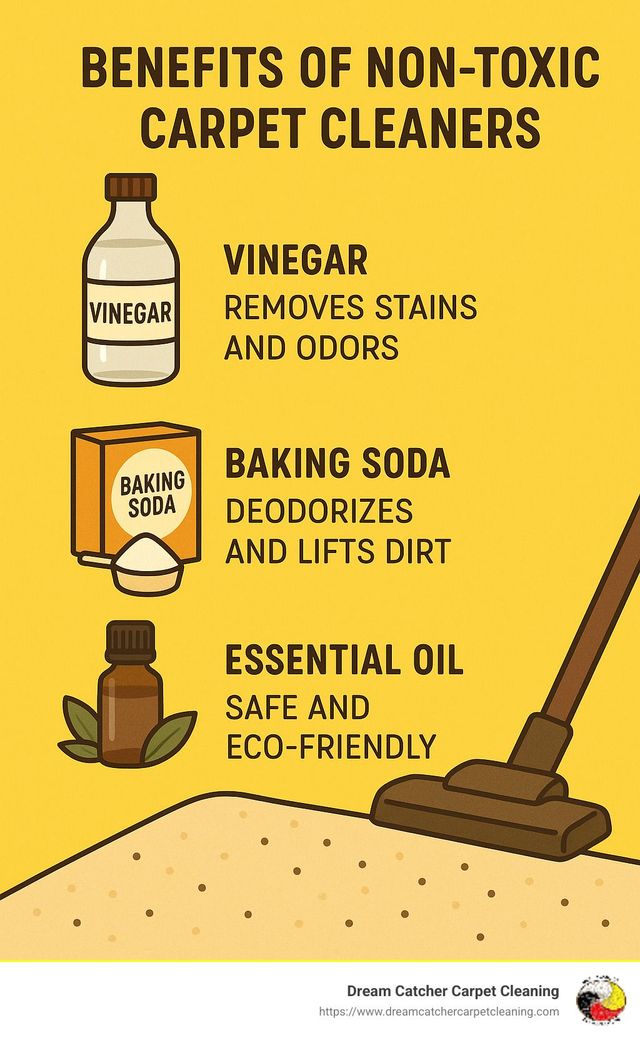
Vinegar is a natural and safe cleaning agent for carpets. It removes stains and odors effectively.
Many people prefer vinegar because it is affordable and easy to find in stores.
Natural And Non-toxic Cleaner
Vinegar contains acetic acid, which helps break down dirt and grime. It cleans without harmful chemicals.
Deodorizes Carpets
Vinegar neutralizes bad smells in carpets. It removes odors caused by pets, smoke, and spills.
Cost-effective Cleaning Solution
- Vinegar is cheaper than many commercial carpet cleaners.
- One bottle can last for many cleaning sessions.
- It reduces the need for buying multiple cleaning products.
Kills Bacteria And Mold
Vinegar has antibacterial and antifungal properties. It helps keep carpets hygienic and fresh.
Safe For Most Carpet Types
| Carpet Material | Safe to Use Vinegar |
| Wool | Use diluted vinegar carefully |
| Nylon | Safe with no damage |
| Polyester | Safe and effective |
| Acrylic | Use diluted vinegar |

Credit: deepsteamcleaner.uk
Choosing The Right Vinegar
Cleaning carpets with vinegar is a simple and natural method. Choosing the right vinegar helps protect your carpet fibers. This guide explains how to pick the best vinegar for your cleaning needs.
Not all vinegars work the same way on carpets. Some types clean better, while others may cause damage. Learn about the common vinegars used for carpet cleaning below.
White Distilled Vinegar
White distilled vinegar is clear and has a strong acidity. It removes stains and odors well. It is safe for most carpet types if diluted properly.
Apple Cider Vinegar
Apple cider vinegar has a brownish color and a mild smell. It works as a deodorizer but can leave slight stains on light carpets. Test it on a small spot first.
Cleaning Vinegar
Cleaning vinegar is stronger than white vinegar. It cleans tough stains but may harm delicate fibers. Use it only on durable carpets and always dilute it well.
Vinegar Strength And Dilution
Vinegar strength is measured by acidity. Higher acidity means stronger cleaning but higher risk of damage. Dilution helps balance cleaning power and safety.
| Vinegar Type | Acidity Level | Recommended Dilution |
| White Distilled Vinegar | 5% | 1 part vinegar to 1 part water |
| Apple Cider Vinegar | 5% | 1 part vinegar to 2 parts water |
| Cleaning Vinegar | 6% | 1 part vinegar to 3 parts water |
Avoid Colored Or Flavored Vinegars
Colored or flavored vinegars may stain carpets. They contain dyes or added ingredients. Always choose clear, plain vinegar for cleaning carpets.
Test Vinegar On A Small Area
Before cleaning, test vinegar on a hidden carpet spot. Wait 24 hours to check for color changes or damage.
- Apply diluted vinegar with a cloth.
- Let it dry completely.
- Look for fading or texture changes.
- If safe, proceed to clean the whole carpet.
Preparing The Carpet
Cleaning your carpet with vinegar starts with good preparation. This makes the process easier and more effective.
Before applying vinegar, you need to clear the area and remove dust and dirt. These steps help vinegar reach the carpet fibers better.
Clearing The Area
Take out all furniture and items from the carpeted space. This gives you full access to clean every spot.
- Move chairs, tables, and other furniture
- Pick up toys, rugs, and loose items
- Check corners and under furniture for small objects
- Keep the area well-lit for easier cleaning
Vacuuming Thoroughly
Vacuum the carpet carefully to remove dust and dirt. This step prepares the fibers to absorb the vinegar solution.
| Vacuuming Tips | Reason |
|---|---|
| Use a vacuum with strong suction | Removes deep dirt and debris |
| Go over the carpet slowly | Ensures thorough cleaning |
| Vacuum multiple times in different directions | Lifts dirt from all angles |
| Empty the vacuum bag or bin before use | Improves vacuum performance |
Mixing The Vinegar Solution
Cleaning carpets with vinegar is a natural and effective method. Mixing the right solution helps remove stains and odors safely.
Using the correct vinegar and water ratio ensures the solution is strong enough to clean but gentle on carpet fibers.
Vinegar And Water Ratio
Mix vinegar with water carefully to avoid damaging the carpet. The usual ratio is one part vinegar to two parts water.
- Pour 1 cup of white vinegar into a bowl or spray bottle.
- Add 2 cups of warm water to the vinegar.
- Stir or shake the mixture well to blend.
- Test on a small carpet area before full use.
Optional Additives For Scent
You can add natural scents to the vinegar solution to leave a fresh smell on your carpet.
| Additive | Amount | Effect |
|---|---|---|
| Essential oil (lavender, lemon, tea tree) | 5 to 10 drops | Gives a pleasant aroma and antibacterial properties |
| Baking soda | 2 tablespoons | Helps absorb odors and boost cleaning power |
| Liquid castile soap | 1 teaspoon | Adds gentle cleaning strength |
Spot Cleaning Techniques
Cleaning carpet stains with vinegar is simple and effective. Spot cleaning helps remove small stains quickly.
Using the right techniques prevents damage and keeps carpets looking fresh. Focus on gentle cleaning steps.
Blotting Stains
Blot the stain with a clean cloth to soak up liquid. Press gently without rubbing to avoid spreading.
Apply a vinegar solution on the stain and blot again. Repeat until the stain lifts from the carpet fibers.
- Use white vinegar mixed with water for best results
- Always blot from outside to inside the stain
- Use clean cloths to avoid pushing dirt back
- Pat gently to avoid damaging fibers
Avoiding Scrubbing
Do not scrub stains as this can damage carpet fibers. Scrubbing may spread the stain and make it worse.
Use gentle blotting and let the vinegar solution work. Patience helps clean stains without harm.
- Scrubbing can push stains deeper into carpet
- Blotting lifts stains without fiber damage
- Let vinegar sit for a few minutes before blotting
- Use soft cloths or paper towels only
Deep Cleaning Methods
Cleaning carpets with vinegar is a natural way to remove dirt and stains. Deep cleaning helps keep carpets fresh and healthy.
Using vinegar breaks down grime and kills bacteria in your carpet fibers. It works well for tough stains and odors.
Using A Spray Bottle
Fill a spray bottle with a mix of equal parts water and white vinegar. Spray the solution evenly over the carpet surface.
Let the vinegar sit for 10 to 15 minutes. This time helps break down dirt deep inside the fibers.
- Test a small area first to check for color changes
- Spray lightly to avoid soaking the carpet
- Use a brush to gently scrub tough spots
- Blot with a clean cloth to remove excess moisture
Applying With A Cloth
Dip a clean cloth in a vinegar and water mixture. Press the cloth onto stained areas and gently rub in circular motions.
This method lets you focus on small spots without wetting the whole carpet. It is good for delicate or older carpets.
- Use a soft cloth to avoid damaging fibers
- Apply the solution carefully to problem areas
- Blot dry with a dry cloth after cleaning
- Repeat if stains remain, but avoid over-wetting
Drying And Ventilation
Cleaning carpets with vinegar is a natural and safe way to remove stains. After cleaning, drying and ventilation are very important. Proper drying keeps your carpet fresh and prevents damage.
Good airflow helps the carpet dry faster. It also stops moisture from staying in the fibers, which can cause problems.
Importance Of Air Circulation
Air circulation moves dry air over the carpet surface. This speeds up the drying process. Without good airflow, carpets stay wet longer.
You can improve air circulation by opening windows and doors. Use fans to help move the air around the room. This keeps the carpet dry and fresh.
- Open windows to let fresh air in
- Use fans to increase airflow
- Avoid closing doors in the room
- Keep air vents clear and clean
Preventing Mold And Mildew
Mold and mildew grow in damp places. Wet carpets can become a perfect home for these fungi. They cause bad smells and can harm your health.
Dry your carpet quickly after cleaning with vinegar. Keep the room ventilated and check the carpet often for damp spots. Act fast if you see any signs of mold.
- Dry the carpet within 24 hours after cleaning
- Use a dehumidifier in humid rooms
- Check corners and under furniture for moisture
- Remove any mold spots with vinegar or cleaner
Maintaining Carpet Freshness
Carpets can hold dust, dirt, and odors. Keeping them fresh needs regular care.
Using natural cleaners like vinegar helps clean and freshen carpets safely.
Regular Cleaning Schedule
Clean your carpets often to stop dirt build-up and bad smells. Vacuum at least twice a week.
Use a vinegar solution to spot clean stains quickly. This stops odors from settling in.
- Vacuum carpets twice a week
- Spot clean spills immediately with vinegar mix
- Deep clean with vinegar solution once a month
Using Baking Soda
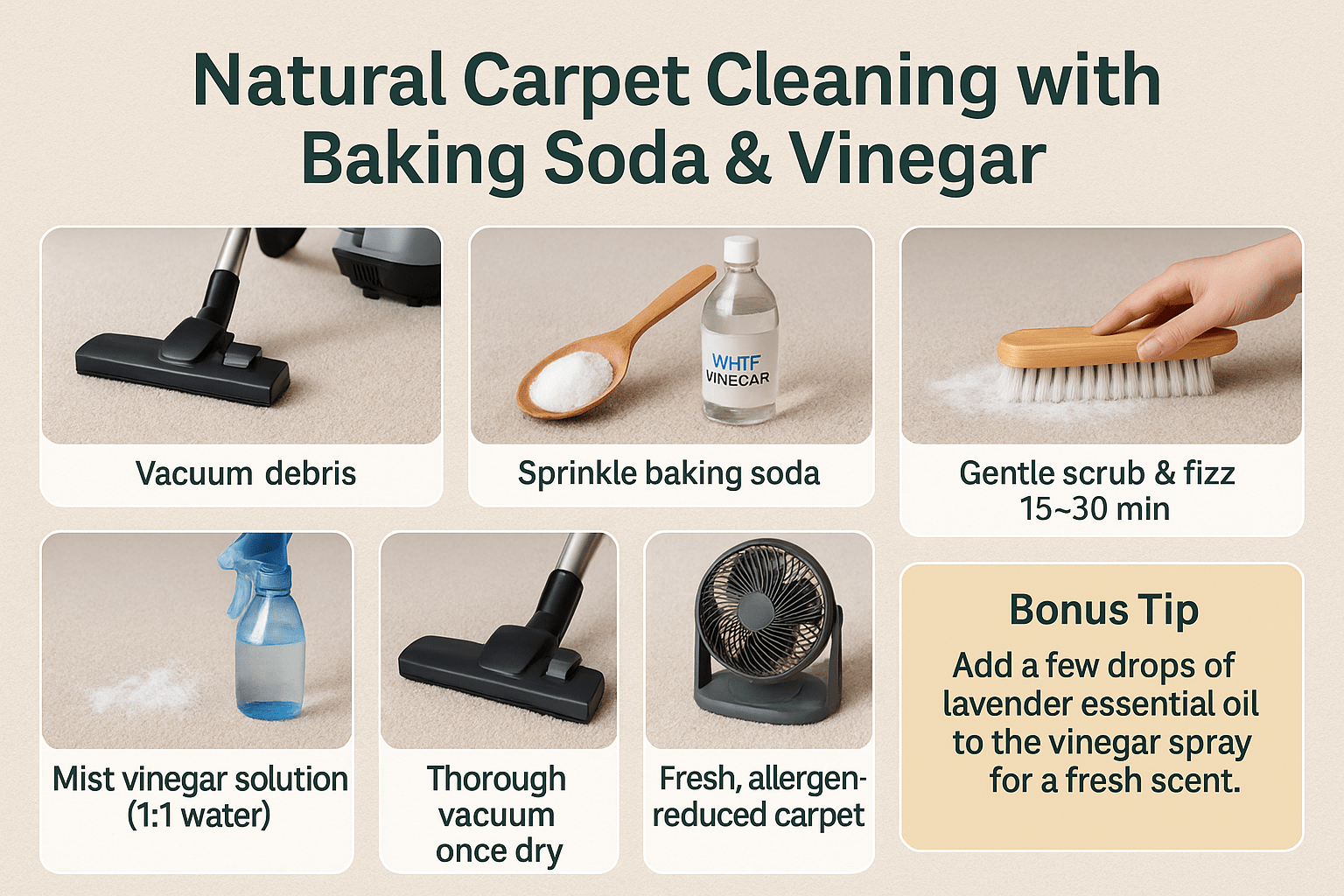
Baking soda helps absorb smells and freshen carpets naturally. Sprinkle it before vacuuming.
Mix baking soda with a few drops of vinegar for tough odors. Let it sit before vacuuming well.
- Sprinkle baking soda on carpet surface
- For strong odors, add a little vinegar
- Let mixture sit for 15 to 30 minutes
- Vacuum thoroughly to remove baking soda
Safety Precautions
Cleaning carpets with vinegar is a simple way to remove stains. Vinegar is natural but still needs careful use. Taking safety steps protects your carpet and health.
Some carpets may react badly to vinegar. Using vinegar too much can also cause damage. Follow safety tips to clean carpets safely and well.
Testing A Small Area
Always test vinegar on a small carpet spot first. This helps check if the carpet color changes or gets damaged. Pick a hidden area like under furniture.
Apply a little vinegar and wait 10 minutes. Look for any color fading or fabric damage. If the carpet looks fine, it is safe to clean the rest.
Avoiding Over-saturation
Do not soak the carpet with vinegar. Too much liquid can cause mold or damage the carpet backing. Use a spray bottle or a damp cloth instead.
After applying vinegar, dry the carpet quickly. Use fans or open windows to help air flow. This prevents moisture buildup and keeps carpets fresh.
Credit: www.dreamcatchercarpetcleaning.com

Credit: sanicarpetcleaner.com
Frequently Asked Questions
How Effective Is Vinegar For Carpet Cleaning?
Vinegar is a natural and effective cleaner for carpets. It removes stains, neutralizes odors, and kills some bacteria without harsh chemicals. Always dilute vinegar with water before use to protect carpet fibers and prevent damage.
Can Vinegar Damage My Carpet Fibers?
When used properly, vinegar does not damage carpet fibers. Always dilute it with water in a 1:1 ratio to reduce acidity. Test a small hidden area first to ensure no discoloration or damage occurs before cleaning larger spots.
How Do I Remove Carpet Odors With Vinegar?
Mix equal parts white vinegar and water in a spray bottle. Lightly mist the carpet and let it dry completely. Vinegar neutralizes odors without leaving a strong scent behind, refreshing your carpet naturally and safely.
Is Vinegar Safe For All Carpet Types?
Vinegar is generally safe for most carpets, including synthetic and wool blends. However, delicate or antique carpets may react poorly. Always test a small, hidden area first to avoid potential discoloration or damage.
Conclusion
Vinegar cleans carpets effectively and safely. It removes stains and odors without harsh chemicals. Mix vinegar with water for best results. Test on a small spot before full use. Use a soft brush to scrub gently. Let carpets dry fully to avoid mildew.
Regular cleaning keeps carpets fresh and healthy. Simple, natural, and affordable—vinegar is a smart choice. Give these tips a try for cleaner carpets today.