

Choosing the perfect kitchen faucet can feel overwhelming with so many styles and features available. But it doesn’t have to be complicated.
Your kitchen faucet is more than just a tool—it impacts your daily routine and the look of your entire kitchen. Imagine turning on your faucet and enjoying smooth water flow, easy cleaning, and a design that matches your space perfectly.
You’ll discover simple tips that make picking the right kitchen faucet easy and stress-free. Keep reading, and you’ll be confident in making a choice that fits both your needs and style.

Credit: faucetu.com
Types Of Kitchen Faucets
Choosing the right kitchen faucet can improve how your kitchen works. There are different styles to fit your needs and kitchen design.
Understanding the types helps you pick a faucet that is both useful and easy to use every day.
Single Handle Vs. Double Handle
Single handle faucets have one lever to control water flow and temperature. They are easy to use with one hand.
Double handle faucets have separate handles for hot and cold water. This lets you adjust temperature more precisely.
- Single handle: quick and simple to operate
- Double handle: better temperature control
- Single handle saves space on the sink
- Double handle fits traditional kitchen styles
Pull-down Vs. Pull-out
Pull-down faucets have a spray head that pulls down into the sink. They work well with deep sinks and tall pots.
Pull-out faucets have a spray head that pulls out toward you. They are good for washing dishes and cleaning around the sink.
- Pull-down: best for tall or deep sinks
- Pull-out: easier for close-up tasks
- Both types offer flexible spray options
- Choose based on your kitchen layout and use
Touchless And Touch-activated
Touchless faucets turn on with a sensor. They help keep your hands clean and reduce germs.
Touch-activated faucets turn on with a simple tap. They are easy to use when your hands are dirty or full.
- Touchless: uses motion sensors to start water flow
- Touch-activated: works by tapping the faucet body
- Both save water by turning off automatically
- Good for busy kitchens and hygiene
Credit: www.angi.com
Material And Finish Options
Choosing the right material and finish for your kitchen faucet is important. It affects the look and how long it lasts.
Different materials offer different strengths. The finish adds style and protects the faucet from damage.
Stainless Steel
Stainless steel is strong and resists rust well. It stays shiny and looks modern in any kitchen.
This material is easy to clean and does not show water spots easily. It fits many kitchen styles.
Brass And Bronze
Brass is a durable metal that resists corrosion. It often comes with a warm, golden look.
Bronze finishes offer a dark, rich color. They add a classic or rustic style to the kitchen.
- Brass is good for traditional kitchens
- Bronze hides fingerprints and water spots
- Both materials age well over time
Chrome And Matte Black
Chrome finishes shine bright and look very clean. They are easy to match with other fixtures.
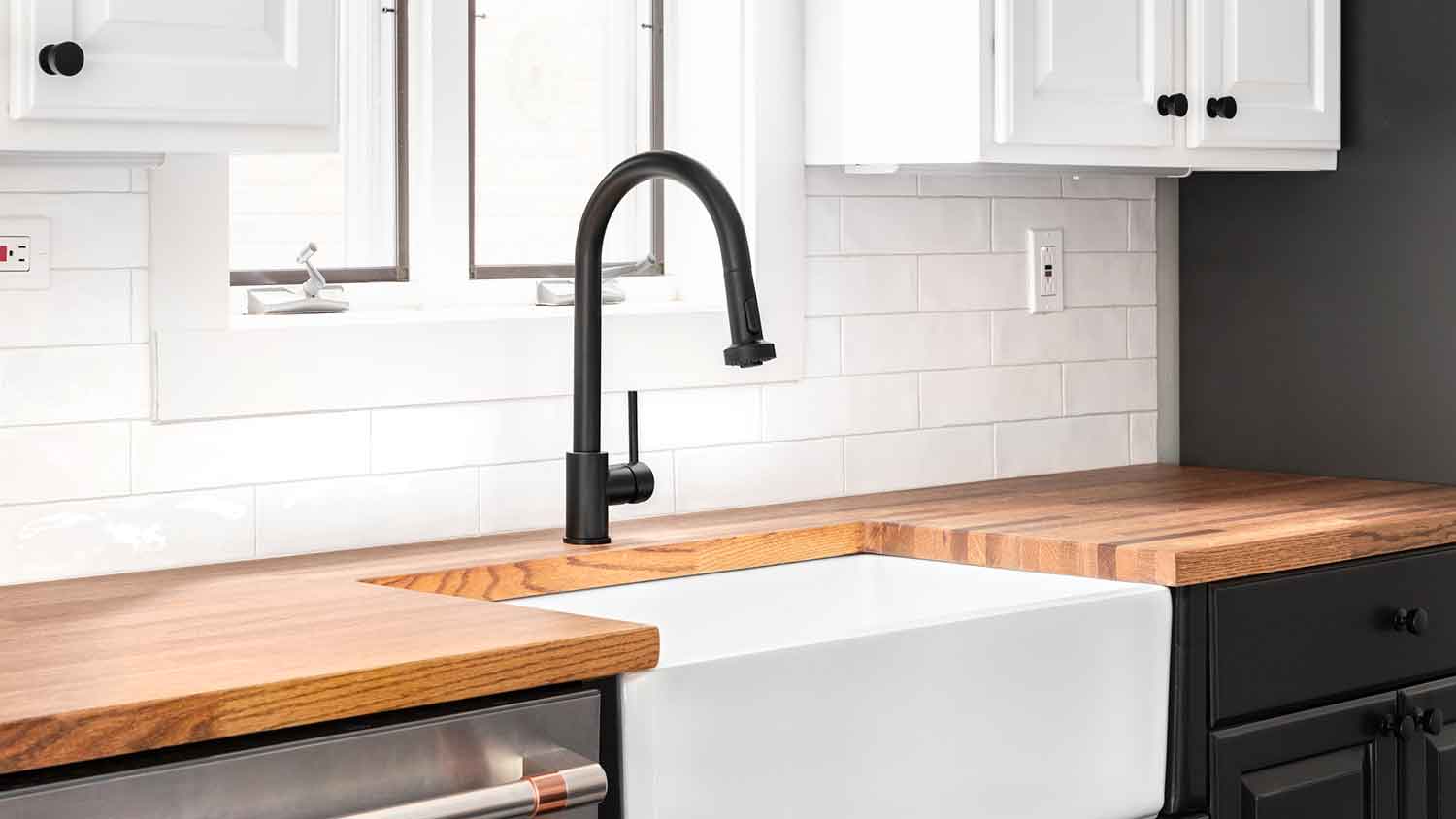
Matte black is a bold choice. It hides smudges and adds a modern touch to the kitchen.
- Chrome is reflective and classic
- Matte black offers a soft, non-reflective surface
- Both finishes are easy to clean
Functionality And Features
Choosing the right kitchen faucet means thinking about how it works. Look at the features that fit your needs.
Good functionality makes kitchen tasks easier and saves time.
Spray And Stream Functions
Many faucets offer both spray and stream options. A stream is steady and smooth for filling pots. A spray is strong and wide for cleaning dishes.
Switching between these modes helps with different kitchen jobs.
- Stream mode: good for filling containers
- Spray mode: great for rinsing food and dishes
- Some faucets have a pause button for water control
Temperature Control
Look for faucets with easy temperature control. A single handle lets you change hot and cold water fast.
Some faucets have touch or motion sensors to adjust temperature without touching handles. This keeps the faucet cleaner.
- Single-handle faucets adjust temperature and flow
- Dual-handle faucets give separate control for hot and cold
- Sensor faucets offer hands-free temperature control
Water Efficiency
Choose faucets that save water. Efficient faucets help reduce bills and protect the environment.
Look for models with aerators. They mix air with water to keep strong flow but use less water.
- Low-flow faucets use less water per minute
- Aerators keep water pressure while saving water
- WaterSense labeled faucets meet water efficiency standards
Compatibility With Sink And Countertop
Choosing the right kitchen faucet means it must fit your sink and countertop. Not all faucets work with every sink or counter setup.
Check the faucet’s size, holes, and mounting style. These details help you pick a faucet that fits well and works smoothly.
Mounting Styles
Faucets can mount on the sink or the countertop. The style depends on your kitchen design and sink type.
Common mounting styles include deck mount, wall mount, and undermount. Each style needs different space and support.
- Deck Mount:Installed on the sink or countertop surface.
- Wall Mount:Attached to the wall above the sink.
- Undermount:Mounted under the countertop for a clean look.
Number Of Holes
Count the holes in your sink or countertop before picking a faucet. Faucets fit only the number of holes available.
Common hole setups are one, two, three, or four holes. Each setup supports different faucet types and accessories.
- One-hole: Single handle faucet or pull-out sprayer.
- Two-hole: Faucet plus side sprayer or soap dispenser.
- Three-hole: Separate hot and cold handles with a spout.
- Four-hole: Extra features like sprayers and soap dispensers.
Size And Reach Considerations
Check the faucet’s height and spout reach. They must fit your sink size and use.
A faucet with a long reach works well with big sinks. Tall faucets offer more space but may splash water.
- Measure sink width and depth before buying.
- Choose a spout that reaches the center of the sink.
- Tall faucets fit deep pots but watch for splashing.
Budget Considerations
Choosing the right kitchen faucet depends a lot on your budget. It helps to know what you can spend before buying.
Think about how much you want to invest and what features matter most to you.
Cost Vs. Quality
Cheap faucets may look good but might break easily. Expensive ones usually last longer and work better.
Look for faucets that balance price with good materials and design.
- Low cost may mean less durability
- Mid-range often offers good quality and price
- High-end faucets have premium features and strong build
Long-term Investment
A kitchen faucet is used daily. Spending more now can save money later on repairs or replacements.
Choose faucets that are easy to fix and made with strong parts.
- Check if parts are easy to replace
- Consider water-saving models to cut bills
- Pick styles that match your kitchen for years
Warranty And Customer Support
A good warranty shows the maker trusts their product. It protects you if something goes wrong.
Customer support helps solve issues fast. Look for brands with clear warranty terms and good service.
- Check length and coverage of the warranty
- See if support is easy to reach
- Read reviews about the brand’s service
Design And Style Preferences
Choosing a kitchen faucet means thinking about design and style. Your faucet should match your kitchen’s look and feel.
Faucets come in many styles and finishes. Picking the right one makes your kitchen more attractive and functional.
Traditional Vs. Modern
Traditional faucets have classic shapes and details. They often feature curved spouts and ornate handles.
Modern faucets look sleek and simple. They have straight lines and smooth finishes that fit contemporary kitchens.
- Traditional: curved designs, vintage style, often bronze or brass
- Modern: clean lines, minimal details, often chrome or matte black
Color Coordination
Match your faucet color with other kitchen elements. This creates a balanced and pleasant look.
Popular faucet colors include chrome, brushed nickel, and matte black. Choose one that fits your cabinets and countertops.
- Chrome matches well with white or light-colored kitchens
- Brushed nickel blends with stainless steel appliances
- Matte black adds contrast in bright or white kitchens
Matching Accessories
Pick faucet accessories that fit your faucet style. These include soap dispensers and spray hoses.
Using matching accessories gives your kitchen a polished and unified look.
- Choose soap dispensers in the same finish as the faucet
- Look for spray hoses that blend with the faucet design
- Use matching handles or knobs on cabinets if possible
Installation Tips
Choosing the right kitchen faucet is important, but installing it correctly matters too. Good installation ensures your faucet works well and lasts longer.
This guide covers key points to consider during installation. It helps you decide between doing it yourself or hiring a professional.
Diy Vs. Professional Installation
Installing a kitchen faucet yourself can save money. It works well if you have basic tools and skills.
Professionals have experience and special tools. They fix problems faster and avoid leaks.
- DIY installation suits simple faucet models.
- Hire a professional for complex plumbing or old pipes.
- Professional work may cost more but reduces risks.
- DIY may take longer and need careful reading of instructions.
Common Installation Mistakes
Many people make simple errors when installing faucets. These mistakes cause leaks, poor water flow, or damage.
Knowing these common errors helps you avoid them and get a smooth installation.
- Not turning off the water supply before starting.
- Forgetting to use plumber’s tape on threaded connections.
- Over-tightening fittings, which can crack parts.
- Ignoring the instructions specific to your faucet model.
- Not checking for leaks after installation.
Necessary Tools And Equipment
Having the right tools makes faucet installation easier. Most tools are common in home toolkits.
Prepare these tools before you begin the installation process.
- Adjustable wrench for tightening nuts and bolts.
- Screwdrivers (flathead and Phillips) for screws.
- Plumber’s tape (Teflon tape) to seal threaded joints.
- Basin wrench to reach hard spots under the sink.
- Bucket or towel to catch water drips.
- Flashlight to see in dark cabinet areas.
:max_bytes(150000):strip_icc()/spr-delta-daneri-single-handle-pull-out-kitchen-faucet-kelsey-hansen-28-92785a2c83f64667a9188ddcfb5c3e94.jpeg)
Credit: www.thespruce.com
Frequently Asked Questions
What Factors Should I Consider When Choosing A Kitchen Faucet?
Consider style, finish, spout height, and handle type. Also, check water flow rate and compatibility with your sink and plumbing.
How Do I Pick A Durable Kitchen Faucet?
Choose faucets made from solid brass or stainless steel. Look for ceramic disc valves for long-lasting performance and leak resistance.
Which Kitchen Faucet Finish Is Easiest To Maintain?
Matte finishes like brushed nickel or stainless steel hide fingerprints and water spots better than shiny chrome surfaces.
Should I Choose A Single Or Double Handle Faucet?
Single-handle faucets offer easier temperature control. Double handles provide precise hot and cold water adjustment but take more space.
Conclusion
Choosing the right kitchen faucet makes daily tasks easier and more enjoyable. Focus on style, function, and quality to fit your needs. Think about how often you cook and clean. Consider water-saving options to lower bills. Don’t forget to check the faucet’s height and reach.
A good faucet lasts for years and looks great too. Take your time and choose wisely. Your kitchen deserves a faucet that works well and looks nice. Small details make a big difference in your kitchen experience.