
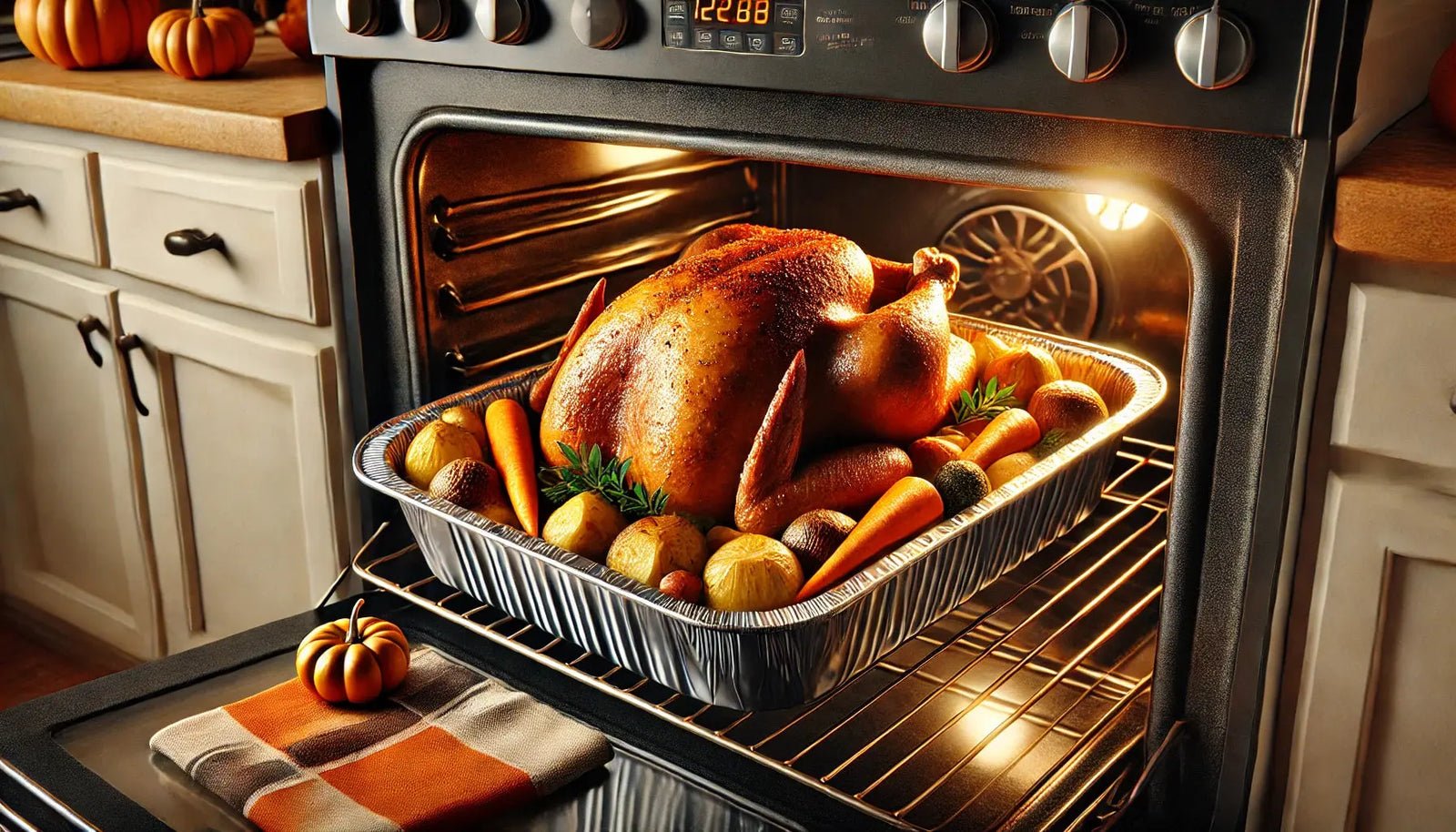
Choosing the right roasting pan for your turkey can make all the difference between a juicy, flavorful bird and a dry, unevenly cooked meal. You want your turkey to impress your guests and taste perfect, but with so many options available, picking the best pan might feel overwhelming.
Don’t worry—this guide will help you find the perfect roasting pan that fits your needs and makes your holiday cooking easier and more successful. Keep reading to discover the key features you should look for and how to make your turkey shine every time.
Size And Capacity
Choosing the right roasting pan size is important for cooking your turkey well. A pan that fits your turkey lets heat circulate evenly.
Capacity helps you understand how much food the pan can hold. It also affects cooking time and space in the oven.
Choosing The Right Size
Select a pan that fits your turkey without too much extra space. A pan too big lets juices spread thin and dry the meat.
Measure your turkey before buying a pan. Leave enough room for air to move around the bird for even cooking.
- Small pans are good for turkeys under 12 pounds
- Medium pans fit turkeys between 12 and 18 pounds
- Large pans work for turkeys over 18 pounds
Capacity Considerations
Capacity means how much the pan can hold in volume or weight. It helps to avoid spills or overcrowding.
A pan with enough capacity lets you add vegetables or gravy pans underneath. This helps cook a full meal at once.
- Check pan depth to fit the turkey and juices
- Choose pans with sturdy sides to hold heavy food
- Consider pans with lids or covers to keep moisture
Material Options
Choosing the right roasting pan material affects cooking results and cleanup. Different materials offer unique benefits for roasting turkey evenly.
Consider heat conduction, durability, and maintenance before selecting a pan. This guide explains common material options for roasting pans.
Stainless Steel
Stainless steel pans are durable and resist rust. They often have an aluminum core to improve heat distribution. These pans do not react with food, keeping flavors pure.
Stainless steel pans are easy to clean but may need oil or a rack to prevent sticking. They look good and last a long time in the kitchen.
Non-stick Coatings
Non-stick pans help prevent food from sticking and make cleaning easier. They require less oil, which can make roasting healthier. However, avoid using metal utensils to keep the coating intact.
- Use gentle cleaning tools to protect the coating
- Do not overheat the pan to avoid damaging the surface
- Non-stick pans may wear out faster than other materials
Cast Iron
Cast iron pans hold heat well and cook food evenly. They are heavy and require seasoning to keep a natural non-stick surface. These pans add flavor but need care to avoid rust.
| Feature | Pros | Cons |
| Heat Retention | Excellent | Slow to heat up |
| Maintenance | Long-lasting with seasoning | Needs regular seasoning and drying |
| Weight | Stable during cooking | Heavy to handle |
Design Features
Choosing the right roasting pan for your turkey depends on its design features. Good design helps cook the turkey evenly and makes handling easier.
Two important design features to consider are the handles and stability, and the type of rack included with the pan.
Handles And Stability
Strong, comfortable handles make moving a heavy turkey easier and safer. Stability keeps the pan steady on the stove or in the oven.
- Look for wide, heat-resistant handles to avoid burns.
- Handles should be securely attached to hold the pan’s weight.
- A flat, heavy base adds stability and prevents tipping.
- Non-slip feet or a textured bottom help keep the pan steady.
Rack Types
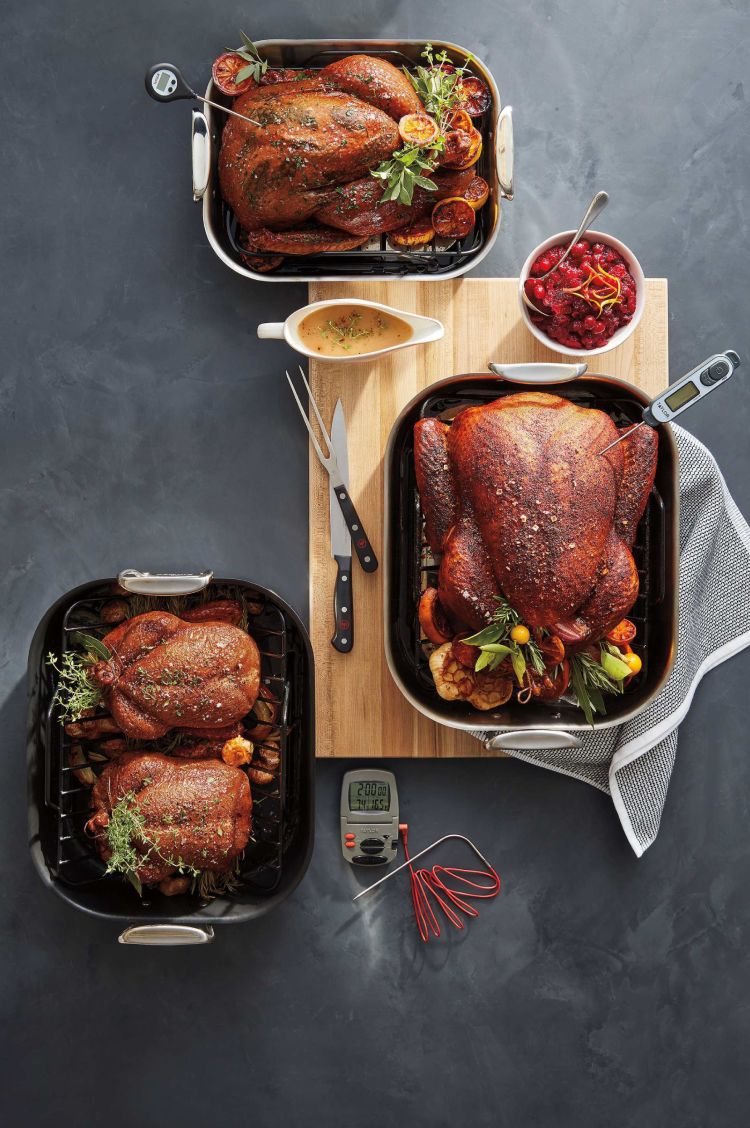
Racks keep the turkey raised above the pan’s surface. This helps heat circulate and fat drain away.
| Rack Type | Description | Advantages |
| Flat Rack | A simple, flat metal frame. | Easy to clean and store. |
| V-Shaped Rack | Supports the turkey like a cradle. | Keeps turkey stable and juices drip evenly. |
| Elevated Rack | Raised higher above the pan. | Better air circulation and browning. |

Credit: www.amazon.ca
Heat Distribution
Choosing the right roasting pan helps cook your turkey evenly. Heat distribution is key to a well-roasted bird.
A pan that spreads heat well avoids undercooked or burnt spots on your turkey. Let’s look at how to pick one based on heat distribution.
Even Cooking
A good roasting pan spreads heat evenly across the turkey. This makes sure all parts cook at the same rate.
- Choose pans made from heavy materials like cast iron or stainless steel.
- A thick base helps keep heat steady and avoid sudden hot or cold spots.
- Pans with a non-stick coating can also improve heat flow and prevent sticking.
- A shallow pan allows heat to reach the turkey skin better for crispiness.
Avoiding Hot Spots
Hot spots burn parts of the turkey while leaving others undercooked. The pan’s design affects this.
| Pan Feature | Effect on Hot Spots |
| Thin metal pans | Create uneven heat, causing hot spots. |
| Heavy gauge pans | Distribute heat evenly, reducing hot spots. |
| Glass or ceramic pans | Hold heat well but may heat unevenly. |
| Pan with ridges or rack | Allow air flow, helping even cooking. |
Ease Of Cleaning
Choosing a roasting pan for turkey means thinking about cleaning too. A pan that cleans easily saves time and effort. It helps keep your kitchen neat after cooking.
Some pans are easier to clean than others. Knowing what to look for can make your choice better.
Dishwasher Safety
Dishwasher-safe pans save time. You can put them in the dishwasher after cooking. This helps remove grease and food stuck to the pan.
Check the pan’s label or description to see if it is dishwasher safe. Not all pans can go in the dishwasher without damage.
- Dishwasher-safe pans handle high heat and water pressure.
- Some materials may lose shine or get scratched in dishwashers.
- Hand washing may be better for pans with special coatings.
Non-stick Vs. Traditional
Non-stick pans clean up quickly because food does not stick. You usually need just a soft sponge and warm water. These pans work well for easy cleanup.
Traditional pans, like stainless steel or cast iron, can be harder to clean. Food may stick, needing scrubbing or soaking. These pans may last longer but need more care.
- Non-stick pans: easy cleanup, avoid metal tools to protect coating.
- Traditional pans: durable, may need more cleaning effort.
- Choose based on how much cleaning you want to do after cooking.
Credit: www.consumerreports.org
Price And Budget
Choosing the right roasting pan for turkey depends on your budget. Price affects the materials and size you can afford.
Think about how often you will use the pan and what features matter most to you.
Balancing Cost And Quality
Look for a pan that offers good durability without costing too much. Cheap pans might wear out fast. Expensive pans often last longer.
- Check the material: stainless steel and cast iron last longer.
- Consider size: larger pans cost more but fit bigger turkeys.
- Look for non-stick coatings for easier cleaning.
- Read reviews to find good value brands.
Long-term Investment
Buying a quality roasting pan saves money over time. A strong pan cooks evenly and lasts many years.
| Feature | Low-Cost Pan | High-Quality Pan |
|---|---|---|
| Material | Aluminum or thin steel | Thick stainless steel or cast iron |
| Durability | May warp or rust | Strong and rust-resistant |
| Cooking Performance | Uneven heat | Even heat distribution |
| Price Range | $15 – $30 | $50 – $100+ |
| Expected Lifespan | 1-2 years | 5-10 years or more |
Additional Features
Choosing a roasting pan for turkey means thinking about extra features. These features can make cooking easier and more efficient.
Look for options that add convenience or improve the cooking process. These details help you get better results.
Lids And Covers
Lids keep heat and moisture inside the pan. This helps the turkey cook evenly and stay juicy.
Some lids can also be used as a serving tray or roasting rack. Check if the lid fits tightly and is easy to handle.
- Retains moisture for tender meat
- Prevents splatters in the oven
- Can double as a serving tray
- Easy to clean and handle
Compatibility With Other Appliances
Check if the roasting pan fits in your oven and other kitchen appliances. Size and shape matter for smooth cooking.
Some pans work well on stovetops or grills. This adds flexibility to how you cook your turkey or other dishes.
- Fits standard and convection ovens
- Safe for stovetop use
- Compatible with grills or broilers
- Fits in dishwasher for easy cleaning
Credit: www.crateandbarrel.ca
Brand Recommendations
Choosing the right roasting pan for your turkey is important. The brand you pick affects quality and durability.
Some brands stand out for their design and customer satisfaction. Let’s explore top brands and what users say about them.
Top Brands In The Market
Several brands offer roasting pans with good heat distribution and sturdy construction. Here are some popular ones:
- All-Clad: Known for stainless steel pans with excellent heat control.
- Calphalon: Offers nonstick pans that are easy to clean.
- Le Creuset: Famous for enameled cast iron pans that retain heat well.
- Viking: Provides heavy-duty pans with even cooking surfaces.
- Cuisinart: Delivers affordable pans with solid build quality.
User Reviews And Ratings
Customer feedback helps in choosing a good roasting pan. Ratings show how well the pans perform in real kitchens.
| Brand | Average Rating | Common Praise | Common Complaints |
| All-Clad | 4.7/5 | Durability, heat distribution | Pricey |
| Calphalon | 4.5/5 | Nonstick surface, easy cleaning | Nonstick coating wears off |
| Le Creuset | 4.6/5 | Heat retention, stylish design | Heavy weight |
| Viking | 4.4/5 | Even cooking, sturdy | Handles get hot |
| Cuisinart | 4.3/5 | Good value, solid build | Not as durable as others |
Frequently Asked Questions
What Size Roasting Pan Is Best For Turkey?
Choose a roasting pan that fits your turkey with 1-2 inches of space around. A 16×12 inch pan suits most turkeys up to 16 pounds. This ensures even heat circulation and prevents overcrowding for perfect roasting.
Should I Use A Non-stick Roasting Pan For Turkey?
Non-stick pans are easy to clean but may not brown turkey skin well. For crispy skin, consider stainless steel or cast iron pans. These materials promote better heat distribution and browning, enhancing turkey flavor.
Is It Necessary To Have A Roasting Rack?
A roasting rack lifts the turkey, allowing even heat circulation underneath. This prevents soggy bottoms and promotes uniform cooking. It also helps fat drip away, resulting in healthier and crispier turkey skin.
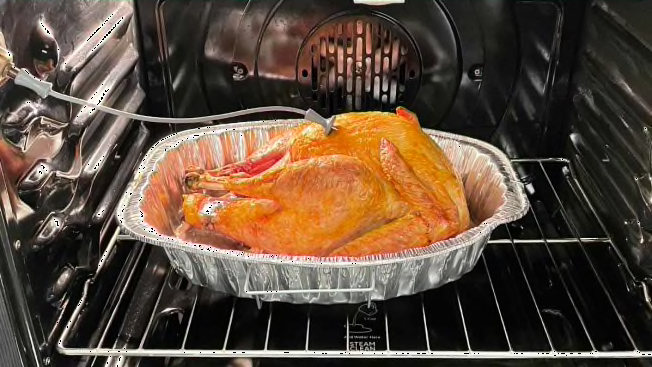
Can I Use A Disposable Roasting Pan For Turkey?
Disposable roasting pans are convenient and affordable for occasional use. However, they may warp under high heat and don’t retain heat as well as metal pans. Use them if you prioritize easy cleanup over durability.
Conclusion
Choosing the right roasting pan helps cook your turkey evenly. Size matters—pick one that fits your turkey well. A sturdy pan keeps heat steady and avoids warping. Non-stick surfaces make cleaning much easier after cooking. Handles should be strong and easy to grip for safe lifting.
Remember, a good pan improves your cooking experience and results. With the right pan, your turkey will come out juicy and delicious every time. Keep these tips in mind for your next holiday feast. Enjoy cooking and sharing great meals with family.