
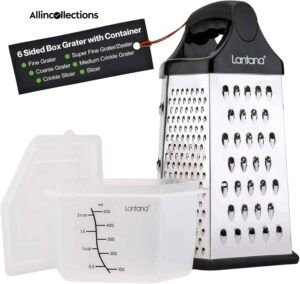
Choosing the right grater for cheese might seem simple, but it can make a big difference in your kitchen. You want something that works well, feels comfortable in your hand, and lasts a long time.
Whether you love finely shredded cheese on your pasta or thick slices for a sandwich, the grater you pick matters. Keep reading, and you’ll discover exactly what to look for, so you get the perfect tool every time. Your cooking will never be the same!
Types Of Cheese Graters
Cheese graters come in different styles to suit various needs. Each type works best with certain kinds of cheese and tasks.
Choosing the right grater helps you get the perfect cheese texture for your dishes. Learn about the main types below.
Box Graters
Box graters are square or rectangular with four sides. Each side has different sized holes for shredding or slicing.
They are good for grating hard and soft cheeses. You can also use them for vegetables or zesting citrus.
- Large surface area for quick grating
- Different hole sizes for coarse or fine grating
- Can stand on a surface for easy use
Microplane Graters
Microplane graters have very fine, sharp teeth. They create light, fluffy cheese shreds.
These graters work best with hard cheeses like Parmesan. They also work well for grating spices and citrus peel.
- Produces fine, delicate shreds
- Easy to hold and use by hand
- Great for garnishing dishes
Rotary Graters
Rotary graters have a handle that you turn to grate cheese inside a drum. The cheese is pushed against the grating surface.
They are good for hard cheeses and make grating faster and less messy. They also keep your hands safe.
- Grates cheese quickly and evenly
- Good for hard cheeses like cheddar and Parmesan
- Less chance of cutting your fingers
Electric Graters
Electric graters use a motor to grate cheese automatically. They handle large amounts of cheese fast.
These are ideal for frequent use or big cooking projects. They work well with both hard and soft cheeses.
- Grates cheese with little effort
- Good for large quantities
- Often have multiple grating options

Credit: sports.yahoo.com
Material Considerations
Choosing the right material for a cheese grater is important. The material affects how long the grater lasts and how easy it is to use.
Different materials offer different benefits. This guide will explain the main materials used in cheese graters.
Stainless Steel
Stainless steel is a common material for cheese graters. It is strong and resists rust and stains.
Steel blades stay sharp for a long time. They make grating cheese easy and quick.
- Durable and long-lasting
- Resists rust and corrosion
- Sharp blades for easy grating
- Easy to clean
Plastic
Plastic cheese graters are light and often less expensive. They may have plastic handles or bodies.
Plastic parts can make the grater easier to hold. Some plastic graters are dishwasher safe but may wear faster.
- Lightweight and easy to handle
- Usually cheaper than metal graters
- May wear out faster
- Can be dishwasher safe
Wooden Handles
Wooden handles give cheese graters a classic look. They offer a good grip and feel comfortable in the hand.
Wood may require extra care to avoid cracking or damage. It is not dishwasher safe and should be cleaned by hand.
- Comfortable and natural grip
- Elegant and traditional appearance
- Needs hand washing only
- Can crack if not cared for properly
Ease Of Use
Choosing a grater for cheese means looking for one that is easy to use. A good grater saves time and reduces effort in the kitchen.
Focus on features that make grating simple and safe. This helps you enjoy cooking without frustration.
Grip And Handle Design
A grater with a comfortable grip helps you hold it firmly. Look for handles made from soft materials or with textured surfaces.
Good handle design reduces hand strain and prevents slipping. This is important for safe and easy grating.
- Soft rubber or silicone handles improve comfort
- Textured grips stop slipping during use
- Ergonomic shapes fit your hand well
Weight And Balance
Lightweight graters are easier to move and control. Too heavy graters can cause fatigue quickly.
Balance matters for smooth grating. A well-balanced grater lets you apply pressure evenly on cheese.
- Choose a grater that feels light but sturdy
- Check if the weight is spread evenly
- Test how it feels in your hand before buying
Safety Features
Safety is key when using a cheese grater. Look for features that protect your fingers and hands.
Some graters come with covers or guards. These parts help reduce the risk of cuts and scrapes.
- Non-slip bases keep the grater steady
- Finger guards protect your skin
- Rounded edges prevent accidental cuts

Credit: www.kimecopak.ca
Cleaning And Maintenance
Keeping your cheese grater clean helps it last longer. Proper care also stops old cheese bits from building up.
Some graters are easier to clean than others. Knowing how to clean and store your grater saves time and effort.
Dishwasher Safe Options
Many cheese graters can go in the dishwasher. This makes cleaning quick and easy.
Look for stainless steel or plastic graters labeled dishwasher safe. Avoid wooden handles if you want dishwasher use.
- Place the grater on the top rack to avoid damage
- Rinse off large cheese pieces before loading
- Use a gentle cycle to keep the grater sharp
Manual Cleaning Tips
Cleaning by hand works well for delicate or non-dishwasher graters. Use warm water and soap right after use.
A brush or old toothbrush helps remove stuck cheese. Dry the grater fully to stop rust.
- Soak the grater in warm water if cheese is stuck
- Use a soft brush to clean the holes and blades
- Wipe dry with a clean cloth to avoid moisture
Storage Solutions
Store your grater in a dry place to keep it clean and rust-free. Avoid humid spots like near the sink.
Use a protective cover or a drawer to prevent the grater from dulling or causing cuts.
- Keep the grater in a drawer or utensil holder
- Use blade covers if available to protect edges
- Store upright to let air flow and dry the grater
Cheese Types And Grater Compatibility
Choosing the right grater depends on the cheese type. Different cheeses need different grater styles.
Using the correct grater helps keep the cheese texture and flavor intact. This guide explains which grater fits each cheese.
Hard Cheeses
Hard cheeses like Parmesan and Pecorino are firm and dry. They need a grater with small, sharp holes.
A microplane grater works best. It creates fine, fluffy shreds that melt easily on food.
- Use fine or microplane graters
- Grate evenly for best results
- Avoid large holes that crush the cheese
Soft Cheeses
Soft cheeses like Mozzarella and Brie are creamy and moist. They do not grate well on hard graters.
Use a box grater with larger holes or a crumbling tool. You can also slice or tear soft cheese.
- Choose large-hole box graters
- Consider slicing for soft cheeses
- Handle gently to keep texture
Specialty Cheeses
Specialty cheeses vary in texture. Some are crumbly, others are semi-soft or aged.
Match the grater to the cheese texture. Use medium holes for semi-soft, and fine holes for aged cheeses.
| Cheese Type | Grater Style | Notes |
| Crumbly (Feta) | Medium-hole box grater | Grate gently to keep shape |
| Semi-soft (Gouda) | Medium or fine holes | Works well grated or sliced |
| Aged (Asiago) | Fine or microplane | Best for topping dishes |
Price And Budget Considerations
Choosing the right cheese grater depends on your budget. Graters come in many prices and qualities.
It is important to find a grater that fits your needs and wallet. This guide helps you pick wisely.
Budget-friendly Options
Budget-friendly graters are great for occasional use. They often come in simple designs and materials.
These graters usually cost less but still do the job well. They may not last as long as pricier models.
- Made of basic stainless steel or plastic
- Simple box or handheld styles
- Good for light, daily grating tasks
- Easy to replace if damaged
Mid-range Choices
Mid-range graters offer better quality and durability. They often include ergonomic handles for comfort.
These graters work well for regular cooking. They balance price and performance effectively.
- Made from higher-grade stainless steel
- Multiple grating surfaces included
- Comfortable grips and stable bases
- Good for shredding various cheese types
Premium Graters
Premium graters use top materials and design. They offer long-lasting sharpness and ease of use.
These graters are ideal for serious cooks or frequent cheese lovers. They usually come with warranties.
- Made of high-quality stainless steel or titanium
- Precision-engineered blades for smooth grating
- Elegant designs with sturdy handles
- Often dishwasher safe and rust-resistant
Popular Brands And Recommendations
Choosing the right cheese grater can make your cooking easier and more enjoyable. Many brands offer different styles and features. This guide will help you find popular brands and useful recommendations.
Look for a grater that fits your needs and budget. Quality, durability, and ease of use are important factors to consider.
Top-rated Brands
Several brands are known for making reliable cheese graters. These brands often have good build quality and sharp blades. They offer various grater types like box graters, rotary graters, and handheld graters.
- Microplane – Known for very sharp and durable graters.
- Zyliss – Offers ergonomic designs and multiple grating options.
- OXO – Focuses on comfortable handles and easy cleaning.
- Kuhn Rikon – Provides both traditional and innovative grater styles.
- Cuisipro – Popular for sturdy construction and fine grating.
User Reviews And Ratings
Customer reviews reveal how well a grater works in real kitchens. Many users value sharp blades that stay sharp over time. Comfort and safety features also get high marks.
Some common user feedback includes ease of cleaning and grip quality. Ratings help compare products and find the best match for your needs.
- Sharpness is the top feature users look for.
- Non-slip handles improve safety and comfort.
- Dishwasher-safe models get higher ratings.
- Compact designs are preferred for small kitchens.
- Some users like graters with multiple grating sizes.
Expert Recommendations
Experts suggest choosing a grater based on how often you cook with cheese. For frequent use, a sturdy box grater or Microplane-style grater is best.
Look for stainless steel blades that resist rust. Ergonomic handles reduce hand strain. Experts also recommend checking blade sharpness and ease of cleaning.
- Pick a grater with multiple sides for different textures.
- Choose stainless steel for durability and hygiene.
- Consider a grater with a container to catch cheese.
- Test the handle for comfort before buying.
- Store graters safely to protect the blades.

Credit: www.boska.com
Frequently Asked Questions
What Types Of Cheese Graters Are Best For Hard Cheese?
Box graters and rotary graters work best for hard cheese. They provide firm grip and sharp blades. These graters easily shred or slice hard cheeses like Parmesan. Choose stainless steel for durability and easy cleaning. This ensures efficient grating without cheese sticking.
How To Choose A Grater For Soft Cheese?
For soft cheese, use a fine or microplane grater. It creates delicate shreds without crushing. Choose graters with non-stick surfaces to prevent sticking. Soft cheeses like mozzarella or goat cheese grate smoothly with these. This helps maintain texture and flavor during preparation.
Which Material Is Ideal For Cheese Graters?
Stainless steel is the ideal material for cheese graters. It resists rust, is durable, and sharp. Stainless steel graters ensure easy cleaning and long-lasting performance. Plastic graters may break or dull quickly. Always pick stainless steel for consistent, reliable grating results.
Can A Grater Affect Cheese Flavor Or Texture?
Yes, grater type can affect cheese texture but not flavor. Sharp blades produce clean shreds preserving texture. Dull graters crush cheese, changing mouthfeel. Using the right grater maintains cheese’s intended texture for better taste experience.
Conclusion
Choosing the right cheese grater makes cooking easier and more fun. Think about the cheese types you use most. Pick a grater that matches your needs and feels good in your hand. A good grater saves time and helps you enjoy your meals more.
Keep it clean and store it safely after use. A simple tool, but it can make a big difference in your kitchen. Try different styles to see what suits you best. Enjoy grating!