
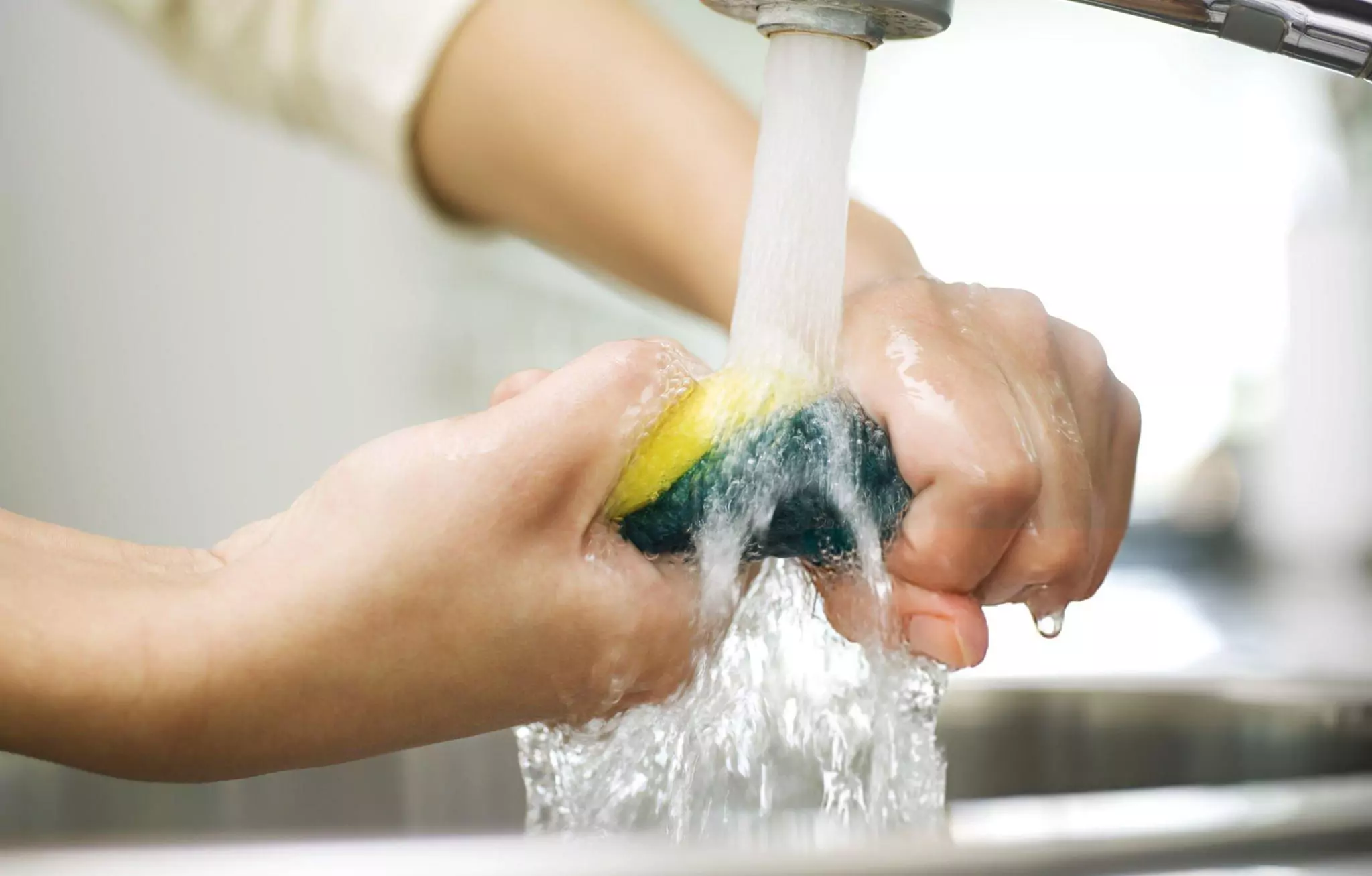
Your kitchen sponge is one of the dirtiest items in your home. It’s full of bacteria, mold, and germs that you can’t see but can affect your health.
If you don’t sanitize it properly, you might be spreading those harmful microbes every time you clean. But don’t worry—sanitizing your kitchen sponge is easier than you think. Keep reading to learn simple, effective ways to keep your sponge clean and your kitchen safe.
You’ll be surprised how small changes can make a big difference for your family’s health.
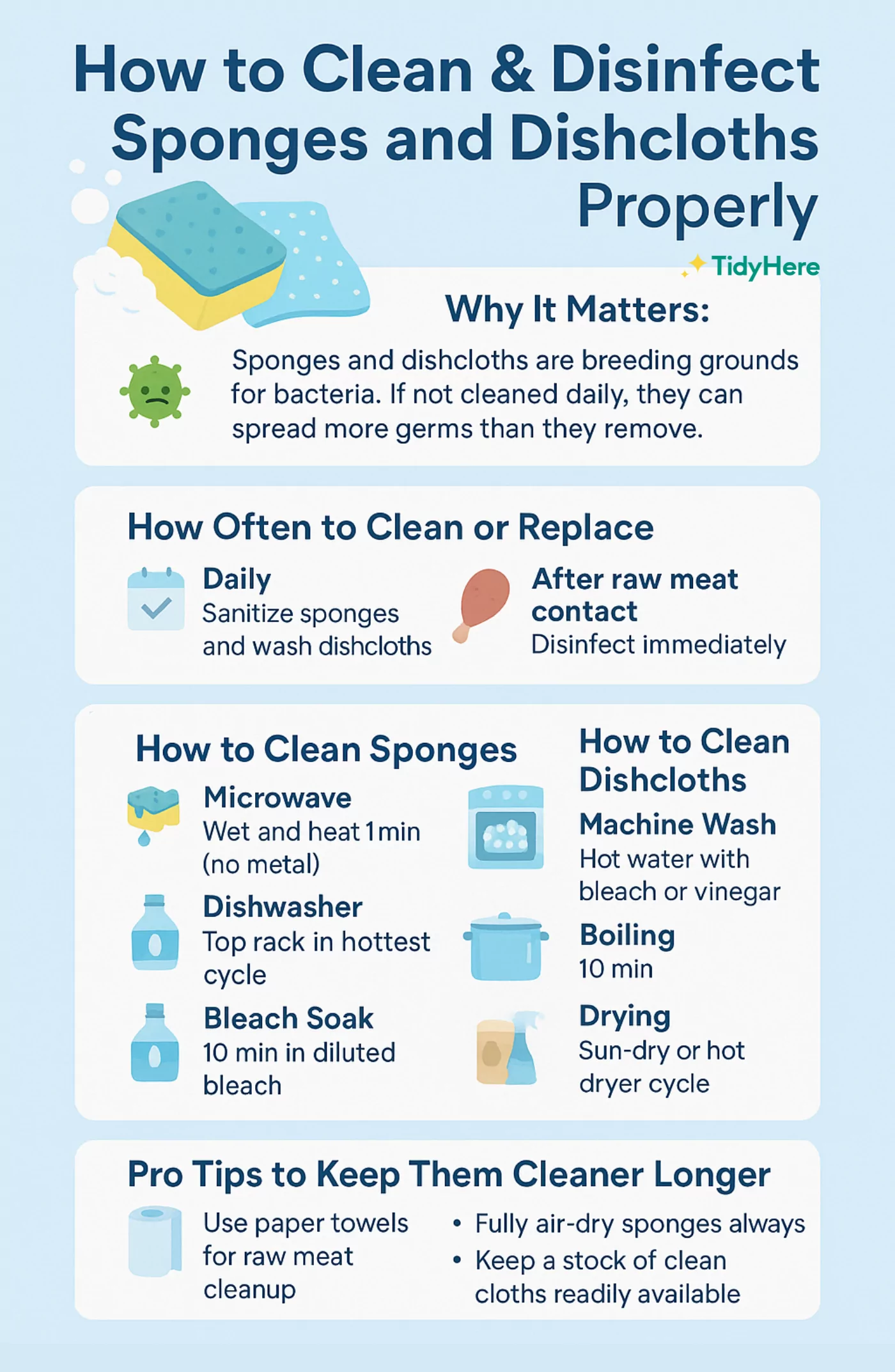
Credit: tidyhere.com
Why Kitchen Sponge Hygiene Matters
Kitchen sponges are useful tools to clean dishes and surfaces. They trap food scraps and moisture, which can grow germs.
Keeping sponges clean helps stop bacteria from spreading. This protects your health and keeps your kitchen safe.
Sponges Can Harbor Harmful Bacteria
Sponges stay wet and hold food bits. This makes a perfect place for bacteria to grow fast.
Common bacteria in sponges can cause stomach sickness and infections.
Dirty Sponges Spread Germs Easily
Using a dirty sponge can spread germs onto clean dishes and counters. This can make you and your family sick.
Regularly cleaning sponges stops germs from moving around your kitchen.
Sanitized Sponges Last Longer
Cleaning your sponge removes bacteria and odors. This keeps the sponge fresh and useful for more time.
Replacing sponges less often saves money and reduces waste.
Healthy Kitchen Habits Start With Clean Tools
Keeping sponges clean is part of safe kitchen routines. It helps prevent food contamination.
Good sponge hygiene supports overall kitchen cleanliness and family health.
Common Germs Found On Sponges
Kitchen sponges are helpful for cleaning, but they can hold many germs. These germs can spread bacteria and cause illness.
Knowing which germs live on sponges helps you clean them better. This keeps your kitchen safer and healthier.
Escherichia Coli (e. Coli)
E. coli is a common bacteria found in the intestines of humans and animals. It can get on sponges from raw meat or dirty surfaces.
Some types of E. coli can cause stomach cramps, diarrhea, and vomiting. Cleaning sponges well helps stop its spread.
Salmonella
Salmonella bacteria often live on raw poultry and eggs. Sponges can pick it up when cleaning these foods.
This germ can cause food poisoning with fever, diarrhea, and stomach pain. Regular sponge sanitizing lowers the risk.
Staphylococcus Aureus
Staphylococcus aureus lives on the skin and nose of healthy people. It can move to sponges through handling or sneezing.
This bacteria can cause skin infections and food poisoning. Keeping sponges clean prevents spreading it in your kitchen.
Listeria Monocytogenes
Listeria monocytogenes is found in soil and water. It can stick to sponges after cleaning raw vegetables or meats.
This germ causes listeriosis, a serious infection. It is especially risky for pregnant women and older adults.
Mold And Yeast
Sponges often stay wet, which lets mold and yeast grow easily. These fungi can cause unpleasant smells and stains.
Some molds produce allergens or irritants. Removing mold and yeast from sponges keeps the kitchen fresh and clean.
Signs Your Sponge Needs Sanitizing
Kitchen sponges get dirty fast. They hold germs and food bits. You need to clean them often.
Knowing when to sanitize your sponge helps keep your kitchen safe and clean.
Foul Smell From The Sponge
If your sponge smells bad, it means bacteria are growing inside. The smell is a clear sign.
Sanitizing will remove the smell and kill the germs that cause it.
Visible Dirt Or Food Particles
When you see food bits or stains on your sponge, it needs cleaning. Dirt holds germs.
Sanitizing helps remove leftover food and stops bacteria from growing.
Sponge Feels Slimy Or Sticky
A slimy or sticky sponge shows bacteria and mold buildup. This makes it unsafe to use.
Sanitizing will remove the slimy layer and keep your sponge fresh.
Sponge Has Been Used For Several Days
Using the same sponge for days helps germs grow. Sponges need regular sanitizing.
Clean your sponge every few days to avoid bacteria buildup and keep it working well.
Cross-contamination Occurs
If you use your sponge on raw meat or other risky foods, it needs sanitizing right away.
Sanitizing prevents spreading germs from one food to another in your kitchen.

Credit: www.reddit.com
Effective Methods For Sanitizing Sponges
Kitchen sponges hold many germs and bacteria. Regular cleaning helps keep them safe to use. Sanitizing sponges stops harmful microbes from spreading in your kitchen.
Here are easy and effective ways to sanitize your kitchen sponges at home.
Microwave Method
Wet your sponge completely before microwaving. Place it in the microwave for two minutes on high. The heat kills most bacteria and germs inside the sponge. Be careful when removing it, as it will be hot.
Boiling Method
Put your sponge in boiling water for five minutes. This method uses high heat to kill germs. Make sure the sponge is fully submerged. Remove it with tongs and let it dry.
Dishwasher Method
Place your sponge on the top rack of your dishwasher. Run a full cycle with the heat dry option. The hot water and heat will sanitize the sponge. This method is simple and fits with your regular dishwashing.
Bleach Solution Soak
Use a bleach solution to soak your sponge for deep cleaning. Mix one tablespoon of bleach with one gallon of water. Soak the sponge for five minutes, then rinse well. This kills bacteria and removes stains.
- Mix 1 tablespoon bleach in 1 gallon water
- Soak sponge for 5 minutes
- Rinse sponge thoroughly with water
- Let sponge air dry
Vinegar And Lemon Soak
Combine white vinegar and lemon juice for a natural sanitizer. Mix equal parts vinegar and lemon juice in a bowl. Soak the sponge for 10 minutes. This mix kills bacteria and leaves a fresh scent. Rinse and dry after soaking.
| Ingredient | Amount | Soak Time |
| White Vinegar | 1/2 cup | 10 minutes |
| Lemon Juice | 1/2 cup |
Best Practices For Sponge Maintenance
Kitchen sponges can hold many germs if not cleaned properly. Keeping them clean helps keep your kitchen safe.
Sanitizing and caring for sponges is easy with a few good habits. These tips will help you keep sponges fresh.
Replacing Sponges Regularly
Change your kitchen sponge often to stop bacteria build-up. A sponge used for two weeks can carry many germs.
Throw away sponges that smell bad or look worn out. Fresh sponges clean better and last longer.
- Replace sponges every 1 to 2 weeks
- Discard sponges with bad odor or tears
- Use separate sponges for different tasks
Proper Storage Tips
Store sponges where they can dry quickly. Damp sponges grow germs faster.
Keep sponges off the sink and in a well-ventilated spot. This stops moisture and helps them last.
- Use a sponge holder with good airflow
- Avoid leaving sponges in water or sink
- Rinse and squeeze out water after use
Alternatives To Traditional Sponges
Try using other cleaning tools that are easier to keep clean. Some materials resist germs better than sponges.
These options can last longer and reduce bacteria growth in your kitchen.
- Silicone scrubbers: easy to rinse and dry
- Microfiber cloths: washable and reusable
- Cellulose sponges: natural and biodegradable
- Brushes: good for scrubbing and drying fast
Environmental Considerations
Sanitizing kitchen sponges helps keep your home clean. It also matters for the planet. Choosing the right sponge and disposing of it well lowers waste and pollution.
Using eco-friendly sponges and recycling old ones reduces harm to the environment. Let’s explore smart choices for cleaning tools and their disposal.
Eco-friendly Sponge Options
Look for sponges made from natural materials. These break down easier after use. Avoid plastic sponges that last long in landfills. Bamboo, cellulose, and cotton sponges are good picks.
- Bamboo sponges: biodegradable and durable
- Cellulose sponges: made from wood fibers
- Cotton sponges: natural and compostable
- Sponges with no added plastic or chemicals
Recycling And Disposal Tips
Properly disposing of sponges helps reduce waste. Some sponges can be composted at home. Others need to go to recycling centers. Avoid throwing them in the trash if possible.
| Disposal Method | Details |
| Composting | Natural sponges break down in garden compost |
| Recycling | Check local facilities for sponge recycling options |
| Trash | Use only if no other option is available |

Credit: tidyhere.com
Frequently Asked Questions
How Often Should I Sanitize Kitchen Sponges?
You should sanitize kitchen sponges daily to reduce bacteria. Regular cleaning prevents odor and cross-contamination. It keeps your kitchen hygienic and safe.
What Is The Best Method To Sanitize Sponges?
Microwaving damp sponges for 1-2 minutes is effective. Alternatively, soaking in bleach or vinegar also kills germs. Choose a method that suits your convenience and safety.
Can I Use A Dishwasher To Sanitize Sponges?
Yes, placing sponges in the dishwasher with a heated dry cycle sanitizes them. This method kills bacteria and removes food debris efficiently.
How Do I Prevent Kitchen Sponges From Smelling Bad?
Rinse sponges thoroughly and squeeze out excess water after use. Store them in a dry area and sanitize daily to avoid foul odors.
Conclusion
Sanitizing kitchen sponges keeps your kitchen cleaner and safer. Regular cleaning stops germs from spreading on surfaces. Use simple methods like microwaving or soaking in vinegar. Replace sponges often to avoid bad smells and bacteria. Clean sponges help protect your family’s health.
Small steps make a big difference in hygiene. Keep your kitchen fresh with these easy tips. Clean sponges mean safer cooking every day. Don’t let germs hide where you clean. Stay healthy by caring for your sponges well.