
You’ve just finished cooking a delicious meal, but what about your countertops? Keeping your kitchen surfaces clean and safe is more important than you might think.
If you want to protect your family from harmful bacteria and avoid foodborne illnesses, knowing how to properly sanitize your countertops is a must. You’ll discover simple, effective steps to make your kitchen spotless and safe—without wasting time or effort.
Ready to learn the secrets to a truly clean countertop? Let’s dive in.
Choose The Right Cleaner
Cleaning countertops after cooking is important to keep them safe. Choosing the right cleaner is key. Some cleaners are better for food areas than others.
There are different options available. You can use natural or chemical cleaners. Each type has its own benefits. It is important to pick the one that suits your needs.
Natural Vs Chemical Options
Natural cleaners use ingredients found in nature. They are often gentler on surfaces. Chemical cleaners are stronger and can kill more germs.
Think about what is best for your kitchen. Natural cleaners are better for the environment. Chemical cleaners are good for tough stains.
- Natural: Vinegar, baking soda
- Chemical: Bleach, disinfectant sprays
Safe Ingredients For Food Areas
When cleaning food areas, safe ingredients are important. Some cleaners leave residues that are not safe. Choose ingredients that are non-toxic.
Look for cleaners with simple ingredients. These are less likely to harm you. They are also better for food preparation surfaces.
- Non-toxic: Hydrogen peroxide, lemon juice
- Simple: Soap and water
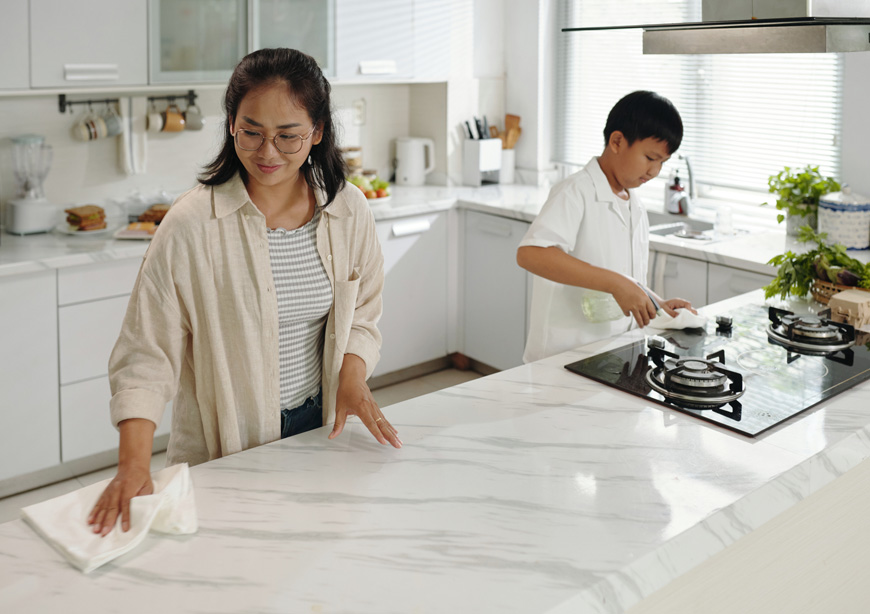
Credit: www.kirkstone.co
Prepare The Surface
Cleaning your countertops after cooking is important to keep your kitchen safe. Preparing the surface properly helps remove germs and dirt.
Start by making sure the area is ready for sanitizing. This will make the cleaning process easier and more effective.
Remove Food Debris
Clear away any leftover food particles from the countertops. Food bits can hold bacteria and stop disinfectants from working well.
Use a damp cloth or paper towel to wipe crumbs and spills. Make sure no food pieces stay on the surface before sanitizing.
Clear Clutter
Remove all items from the countertop. This includes dishes, utensils, and appliances that may block cleaning.
Clearing clutter gives you full access to the surface. It helps you clean every spot properly and avoid missing dirty areas.
Sanitizing Techniques
Sanitizing countertops after cooking helps keep your kitchen safe. It removes germs that can cause illness.
Different techniques work well for different surfaces and messes. Choose one that fits your needs.
Spray And Wipe Method
Spraying a disinfectant on the countertop is a common way to sanitize. Use a spray that kills bacteria and viruses.
After spraying, let the solution sit for a few minutes. Then wipe the surface with a clean cloth or paper towel.
- Choose an EPA-approved disinfectant
- Spray evenly over the entire surface
- Wait the recommended time on the label
- Wipe with a clean, dry cloth
Use Of Disinfecting Wipes
Disinfecting wipes are a quick way to clean countertops. They contain chemicals that kill germs on contact.
Simply rub the wipe over the surface until it looks clean. Let the area air dry for full sanitation.
- Pick wipes safe for kitchen surfaces
- Cover all areas with the wipe
- Do not rinse after wiping
- Allow surface to air dry
Steam Cleaning
Steam cleaning uses hot steam to kill germs and loosen dirt. It is chemical-free and safe for many surfaces.
Move the steam cleaner slowly across the countertop. Allow the steam to work for a few seconds before wiping.
- Use a steam cleaner with a nozzle attachment
- Hold the nozzle close to the surface
- Move slowly to cover all areas
- Wipe excess moisture with a dry cloth

Credit: www.rockwoodstone.com
Dry And Air Out
After cooking, cleaning your countertops is important. Drying and airing out help keep surfaces clean.
Proper drying stops germs from growing. Air circulation helps remove moisture and smells.
Proper Drying Methods
Use a clean cloth or paper towel to dry the countertop. Make sure to remove all water drops.
Do not leave the surface wet. Water can attract bacteria and cause stains or damage.
- Use fresh, dry towels after cleaning
- Pat the surface instead of rubbing hard
- Replace cloths often to avoid spreading germs
- Dry all corners and edges thoroughly
Importance Of Air Circulation
Good air flow helps dry countertops faster. It also lowers moisture that causes mold.
Keep windows or vents open after cleaning. Use fans if the room feels humid or still.
- Open windows to let fresh air in
- Use kitchen fans to move air around
- Avoid closing doors that block airflow
- Let countertops air dry after wiping
Frequency And Timing
Keeping your countertops clean is important for food safety. Knowing when to sanitize helps stop germs.
Cleaning often and deeply at the right times keeps your kitchen healthy and fresh.
After Each Cooking Session
Sanitize countertops after every time you cook. This stops bacteria from spreading to your next meal.
Use a safe disinfectant or a mix of water and vinegar. Wipe all surfaces well and let them air dry.
- Clear all food crumbs and spills first
- Spray sanitizer evenly on the surface
- Wait a few minutes before wiping
- Let the countertop air dry fully
Weekly Deep Cleaning
Once a week, do a deep clean to remove hidden dirt and germs. This helps keep your kitchen safe.
Use a stronger cleaner that is safe for your countertop type. Scrub corners and edges well.
- Remove all items from the countertop
- Use a brush or sponge for scrubbing
- Clean under appliances and backsplash
- Rinse with clean water and dry

Credit: www.stonelinkcorp.com
Tips For Different Countertop Materials
Keeping your countertops clean after cooking is important for health. Different materials need different care to stay safe and look good.
This guide shares easy tips to sanitize various countertop surfaces without damage.
Granite And Marble
Granite and marble are natural stones that need gentle cleaning. Avoid harsh chemicals to protect their surface.
Use a soft cloth with mild dish soap and warm water. Rinse well and dry with a clean towel to avoid water spots.
- Do not use bleach or acidic cleaners like vinegar.
- Disinfect with a mix of isopropyl alcohol and water (50/50).
- Wipe gently to avoid scratching the stone.
Laminate And Wood
Laminate and wood countertops need quick cleaning to prevent damage. Avoid soaking wood to stop warping.
Use a mild soap and warm water solution. For wood, dry the surface immediately after cleaning.
- Use diluted vinegar or hydrogen peroxide to disinfect laminate.
- For wood, use a wood-safe disinfectant or a mix of mild soap and water.
- Do not use abrasive scrubbers on wood or laminate.
Quartz And Solid Surface
Quartz and solid surfaces are durable and non-porous. They clean easily with mild cleaners.
Use warm water and mild dish soap. Rinse well and dry to keep the surface shiny.
- Disinfect with diluted bleach (1 tablespoon bleach per gallon water) safely.
- Avoid strong acids or abrasive cleaners.
- Use soft cloths or sponges to clean.
Frequently Asked Questions
How Do I Sanitize Countertops After Cooking?
Clean the surface with warm, soapy water first. Then, apply a food-safe disinfectant or diluted bleach solution. Let it sit for a few minutes. Finally, wipe with a clean cloth and allow to air dry.
What Household Items Can Sanitize Kitchen Counters?
You can use diluted bleach, white vinegar, or hydrogen peroxide. These items effectively kill bacteria and viruses on countertops. Always test a small area first to avoid damage.
How Long Should Sanitizer Stay On Countertops?
Let the sanitizer remain on the surface for at least 1 to 5 minutes. This contact time ensures effective germ and bacteria elimination. Follow the product instructions for best results.
Can I Use Vinegar To Sanitize Countertops?
Yes, vinegar is a natural disinfectant. It kills many bacteria and viruses but may not eliminate all pathogens. For thorough sanitation, combine vinegar with other cleaning methods.
Conclusion
Sanitizing countertops after cooking keeps your kitchen safe and clean. Use simple steps: wipe, spray, and let the sanitizer work. Clean surfaces stop germs from spreading. Always choose safe cleaning products for your countertop type. Regular cleaning helps avoid sickness and keeps food fresh.
Small habits make a big difference in kitchen hygiene. Keep your space tidy and enjoy cooking without worry. Safe counters mean healthy meals for you and your family.