
Are you tired of seeing those stubborn hard water stains ruining the look of your kettle? You’re not alone.
Hard water stains can build up quickly and make your kettle look old and dirty, even if it’s working perfectly. But here’s the good news: you don’t need expensive cleaners or special tools to get rid of them. You’ll discover simple, effective ways to remove hard water stains from your kettle.
By the end, your kettle will look sparkling clean, and you’ll feel great knowing you saved time and money. Keep reading to find out how easy it really is!

Credit: aquariushomeservices.com
Causes Of Hard Water Stains
Hard water stains form inside kettles due to minerals in the water. These minerals build up over time.
Understanding what causes these stains helps keep your kettle clean and working well.
Mineral Buildup Explained
Hard water contains minerals like calcium and magnesium. When water boils, these minerals settle inside the kettle.
Over time, minerals form a crusty layer known as limescale. This layer is the hard water stain.
- Calcium carbonate is the main cause of buildup.
- Boiling water speeds up mineral deposits.
- Hard water has more minerals than soft water.
Common Areas Affected In Kettles
Hard water stains appear in specific parts of the kettle. These areas touch boiling water the most.
Cleaning these spots helps prevent damage and keeps the kettle efficient.
- Bottom inside surface where water heats.
- Spout where water pours out.
- Inside walls that hold water.
- Heating element in electric kettles.

Credit: www.youtube.com
Signs Of Hard Water Stains
Hard water stains appear when minerals build up inside your kettle. These stains can affect the look and function of your kettle.
Knowing the signs helps you clean your kettle before damage occurs. Here are two main ways to spot hard water stains.
Visual Indicators
You can see hard water stains as white or chalky marks inside the kettle. They often look like crusty or scaly patches on the metal or glass surface.
- White or gray crusty spots on the kettle’s interior
- Cloudy or dull areas on the kettle walls
- Rough texture inside the kettle instead of smooth
- Mineral flakes or powder at the bottom after boiling water
Impact On Kettle Performance
Hard water stains can slow down heating and increase energy use. The buildup acts as a barrier between the heating element and water.
| Problem | Effect on Kettle |
| Mineral buildup | Longer time to boil water |
| Heating element covered | More electricity used |
| Corrosion risk | Shortened kettle lifespan |
| Blocked spout | Water flow slows down |
Natural Cleaning Methods
Hard water stains in kettles are common and can be hard to clean. Using natural cleaning methods helps remove stains safely.
These methods use simple ingredients found at home. They are easy, eco-friendly, and effective.
Using Vinegar
Vinegar is acidic and breaks down hard water stains well. It is a popular natural cleaner for kettles.
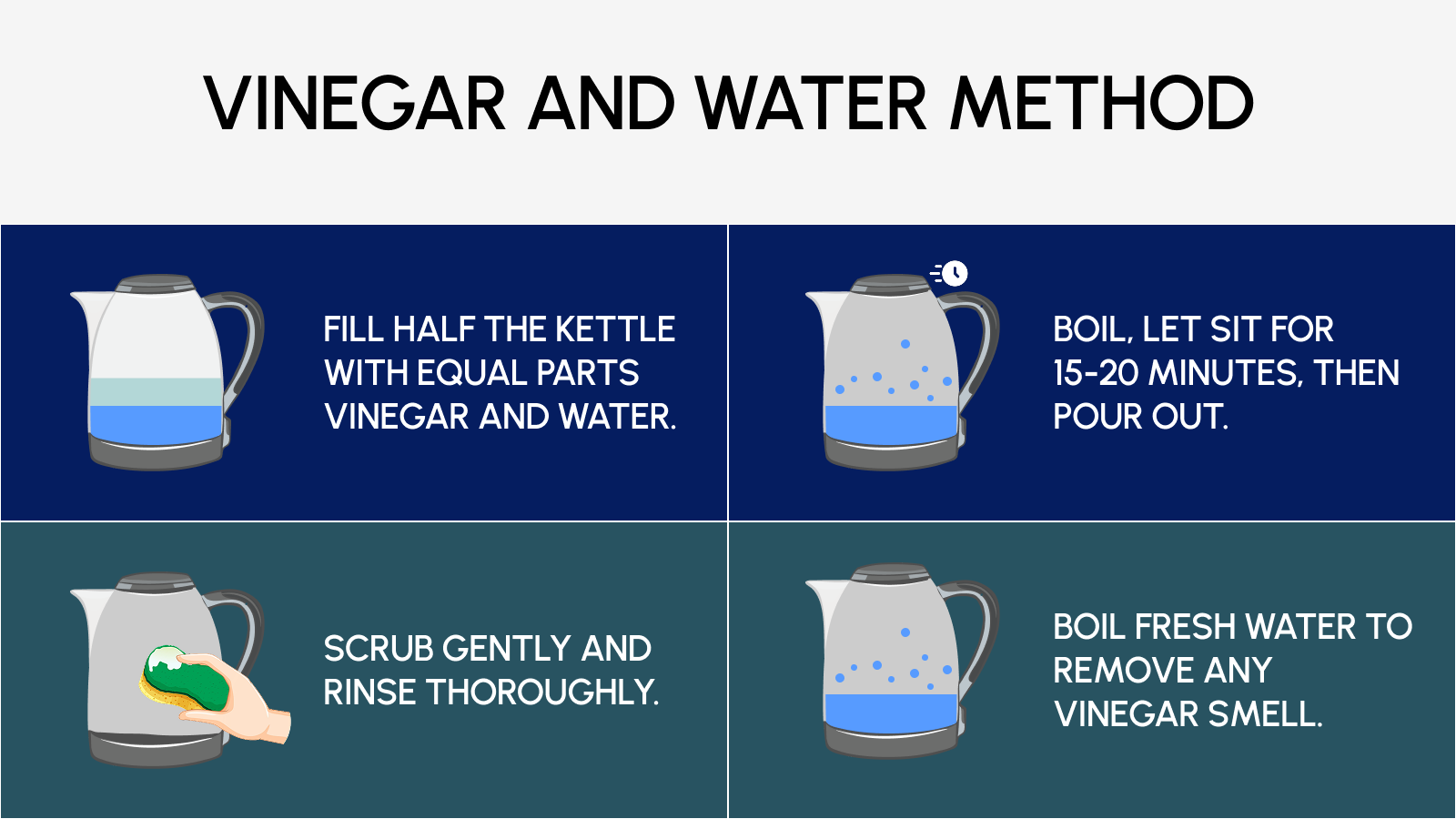
Fill the kettle halfway with equal parts water and white vinegar. Boil the mixture to loosen stains.
- Boil a half water and half vinegar mix in the kettle.
- Turn off the kettle and let it sit for 30 minutes.
- Pour out the liquid and rinse the kettle thoroughly.
- Use a soft brush to scrub any leftover spots.
Lemon Juice Techniques
Lemon juice is acidic and fresh-smelling. It helps remove stains and adds a clean scent.
Fill the kettle with water and add lemon juice or lemon slices. Boil and let it cool before cleaning.
- Add the juice of one lemon or several slices to the kettle.
- Fill the rest of the kettle with water.
- Boil the mixture and let it cool for an hour.
- Empty the kettle and scrub stains with a soft cloth.
Baking Soda Solutions
Baking soda is mildly abrasive and neutralizes odors. It helps scrub away hard water stains gently.
Make a paste with baking soda and water. Apply it inside the kettle to clean stains and rinse well.
- Mix 2 tablespoons of baking soda with a little water to form a paste.
- Apply the paste to stains inside the kettle.
- Scrub gently with a soft sponge or cloth.
- Rinse the kettle thoroughly to remove residue.

Credit: www.express.co.uk
Commercial Cleaning Products
Hard water stains build up inside kettles over time. Commercial cleaning products help remove these stains quickly.
Choosing the right product and using it safely ensures your kettle stays clean without damage.
Choosing The Right Descaler
Pick a descaler made for kettles or small appliances. Check the label to make sure it works on calcium and mineral deposits.
- Look for products with mild acids like citric or lactic acid.
- Avoid harsh chemicals that can damage metal or plastic parts.
- Check if the product is safe for your kettle’s material (stainless steel, glass, or plastic).
- Choose a product with clear instructions and safety information.
Safe Usage Tips
| Tip | Details |
| Read Instructions | Follow product guidelines carefully before use. |
| Wear Gloves | Protect your skin from chemicals during cleaning. |
| Ventilate Area | Use in a well-ventilated space to avoid fumes. |
| Rinse Thoroughly | Flush the kettle multiple times after cleaning to remove residue. |
| Store Safely | Keep products out of reach of children and pets. |
Step-by-step Cleaning Process
Hard water stains in kettles look unsightly and can affect taste. Removing these stains keeps your kettle clean and safe to use.
This guide shows you a simple way to clean hard water stains with easy steps.
Preparation
Gather all materials before you start cleaning the kettle. This saves time and makes the process smooth.
You will need white vinegar or lemon juice, water, a soft cloth, and a brush or sponge.
- White vinegar or lemon juice
- Water
- Soft cloth
- Brush or sponge
Application
Fill the kettle halfway with equal parts water and vinegar or lemon juice. Heat the mixture until it boils.
Turn off the kettle and let the mixture sit for 30 minutes. This loosens the hard water stains inside.
- Fill kettle with half water, half vinegar or lemon juice
- Boil the mixture
- Let it sit for 30 minutes
Rinsing And Drying
After soaking, pour out the mixture. Use a soft cloth or sponge to wipe away loosened stains.
Rinse the kettle several times with clean water. Dry it with a clean towel before using again.
- Pour out the vinegar or lemon juice solution
- Wipe stains with a soft cloth or sponge
- Rinse kettle multiple times with water
- Dry with a clean towel
Preventing Future Stains
Hard water stains can build up quickly inside your kettle. Preventing these stains keeps your kettle clean and working well. Simple steps help stop stains from forming again.
Here are some ways to prevent hard water stains and keep your kettle spotless for longer.
Regular Maintenance
Clean your kettle often to avoid mineral buildup. Empty the kettle after each use. Wipe the inside with a soft cloth to remove any moisture.
- Descale your kettle every 1-2 weeks with vinegar or lemon juice.
- Rinse the kettle thoroughly after descaling to remove residue.
- Use a soft brush to scrub away any stubborn spots.
- Do not leave water standing in the kettle for long periods.
Water Softening Options
Using softer water reduces mineral deposits. Here is a comparison of common water softening methods for kettles.
| Method | How It Works | Pros | Cons |
|---|---|---|---|
| Boiling and Cooling | Boil water, cool, then pour off sediment. | Easy and free. | Does not remove all minerals. |
| Water Softener Filter | Filters out minerals using resin or charcoal. | Effective at reducing hardness. | Needs regular filter replacement. |
| Distilled Water | Water is boiled and condensed to remove minerals. | Completely mineral-free. | Costly and less convenient. |
Troubleshooting Stubborn Stains
Hard water stains in kettles can be tough to remove. These stains form from minerals like calcium. They build up over time and can block your kettle.
Some stains do not disappear with simple cleaning. You need stronger methods to clear them. This guide helps you fix those tough stains safely.
Alternative Methods
You can try natural and household items to clean hard water stains. These methods work without harming your kettle.
Vinegar and baking soda are common choices. They break down mineral deposits well.
- Fill the kettle with equal parts water and white vinegar. Boil and let sit for one hour.
- Use a soft brush to scrub the inside after soaking.
- For extra power, add baking soda after vinegar soaking. Let fizz and scrub again.
- Rinse the kettle several times with clean water to remove residues.
- Lemon juice also works by dissolving mineral stains naturally.
When To Seek Professional Help
Some stains may not come off with home methods. If your kettle has thick or old build-up, it might need expert care.
Professional cleaning can protect your kettle from damage. Experts use safe tools and chemicals for deep cleaning.
- If the kettle leaks or shows rust, stop using it.
- Call a professional if hard water stains cover heating elements.
- Seek help when stains cause bad smells or taste in water.
- Use professional services to extend your kettle’s life.
Frequently Asked Questions
How Do I Remove Hard Water Stains From A Kettle?
To remove hard water stains, fill the kettle with equal parts water and white vinegar. Boil, then let it sit for an hour. Rinse thoroughly and scrub any remaining stains gently with a soft brush.
Can Baking Soda Clean Kettle Stains Effectively?
Yes, baking soda is great for cleaning kettle stains. Make a paste with water, apply it to stains, and scrub gently. Rinse well afterward to remove any residue and restore your kettle’s shine.
How Often Should I Descale My Kettle?
Descale your kettle every 1-3 months, depending on water hardness. Regular descaling prevents buildup, improves efficiency, and extends your kettle’s lifespan. Use vinegar or commercial descaling agents for best results.
Is It Safe To Use Vinegar In My Kettle?
Yes, vinegar is safe and effective for descaling kettles. It dissolves mineral deposits naturally without harsh chemicals. Always rinse the kettle thoroughly after using vinegar to avoid lingering odors or tastes.
Conclusion
Removing hard water stains from your kettle is simple. Regular cleaning prevents buildup. Vinegar and lemon juice work wonders. They break down minerals effectively. Use them monthly for best results. Always rinse your kettle thoroughly. This ensures no residue remains.
A clean kettle means better-tasting beverages. Plus, it prolongs your kettle’s life. Keep these tips handy. Share them with friends. Everyone deserves a stain-free kettle. Happy cleaning!