
Have you ever cooked risotto that turned out a bit dry or clumpy instead of smooth and creamy? You’re not alone.
Making risotto perfectly creamy can feel tricky, but once you know the simple secrets, you’ll impress yourself and anyone you serve it to. Imagine spooning into a bowl of risotto that’s rich, velvety, and melts in your mouth with every bite.
Ready to learn how to transform your risotto into that dream texture? Keep reading—your perfect creamy risotto is just a few steps away.
Choosing The Right Rice
Risotto becomes creamy because of the rice used. Picking the right rice is key to a soft, smooth dish.
Not all rice types give the same texture. Some hold more starch, which makes risotto creamier.
Arborio Vs. Carnaroli
Arborio is the most common rice for risotto. It is easy to find and cooks well.
Carnaroli is called the “caviar” of risotto rice. It has a firmer texture and absorbs liquid better.
- Arborio is creamier but can be softer.
- Carnaroli holds shape longer and is less sticky.
- Both make creamy risotto but feel different in the mouth.
Rice Starch Content
Rice starch makes risotto creamy. The starch breaks down during cooking to create a smooth sauce.
Short-grain rice has more starch than long-grain rice. This is why it is best for risotto.
| Rice Type | Starch Level | Effect on Risotto |
|---|---|---|
| Arborio | High | Creates creamy, slightly sticky texture |
| Carnaroli | Very High | Produces creamy and firm grains |
| Vialone Nano | Medium | Soft but less creamy risotto |

Credit: coupleinthekitchen.com
The Importance Of Stock
Stock is the liquid used to cook risotto rice. It adds flavor and moisture to the dish.
Using good stock helps make risotto creamy and tasty. It affects the final texture and taste.
Homemade Vs. Store-bought
Homemade stock is fresh and full of natural flavors. You can control the ingredients and salt level.
Store-bought stock is convenient and quick. It saves time but may contain preservatives or extra salt.
- Homemade stock has a richer taste
- Store-bought stock is easy to use
- Homemade stock may take hours to prepare
- Store-bought stock is ready in minutes
Stock Flavor Profiles
Chicken stock is light and adds mild flavor to risotto. It works well with many ingredients.
Vegetable stock gives a fresh and earthy taste. It is good for vegetarian or vegan risotto.
Beef stock is strong and rich. It suits hearty risotto with meat or mushrooms.
- Chicken stock: mild and versatile
- Vegetable stock: fresh and earthy
- Beef stock: rich and bold
Stirring Techniques
Stirring risotto correctly helps create its creamy texture. The right method affects both the rice and flavor.
Learn how gentle stirring and avoiding over-stirring keep your risotto smooth and perfect.
Gentle And Consistent Stirring
Stir your risotto gently to release the rice’s starch. This starch makes the dish creamy without being mushy.
- Use a wooden spoon for soft stirring.
- Keep a steady rhythm to avoid breaking the rice grains.
- Stir often but not constantly; about every 30 seconds is ideal.
- Combine the rice and broth evenly for smooth cooking.
Avoiding Over-stirring
Too much stirring breaks rice grains. This makes the risotto gluey and dense.
| Effect | Too Much Stirring | Right Amount |
| Rice Grain | Broken and mushy | Whole and firm |
| Texture | Gluey and heavy | Creamy and light |
| Appearance | Thick and clumpy | Glossy and smooth |
Controlling Heat
Controlling heat is key to making risotto creamy. The right temperature helps the rice cook evenly and release starch.
Too much heat can dry out the rice. Too little heat slows cooking and affects texture. Finding the right heat is important.
Medium Heat Benefits
Cooking risotto on medium heat keeps the temperature steady. It allows the rice to absorb liquid slowly and swell properly.
Medium heat helps the starch to release gradually. This creates the creamy texture risotto is known for without burning.
- Even cooking for tender rice
- Better starch release for creaminess
- Less risk of burning or sticking
- More control over cooking speed
Avoiding High Heat
High heat cooks the rice too fast. It can cause the liquid to evaporate before the rice is soft.
When heat is too high, the risotto may burn or stick to the pan. This ruins the creamy texture and taste.
- Liquid evaporates too quickly
- Rice cooks unevenly with hard centers
- Risk of burning or sticking to pan
- Loss of creamy texture
Incorporating Ingredients
Making risotto creamy depends on how you add each ingredient. The order and timing matter a lot.
Adding ingredients carefully helps the rice release its starch. This creates the smooth texture risotto needs.
Timing Of Additions
Start by sautéing onions and garlic until soft. Then add the rice and toast it briefly.
Add warm broth slowly, one ladle at a time. Stir the rice often and wait until the liquid is almost gone before adding more.
- Add cheese and butter at the very end to keep creaminess.
- Add delicate ingredients like herbs near the end to keep flavor fresh.
- Avoid adding cold ingredients early; they can stop cooking.
Balancing Flavors
Use salt and pepper carefully to enhance the taste. Too much salt can hide other flavors.
Add acidic ingredients like lemon juice or vinegar last. They brighten the dish without making it sour.
- Cheese adds richness and saltiness.
- Butter smooths the texture and rounds flavors.
- Fresh herbs add brightness and color.

Credit: myfoodmemoirs.com
Finishing Touches
Finishing a risotto well makes it creamy and delicious. Small additions at the end create a smooth texture and rich taste.
These final steps help bind the rice and liquids together. They give risotto its classic creamy feel.
Adding Butter And Cheese
Butter adds richness and shine to risotto. Stir in cold butter at the end to melt it slowly.
Cheese, like Parmesan, adds flavor and creaminess. Add grated cheese while the risotto is hot, but off the heat.
- Use unsalted butter for better control of saltiness
- Butter should be cold to create a silky texture
- Grated Parmesan is best for smooth melting
- Stir cheese in gently to avoid clumping
The Role Of Cream
Cream is optional but helps make risotto extra smooth. Add a small amount at the end for softness.
Too much cream can hide the rice flavor. Use just enough to improve texture without overpowering taste.
Testing Texture
Making risotto creamy requires careful texture testing. This helps you decide when it is cooked just right.
Checking the texture during cooking is important. It guides you to stop at the perfect moment for the best dish.
Al Dente Vs. Creamy
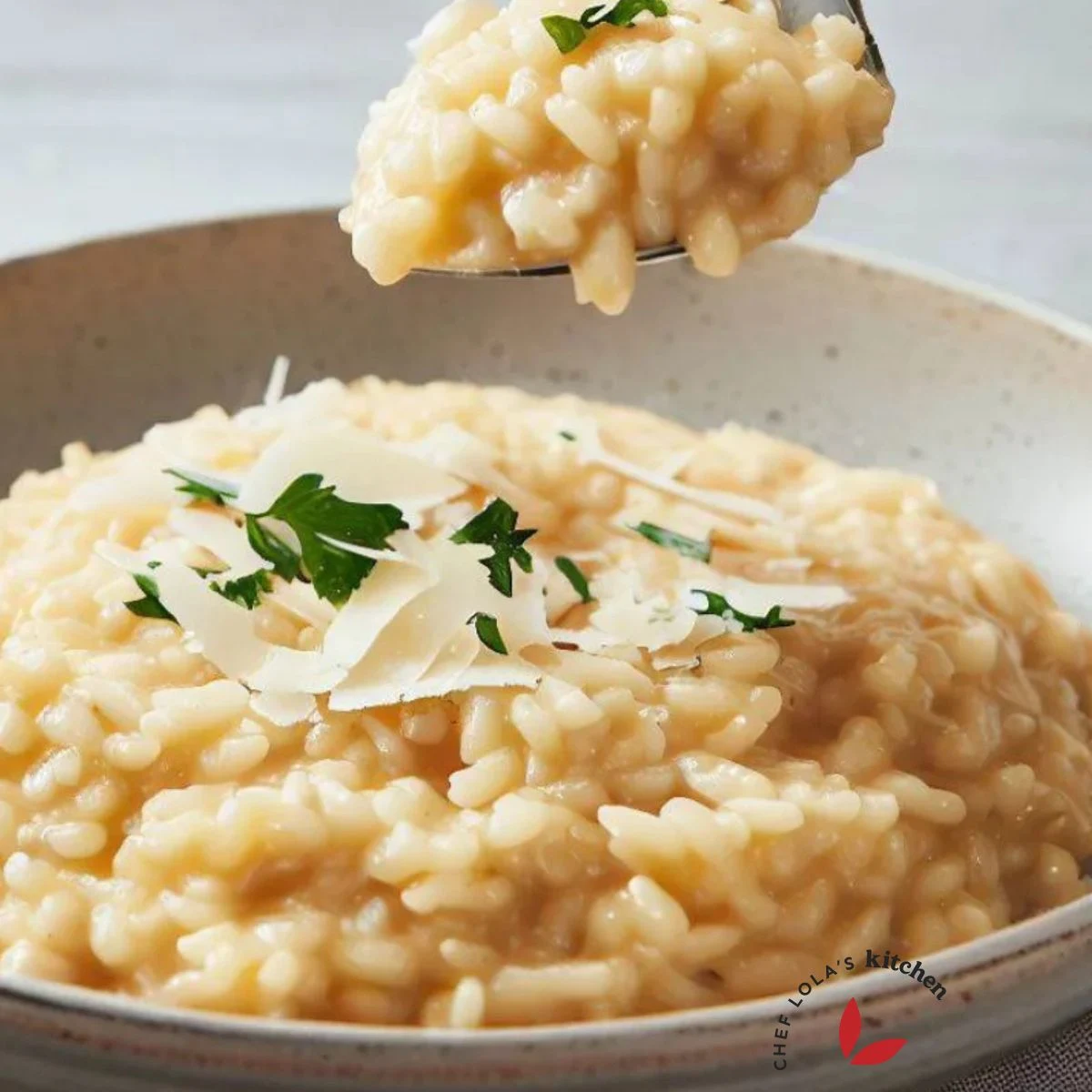
Al dente means the rice is firm to the bite. Creamy means the grains are soft but still hold shape. Both textures affect how risotto feels in your mouth.
- Al dente rice has a slight bite and is not mushy.
- Creamy risotto has a smooth, thick texture.
- Rice should not be hard or crunchy.
- Creaminess comes from starch released during slow cooking.
Taste Testing For Perfection
| Step | What to Check | Why It Matters |
|---|---|---|
| 1 | Taste a spoonful | Check if rice is cooked through |
| 2 | Feel the texture | Firm grains show al dente |
| 3 | Notice creaminess | Look for smooth, thick sauce |
| 4 | Adjust cooking time | Stop when balance is right |
Credit: cheflolaskitchen.com
Common Mistakes
Making risotto creamy can be tricky. Many cooks face problems that stop the dish from turning out right.
Knowing common mistakes helps you avoid them and make better risotto every time.
Avoiding Too Much Liquid
Adding too much liquid makes risotto watery and loose. It loses the creamy texture you want.
Pour broth slowly and wait for the rice to absorb it before adding more. This controls the liquid level.
- Use a ladle to add broth little by little
- Stir often to help rice absorb liquid
- Stop adding broth when rice feels tender but firm
- Keep broth warm for even cooking
Preventing Sticky Risotto
Sticky risotto happens when the rice cooks too long or stirs too much. It turns thick and gluey.
Cook the rice on medium heat and stir gently. This keeps the grains separate but creamy.
- Use Arborio or Carnaroli rice for best texture
- Keep stirring but avoid fast, rough movements
- Check rice often to avoid overcooking
- Remove from heat when rice is just tender
Frequently Asked Questions
How Do You Achieve Creamy Risotto Texture?
To get creamy risotto, use Arborio rice and stir constantly. Add warm broth gradually. This releases starch, creating a smooth, velvety texture.
What Type Of Rice Is Best For Creamy Risotto?
Arborio rice is best for creamy risotto. Its high starch content helps achieve the desired creamy consistency without becoming mushy.
Can Adding Cheese Make Risotto Creamier?
Yes, adding Parmesan or similar cheese enhances creaminess. Stir cheese in at the end for a rich, smooth finish.
Why Is Constant Stirring Important In Risotto?
Constant stirring releases rice starch, essential for risotto’s creamy texture. It also prevents sticking and ensures even cooking throughout.
Conclusion
Achieving creamy risotto is easier than it seems. Stir gently and add warm broth slowly. Use the right rice for best results. Finish with butter and cheese for smooth texture. Practice makes your risotto taste better each time. Enjoy your delicious, creamy dish with family or friends.
Cooking risotto can be fun and rewarding. Try different flavors to find what you like most. Your kitchen will soon smell amazing and inviting. Keep these tips in mind and cook with confidence.