
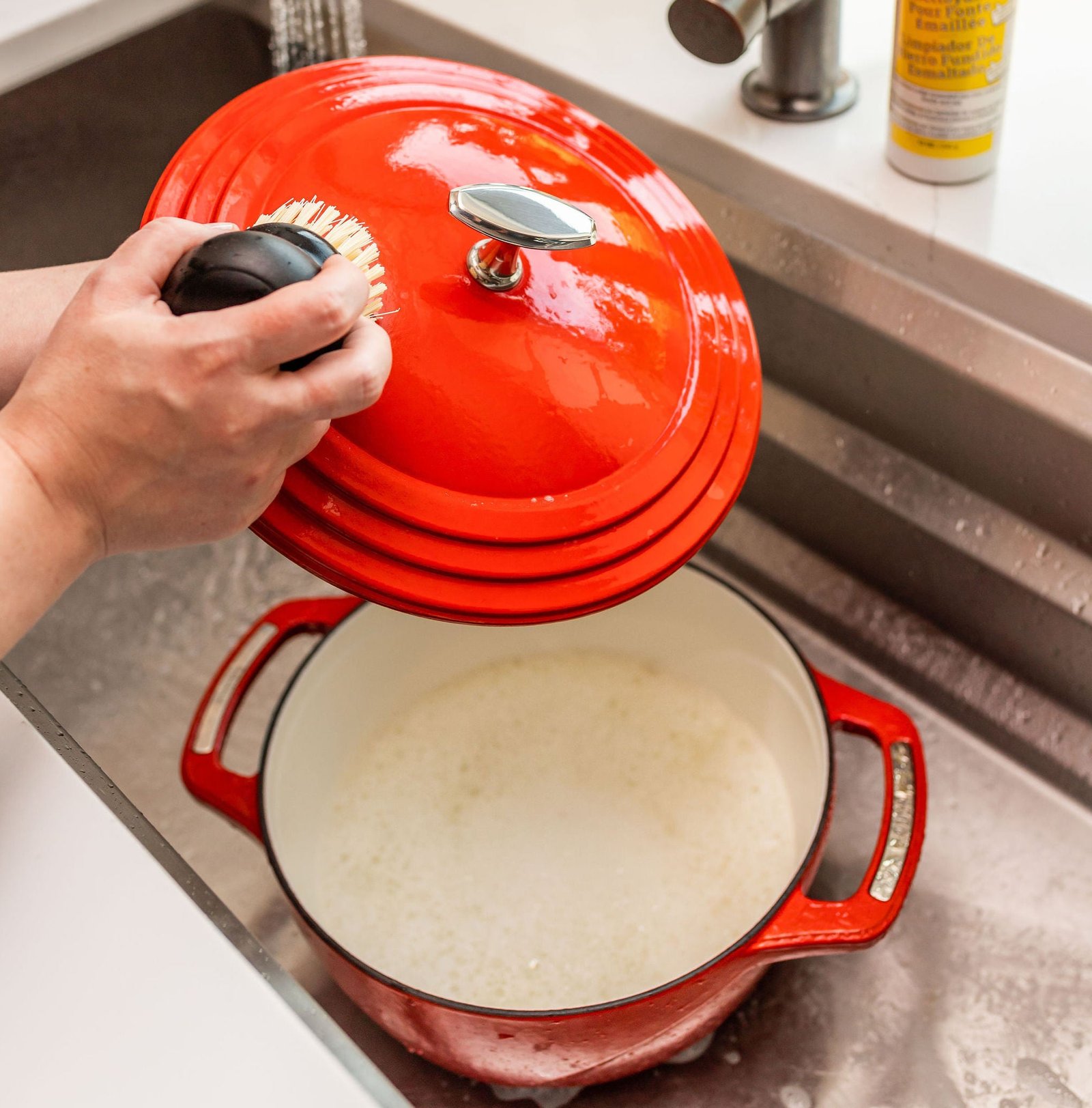
If you love cooking with enamel cookware, you know how important it is to keep it looking and performing its best. But do you sometimes wonder how to clean it without causing damage?
Or how to avoid stains and chips that can ruin your favorite pots and pans? You’re not alone. Taking care of enamel cookware might seem tricky, but with the right tips, it’s easier than you think. Keep reading, and you’ll discover simple, effective ways to maintain your enamel cookware so it stays beautiful and lasts for years to come.
Your kitchen deserves it—and so do you.

Credit: www.cuminco.com
Choosing The Right Enamel Cookware
Enamel cookware offers a blend of beauty and function. It is a popular choice for many kitchens.
Picking the right enamel cookware can make cooking easier and improve your meal quality. This guide helps you understand what to look for.
Factors To Consider
Look at the material under the enamel. Cast iron holds heat well. Steel heats up quickly.
- Check the weight: heavier pots keep heat longer.
- Look for smooth enamel inside to avoid food sticking.
- Choose cookware with tight-fitting lids to keep moisture.
- Consider size and shape based on your cooking needs.
- Make sure handles are sturdy and heat-resistant.
Popular Brands And Models
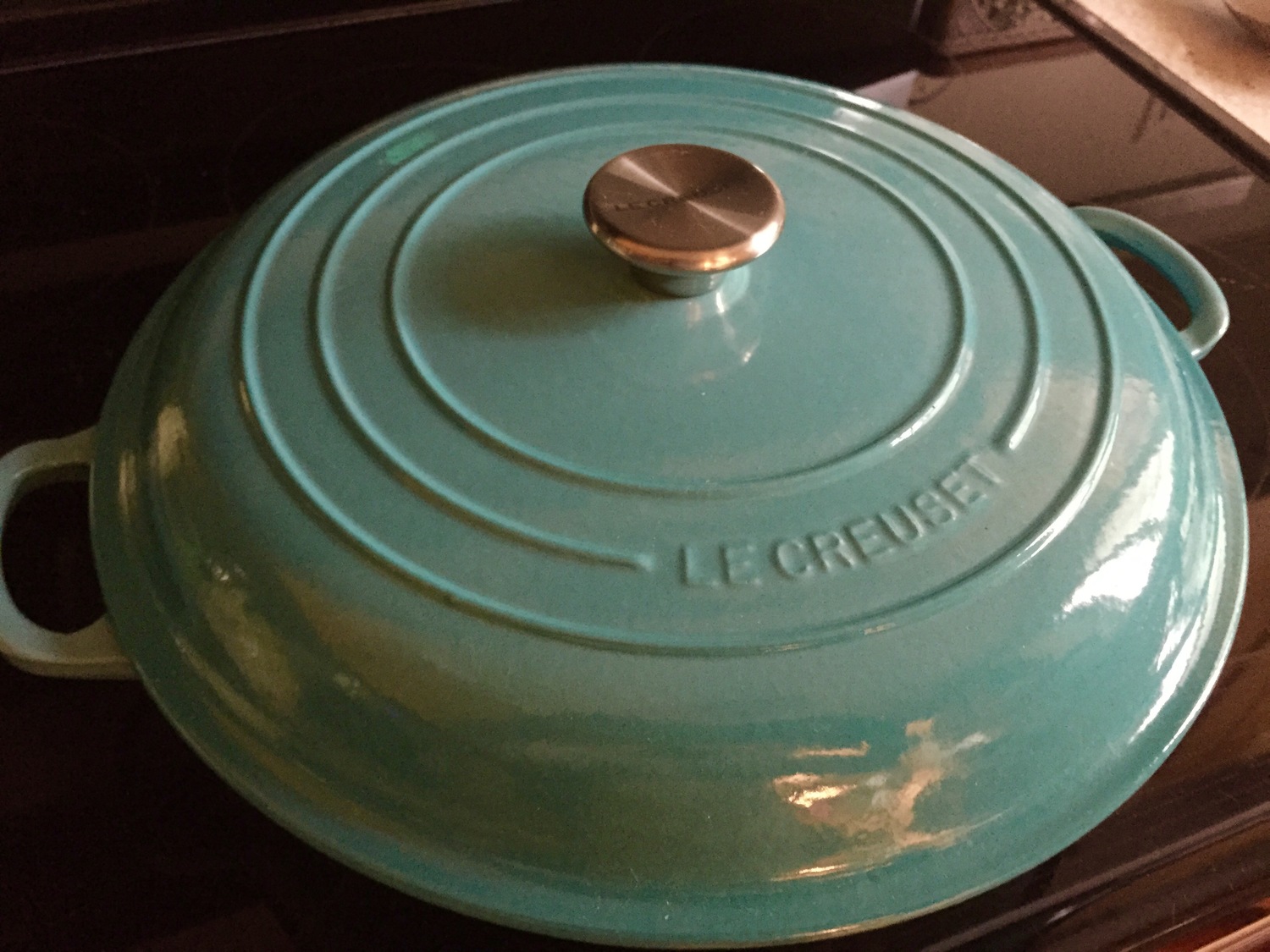
Many brands offer enamel cookware with different features and prices. Some focus on style, others on durability.
| Brand | Material | Popular Model | Price Range |
|---|---|---|---|
| Brand A | Cast Iron | Classic Dutch Oven | High |
| Brand B | Steel | Everyday Saucepan | Medium |
| Brand C | Cast Iron | Multi-Purpose Skillet | High |
| Brand D | Steel | Compact Casserole | Low |
Credit: www.redefiningdomestics.com
Daily Cleaning Practices
Maintaining enamel cookware daily keeps it looking new and working well. Proper cleaning helps stop stains and damage.
Use the right tools and cleaners to protect the enamel surface. Avoid harsh methods that can scratch or wear out the coating.
Best Cleaning Tools
Choose tools that clean gently but effectively. Soft sponges and cloths work best to avoid scratches.
- Non-abrasive sponges or soft cloths
- Plastic or wooden scrapers for stuck food
- Soft-bristled brushes for corners and edges
- Microfiber towels for drying
- Avoid steel wool or metal scrubbers
Safe Cleaning Agents
Select mild cleaners that clean well without harming enamel. Natural and gentle agents work best for daily use.
| Cleaning Agent | Use | Notes |
| Mild dish soap | Daily washing | Safe and effective |
| Baking soda | Stain removal | Use as a paste with water |
| White vinegar | Removing mineral deposits | Dilute with water before use |
| Warm water | Rinsing and soaking | Prevents residue build-up |
Stain Removal Techniques
Enamel cookware looks beautiful but can get stained from cooking. Stains happen because of food and heat. Cleaning stains carefully keeps the cookware safe and shiny.
Using the right ways to remove stains helps keep your enamel pots and pans lasting longer. It also keeps them looking new.
Dealing With Food Residues
Food residues can stick to enamel cookware after cooking. They may leave marks or stains if not cleaned soon. Soak the cookware in warm, soapy water for a while to loosen food bits.
Use a soft sponge or cloth to wipe away the residues. Avoid metal scrubbers as they can scratch the enamel surface.
- Fill cookware with warm water and mild dish soap
- Let it soak for 15-30 minutes
- Use a soft sponge to clean gently
- Rinse well with clean water
- Dry with a soft towel
Handling Tough Stains
Tough stains like burnt food or discoloration need special care. Baking soda is a safe and effective option to remove these stains.
Make a paste with baking soda and water. Apply the paste on the stain and let it sit for 10-15 minutes. Then scrub gently with a soft sponge.
- Mix 3 parts baking soda with 1 part water
- Apply paste on stains
- Wait 10-15 minutes
- Gently scrub with soft sponge
- Rinse and dry thoroughly
Preventing Scratches And Chips
Enamel cookware looks great and lasts long if you take care of it. Scratches and chips can damage the surface and reduce its life.
Using the right methods to store and handle your cookware helps keep it safe and clean.
Proper Storage Solutions
Store your enamel cookware carefully to stop scratches and chips. Avoid stacking pots and pans directly on each other.
Use soft cloth or paper towels between pieces if you need to stack them. This adds a protective layer and prevents damage.
- Place soft liners between stacked cookware
- Keep cookware in a dry, cool place
- Use hooks or racks to hang pots safely
Safe Handling Tips
Handle enamel cookware gently to avoid chips. Avoid dropping or banging it against hard surfaces.
Use wooden or silicone utensils instead of metal ones. This helps prevent scratching the enamel surface.
- Lift cookware carefully, do not drag it
- Use soft utensils like wood or silicone
- Avoid sudden temperature changes to prevent cracks
Avoiding Thermal Shock
Enamel cookware needs careful handling to last long. Thermal shock can crack or chip the enamel coating.
Learn to avoid sudden temperature changes to keep your cookware safe.
Temperature Guidelines
Do not heat enamel cookware too quickly or on very high heat. Sudden heat can cause damage.
- Start cooking on low or medium heat
- Allow the cookware to warm up gradually
- Avoid using high heat settings unless the cookware is designed for it
- Do not heat an empty pan for a long time
- Cool down the cookware slowly after use
Transitioning Between Heat Sources
Move your enamel cookware carefully between different heat sources to avoid cracks.
| Transition Type | Recommended Action |
| From Stove to Oven | Let cookware cool slightly before placing in oven |
| From Oven to Cold Surface | Use a trivet or hot pad to avoid sudden cooling |
| From Stove to Sink | Do not rinse while very hot; let cool first |
| From Grill to Counter | Place on heat-safe surface, avoid cold contact |

Credit: www.reddit.com
Regular Maintenance Tips
Keeping your enamel cookware in good shape needs regular care. Simple steps help it last longer and stay safe for cooking.
Below are important tips for seasonal deep cleaning and inspecting for damage. Follow these to protect your cookware.
Seasonal Deep Cleaning
Deep cleaning your enamel cookware every few months removes stains and food build-up. This keeps it bright and prevents damage.
- Fill the pot with warm water and add baking soda.
- Let it soak for 15-20 minutes to loosen dirt.
- Use a soft sponge to scrub gently without scratching.
- Rinse thoroughly with warm water.
- Dry completely with a soft cloth before storing.
Inspecting For Damage
Check your cookware often for chips, cracks, or rust spots. Early detection helps prevent bigger problems.
| Issue | What to Look For | Action |
|---|---|---|
| Chips | Small broken enamel spots on edges or surface | Avoid cooking acidic foods; consider repair or replacement |
| Cracks | Visible lines or breaks in the enamel coating | Stop using cookware; cracks can harbor bacteria |
| Rust | Orange or brown spots, especially on exposed metal | Clean with mild abrasive and dry well; prevent moisture |
Enhancing Longevity
Enamel cookware lasts longer with proper care. Small habits keep the coating intact.
Knowing when to replace or repurpose your cookware also helps maintain a safe kitchen.
When To Replace Cookware
Replace enamel cookware if the coating cracks or chips. Damaged enamel can expose metal and cause rust.
- Look for large chips or cracks on the surface
- Check for rust spots inside or outside the pan
- Notice if food sticks more than usual
- Watch for discoloration that does not clean off
Repurposing Old Pieces
Old enamel cookware can have new life. Use damaged pieces creatively instead of throwing them away.
| Old Cookware Condition | Repurpose Idea |
|---|---|
| Cracked enamel but no rust | Use as a plant pot for herbs or flowers |
| Chipped edges | Store kitchen utensils or tools |
| Small rust spots | Keep on a shelf for decoration |
| Unusable for cooking | Use as a catch-all tray for keys or coins |
Frequently Asked Questions
How Do I Clean Enamel Cookware Without Damage?
Use warm, soapy water and a soft sponge to clean enamel cookware. Avoid abrasive cleaners or steel wool. For tough stains, soak the cookware in warm water and baking soda. Dry thoroughly to prevent rust and maintain the cookware’s finish.
Can Enamel Cookware Be Used On Induction Stoves?
Yes, most enamel cookware is compatible with induction stoves if it has a magnetic base. Check the manufacturer’s instructions to confirm. Enamel cookware offers even heat distribution, making it ideal for induction cooking when properly designed.
How To Prevent Chipping On Enamel Cookware?
Avoid sudden temperature changes and do not drop or bang enamel cookware. Use wooden or silicone utensils to prevent scratches. Store cookware carefully, stacking with protection between pieces to maintain the enamel coating and prevent chipping.
Is Enamel Cookware Dishwasher Safe?
Many enamel cookware pieces are dishwasher safe, but hand washing is recommended to preserve the finish. Harsh dishwasher detergents and high heat can dull or damage the enamel over time. Always check the manufacturer’s care instructions.
Conclusion
Proper care keeps enamel cookware lasting long and looking good. Avoid sudden temperature changes to prevent cracks. Clean gently with soft sponges and mild soap. Dry completely to stop rust on exposed parts. Store carefully to avoid chips or scratches.
Regular maintenance helps your cookware stay strong and reliable. Enjoy cooking with your well-kept enamel pots and pans every day. Simple steps make a big difference in durability. Keep these tips in mind for the best results.