
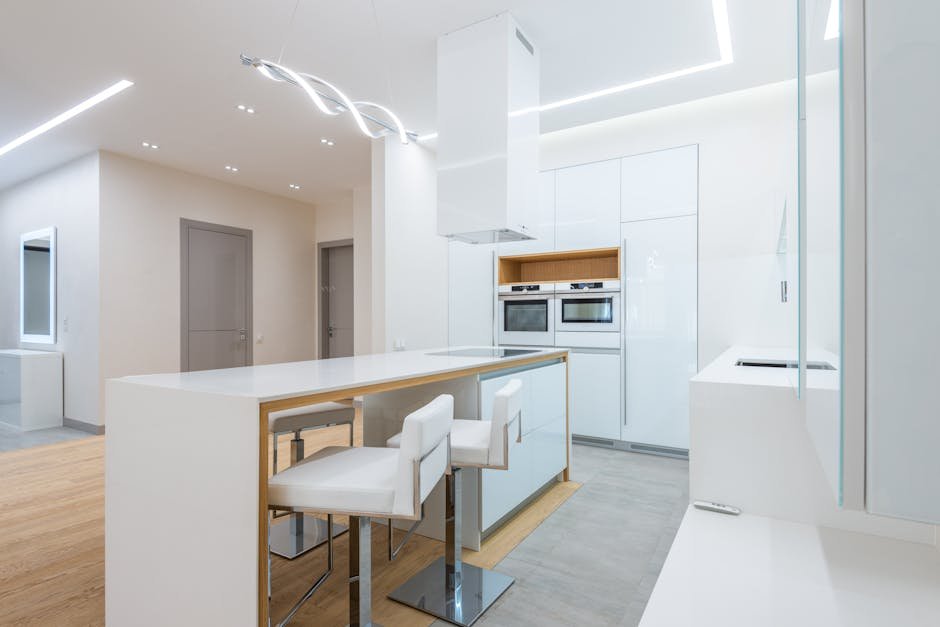
Are you dreaming of a kitchen that feels spacious, organized, and perfect for cooking or entertaining? Designing a kitchen with an L-shaped layout could be the answer you’ve been looking for.
This design not only maximizes your space but also creates a smooth flow that makes every task easier. You’ll discover simple tips and smart ideas to help you create a kitchen that fits your lifestyle and boosts your home’s value.
Keep reading to unlock the secrets to a kitchen design that works just for you.
Benefits Of L-shaped Kitchen
L-shaped kitchens use two connected walls to form a right angle. This design creates a practical workspace for cooking and cleaning.
This layout fits well in many home styles. It offers space for cooking and socializing at the same time.
Maximizes Corner Space
L-shaped kitchens make good use of corner areas. This space often goes unused in other designs.
With the right cabinets and shelves, corners become useful storage spots.
Allows Multiple Work Zones
This design creates separate zones for cooking, cleaning, and preparing food. It helps keep the kitchen organized.
More than one person can work in the kitchen without getting in each other’s way.
Open And Spacious Feel
The L shape leaves one side open, making the kitchen feel larger. It also improves traffic flow.
This open side can connect to dining or living areas, creating a social space.
Flexible Layout Options
You can add an island or a dining table in the open space. This adds extra counter space or seating.
The L-shaped design fits both small and large kitchens. It adapts well to different room sizes.
Efficient Work Triangle
The sink, stove, and refrigerator form a natural triangle. This reduces steps while cooking.
An efficient work triangle saves time and makes cooking easier.
Space Optimization Techniques
Designing a kitchen with an L-shaped layout can save space and make cooking easier. Using space well helps keep your kitchen tidy and functional.
Smart ideas for storage and using walls make the kitchen feel bigger and more organized.
Corner Storage Solutions
Corner cabinets often waste space in L-shaped kitchens. Special storage units can use these spots well. They keep items easy to reach.
Lazy susans and pull-out shelves bring things from deep corners to the front. This saves space and reduces clutter.
- Install lazy susans for easy access
- Use pull-out trays or baskets
- Try corner drawers instead of cabinets
- Add vertical dividers for trays and pans
Efficient Use Of Vertical Space
Using the walls for storage frees up counter space. Shelves and hooks keep things organized and handy.
High cabinets and tall shelves add more storage without taking floor space. This helps keep the kitchen clean and open.
- Mount shelves above counters for dishes
- Hang pots and pans on wall hooks
- Use magnetic strips for knives and tools
- Choose tall cabinets to store less used items
Choosing The Right Appliances
Choosing the right appliances is key to a functional L-shaped kitchen. Appliances should fit the space and suit your cooking needs.
Think about how you use your kitchen daily. This helps select appliances that work well with your layout and lifestyle.
Size And Placement Considerations
Appliances must fit your kitchen space without crowding. Measure the available area carefully before buying.
- Choose appliances that match your counter height and cabinet depth.
- Place the refrigerator near the entrance for easy access.
- Keep the stove close to the sink for better workflow.
- Allow enough clearance for doors to open fully.
- Plan enough space between appliances to avoid congestion.
Energy-efficient Options
| Appliance | Energy-Saving Feature | Benefit |
|---|---|---|
| Refrigerator | Energy Star rating | Uses less electricity, lowers bills |
| Dishwasher | Eco wash cycles | Reduces water and power use |
| Oven | Convection cooking | Faster cooking with less energy |
| Lighting | LED bulbs | Long-lasting and low power use |
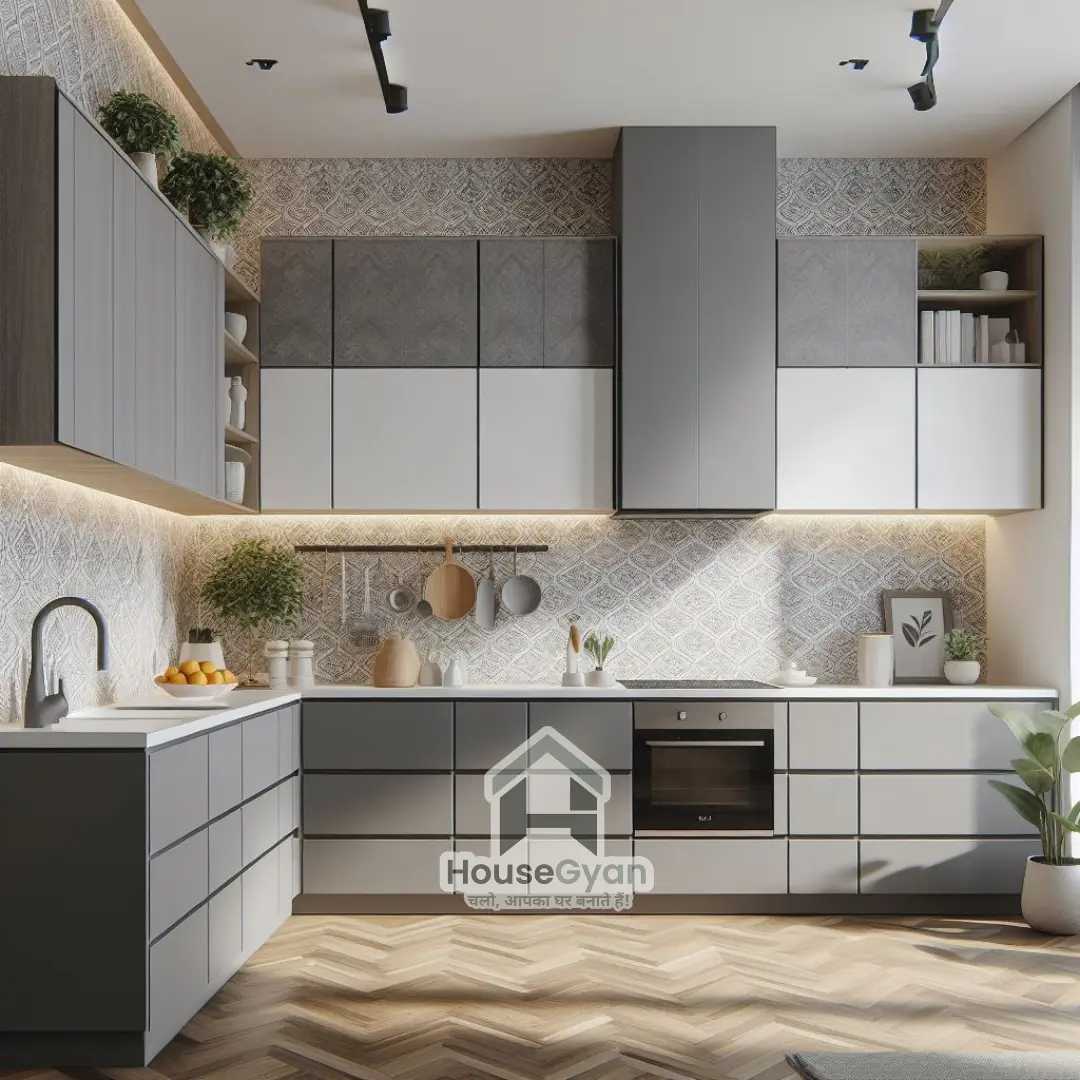
Credit: www.housegyan.com
Cabinet And Countertop Options
Choosing the right cabinets and countertops is key for an L-shaped kitchen. These elements affect style and function.
Think about materials and colors that match your space and lifestyle. This guide covers popular options.
Material Choices
Cabinets come in wood, laminate, and metal. Each has benefits and suits different budgets.
- Wood:Durable and classic, good for a warm look.
- Laminate:Affordable and easy to clean, with many colors.
- Metal:Modern and strong, often used in industrial kitchens.
- Countertops:Choose granite, quartz, or butcher block for durability.
- Granite:Heat and scratch resistant, natural stone beauty.
- Quartz:Low maintenance, consistent color and pattern.
- Butcher Block:Warm wood surface, needs regular care.
Color And Finish Ideas
| Surface | Color Options | Finish Styles |
|---|---|---|
| Cabinets | White, Gray, Navy, Natural Wood | Matte, Glossy, Satin |
| Countertops | Black, White, Earth Tones | Polished, Honed, Textured |
Light colors make the kitchen feel bigger. Dark colors add elegance and hide stains well.
Choose matte finishes for a soft look. Glossy finishes reflect light and brighten the room.
Lighting Strategies
Lighting is key to a beautiful and useful L-shaped kitchen. It helps you see well and creates a good mood.
Good lighting plans mix different types of light to brighten your space and highlight features.
Task Lighting
Task lighting shines on work areas like counters and the stove. It helps you cook and clean safely.
Under-cabinet lights are great for brightening countertops. Pendant lights over the island also work well.
- Use LED strips under cabinets for clear countertop light
- Install bright lights above the sink and stove
- Choose adjustable lights to focus on specific tasks
Ambient And Accent Lighting
Ambient lighting fills the room with soft, even light. It makes your kitchen feel open and warm.
Accent lighting adds style and highlights design details like shelves or artwork.
- Use ceiling lights or recessed lights for ambient glow
- Add LED strips inside glass cabinets for accent effects
- Consider dimmers to adjust light levels easily
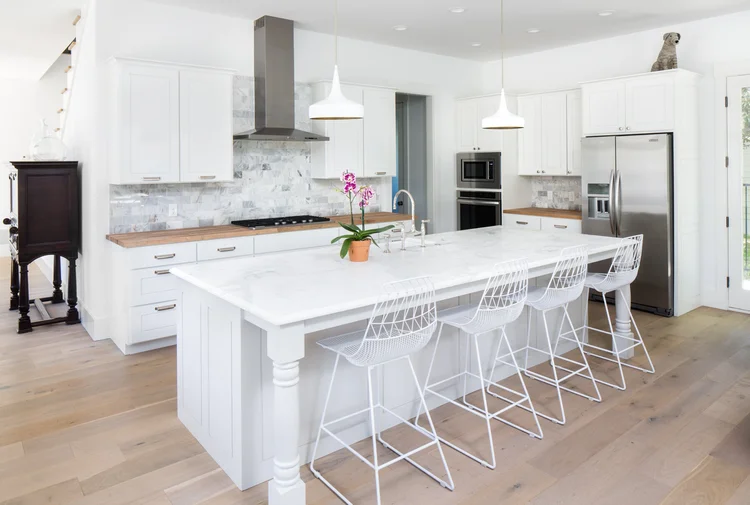
Credit: www.studiodk.com
Incorporating A Kitchen Island
Adding a kitchen island to an L-shaped layout can improve the room’s look and use. It gives extra space for cooking, eating, and storage.
Islands create a central spot that helps with meal prep and socializing. They also bring style and balance to the kitchen design.
Functionality And Style
A kitchen island adds many useful features. It can include a sink, stove, or extra cabinets. This makes cooking and cleaning easier.
Islands also improve the kitchen’s look. You can choose colors and materials that match or stand out. This creates a nice focal point.
- Extra countertop space for food prep
- Additional storage with drawers or shelves
- Room for seating with bar stools
- Place for appliances like microwaves or wine coolers
- Stylish design with unique materials or colors
Space And Traffic Flow
Plan the island size to keep enough walking space. It should not block doors or appliances. A good flow helps people move easily.
Keep at least 3 feet of space around the island. This allows multiple people to work without bumping into each other. The island should fit well with the L-shape.
- Maintain 36 to 48 inches of clearance around the island
- Place the island away from main walkways
- Use the island to divide cooking and dining areas
- Ensure the island does not block cabinet doors or appliances
- Consider island shape to match kitchen space
Flooring Choices
Choosing the right floor is key for an L-shaped kitchen. It affects how the kitchen looks and works every day.
Good flooring should handle spills, foot traffic, and fit your style well.
Durability And Maintenance
Kitchen floors face lots of wear. Pick materials that last and are easy to clean.
Tiles and vinyl resist water and stains well. Hardwood can scratch but adds warmth.
- Ceramic and porcelain tiles resist scratches and water.
- Vinyl floors are soft, water-resistant, and easy to clean.
- Hardwood looks great but needs regular care to avoid damage.
- Laminates are budget-friendly but less water-resistant.
Aesthetic Considerations
Floor style should match your kitchen’s look and feel. It ties the space together.
Light floors can make the kitchen feel bigger. Dark floors add a cozy touch.
- Choose colors that blend with cabinets and walls.
- Patterns can add interest but keep them simple for a clean look.
- Matte finishes hide dirt better than shiny floors.
- Texture helps prevent slips on wet surfaces.
Designing For Workflow Efficiency
Designing a kitchen with an L-shaped layout can improve how you work in the space. It helps keep everything within reach and saves steps.
Good workflow means placing key areas so you move smoothly while cooking and cleaning. This saves time and effort.
The Work Triangle Concept
The work triangle connects the sink, stove, and refrigerator. These three points are where most kitchen work happens.
- Place the sink near the dishwasher to make cleaning easy.
- Keep the stove close to the prep area for quick cooking.
- Locate the refrigerator so you can reach it without blocking traffic.
- Make sure the triangle paths are not blocked by furniture or appliances.
- Keep each leg of the triangle between 4 and 9 feet for comfort.
Zoning And Task Areas
Divide the kitchen into zones for different tasks. This helps you stay organized and work faster.
| Zone | Main Tasks | Key Features |
| Preparation | Cutting, mixing, assembling | Counter space, knives, mixing bowls |
| Cooking | Stove, oven use | Stove, oven, pots, pans |
| Cleaning | Washing dishes, disposing waste | Sink, dishwasher, trash bin |
| Storage | Keeping food and utensils | Refrigerator, pantry, cabinets |
Personalizing Your Kitchen
Designing a kitchen with an L-shaped layout offers a great chance to make it your own. You can add features that fit your needs and tastes.
Personalizing your kitchen makes it feel comfortable and unique. It helps you enjoy cooking and spending time there.
Decorative Elements
Decorative elements bring life to your kitchen space. They add color, texture, and personality to the L-shaped layout.
Consider adding items like colorful backsplashes, patterned tiles, or unique light fixtures. These touches make your kitchen stand out.
- Use bright or soft colors for the backsplash
- Choose stylish cabinet handles and knobs
- Add open shelves with decorative items
- Install pendant lights above the counters
Incorporating Personal Style
Your kitchen should reflect who you are. Use designs and materials that match your lifestyle and preferences.
Think about the themes and styles you like, such as modern, rustic, or classic. Then, add elements that fit those ideas.
- Pick a color palette that you enjoy
- Choose furniture that fits your comfort
- Display personal items like cookbooks or art
- Select appliances that match your design
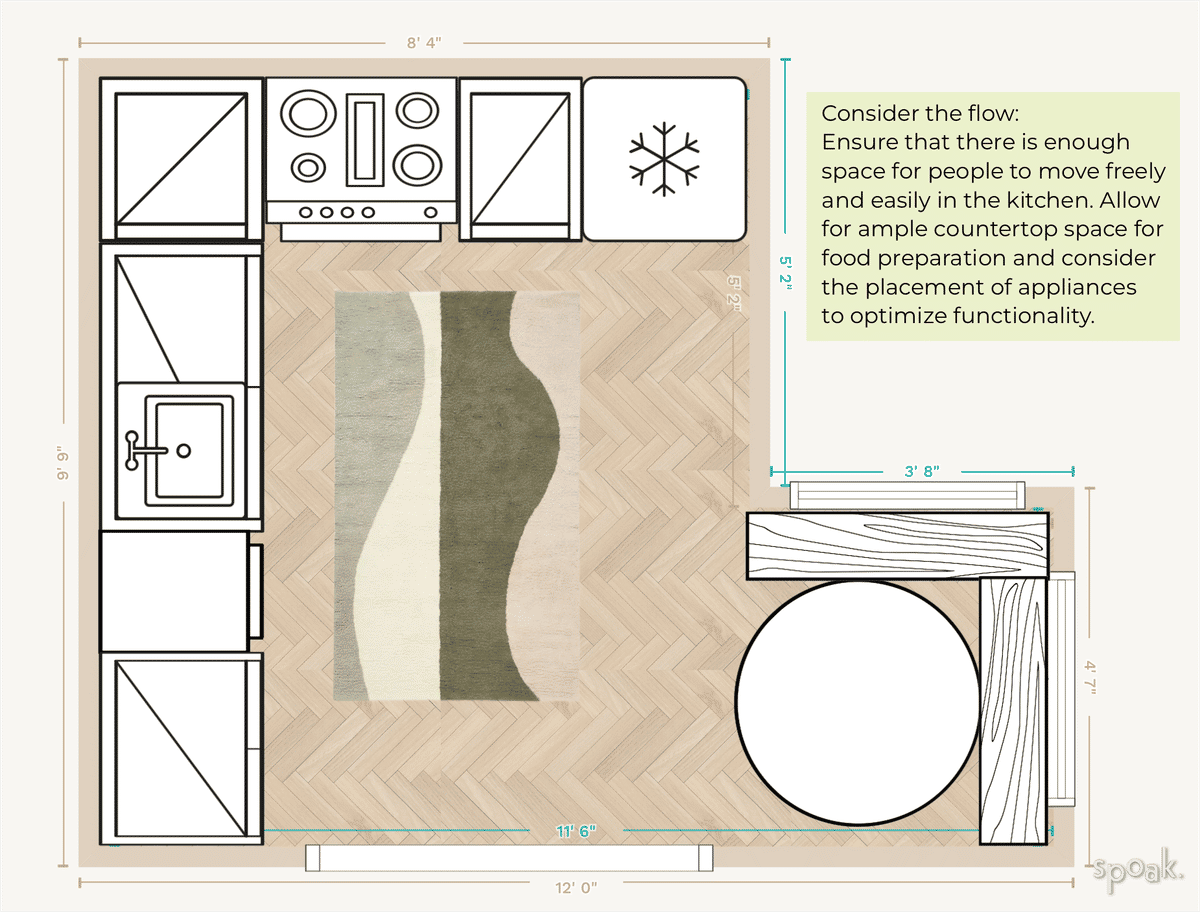
Credit: www.spoak.com
Frequently Asked Questions
What Are The Benefits Of An L-shaped Kitchen Layout?
An L-shaped kitchen maximizes corner space and offers an open, flexible layout. It improves workflow by separating cooking and prep zones, making it ideal for small to medium kitchens. This design also allows easy movement and interaction with adjacent living areas, enhancing social connectivity.
How To Optimize Storage In An L-shaped Kitchen?
Use corner cabinets with rotating shelves or pull-out trays to utilize dead space efficiently. Incorporate tall cabinets and wall-mounted shelves for extra storage. Keep frequently used items within easy reach to maintain functionality and reduce clutter, enhancing kitchen organization and accessibility.
What Appliances Fit Best In An L-shaped Kitchen?
Place the refrigerator, stove, and sink in a triangular arrangement for efficient workflow. Choose compact or built-in appliances to save space. Consider under-cabinet microwaves and slim dishwashers to maintain a clean, streamlined look while maximizing usability.
How To Create A Functional Work Triangle In L-shaped Kitchens?
Position the sink, stove, and refrigerator at three points forming a triangle. Ensure each leg is between 4 to 9 feet for optimal efficiency. This setup minimizes movement and improves kitchen task flow, making cooking and cleaning more convenient.
Conclusion
Designing a kitchen with an L-shaped layout saves space and adds comfort. It offers a smooth flow between cooking, cleaning, and storage areas. You can easily fit a dining spot or extra cabinets. Choose colors and materials that match your style.
Keep the work triangle tight for easy movement. Lighting is key to bright and inviting kitchens. Small kitchens feel larger with this design. Plan well, and your kitchen becomes a place you enjoy every day. Simple, smart, and stylish—an L-shaped kitchen works well for many homes.