
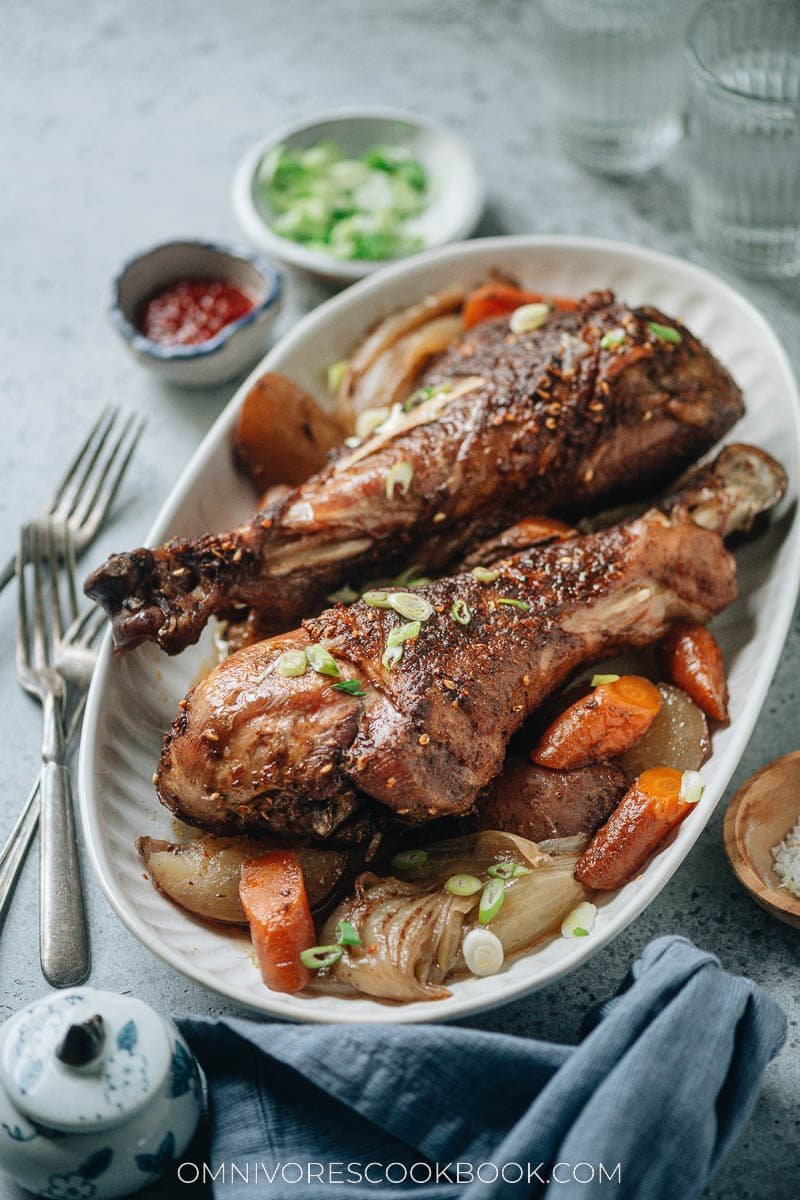
Are you tired of turkey legs that turn out tough and dry? You’re not alone.
Getting turkey legs tender can feel tricky, but it doesn’t have to be. Imagine biting into juicy, flavorful meat that falls right off the bone every time. In this guide, you’ll discover simple, effective methods to cook turkey legs so tender they’ll become your new favorite dish.
Ready to transform your cooking and impress everyone at the table? Keep reading to learn how.
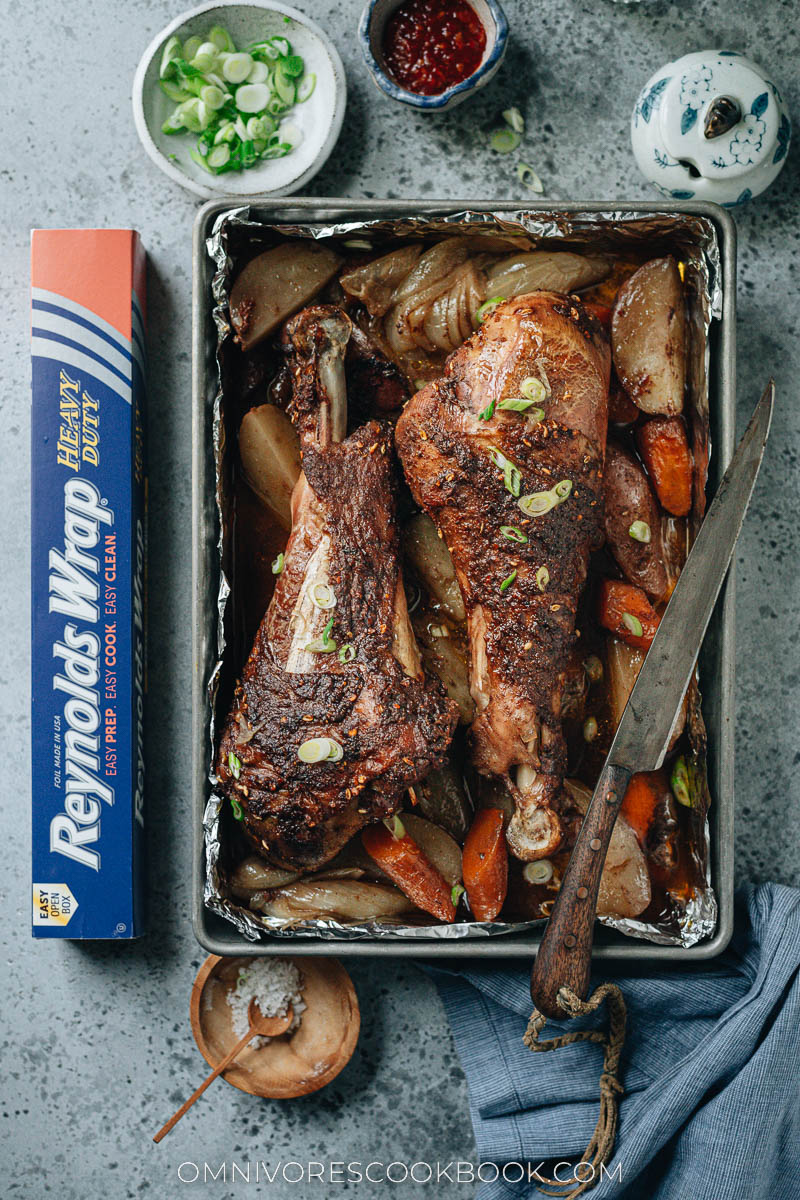
Credit: omnivorescookbook.com
Choosing The Right Turkey Legs
Picking good turkey legs is the first step to cooking them tender. Fresh and quality legs make a big difference.
Learn how to find the best turkey legs to get soft and juicy results every time.
Look For Freshness
Fresh turkey legs have a mild smell and firm texture. Avoid legs with a strong odor or slimy feel.
Check the color too. The skin should be pale pink or white, not gray or yellow.
Choose The Right Size
Turkey legs come in different sizes. Smaller legs cook faster and stay tender easily.
Larger legs need more cooking time but can be very juicy if cooked well.
- Small: 8 to 12 ounces each
- Medium: 12 to 16 ounces each
- Large: 16 ounces or more
Check For Skin And Bone Quality
Good skin helps keep moisture in during cooking. Look for smooth, unbroken skin.
The bone should be clean and free from cracks. Strong bones support even cooking and tenderness.
Consider Fresh Vs. Frozen
Fresh turkey legs often taste better and cook more evenly. They are best if you use them soon.
Frozen legs are easy to store but thaw them properly before cooking for best tenderness.
- Thaw frozen legs in the fridge for 24 hours
- Avoid thawing at room temperature
- Use thawed legs within two days
Preparing The Turkey Legs
Cooking tender turkey legs starts with proper preparation. Cleaning and marinating are key steps.
These steps help remove impurities and add flavor. They make the meat soft and tasty.
Cleaning And Trimming
First, rinse the turkey legs under cold water. This removes surface blood and dirt.
Use a sharp knife to trim excess fat and skin. Cut away any bruised or tough parts.
- Rinse turkey legs well in cold water
- Pat dry with paper towels
- Trim off extra fat and skin
- Remove any dark or tough spots
- Check for leftover feathers and pluck if needed
Marinating For Flavor
Marinating helps tenderize the meat and adds taste. Use a mix of oil, acid, and spices.
| Ingredient | Purpose |
|---|---|
| Olive oil | Keeps meat moist |
| Lemon juice | Breaks down fibers |
| Garlic | Adds aroma and flavor |
| Salt | Enhances taste and tenderness |
| Black pepper | Gives mild heat |
Mix ingredients well. Place turkey legs in a sealable bag or container. Pour marinade over them.
Refrigerate for at least 4 hours or overnight. Turn the legs once to coat evenly.
Best Cooking Methods
Cooking turkey legs until they are tender takes patience and the right method. Using slow heat and good techniques helps break down the meat fibers.
Here are three great ways to cook turkey legs so they stay juicy and soft.
Slow Cooking
Slow cooking turkey legs means cooking them at low heat for a long time. This helps the meat become very tender and easy to pull apart.
You can use a slow cooker or a pot on the stove set to low heat. Add some broth or water to keep the meat moist.
- Place turkey legs in slow cooker with vegetables and broth
- Cook on low for 6 to 8 hours
- Check meat for tenderness before serving
Roasting In The Oven
Roasting turkey legs in the oven gives a crispy skin and tender meat inside. Use a moderate oven temperature to cook the legs evenly.
Cover the legs with foil to keep moisture, then uncover near the end to brown the skin.
- Preheat oven to 325°F (165°C)
- Season turkey legs and place on a roasting pan
- Cover with foil and roast for 1.5 to 2 hours
- Remove foil and roast 15 minutes more for crispy skin
Grilling Techniques
Grilling turkey legs adds a smoky flavor and charred texture. Use indirect heat to cook the legs slowly without burning.
Turn the legs often to cook evenly. Use a meat thermometer to check for doneness.
- Preheat grill to medium heat
- Place turkey legs away from direct flames
- Grill covered for 45 to 60 minutes, turning every 10 minutes
- Ensure internal temperature reaches 165°F (74°C)

Credit: niyis.co.uk
Seasoning For Optimal Taste
Seasoning turkey legs properly adds great flavor and helps keep them tender. Using the right mix of spices and herbs makes a big difference. It also enhances the natural taste of the meat.
In this guide, we explore key seasoning tips to make your turkey legs delicious. Learn how to choose spices and apply them for the best results.
Basic Spice Mix
A simple spice mix forms the base for seasoning turkey legs. It should balance salty, sweet, and savory notes. Salt helps bring out flavors, while herbs add aroma.
- Salt: enhances natural meat flavor
- Pepper: adds mild heat and sharpness
- Paprika: gives color and a smoky taste
- Garlic powder: adds depth and richness
- Onion powder: complements garlic with sweetness
Herbs For Fresh Flavor
Fresh or dried herbs brighten the taste of turkey legs. They add layers of flavor without overpowering the meat. Common choices include thyme, rosemary, and sage.
| Herb | Flavor Profile |
|---|---|
| Thyme | Earthy, subtle lemon notes |
| Rosemary | Pine-like, woody aroma |
| Sage | Warm, slightly peppery |
Marinades And Rubs
Marinating turkey legs adds moisture and flavor. Rubs create a tasty crust when cooked. Both methods help tenderize the meat.
Try this simple marinade recipe:
- 1/4 cup olive oil
- 2 tablespoons lemon juice
- 3 cloves garlic, minced
- 1 teaspoon salt
- 1/2 teaspoon black pepper
- 1 tablespoon chopped rosemary
Mix ingredients and soak turkey legs for at least 2 hours or overnight.
Checking For Doneness
Cooking turkey legs until they are tender means checking if they are fully done. It is important to know when the meat is safe to eat and soft enough.
Two ways to check doneness are using temperature and observing the meat’s look and feel. Both help make sure your turkey legs are cooked well.
Internal Temperature Guidelines
Use a meat thermometer to check the turkey leg’s internal temperature. This is the most reliable way to know if it is done.
The safe temperature for cooked turkey legs is 165°F (74°C). Insert the thermometer into the thickest part of the leg without touching the bone.
- Remove turkey legs from heat when they reach 165°F (74°C)
- Let the meat rest for 5-10 minutes before cutting
- Resting helps juices spread and keeps meat tender
Visual And Texture Cues
Look at the turkey leg’s color and texture to check doneness. Fully cooked turkey meat is white or light brown inside, not pink or red.
Press the meat with a fork or your finger. It should feel firm but still soft and easy to pull apart. Tough or rubbery meat means it needs more cooking.
- Juices should run clear, not pink or bloody
- Meat should pull away easily from the bone
- The skin should be golden and crisp if roasted
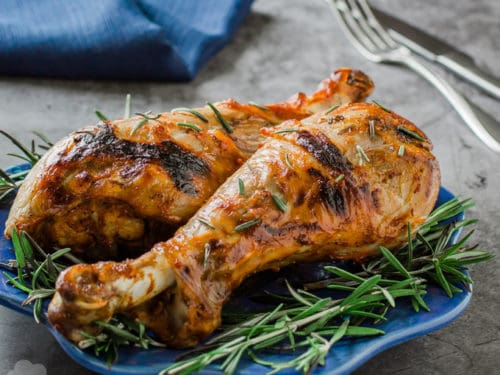
Credit: dizzybusyandhungry.com
Serving Suggestions
Turkey legs are delicious when cooked tender. Serving them well makes the meal special.
Choose sides and presentation that bring out the best in turkey legs.
Side Dishes To Complement
Pair turkey legs with simple, tasty sides. They add flavor and balance to your plate.
- Mashed potatoes with gravy
- Roasted vegetables like carrots and Brussels sprouts
- Fresh green salad with light dressing
- Cornbread or dinner rolls
- Steamed green beans with garlic
- Sweet potato fries
These dishes are easy to prepare and match the rich taste of turkey legs.
Presentation Tips
Good presentation makes your meal look tasty and inviting. Use simple ideas for best results.
Place the turkey leg in the center of the plate. Arrange sides around it neatly.
- Use fresh herbs like rosemary or parsley on top
- Add a lemon wedge for color and a fresh scent
- Serve on a large white plate for contrast
- Keep sauce or gravy in a small dish on the side
- Use colorful vegetables to brighten the plate
These small touches make your turkey legs look as good as they taste.
Frequently Asked Questions
How Long Should I Cook Turkey Legs For Tenderness?
Cook turkey legs low and slow for 2 to 3 hours. Use 325°F (163°C) in the oven. This breaks down tough fibers, making the meat tender and juicy.
What Is The Best Marinade For Turkey Legs?
Use a marinade with acid like lemon juice or vinegar. Add herbs, garlic, and olive oil. Marinate for at least 4 hours to enhance flavor and tenderness.
Should I Boil Turkey Legs Before Cooking?
Boiling turkey legs first is optional. It can reduce cooking time and make meat tender. However, slow roasting or braising often yields better flavor and texture.
How Can I Keep Turkey Legs Moist While Cooking?
Cover turkey legs with foil or cook in a covered dish. Basting occasionally with juices helps. Slow cooking at lower heat also preserves moisture and tenderness.
Conclusion
Cooking turkey legs tender takes time and care. Use low heat and cook slowly. Keep the meat moist with broth or marinade. Check tenderness with a fork before serving. Rest the meat to keep juices inside. These steps help you enjoy juicy, soft turkey legs.
Try different spices to find your favorite taste. Enjoy your meal with simple sides. Cooking turkey legs can be easy and rewarding. Give it a try and taste the difference!