
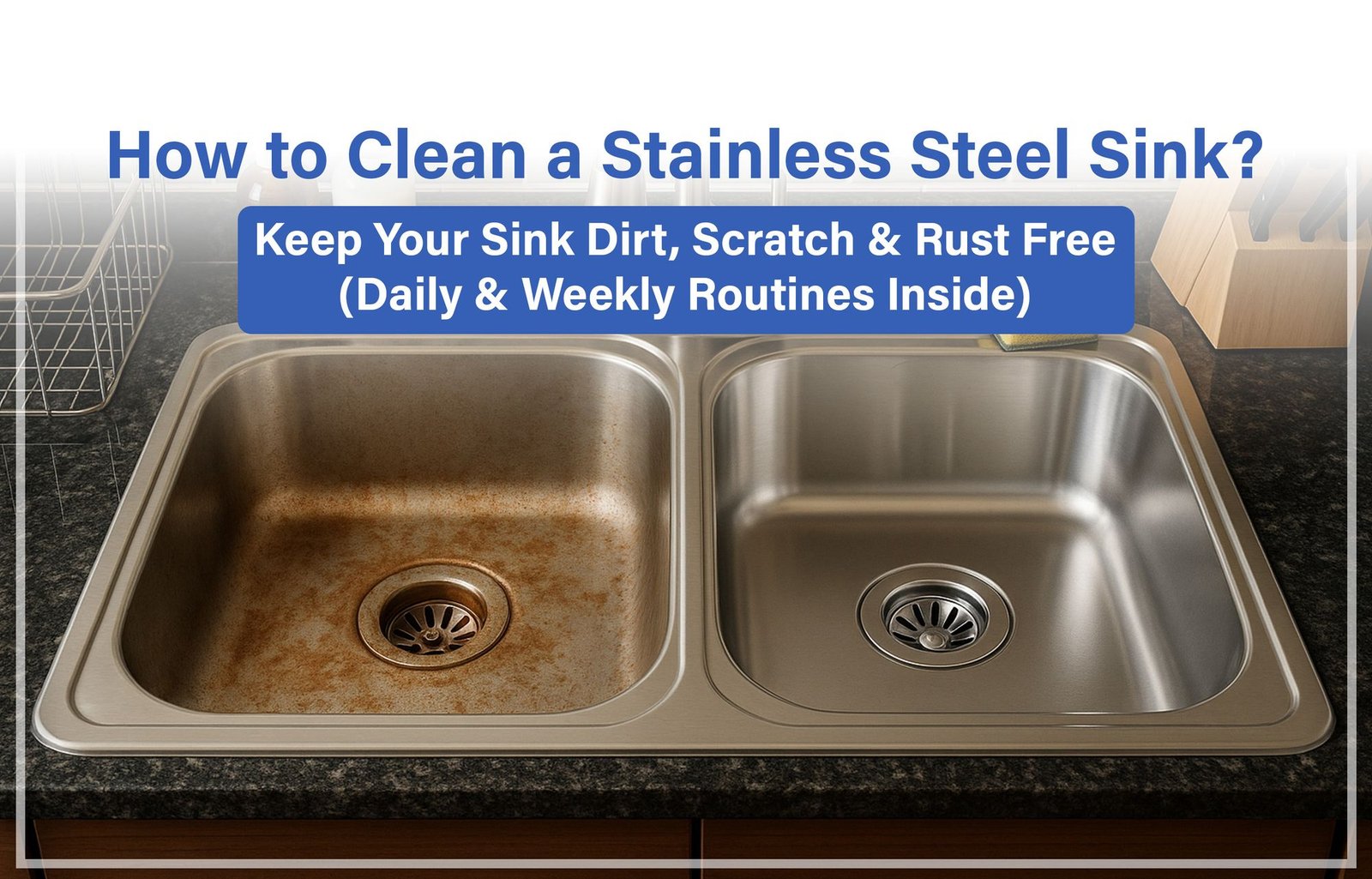
Your stainless steel sink is one of the busiest spots in your kitchen, but keeping it spotless can feel like a chore. What if cleaning it didn’t have to be hard or time-consuming?
Imagine a sink that shines like new, free of stains, water spots, and grime—without using harsh chemicals or spending hours scrubbing. In this guide, you’ll discover simple, effective ways to clean your stainless steel sink quickly and easily. Ready to transform your sink into a sparkling centerpiece?
Keep reading to find out how!

Credit: www.youtube.com
Materials Needed
Cleaning a stainless steel sink is easy with the right tools. Using simple materials helps keep your sink shiny and fresh.
Gather these common items before you start cleaning. They work well without damaging the steel surface.
Soft Sponge Or Cloth
A soft sponge or cloth cleans without scratching the sink. Avoid rough scrubbers that can leave marks.
Mild Dish Soap
Mild dish soap breaks down grease and food residue. It cleans well and is safe for stainless steel.
Baking Soda
Baking soda helps remove stains and tough spots. It is gentle and natural for cleaning sinks.
White Vinegar
White vinegar cuts through water spots and mineral deposits. It also shines the surface without harm.
Old Toothbrush
An old toothbrush cleans hard-to-reach corners and around the drain. It helps remove buildup in small spaces.
Dry Towel Or Microfiber Cloth
Use a dry towel or microfiber cloth to wipe the sink dry. This stops water spots and keeps the sink shiny.
Daily Maintenance
Keeping your stainless steel sink clean every day helps it stay shiny and new. Simple habits prevent stains and buildup.
Daily care is easy and takes only a few minutes. Follow these tips to maintain your sink’s look and function.
Quick Rinse Routine
Rinsing your sink after each use removes food and soap residue. This stops stains from forming and keeps the surface smooth.
- Use warm water to rinse all sink areas
- Run the water over the drain to clear debris
- Flush the faucet and handles as well
- Check for leftover food scraps and remove them
- Dry the sink after rinsing to prevent water spots
Wiping With A Soft Cloth
Wiping your sink daily keeps fingerprints and streaks away. Use a soft cloth to avoid scratching the surface.
| Cloth Type | Why Use It |
| Microfiber cloth | Gently cleans without scratching |
| Cotton cloth | Absorbs water and dries quickly |
| Soft sponge | Removes light dirt and residue |
Deep Cleaning Steps
Cleaning a stainless steel sink well keeps it shiny and free from stains. Deep cleaning removes tough grime and bacteria.
Use simple household items to clean your sink safely and effectively. Follow these steps to get your sink spotless.
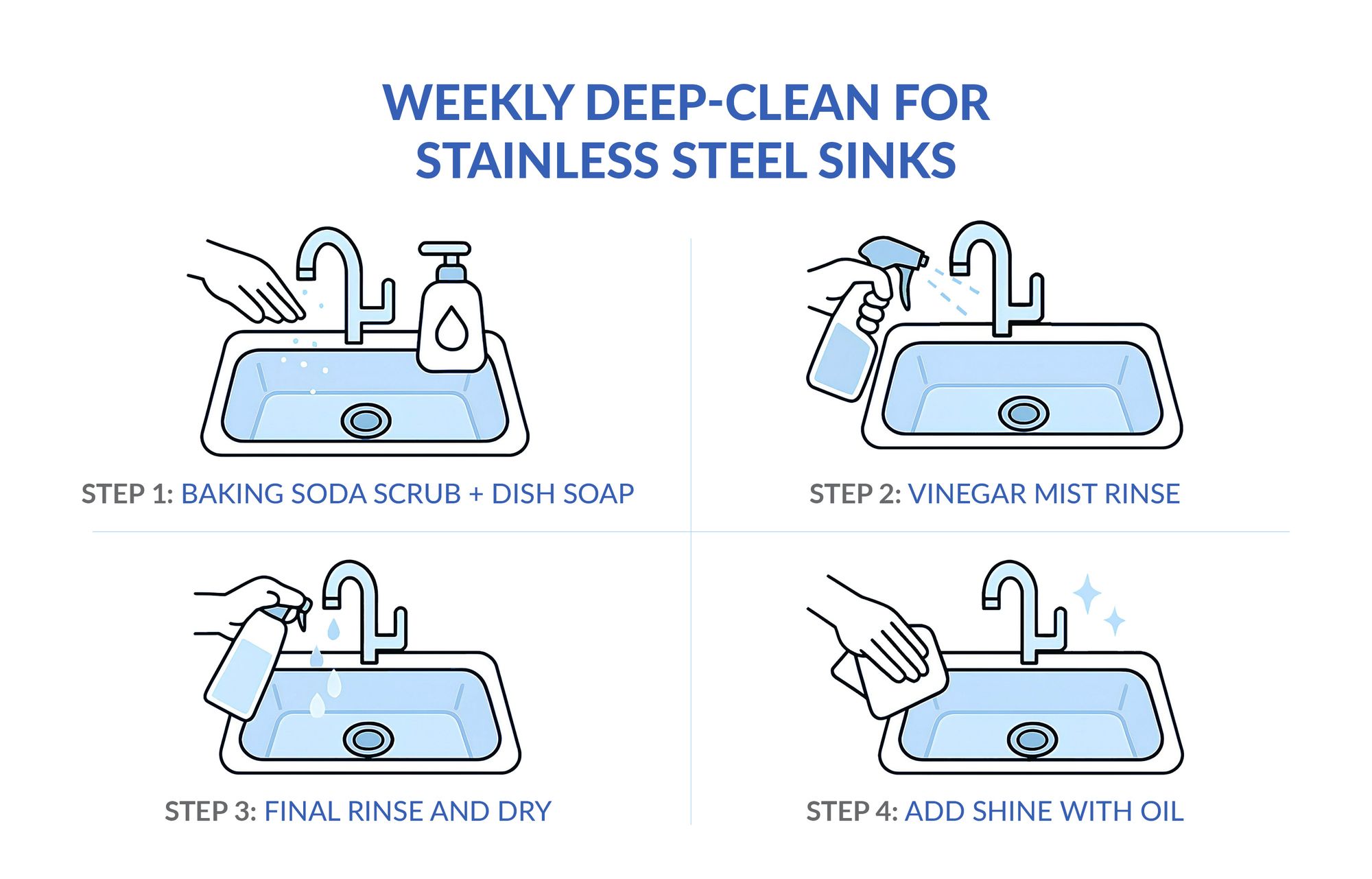
Using Baking Soda Paste
Baking soda is a gentle cleaner that removes dirt and stains. Make a paste by mixing baking soda with water.
- Sprinkle baking soda all over the sink surface.
- Add a little water to form a thick paste.
- Spread the paste evenly using a soft cloth or sponge.
- Let it sit for 10 minutes to break down grime.
- Rinse the sink well with warm water.
Applying Vinegar Solution
Vinegar helps remove hard water spots and disinfects the sink. Mix equal parts white vinegar and water in a spray bottle.
| Item | Details |
|---|---|
| Vinegar | White distilled vinegar for cleaning |
| Water | Room temperature to dilute vinegar |
| Spray Bottle | For easy application |
Spray the solution on the sink and let it sit for 5 minutes. Wipe with a clean cloth, then rinse with water.
Scrubbing With A Soft Brush
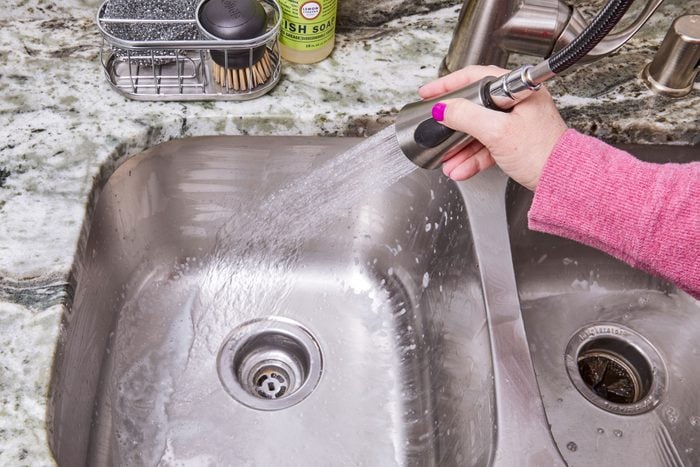
Use a soft brush to scrub the sink gently. This removes dirt without scratching the surface.
- Choose a soft nylon brush or an old toothbrush.
- Focus on corners and around the drain where dirt builds up.
- Scrub in circular motions for best results.
- Rinse the sink thoroughly after scrubbing.
Credit: www.rd.com
Tackling Stubborn Stains
Stainless steel sinks look great but can get tough stains. Stubborn stains need special care to clean well.
This guide helps you remove water spots and rust marks easily. Follow simple steps to keep your sink shiny.
Removing Water Spots
Water spots appear from hard water drying on the sink. They leave white or cloudy marks that are hard to wipe off.
Use vinegar or lemon juice to break down these spots. Apply the liquid and let it sit for a few minutes before scrubbing.
- Spray or soak a cloth with vinegar or lemon juice
- Place it over the water spots for 5-10 minutes
- Gently scrub with a soft sponge or cloth
- Rinse the sink with warm water
- Dry the sink using a clean towel to avoid new spots
Eliminating Rust Marks
Rust marks can form from metal objects left in the sink. They look like orange or brown stains on the surface.
Use a paste made from baking soda and water to remove rust. Rub the paste gently on the rust marks and rinse well.
- Mix baking soda with water to form a thick paste
- Apply the paste to rust marks using a soft cloth
- Let it sit for 10-15 minutes
- Rub the area gently to lift the rust
- Wash the sink with warm water and dry thoroughly
Polishing For Extra Shine
Stainless steel sinks look best when they shine. Polishing helps remove water spots and dullness.
Use safe products to polish your sink. This keeps it bright and smooth for a long time.
Using Olive Oil
Olive oil works well to add shine to stainless steel sinks. It creates a natural, glossy finish.
Apply a small amount of olive oil on a soft cloth. Rub it gently over the sink surface in circles.
- Use about one tablespoon of olive oil
- Rub evenly on all areas of the sink
- Wipe off any extra oil with a clean cloth
- Repeat polishing as needed for best shine
Commercial Stainless Steel Cleaners
Special cleaners made for stainless steel also polish sinks well. They remove stains and add shine.
Follow the product instructions carefully. Use a soft cloth to apply and buff the cleaner.
- Spray or apply cleaner in small sections
- Rub gently with a microfiber cloth
- Buff until the surface shines
- Rinse if the cleaner requires it
Credit: www.dkhardware.com
Preventive Measures
Keeping your stainless steel sink clean starts with good habits. Preventive care helps avoid stains and damage.
Simple steps protect your sink and make cleaning easier over time.
Avoiding Harsh Chemicals
Strong chemicals can harm the finish of stainless steel. Avoid bleach, ammonia, and abrasive cleaners.
- Use mild dish soap and warm water for daily cleaning
- Choose cleaners labeled safe for stainless steel
- Rinse thoroughly to remove any soap residue
- Dry the sink with a soft cloth to prevent water spots
Using Protective Mats
Protective mats cushion your sink and stop scratches from pots and utensils.
| Type of Mat | Benefits |
| Silicone mats | Flexible and easy to clean |
| Rubber mats | Strong grip, prevents slipping |
| Cushioned plastic mats | Protects against dents and marks |
Common Mistakes To Avoid
Cleaning stainless steel sinks is easy if you do it right. Many people make mistakes that damage the sink’s surface.
Avoiding these common errors will keep your sink shiny and new for years.
Scratching The Surface
Using rough tools can scratch the sink surface. Scratches make the sink look dull and can trap dirt.
Always use soft cloths or non-abrasive sponges to clean your sink. Avoid steel wool or hard brushes.
- Do not scrub with metal pads
- Use microfiber cloths for wiping
- Clean gently in the direction of the grain
Using Abrasive Materials
Abrasive cleaners can harm the finish on stainless steel sinks. They leave dull marks and cause corrosion spots.
Choose mild, non-abrasive cleaners instead. Natural options like baking soda mixed with water work well.
- Avoid powders with harsh chemicals
- Skip bleach or strong acids
- Test any cleaner on a small area first
Frequently Asked Questions
How Often Should I Clean A Stainless Steel Sink?
Clean your stainless steel sink daily to prevent buildup. Weekly deep cleaning removes stains and disinfects. Regular maintenance keeps it shiny and hygienic, extending its lifespan.
What Household Items Effectively Clean Stainless Steel Sinks?
Use baking soda, vinegar, and mild dish soap. These non-abrasive cleaners remove stains and grease safely. Avoid harsh chemicals to prevent damage and maintain shine.
How Do I Remove Hard Water Stains From Sinks?
Apply vinegar to the stains and let it sit for 10 minutes. Scrub gently with a soft cloth or sponge. Rinse thoroughly and dry to restore the sink’s shine.
Can I Use Steel Wool On Stainless Steel Sinks?
Avoid steel wool as it scratches the surface. Instead, use soft sponges or microfiber cloths. These clean effectively without damaging the sink’s finish.
Conclusion
Cleaning stainless steel sinks is easy with simple steps. Use gentle cleaners and soft cloths to avoid scratches. Regular wiping keeps your sink shiny and fresh. Avoid harsh chemicals that can damage the surface. A clean sink looks great and lasts longer.
Small daily efforts make a big difference over time. Keep your sink free from stains and water spots. Enjoy a bright, clean kitchen every day with these tips. Simple care keeps your stainless steel sink looking new.