
Your microwave is one of the busiest appliances in your kitchen, but cleaning it often gets pushed aside. If you’re worried about harsh chemicals or damaging your microwave, you’re not alone.
What if you could make your microwave sparkle without stress or risk? You’ll discover simple, safe ways to clean your microwave that protect both your appliance and your health. Keep reading, and you’ll never dread microwave cleaning again.
Credit: hyveclean.com
Essential Supplies
Cleaning your microwave safely needs the right supplies. Using safe tools helps protect the microwave and your hands.
Gather these items before you start. They make cleaning easier and more effective.
Mild Dish Soap
Mild dish soap cleans grease and food stains well. It is gentle and does not harm the microwave’s surface.
Use a small amount mixed with water to wipe the inside. Avoid harsh chemicals that can damage the microwave.
Soft Sponge Or Cloth
Use a soft sponge or cloth to avoid scratching the microwave. Rough scrubbers can ruin the finish inside.
Microfiber cloths work well to remove dirt without leaving lint behind. Keep the sponge damp, not soaking wet.
White Vinegar
White vinegar helps remove odors and tough stains. It is a natural cleaner and safe to use inside microwaves.
Mix vinegar with water in a microwave-safe bowl. Heat it to create steam that loosens grime for easy cleaning.
Microwave-safe Bowl
Use a microwave-safe bowl to heat cleaning solutions like vinegar and water. This prevents damage to your microwave.
Choose glass or ceramic bowls that can handle heat without breaking or melting.
Paper Towels Or Dry Cloth
Paper towels or a dry cloth help wipe away moisture and residue after cleaning. They leave the microwave dry and shiny.
Use a clean towel to avoid spreading dirt or lint inside the microwave.

Credit: www.express.co.uk
Preparation Steps
Cleaning your microwave safely needs some simple preparation. It helps you avoid damage and keep the appliance working well.
Follow these steps before you start cleaning. They make the process quick and safe.
Unplug The Microwave
Always unplug the microwave before cleaning. This stops any chance of electric shock.
Unplugging also prevents the microwave from turning on by mistake while you clean.
Remove Loose Debris
Take out any loose crumbs or food pieces inside the microwave. Use a soft cloth or paper towel to wipe them away.
Removing debris first helps the cleaning solution work better on stains and spills.
Gather Safe Cleaning Supplies
Use mild cleaning products like water, vinegar, or baking soda. Avoid harsh chemicals that can damage the microwave.
- Soft cloth or sponge
- Water
- White vinegar
- Baking soda (optional)
- Spray bottle (optional)
Ventilate The Area
Open a window or turn on a fan before cleaning. Good airflow helps remove any smells or fumes from cleaning.
This step keeps the air fresh and safe while you work on the microwave.
Read The Microwave Manual
Check your microwave’s user guide for any special cleaning tips. Some models need specific care.
Following the manual helps avoid mistakes that can harm the appliance.
Steam Cleaning Method
Cleaning your microwave safely keeps it working well and free from germs. Steam cleaning is a gentle way to remove dirt and stains inside the microwave.
This method uses hot steam to loosen food particles and grease. It is simple and uses natural ingredients you may already have at home.
Using Vinegar
Vinegar is a natural cleaner that helps cut through grime. It also kills some bacteria and removes odors from the microwave.
To use vinegar for steam cleaning, mix equal parts water and white vinegar in a microwave-safe bowl. Heat the bowl in the microwave until it steams well.
- Mix 1 cup water and 1 cup white vinegar in a bowl.
- Place the bowl inside the microwave.
- Run the microwave on high for 5 minutes.
- Leave the door closed for 2 minutes to let steam work.
- Carefully remove the bowl and wipe the inside with a cloth.
Using Lemon
Lemon adds a fresh scent and helps break down grease inside the microwave. Its natural acids make cleaning easier.
Cut a lemon in half and squeeze the juice into a microwave-safe bowl with water. Place the lemon halves in the bowl and heat until the steam fills the microwave.
- Fill a bowl with 1 cup water.
- Add juice from half a lemon.
- Put lemon halves in the bowl.
- Heat the bowl in the microwave for 5 minutes.
- Keep the door closed for 2 minutes to let steam loosen grime.
- Remove the bowl and wipe the microwave clean with a cloth.
Baking Soda Solution
Baking soda is a safe, natural cleaner for microwaves. It removes stains and odors without harsh chemicals.
You can make a simple baking soda solution at home. It helps keep your microwave fresh and clean.
Prepare The Baking Soda Mixture
To start, mix two tablespoons of baking soda with one cup of warm water. Stir until the baking soda dissolves.
Clean The Microwave Interior
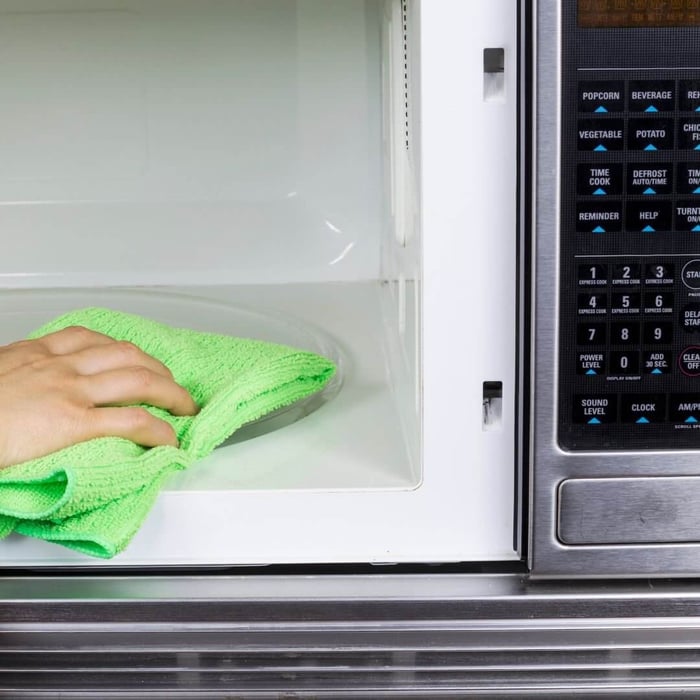
Dip a clean cloth or sponge in the baking soda solution. Wipe the inside walls, ceiling, and floor of the microwave carefully.
Remove Tough Stains
- Apply baking soda paste made with baking soda and a little water on the stain.
- Let it sit for 5 to 10 minutes.
- Scrub gently with a soft cloth or sponge.
- Wipe clean with a damp cloth to remove residue.
Deodorize The Microwave
Place a small bowl of baking soda inside the microwave when not in use. It will absorb bad smells over time.
Safety Tips For Using Baking Soda
| Tip | Why It Matters |
| Use soft cloth or sponge | Prevents scratches on microwave surface |
| Do not mix with vinegar inside microwave | Avoids chemical reactions that can damage the appliance |
| Rinse with water after cleaning | Removes baking soda residue for safe use |
Dealing With Stubborn Stains
Stubborn stains in your microwave can be tough to clean. Using the right methods helps remove them safely. This guide shows easy ways to handle these stains without harm.
Cleaning with care keeps your microwave working well for a long time. Avoid harsh scrubbing or chemicals that may damage parts inside.
Scrubbing Techniques
Use gentle scrubbing tools to avoid scratching the microwave’s surface. Soft sponges and cloths work best. Avoid steel wool or rough brushes.
- Apply a baking soda paste on stains and let it sit for 10 minutes.
- Use a damp soft sponge to scrub the stained area gently.
- Wipe clean with a microfiber cloth to remove residue.
- Repeat if stains do not come off the first time.
Avoiding Damage
| Do | Don’t |
| Use mild dish soap with warm water | Avoid harsh chemicals like bleach |
| Turn off and unplug before cleaning | Never spray cleaner directly inside the microwave |
| Use soft cloths or sponges | Do not scrub metal parts hard |
| Clean the door seal gently | Avoid soaking the microwave with water |

Credit: news4trafford.co.uk
Cleaning The Microwave Door
The microwave door often gets dirty from food splashes and fingerprints. Cleaning it regularly helps keep your microwave working well.
Focus on removing grease and making the glass clear. This keeps the door safe and easy to see through.
Removing Grease
Grease builds up on the microwave door from cooking oils and food sprays. Use a mild cleaner to remove it safely.
Mix warm water with a few drops of dish soap. Dip a soft cloth in the solution and wipe the door gently.
- Use a soft cloth to avoid scratches
- Do not use harsh chemicals or abrasive pads
- Wipe off soap with a clean damp cloth
- Dry the door with a soft towel after cleaning
Ensuring Transparency
Clear glass lets you watch food while it cooks. Clean the door glass carefully to keep it transparent.
Use a glass cleaner or vinegar solution. Spray lightly and wipe with a microfiber cloth for a streak-free finish.
- Spray cleaner on the cloth, not directly on the glass
- Wipe in circular motions to avoid streaks
- Clean both sides of the glass if possible
- Check for spots and clean again if needed
Cleaning The Turntable
The microwave turntable collects food spills and stains. It needs regular cleaning to work well and stay hygienic.
You can clean the turntable using a dishwasher or by washing it manually. Both methods are safe and effective.
Dishwasher Method
Most microwave turntables are dishwasher safe. This method saves time and cleans deeply.
- Remove the turntable from the microwave.
- Place it on the bottom rack of your dishwasher.
- Use a normal wash cycle with your usual detergent.
- Dry the turntable completely before placing it back.
Manual Washing
If your turntable is not dishwasher safe, wash it by hand using gentle soap and warm water.
| Item | Instructions |
| Soap | Use mild dish soap, not harsh chemicals. |
| Water | Use warm water for better cleaning. |
| Scrubber | Soft sponge or cloth to avoid scratches. |
| Drying | Air dry or wipe with a clean towel. |
Odor Removal Tips
Microwave odors can be unpleasant and hard to remove. Cleaning your microwave safely helps keep it fresh and odor-free.
Use natural methods to deodorize your microwave without chemicals. These tips also help prevent smells from building up again.
Natural Deodorizers
Natural ingredients can remove odors safely. They are easy to find and gentle on your microwave.
- Lemon juice: Mix lemon juice with water and heat inside the microwave for 5 minutes. Wipe clean after.
- Baking soda: Place a bowl of baking soda inside the microwave overnight to absorb smells.
- Vinegar: Heat a bowl of vinegar and water for 3-5 minutes. Let it sit before wiping.
- Coffee grounds: Leave dry coffee grounds in a small container inside the microwave to absorb odors.
Preventing Future Odors
Stopping odors before they start keeps your microwave fresh longer. Clean spills quickly and avoid strong-smelling foods inside.
| Tip | How It Helps |
| Cover food | Prevents splatters and strong smells from spreading |
| Clean spills immediately | Stops stains and odors from building up |
| Use natural deodorizers regularly | Keeps microwave smelling fresh without chemicals |
| Leave door open after use | Allows moisture and smells to escape |
Safety Precautions
Cleaning your microwave is important to keep it working well. You must follow safety rules to avoid accidents. This guide helps you clean your microwave safely.
Using the right steps protects you and your appliance. Always be careful with cleaning products and how you handle the microwave.
Handling Chemicals
Use mild cleaning chemicals to avoid damage and harm. Strong chemicals can cause burns or release bad fumes.
Always wear gloves and open windows to keep air fresh. Never mix cleaning products because this can create dangerous gases.
- Choose gentle cleaners like vinegar or baking soda
- Wear rubber gloves to protect your skin
- Ventilate the area by opening windows or using a fan
- Do not mix bleach with ammonia or other cleaners
Ensuring Appliance Safety
Unplug the microwave before cleaning to avoid electric shock. Make sure it is cool to prevent burns.
Do not spray water directly inside the microwave. Use a damp cloth to wipe surfaces carefully.
- Always unplug the microwave first
- Wait until the microwave is cool before cleaning
- Use a soft, damp cloth for wiping
- Avoid soaking the microwave or using too much water
Regular Maintenance Tips
Keeping your microwave clean helps it work well and last longer. Dirt and spills can cause smells and stains. Regular cleaning stops this from happening.
Cleaning your microwave safely means using gentle methods. Avoid harsh chemicals that can damage the inside or leave harmful residues.
Frequency Of Cleaning
Clean your microwave every week to stop buildup. If you use it a lot, clean it more often. Wipe spills right after they happen to keep it fresh.
Deep clean your microwave once a month. This removes tough stains and hidden dirt inside the vents and corners.
- Wipe spills immediately
- Clean inside and outside weekly
- Deep clean monthly
Quick Daily Routines
Do quick cleanups every day to keep your microwave neat. Use a damp cloth to wipe the inside and outside surfaces. This stops food from sticking and smells from forming.
Steam cleaning with water and lemon juice makes wiping easier. Heat a bowl with this mix for a few minutes. Then, wipe the soft residue away with a cloth.
- Wipe spills with a damp cloth
- Use steam cleaning weekly
- Clean the door and buttons daily
Frequently Asked Questions
How Often Should I Clean My Microwave Safely?
Clean your microwave weekly to avoid buildup. Frequent cleaning prevents odors and ensures food safety. Regular wiping keeps it hygienic and efficient.
What Is The Safest Way To Clean A Microwave?
Use natural cleaners like vinegar or lemon with water. Heat the solution inside, then wipe clean. Avoid harsh chemicals to protect your microwave’s interior.
Can I Use Bleach To Clean My Microwave Safely?
No, avoid bleach as it emits harmful fumes. Bleach can damage microwave surfaces and contaminate food. Stick to mild, food-safe cleaning agents instead.
How Do I Remove Stubborn Stains From A Microwave Safely?
Heat a bowl of water with lemon or vinegar for 5 minutes. Steam loosens stains, making them easy to wipe away without scrubbing hard.
Conclusion
Cleaning your microwave safely keeps it working well and lasting longer. Use mild cleaners and avoid harsh chemicals. Always unplug the microwave before cleaning to stay safe. Wipe spills quickly to stop stains and smells. Regular cleaning saves time and effort later.
A clean microwave means healthier meals and a tidy kitchen. Simple steps make a big difference every day. Keep these tips in mind for easy, safe microwave care.