
Your kitchen faucet is one of the busiest spots in your home, but it often gets overlooked when it comes to cleaning. Over time, grime, water spots, and mineral buildup can dull its shine and even affect how it works.
What if you could restore your faucet to its sparkling best using simple, natural ingredients you already have at home? You’ll discover easy and effective ways to clean your kitchen faucet without harsh chemicals. By the end, your faucet will look fresh, work smoothly, and you’ll feel great knowing you’ve used safe methods for your family and the environment.
Keep reading to find out how!

Credit: www.express.co.uk
Benefits Of Natural Cleaning
Cleaning kitchen faucets naturally uses simple ingredients from your home. It avoids harsh chemicals that can harm people and the environment.
Natural cleaning keeps your faucets shiny and safe. It also saves money and reduces waste from buying special cleaners.
Safer For Your Family
Natural cleaners do not contain toxic chemicals. This makes your kitchen safer for children and pets.
You avoid breathing in strong fumes. Natural ingredients like vinegar and baking soda are gentle and healthy.
Better For The Environment
Natural cleaning ingredients break down easily in nature. They do not pollute water or soil.
Using natural products helps reduce plastic waste. Many natural ingredients come in recyclable containers or can be bought in bulk.
Cost-effective Cleaning
Natural cleaning ingredients are cheap and easy to find. They save money compared to buying special cleaners.
- White vinegar cleans and disinfects
- Baking soda removes stains and odors
- Lemon juice brightens and adds scent
Gentle On Your Faucets
Natural cleaners do not damage faucet finishes. They keep metal and chrome looking new longer.
Harsh chemicals can cause corrosion or dullness. Natural methods protect your faucet’s surface from wear.
Easy To Use And Prepare
Natural cleaning solutions are simple to make. You can mix them quickly with common kitchen items.
They do not require special tools or instructions. This makes cleaning faster and less stressful.
Essential Natural Ingredients
Cleaning kitchen faucets can be easy and safe with natural ingredients. These items help remove dirt and germs without harsh chemicals.
Using natural products keeps your faucet shiny and fresh. It also protects your family from harmful substances.
Lemon For Shine
Lemon is great for making faucets shine. Its natural acid breaks down mineral deposits and water stains.
Rub lemon juice on the faucet with a soft cloth. Let it sit for a few minutes, then rinse with water.
Baking Soda For Scrubbing
Baking soda works as a gentle scrubber. It removes grime and tough spots without scratching the surface.
Make a paste with baking soda and water. Apply it to the faucet and scrub with a soft brush or cloth.
- Mix 3 parts baking soda with 1 part water
- Use a toothbrush for tight spots
- Rinse well after scrubbing
White Vinegar For Disinfection
White vinegar cleans and disinfects kitchen faucets naturally. It kills bacteria and dissolves mineral buildup.
Soak a cloth in white vinegar and wrap it around the faucet. Leave it for 10 minutes, then wipe and rinse clean.
Daily Maintenance Tips
Keeping your kitchen faucet clean every day helps it last longer. Small daily habits stop dirt and stains from building up.
Natural cleaning is safe and easy. It uses items you already have at home and keeps your faucet shiny.
Quick Wipe Downs
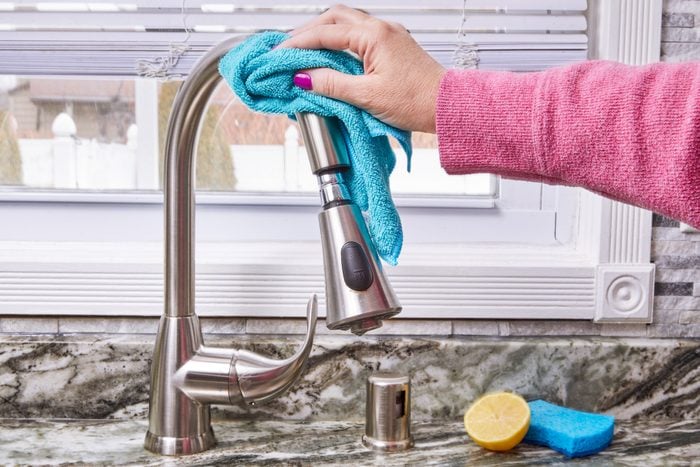
Wipe your faucet with a soft cloth each day. This removes water spots and dust before they settle.
Use a damp cloth with water or a mix of water and mild vinegar. Avoid harsh chemicals that can damage the finish.
- Use a microfiber cloth for best results
- Wipe around handles and spout
- Dry the faucet after wiping to prevent water marks
Preventing Mineral Buildup
Mineral deposits can block your faucet and make it look dull. Stop buildup by cleaning small spots often.
Use natural ingredients like vinegar or lemon juice to dissolve minerals. Soak a cloth and wrap it around the faucet parts.
- Apply vinegar or lemon juice on a cloth
- Wrap it on faucet areas with white spots
- Leave for 10-15 minutes
- Wipe clean with a soft cloth
Credit: www.rd.com
Deep Cleaning Techniques
Cleaning kitchen faucets naturally keeps them shiny and healthy. Deep cleaning removes buildup that regular washing misses.
Using simple home ingredients is safe and effective. These techniques help restore your faucet’s shine without harsh chemicals.
Removing Hard Water Stains
Hard water leaves white spots and stains on faucets. These marks come from minerals like calcium and lime.
Use vinegar to break down these minerals naturally. Soak a cloth in vinegar and wrap it around the faucet.
- Soak cloth in white vinegar
- Wrap cloth tightly around stained area
- Leave for 30 minutes to 1 hour
- Scrub gently with a soft brush
- Rinse with warm water and dry
Tackling Tough Grease
Grease can build up from cooking and dirty hands. It makes faucets look dull and sticky.
Baking soda works well to cut through grease. Make a paste with baking soda and water.
- Mix baking soda with a little water
- Apply paste to greasy spots on faucet
- Let sit for 10 to 15 minutes
- Scrub gently with a soft cloth or brush
- Rinse thoroughly with warm water
- Dry with a clean towel
Polishing For A New-like Finish
Cleaning kitchen faucets naturally helps keep them shiny and fresh. Polishing gives your faucet a new-like finish without harsh chemicals.
Using simple ingredients and the right cloth can make your faucet sparkle. It also protects the surface from water spots and stains.
Using Olive Oil
Olive oil works well as a natural polish for kitchen faucets. It adds shine and removes water marks gently.
Apply a small amount of olive oil to a soft cloth. Rub the faucet in circular motions to bring out the shine.
- Olive oil is safe and non-toxic.
- It creates a protective layer on the faucet.
- It helps prevent rust and corrosion.
Cloth Types For Polishing
Choosing the right cloth is important for polishing. A soft cloth avoids scratches and spreads the polish evenly.
Microfiber cloths work best because they are gentle and absorb oil well. Cotton cloths can also work if very soft.
- Microfiber cloths remove dirt and polish shine.
- Cotton cloths should be clean and soft.
- Avoid rough or abrasive cloths that can scratch.
Preventive Measures
Keeping your kitchen faucets clean helps avoid buildup and damage. Natural cleaning methods are safe and simple. Preventive care keeps faucets working well for years.
Regular maintenance stops grime and hard water stains. Using simple tools and covers protects faucets from dirt and scratches. Follow these tips to save time and effort.
Regular Cleaning Schedule
Set a cleaning routine to keep faucets shiny and clean. Frequent gentle cleaning prevents stains and mineral buildup. Use natural solutions like vinegar and baking soda.
- Wipe faucets daily with a soft cloth to remove water spots.
- Clean weekly with a mixture of equal parts water and vinegar.
- Use a toothbrush to scrub around joints and crevices gently.
- Rinse with water and dry thoroughly after cleaning.
- Apply natural oil occasionally to keep metal parts polished.
Using Faucet Covers
Faucet covers protect surfaces from dust, grease, and scratches. They help reduce the need for harsh cleaning products. Covers are easy to install and remove.
| Type of Cover | Material | Benefits |
| Silicone Sleeve | Flexible Silicone | Water-resistant, easy to clean |
| Fabric Cover | Cotton or Polyester | Breathable, washable |
| Plastic Cap | Hard Plastic | Sturdy, protects from impact |
Credit: www.luminalife.ca
Frequently Asked Questions
How Do I Clean Kitchen Faucets Naturally?
Use a mixture of equal parts white vinegar and water. Apply with a cloth, scrub gently, then rinse with water. Vinegar removes mineral deposits and kills bacteria safely.
What Natural Ingredients Remove Faucet Water Stains?
White vinegar and baking soda are effective. Vinegar dissolves stains, while baking soda acts as a gentle abrasive. Together, they clean without harsh chemicals.
Can Lemon Juice Clean Kitchen Faucets Effectively?
Yes, lemon juice’s acidity breaks down mineral buildup and water spots. Apply lemon juice, let it sit for 5 minutes, then wipe clean for a shiny faucet.
How Often Should I Clean Kitchen Faucets Naturally?
Clean your faucet weekly to prevent buildup. Regular natural cleaning keeps faucets shiny, hygienic, and extends their lifespan without harsh chemicals.
Conclusion
Cleaning kitchen faucets naturally saves money and protects your health. Vinegar, baking soda, and lemon work well to remove grime. These ingredients are easy to find and safe to use. Regular cleaning keeps faucets shiny and prevents buildup. Simple steps help maintain a fresh, clean kitchen space.
Give natural cleaning a try for a healthier home. You’ll enjoy a faucet that looks good and stays clean longer. Small changes make a big difference in your kitchen care.