
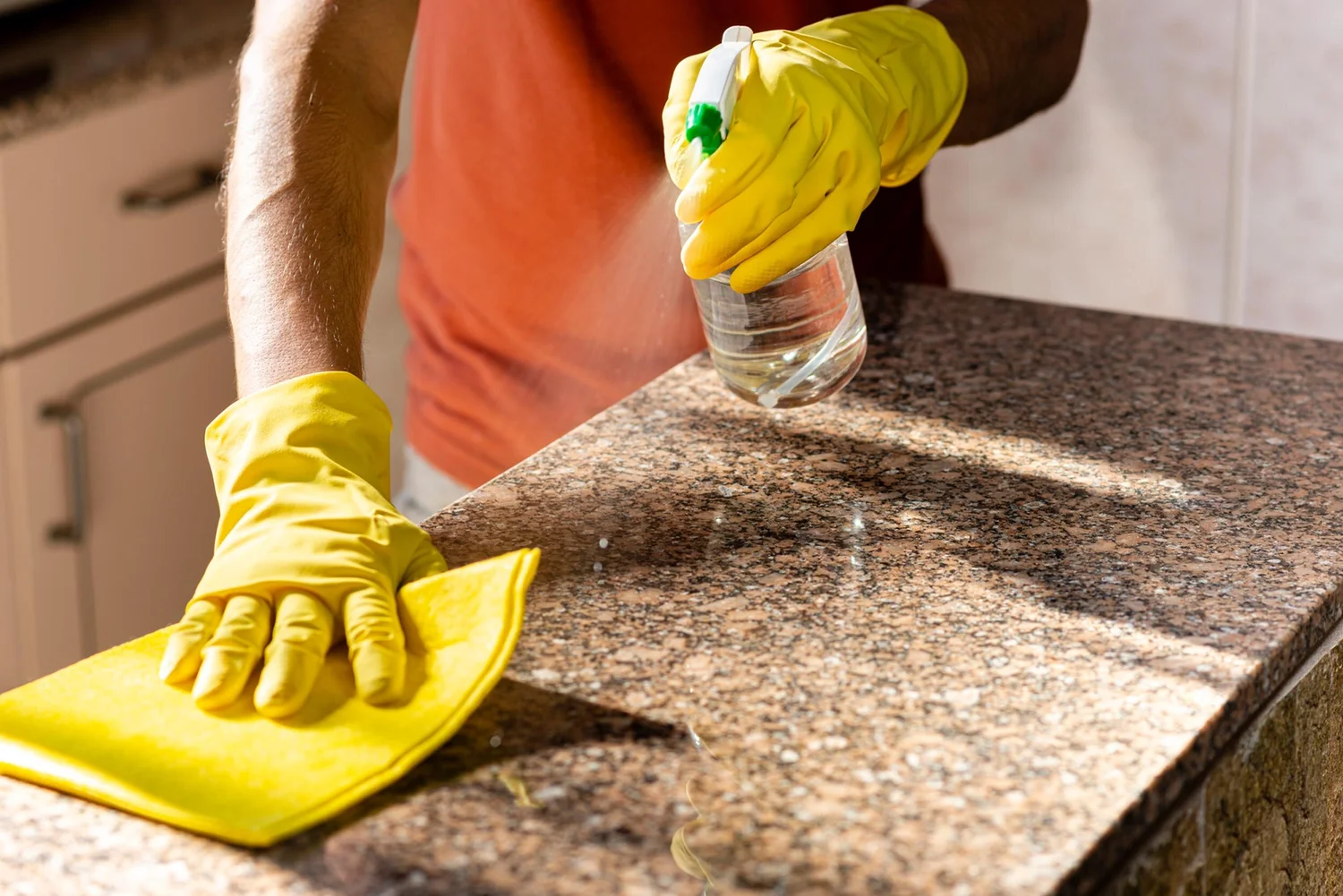
Your kitchen countertop is more than just a workspace—it’s where you prepare meals, gather with family, and sometimes even entertain guests. Keeping it clean isn’t just about appearance; it’s about health and safety too.
But do you really know how to clean your countertops properly to avoid damage and germs? You’ll discover simple, effective steps to make your kitchen surface spotless and safe. Ready to transform your cleaning routine and protect your home? Let’s dive in.

Credit: www.bettermarble.ca
Types Of Kitchen Countertops
Kitchen countertops come in many materials. Each type needs different care to stay clean.
Knowing your countertop type helps you clean it properly and keep it looking good.
Granite
Granite is a natural stone that looks shiny and strong. It is very popular in kitchens.
Use a mild soap and warm water to clean granite. Avoid acidic cleaners that can dull the surface.
- Wipe spills quickly to prevent stains
- Use a soft cloth or sponge
- Seal granite once a year for protection
Quartz
Quartz countertops are made from crushed quartz and resin. They are smooth and non-porous.
Clean quartz with warm water and mild soap. Avoid harsh chemicals that can damage the finish.
- Use a soft cloth to wipe the surface
- Remove sticky stains with a plastic scraper
- Do not use bleach or strong acids
Marble
Marble is a soft natural stone with a smooth, cool feel. It can stain easily from spills.
Clean marble with warm water and a gentle soap. Avoid acidic or abrasive cleaners that cause damage.
- Wipe spills immediately to avoid stains
- Use a soft cloth or sponge only
- Seal marble regularly to protect the surface
Laminate
Laminate countertops are made from layers of paper and resin. They are affordable and easy to clean.
Use a mild detergent with warm water to clean laminate. Avoid abrasive scrubbing pads that can scratch.
- Wipe spills quickly to avoid swelling
- Use a soft cloth or sponge
- Do not use bleach or strong chemicals
Butcher Block
Butcher block countertops are made from wood pieces glued together. They add warmth to kitchens.
Clean butcher block with warm water and mild soap. Dry it well to prevent wood damage.
- Oil the wood regularly to keep it smooth
- Avoid soaking or using harsh cleaners
- Sand and reseal if surface gets rough
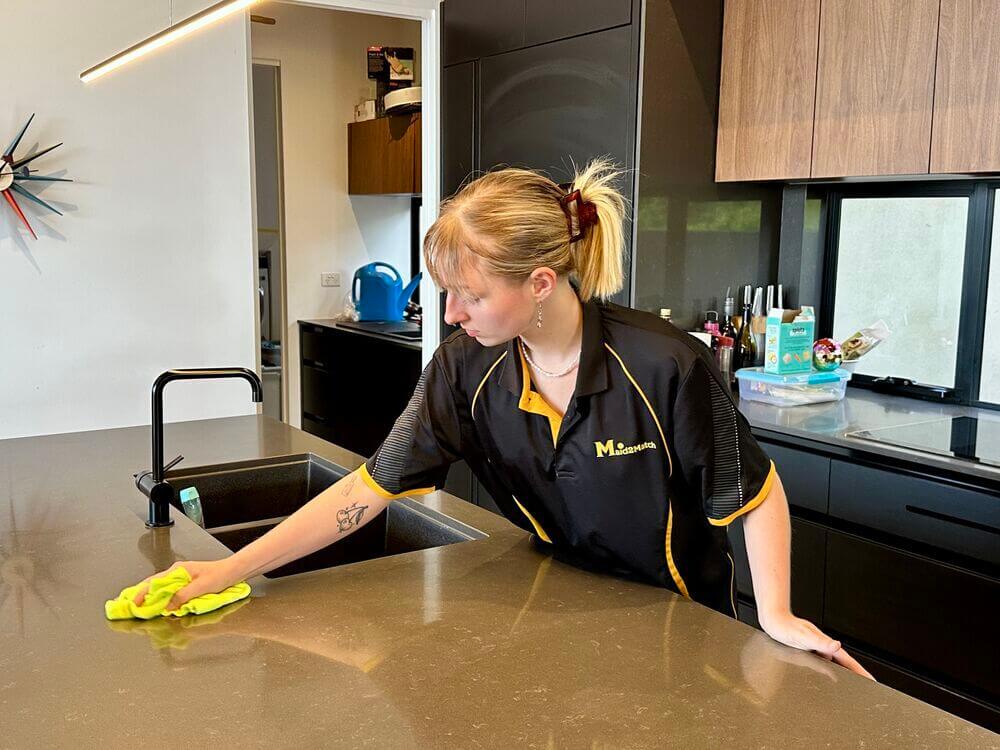
Credit: www.maid2match.com.au
Essential Cleaning Tools
Cleaning kitchen countertops needs the right tools. Good tools help remove dirt and keep surfaces safe.
Using proper cleaning items protects your countertops from damage and germs.
Microfiber Cloths
Microfiber cloths are soft and very good at trapping dirt. They do not scratch your countertop surface.
You can use them dry or damp for wiping spills and cleaning stains gently.
Non-abrasive Sponges
Non-abrasive sponges clean without scratching. They work well on delicate materials like marble or granite.
Choose sponges that feel soft and avoid rough scrubbing pads for your countertops.
Natural Cleaners
Natural cleaners like vinegar and baking soda clean safely. They reduce harsh chemicals in your kitchen.
These cleaners remove stains and odors without harming your countertop finish.
- Mix vinegar with water for light cleaning
- Use baking soda paste for tough spots
- Rinse well after applying natural cleaners
Disinfecting Solutions
Disinfecting solutions kill germs and bacteria on countertops. Use safe products for food areas.
Follow instructions for dilution and contact time to ensure proper disinfection.
- Use diluted bleach or store-bought disinfectants
- Let solution sit for a few minutes before wiping
- Wear gloves to protect your hands
Daily Cleaning Routine
Keeping kitchen countertops clean every day helps keep your kitchen safe. It also makes cooking more pleasant.
A simple daily routine stops dirt and germs from building up on surfaces.
Quick Wipe Down
Use a damp cloth to wipe down countertops after cooking or eating. This removes crumbs and spills fast.
Choose a soft cloth or sponge and a gentle cleaner safe for your countertop material.
- Spray cleaner lightly on the surface
- Wipe in circular motions to lift dirt
- Dry with a clean towel to avoid streaks
Spot Cleaning
Check for sticky spots or stains throughout the day. Clean these spots right away to prevent stains.
Use a small amount of cleaner and a soft cloth. Rub gently on the spot until it is clean.
- Apply cleaner only on the stained area
- Let it sit for a minute if needed
- Wipe with a damp cloth and dry
Deep Cleaning Techniques
Cleaning kitchen countertops deeply keeps them safe and looking good. It removes dirt and germs that build up over time.
Use the right tools and cleaners to clean well without damage. This guide shows how to remove stains and polish surfaces.
Removing Stains
Stains can make your countertop look dirty and old. Remove them quickly to keep your kitchen fresh.
Use a gentle cleaner for most stains. For tough stains, try baking soda paste or a mild bleach solution.
- Mix baking soda with water to make a paste
- Apply paste on the stain and let it sit for 10 minutes
- Scrub gently with a soft cloth or sponge
- Rinse with clean water and dry with a towel
- For organic stains, use a mild bleach diluted in water
Polishing Surfaces
Polishing makes countertops shine and protects them from damage. It also smooths out small scratches.
Use a polish suitable for your countertop material. Apply with a soft cloth and buff in small circles.
- Choose polish for granite, marble, or laminate
- Apply a small amount to a clean cloth
- Rub gently in circular motions over the surface
- Wipe off extra polish with a dry cloth
- Repeat polishing once a month to keep shine
Preventing Damage
Cleaning kitchen countertops is important to keep them looking nice. Using the right methods helps avoid damage.
Some cleaning habits can harm your countertops. Learn how to protect them while you clean.
Avoiding Harsh Chemicals
Harsh chemicals can ruin countertop surfaces. They may cause stains or discoloration.
Use gentle cleaners made for your countertop type. Avoid bleach and strong acids.
- Choose mild soap and water for daily cleaning
- Test new cleaners on a small spot first
- Do not use abrasive scrubs or powders
Using Cutting Boards
Cutting directly on countertops can cause scratches and dents. Always use a cutting board.
Cutting boards protect your countertops and keep knives sharp. Clean boards after each use.
- Use wood or plastic cutting boards
- Replace worn-out boards to avoid damage
- Keep boards clean to stop bacteria spread
Heat Protection
Hot pots and pans can cause burns or cracks on countertops. Use heat protection every time.
Place hot items on trivets or heat pads. This keeps your countertop safe from heat damage.
- Use heat-resistant mats under hot cookware
- Avoid placing hot pans directly on the surface
- Let cookware cool before setting it down
Eco-friendly Cleaning Alternatives
Cleaning kitchen countertops does not have to harm the environment. Using eco-friendly options keeps your home safe and green.
Natural ingredients and sustainable products work well to clean without harsh chemicals. They protect your surfaces and the planet.
Diy Natural Solutions
You can make simple cleaners at home using everyday ingredients. These natural solutions clean well and avoid toxins.
Common ingredients include vinegar, baking soda, lemon, and water. They help remove stains, grease, and germs safely.
- Mix equal parts vinegar and water for a spray cleaner
- Use baking soda paste to scrub tough spots
- Rub lemon juice to cut grease and freshen surfaces
- Rinse with warm water and dry with a clean cloth
Sustainable Products
Choose cleaning products made from natural ingredients and recycled materials. These products reduce waste and pollution.
Look for labels that say biodegradable, non-toxic, and cruelty-free. These products keep your kitchen clean without harming nature.
- Eco-friendly sprays with plant-based cleaners
- Reusable cleaning cloths instead of paper towels
- Refillable bottles to cut plastic waste
- Products with minimal packaging and natural scents
Common Mistakes To Avoid
Cleaning kitchen countertops seems easy but many people make mistakes. These mistakes can damage the surface or leave it dirty.
Knowing what to avoid helps keep your countertops clean and long-lasting. Read about common errors to protect your kitchen.
Over-scrubbing
Scrubbing too hard can scratch or damage your countertop. Some surfaces like granite or laminate are sensitive to harsh scrubbing.
Use a soft cloth or sponge and gentle pressure to clean. Avoid rough brushes or steel wool that can leave marks.
- Harsh scrubbing can cause scratches
- Soft cleaning tools protect the surface
- Gentle cleaning keeps countertops looking new
Ignoring Manufacturer Guidelines
Each countertop material needs special care. Ignoring cleaning instructions can cause stains or damage.
Always read the manufacturer’s cleaning guide. Use recommended cleaners and avoid products that can harm your countertop.
- Follow cleaning instructions for your countertop type
- Use approved cleaning products only
- Check for warnings about harsh chemicals
:strip_icc()/7-1-2023BKB20195-1_preview-6bbece63b7c044d692e033b98597e545.png)
Credit: www.bhg.com
Frequently Asked Questions
How Often Should I Clean Kitchen Countertops?
Clean your kitchen countertops daily to remove spills and crumbs. A quick wipe with a mild cleaner keeps surfaces hygienic and stain-free. Deep clean weekly for thorough sanitation and to maintain countertop longevity.
What Is The Best Cleaner For Kitchen Countertops?
Use a gentle, non-abrasive cleaner suitable for your countertop material. Mild dish soap mixed with warm water works well for most surfaces. Avoid harsh chemicals that can damage or dull the finish.
Can I Use Bleach To Clean Kitchen Countertops?
Bleach can disinfect but may damage some countertop materials. Use it diluted and sparingly, only on non-porous surfaces like laminate or stainless steel. Always rinse thoroughly to prevent residue and discoloration.
How Do I Prevent Stains On Kitchen Countertops?
Wipe spills immediately to prevent stains from setting. Use cutting boards and trivets to protect surfaces from scratches and heat damage. Regular sealing of porous countertops like granite helps block stains effectively.
Conclusion
Keeping kitchen countertops clean is simple with the right steps. Use gentle cleaners and soft cloths for best results. Clean spills quickly to avoid stains and damage. Regular wiping keeps surfaces fresh and safe. Different materials need different care, so choose cleaning products carefully.
A clean countertop makes cooking easier and more enjoyable. Take small actions daily for big results. Your kitchen will look neat and inviting. Good habits protect your countertops for years. Cleaning doesn’t have to be hard or time-consuming. Just follow these tips and enjoy a tidy kitchen every day.