

Is your ceiling fan covered in dust and grime? Cleaning it might seem like a hassle, but it doesn’t have to be.
Imagine turning on your fan and feeling fresh, cool air without any dust swirling around. You can make that happen with just a few simple steps. In this guide, you’ll discover easy and effective ways to clean your ceiling fan quickly and safely.
Keep reading, and you’ll learn how to bring back that fresh, clean breeze in your home—without the mess or stress.

Credit: patriotmaids.com
Preparation And Safety
Cleaning ceiling fans keeps your home fresh and dust-free. Proper preparation helps you work safely and well.
Follow simple steps to gather supplies and ensure safety before starting the cleaning process.
Gather Necessary Supplies
Have all your cleaning tools ready before you begin. This saves time and makes the task easier.
- A sturdy ladder or step stool for reaching the fan
- A microfiber cloth or pillowcase to trap dust
- All-purpose cleaner or mild soap mixed with water
- A spray bottle for liquids
- Protective gloves and goggles to protect your skin and eyes
- A vacuum cleaner with a brush attachment for extra dust removal
Ensure Safety First
Safety is important when cleaning ceiling fans. Make sure the fan is off and stable.
| Safety Tip | Description |
| Turn off power | Switch off the ceiling fan and light at the breaker |
| Use a sturdy ladder | Check the ladder for stability before climbing |
| Wear protective gear | Use gloves and goggles to avoid dust and cleaner contact |
| Work in daylight | Make sure the room has enough natural light to see well |

Credit: www.youtube.com
Dusting The Blades
Ceiling fans collect dust quickly. Dust on the blades can spread allergens and reduce air quality.
Cleaning the blades regularly keeps your fan working well and your home fresh.
Use A Microfiber Cloth
A microfiber cloth traps dust better than regular cloths. It cleans without scratching the blades.
- Turn off the fan before cleaning.
- Hold the blade with one hand to steady it.
- Gently wipe each blade with the dry microfiber cloth.
- For sticky spots, slightly dampen the cloth with water.
- Dry the blades with a clean, dry microfiber cloth.
Employ A Vacuum Cleaner
A vacuum cleaner with a brush attachment can remove dust from blades quickly. It also cleans hard-to-reach corners.
| Vacuum Cleaner Tips | Details |
| Use brush attachment | Prevents blade damage and loosens dust |
| Hold blade steady | Stops movement during cleaning |
| Clean both sides | Removes dust completely |
| Empty vacuum after use | Maintains suction power |
Deep Cleaning The Blades
Cleaning ceiling fan blades deeply can improve air quality and fan performance. Dust and grime build up over time, making fans less efficient.
Use the right cleaning method to remove dirt without damaging the blades. Follow these steps to clean them well.
Create A Cleaning Solution
Make a gentle cleaning solution to safely clean the blades. Mix common household items for best results.
- Combine one cup of warm water
- Add one tablespoon of mild dish soap
- Mix in two tablespoons of white vinegar
- Stir the solution until it is well blended
Wipe Each Blade Thoroughly
Use a soft cloth or microfiber towel to clean each blade. This helps remove dust and stains without scratching.
| Cleaning Tip | Reason |
|---|---|
| Hold the blade firmly | Prevents bending or damage |
| Wipe both top and bottom sides | Removes all dust and grime |
| Rinse cloth often in the cleaning solution | Keeps the cloth clean for better wiping |
| Dry blades with a clean cloth | Prevents water spots and streaks |
Addressing Stubborn Stains
Ceiling fans can collect dust and stains over time. Some stains are hard to remove with regular cleaning. You need extra care to clean these stubborn spots well.
Using the right products and techniques helps keep your fan blades clean. This guide shows how to remove tough stains safely.
Apply A Stain Remover
Choose a gentle stain remover safe for your fan’s material. Spray or apply it on the stained areas. Let it sit for a few minutes to loosen the dirt.
Use a soft cloth or sponge to rub the stains gently. Avoid using rough scrubbers that can damage the fan blades.
- Test stain remover on a small spot first
- Use mild cleaners for painted or wooden blades
- Wear gloves to protect your skin
Rinse And Dry Blades
After removing stains, wipe the blades with a damp cloth to rinse off any cleaner. This stops residue from building up over time.
Dry the blades well using a clean, dry cloth. Dry blades prevent dust from sticking quickly and keep your fan looking fresh.
Cleaning The Motor And Housing
Cleaning the motor and housing of a ceiling fan helps it run better. Dust and dirt can build up and cause problems.
Regular cleaning keeps the fan safe and extends its life. Use simple tools and follow easy steps.
Remove Dust From Motor
Turn off the power to the fan before cleaning the motor. Use a soft brush to remove dust carefully.
A vacuum with a brush attachment can also help remove dust without damaging the motor parts.
- Switch off power at the circuit breaker
- Use a soft brush or vacuum brush tool
- Gently clean around the motor vents
- Avoid using water or liquids on the motor
Wipe Down The Housing
Use a damp cloth to wipe the fan housing. This removes dust and dirt from the outside surface.
Dry the housing with a clean cloth to prevent moisture from entering the motor area.
- Use a soft, damp cloth for wiping
- Clean all sides of the housing
- Dry the surface after wiping
- Do not spray cleaner directly on the fan
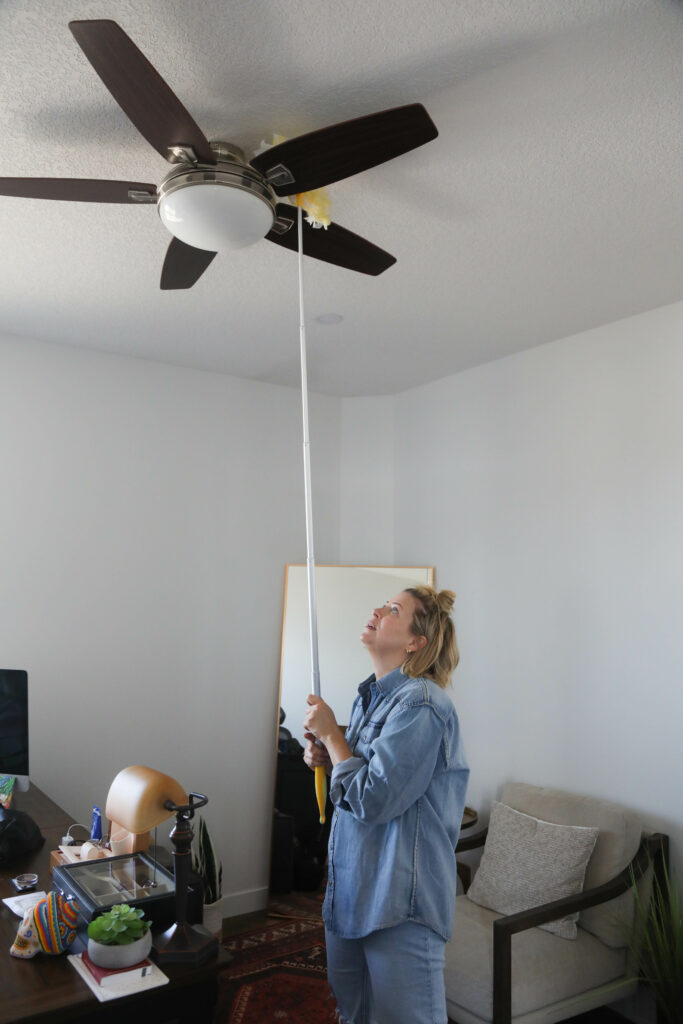
Credit: www.housework.com
Final Checks And Maintenance Tips
Cleaning ceiling fans is not complete without checking for safety and regular upkeep. These steps keep fans working well and lasting longer.
Here are important tips to finish your cleaning and maintain your ceiling fans.
Inspect For Loose Screws
After cleaning, check all screws on the fan blades and motor. Tight screws prevent wobbling and noise. Use a screwdriver to secure any loose screws gently.
- Check screws on each blade
- Look at screws near the motor housing
- Tighten any screws that feel loose
- Avoid over-tightening to prevent damage
Schedule Regular Cleanings
Set a cleaning schedule to keep your fan dust-free and running smoothly. Regular cleaning stops dust buildup that can cause motor strain.
| Cleaning Frequency | Best Time |
| Light cleaning | Every 2 weeks |
| Thorough cleaning | Every 3 months |
| Maintenance check | Every 6 months |
Frequently Asked Questions
How Often Should I Clean My Ceiling Fan?
Clean your ceiling fan every 1 to 3 months. Frequent cleaning prevents dust buildup and improves air quality. It also keeps the fan running efficiently and extends its lifespan.
What Tools Are Best For Cleaning Ceiling Fans?
Use a microfiber cloth, a step ladder, and a vacuum with a brush attachment. These tools remove dust gently without damaging fan blades or motor parts.
Can I Use Water To Clean Ceiling Fan Blades?
Avoid soaking blades with water. Instead, use a damp cloth or mild cleaning spray. Excess water can damage wood blades and electrical components.
How Do I Safely Clean Ceiling Fans Without A Ladder?
Use an extendable duster designed for ceiling fans. It allows you to reach blades safely from the floor. Ensure the fan is turned off before cleaning.
Conclusion
Cleaning ceiling fans keeps your home fresh and dust-free. Regular dusting stops dirt from building up. Use simple tools like a cloth or brush for easy cleaning. Turn off the fan first to stay safe. Clean blades improve air flow and reduce allergies.
Small effort, big difference. Keep your fans bright and working well all year. Make cleaning a habit and enjoy cleaner air every day. Easy steps lead to a cleaner, healthier home environment. Simple care protects your fans and your family’s health.