
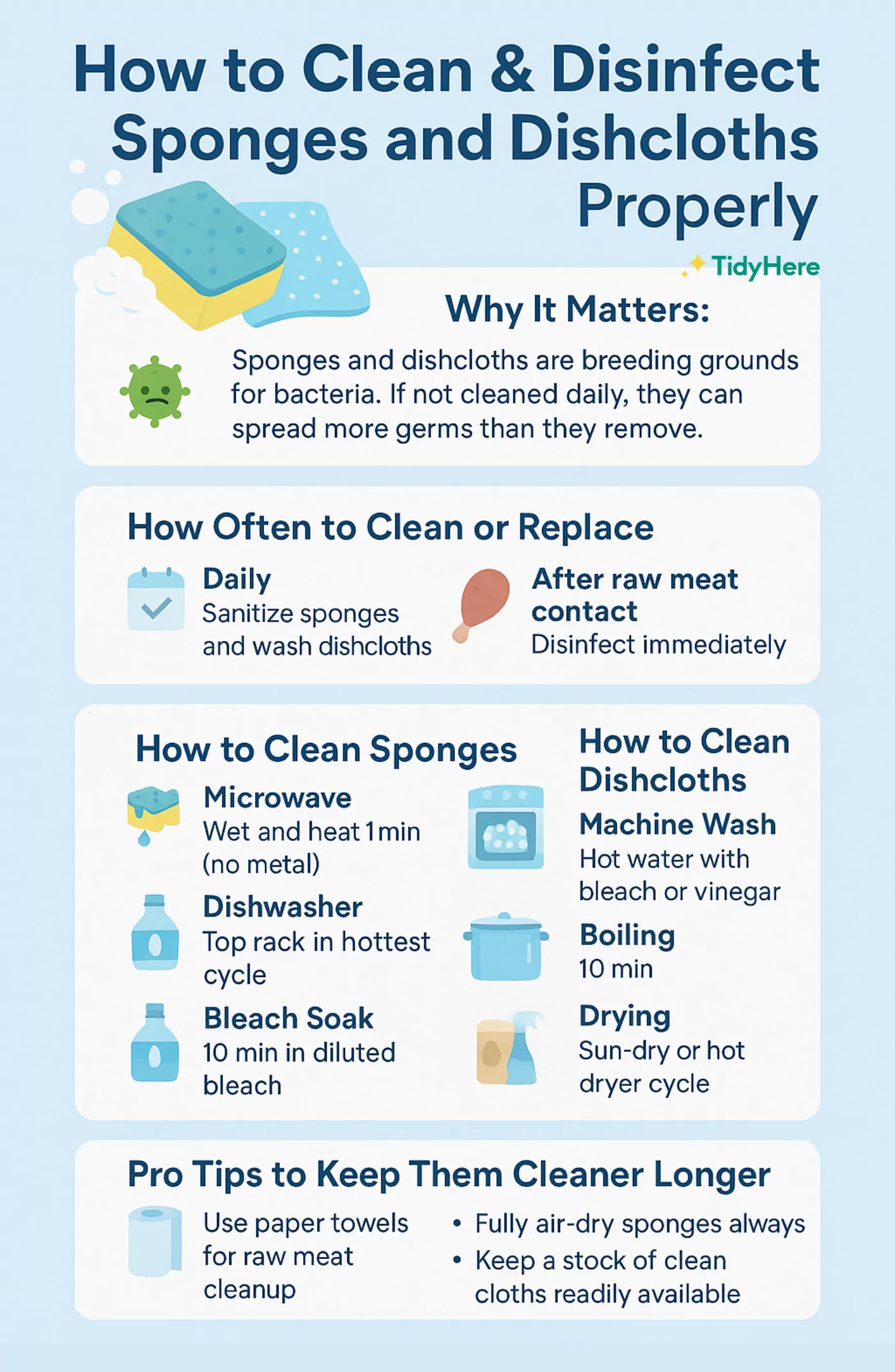
Your kitchen sponge is one of the dirtiest items in your home, even dirtier than your toilet seat. Every time you use it, it picks up bacteria, germs, and food particles that can make your kitchen less safe.
But don’t worry—cleaning and disinfecting your kitchen sponge is easier than you think. You’ll discover simple, effective ways to keep your sponge fresh and germ-free. By following these steps, you’ll protect your family’s health and make your kitchen a cleaner place.
Keep reading to find out how you can easily transform your sponge from a bacteria hotspot into a safe cleaning tool.
Importance Of Cleaning Sponges
Kitchen sponges clean dishes and surfaces every day. They collect food crumbs, grease, and germs.
Dirty sponges can spread bacteria and cause illness. Cleaning them keeps your kitchen safe and healthy.
Preventing Bacteria Growth
Sponges stay wet and warm, perfect for bacteria to grow. Germs multiply quickly on dirty sponges.
Cleaning sponges stops bacteria from spreading to your dishes and counters.
Reducing Foodborne Illness Risk
Using a dirty sponge can spread harmful germs like Salmonella and E. coli. These cause stomach sickness.
Regularly cleaning sponges lowers the chance of foodborne illness in your home.
Maintaining Sponge Longevity
Cleaning removes dirt and grime that break down sponge material. This helps sponges last longer.
Well-maintained sponges work better and save money by lasting more uses.
Keeping Kitchen Smell Fresh
Dirty sponges often smell bad due to bacteria and food residue. This can make your kitchen smell unpleasant.
Cleaning sponges regularly helps keep your kitchen smelling fresh and clean.

Credit: tidyhere.com
Common Germs Found In Sponges
Kitchen sponges are one of the dirtiest items in your home. They hold many germs that can cause sickness.
Knowing which germs live in sponges helps you clean and disinfect them better. Let’s look at the common germs found in kitchen sponges.
Escherichia Coli (e. Coli)
E. coli is a type of bacteria found in raw meat and feces. It can cause stomach cramps and diarrhea.
Sponges pick up E. coli when they clean surfaces or dishes contaminated with raw food juices.
Salmonella
Salmonella bacteria come from raw meat, poultry, and eggs. It causes food poisoning symptoms like fever and vomiting.
Sponges can spread Salmonella if they touch raw foods or dirty kitchen counters.
Staphylococcus Aureus
This bacteria lives on skin and in noses. It can cause skin infections and food poisoning.
Sponges get contaminated when handled with unwashed hands or used on leftover food spills.
Campylobacter
Campylobacter bacteria come from raw poultry and unclean water. They cause diarrhea and stomach pain.
Using sponges on raw chicken or dirty surfaces can spread Campylobacter germs.
Listeria Monocytogenes
Listeria bacteria grow in cold places like refrigerators. They cause serious illness, especially in pregnant women.
Sponges used on fridge shelves or leftovers can carry Listeria germs.
Mold And Yeast
Sponges stay wet and warm, which helps mold and yeast grow. They cause bad smells and can trigger allergies.
These fungi make sponges unsafe and unhygienic for cleaning tasks.
Signs Your Sponge Needs Cleaning
Kitchen sponges get dirty fast. They collect germs and food bits. Cleaning them keeps your kitchen safe.
Look for these signs to know when your sponge needs cleaning. A clean sponge helps prevent sickness.
Foul Odor Coming From The Sponge
A bad smell is a clear sign. Sponges hold moisture and food, causing bacteria to grow. If your sponge smells bad, it needs cleaning.
Sponge Feels Slimy Or Sticky
If your sponge feels slimy or sticky, bacteria have built up. This texture means it is dirty and unsafe to use.
Visible Food Particles Or Stains
Food bits stuck in the sponge make it dirty. Stains also show it needs cleaning. A clean sponge looks fresh without marks.
Sponge Breaks Or Falls Apart Easily
A sponge that breaks down fast has worn out. Old sponges trap more germs. Replace or clean it well if it falls apart.
It Has Been Used For Several Days
Sponges should be cleaned regularly. If you use the same sponge for many days without cleaning, it is full of bacteria.
- Clean sponges after each use if possible
- Do a deep clean every few days
- Replace sponges every 1-2 weeks
Preparation For Cleaning
Cleaning kitchen sponges is important to keep your kitchen safe. Before you start, prepare everything you need. This makes the process quick and easy.
Getting ready helps you clean the sponge well and avoid spreading germs. Let’s look at the steps to prepare for cleaning.
Gather Necessary Supplies
Collect all the supplies before you clean your sponge. This will help you finish the task without stopping.
- Kitchen sponge
- Dish soap
- Bleach or white vinegar
- Microwave-safe bowl or container
- Hot water
- Gloves (optional for protection)
Having these items ready makes cleaning simple. You can choose the best cleaning way with what you have.
Choose A Cleaning Method
Pick a cleaning method that fits your needs. Some ways use heat, others use chemicals. Each method cleans germs and removes smells.
- Microwave the sponge with water for a few minutes
- Soak the sponge in a bleach solution
- Use white vinegar to soak and disinfect
- Wash with hot, soapy water
Choose a safe and easy method for you. Make sure to follow the steps carefully to clean your sponge well.
Microwave Method
Cleaning and disinfecting kitchen sponges is important to keep your kitchen safe. The microwave method is a quick way to kill germs on sponges.
This method uses the heat from the microwave to disinfect the sponge effectively.
Step-by-step Instructions
Follow these simple steps to clean your kitchen sponge using a microwave.
- Wet the sponge completely with water.
- Place the wet sponge on a microwave-safe plate.
- Microwave the sponge on high for 1 to 2 minutes.
- Be careful removing the sponge; it will be hot.
- Let the sponge cool before using it again.
Safety Precautions
Take these safety steps to avoid accidents while microwaving sponges.
- Always wet the sponge before microwaving to prevent fire.
- Use a microwave-safe plate to hold the sponge.
- Do not microwave sponges with metal parts.
- Handle the sponge carefully; it can be very hot.
- Watch the microwave while heating to stop if smoke appears.

Credit: tidyhere.com
Boiling Water Method
Kitchen sponges can hold many germs and bacteria. Cleaning them often helps keep your kitchen safe. One easy way to clean sponges is using boiling water.
This method kills most bacteria and removes food particles. It is quick and does not need special products.
Boiling Process
First, fill a pot with enough water to cover the sponge. Bring the water to a rolling boil on the stove.
Place the sponge carefully into the boiling water. Let it boil for about five minutes to kill germs.
- Use tongs to avoid burns when handling the sponge.
- Keep the sponge fully submerged in the water.
- Do not boil sponges with metal scrubbers attached.
Cooling And Handling
After boiling, remove the sponge using tongs. Place it on a clean surface to cool down.
Wait until the sponge is cool enough to touch. Squeeze out excess water before using or storing it.
- Do not store the sponge when wet; it can grow bacteria.
- Let the sponge dry completely between uses.
- Replace the sponge regularly for best hygiene.
Vinegar Soak Method
Kitchen sponges hold many germs and bacteria. Cleaning them often keeps your kitchen safe.
The vinegar soak method uses vinegar to kill germs on sponges. It is simple and effective.
Preparation And Soaking
Start by rinsing the sponge with water to remove food debris. Then prepare a vinegar solution.
Use white vinegar because it is strong and natural. Soak the sponge fully in the vinegar.
- Fill a bowl with one cup of white vinegar
- Place the sponge in the bowl
- Make sure the sponge is completely covered
- Let it soak for at least 5 minutes
Rinsing And Drying
After soaking, remove the sponge from vinegar. Rinse it well under clean water to remove vinegar smell.
Dry the sponge completely before use. A dry sponge stops bacteria from growing again.
- Rinse sponge under warm water
- Squeeze out excess water
- Place sponge in a dry, airy spot
- Allow it to dry fully before using
Bleach Solution Method
Kitchen sponges often hold many germs and bacteria. Cleaning them well helps keep your kitchen safe.
Using a bleach solution is a strong way to disinfect sponges. It kills most harmful microbes quickly.
Mixing The Solution
Start by preparing a bleach solution. Use one tablespoon of bleach in one quart of water.
Mix the bleach and water carefully in a container. Make sure the container is clean and safe to use.
- Measure one tablespoon of bleach
- Add it to one quart (4 cups) of water
- Stir gently to mix
Soaking And Rinsing
Place the sponge in the bleach solution. Let it soak for five minutes to kill germs.
After soaking, rinse the sponge well with clean water. Squeeze out all bleach and water before use.
- Soak sponge for 5 minutes
- Remove and rinse thoroughly
- Squeeze out excess water
When To Replace Your Sponge
Kitchen sponges get dirty fast. They can hold many germs that spread bacteria.
Knowing when to replace your sponge helps keep your kitchen clean and safe.
Visible Wear And Tear
Check your sponge for holes, tears, or cracks. Worn sponges do not clean well.
Replace your sponge as soon as it looks damaged or falls apart.
Bad Smell
A sponge that smells bad has bacteria growing inside. Cleaning may not remove the odor.
Throw away the sponge if it still smells bad after disinfecting.
After Two Weeks Of Use
Sponges get full of germs quickly. Replace your sponge every two weeks to stay safe.
This timing helps prevent bacteria buildup and keeps your kitchen healthier.
After Cleaning Raw Meat Or Fish
Sponges used to clean raw meat or fish can carry harmful germs.
Replace the sponge right after cleaning these foods to avoid cross-contamination.
If It Feels Slimy
A slimy sponge means bacteria are growing inside. It is unsafe to use.
Replace the sponge immediately if it feels slimy, even after washing.
Credit: tidyhere.com
Tips For Maintaining Sponge Hygiene
Kitchen sponges can hold many germs and bacteria. Keeping them clean helps stop the spread of illness.
Learn simple ways to clean and disinfect your sponges. Good habits keep your kitchen safer.
Daily Maintenance Practices
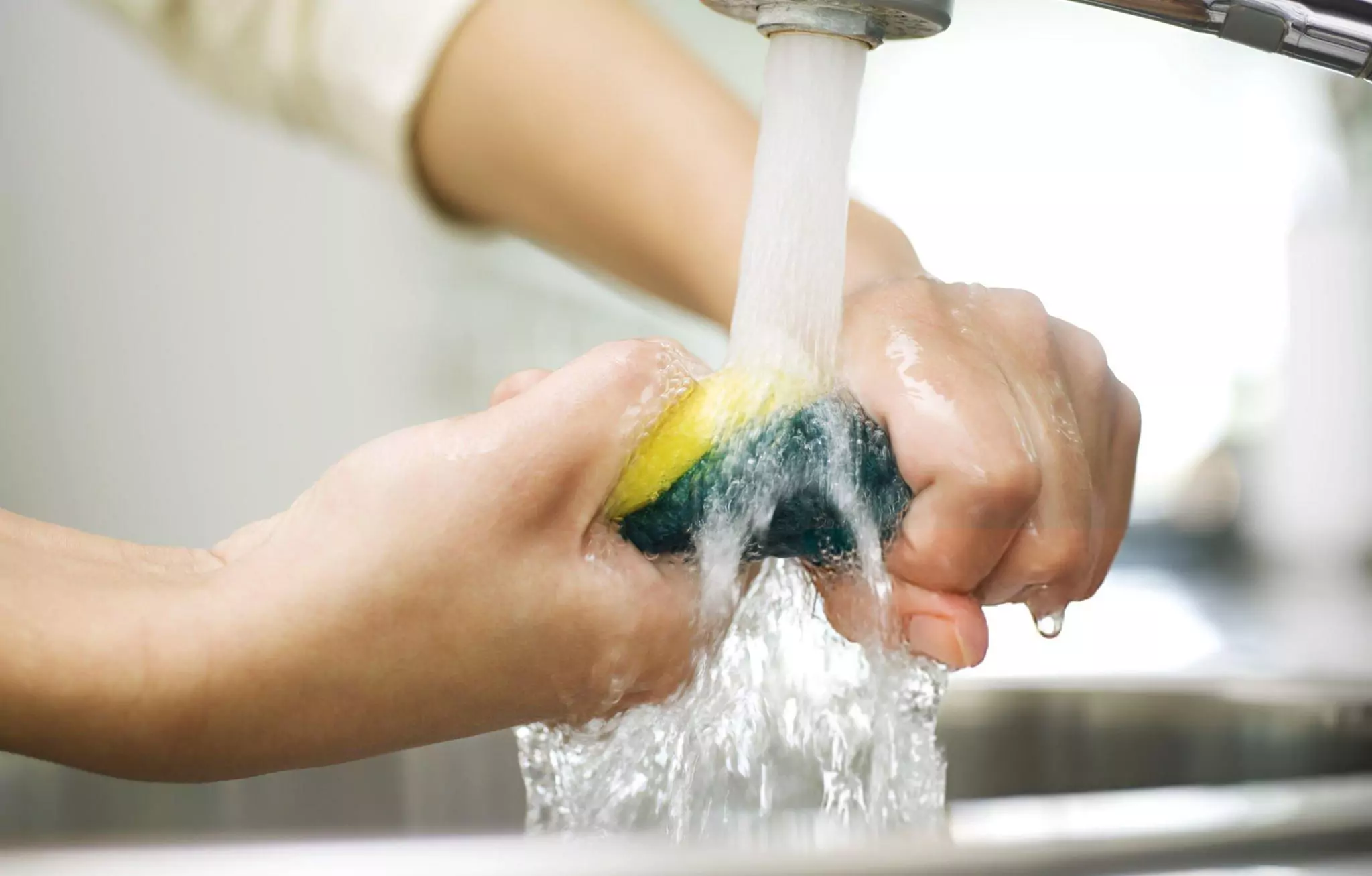
Rinse your sponge well after each use to remove food and soap. Squeeze out water to keep it dry.
Store sponges in a dry place. Wet sponges breed bacteria faster.
- Rinse thoroughly with hot water
- Squeeze to remove excess water
- Keep sponge in a dry holder
- Replace sponges every 1-2 weeks
Avoiding Cross-contamination
Use different sponges for dishes and cleaning surfaces. This stops germs from spreading.
Do not use a sponge on raw meat spills and then on other areas. Cross-contamination can cause food poisoning.
- Use color-coded sponges for different tasks
- Do not share sponges between food types
- Clean sponges regularly with disinfecting methods
- Throw away sponges that smell bad or look worn
Frequently Asked Questions
How Often Should I Clean Kitchen Sponges?
You should clean kitchen sponges daily to reduce bacteria buildup. Frequent cleaning prevents unpleasant odors and cross-contamination in your kitchen.
What Is The Best Method To Disinfect Sponges?
Microwaving wet sponges for 1-2 minutes or soaking them in bleach solution effectively disinfects sponges. Both methods kill most germs safely.
Can I Use A Dishwasher To Clean Sponges?
Yes, placing sponges in the dishwasher’s top rack with a heated dry cycle can sanitize them well. It’s a convenient cleaning method.
How Do I Dry Sponges Properly After Cleaning?
Squeeze out excess water and air-dry sponges completely between uses. Proper drying reduces bacterial growth and extends sponge lifespan.
Conclusion
Cleaning and disinfecting kitchen sponges keeps your kitchen safe. Regular care stops germs from spreading to your dishes. Use simple methods like microwaving or soaking in vinegar. Replace sponges often to avoid bad smells and bacteria build-up. Clean sponges last longer and work better.
Small steps make a big difference in kitchen hygiene. Keep your sponge fresh for a healthier home.