
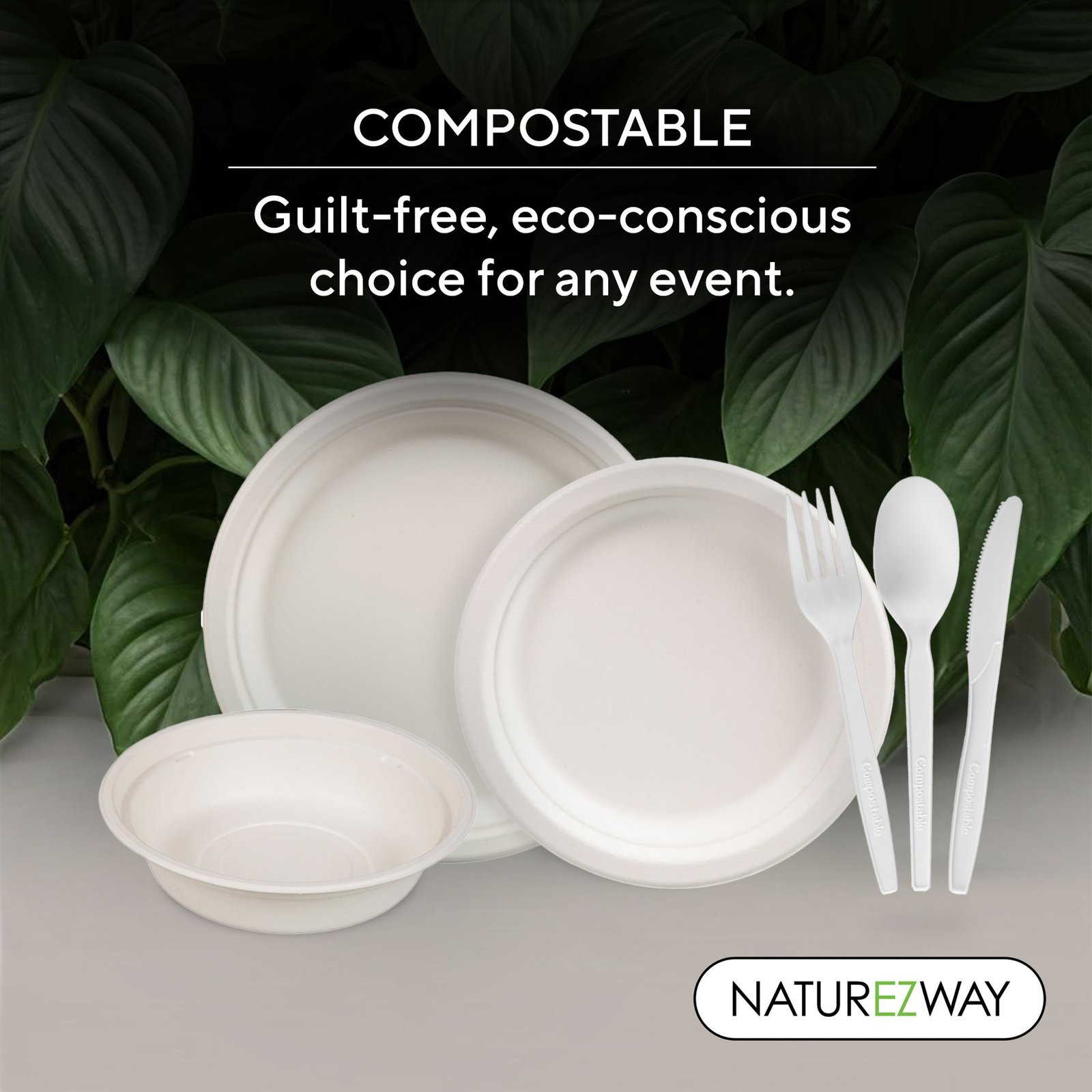
Choosing the right compostable cups and plates can feel overwhelming, but it doesn’t have to be. You want products that are good for the environment, safe for your guests, and fit your budget—all at the same time.
This guide will help you make smart choices with simple tips that anyone can follow. By the end, you’ll know exactly what to look for, so your next event or business can be both eco-friendly and hassle-free. Keep reading to discover how easy it is to pick the best compostable cups and plates for your needs.
Benefits Of Compostable Tableware
Compostable cups and plates are a smart choice for the environment. They break down naturally and help reduce waste.
Choosing compostable tableware supports the planet. It encourages sustainable practices and improves soil health.
Reducing Plastic Waste
Plastic waste harms the environment. Compostable tableware helps cut down on plastic pollution.
These items decompose quickly, unlike plastic, which takes years to break down.
- Less plastic in landfills
- Decreased ocean pollution
- Conservation of wildlife habitats
Supporting Sustainable Practices
Using compostable tableware supports eco-friendly practices. It encourages companies to produce greener products.
Choosing these items shows commitment to sustainability. It sets a positive example for others to follow.
| Practice | Impact |
| Composting | Reduces landfill waste |
| Sustainable sourcing | Preserves natural resources |
Improving Soil Health
Compostable tableware enhances soil quality. It returns nutrients to the earth as it breaks down.
Healthy soil supports plant growth. It helps produce more food and maintain ecosystems.
- Increases soil fertility
- Boosts plant productivity
- Supports biodiversity
Credit: greenprintproducts.com
Materials Used In Compostable Cups And Plates
Compostable cups and plates are made from natural materials that break down easily. These items help reduce waste and protect the environment.
Different materials give compostable products their strength and ability to decompose quickly. Knowing these materials helps you choose the right product.
Plant-based Fibers
Plant-based fibers come from plants like sugarcane, bamboo, and wheat straw. These fibers are strong and can hold liquids and food well.
They are natural and break down fast in compost conditions. Many cups and plates use these fibers as the main material.
- Sugarcane bagasse is a common fiber from leftover stalks.
- Bamboo fibers grow quickly and are renewable.
- Wheat straw is a byproduct of grain farming.
Biodegradable Plastics
Biodegradable plastics are made from natural substances like corn starch. They look like regular plastic but break down faster.
These plastics are often used as coatings to keep plates and cups waterproof. They help keep food fresh without harming the environment.
- PLA (polylactic acid) is a popular biodegradable plastic.
- PHA (polyhydroxyalkanoates) comes from bacteria.
- Bioplastics reduce plastic waste in landfills.
Other Natural Components
Some compostable cups and plates include other natural parts like starch, cellulose, and natural waxes. These add strength or help with water resistance.
These materials make the products last longer without using harmful chemicals. They also help the items break down faster in compost piles.
- Starch from potatoes or corn adds thickness.
- Cellulose from wood helps with structure.
- Natural waxes create water-resistant surfaces.
Key Features To Look For
Choosing compostable cups and plates is important for the environment. You want products that break down safely and fast.
Look for key features to ensure you get the best quality and true compostable items.
Certification Labels
Certification labels prove that cups and plates meet compostable standards. They show products are tested and safe for composting.
Common labels include:
- OK Compost
- Compostable ASTM D6400
- Biodegradable Products Institute (BPI)
- Seedling Logo by European Bioplastics
Durability And Functionality
Compostable cups and plates should be strong enough for their use. They must hold food without leaking or breaking.
Check these points:
- Heat resistance for hot drinks or food
- Sturdy design for holding liquids or solids
- Leak-proof or moisture resistant
- Comfortable to hold and use
Composting Compatibility
Make sure cups and plates can compost in your local system. Some need industrial composting, others break down at home.
Ask about:
- Type of composting needed (industrial or home)
- Time needed to break down
- Materials used (like PLA, bagasse, or paper)
- Any additives that affect composting
Credit: repurpose.com
Comparing Compostable And Conventional Options
Choosing cups and plates can affect the environment and your budget. Compostable products offer an alternative to plastic and foam items.
Understanding the differences helps you pick the right option for your needs and values.
Environmental Impact
Compostable cups and plates break down naturally after use. They return nutrients to the soil without harming it.
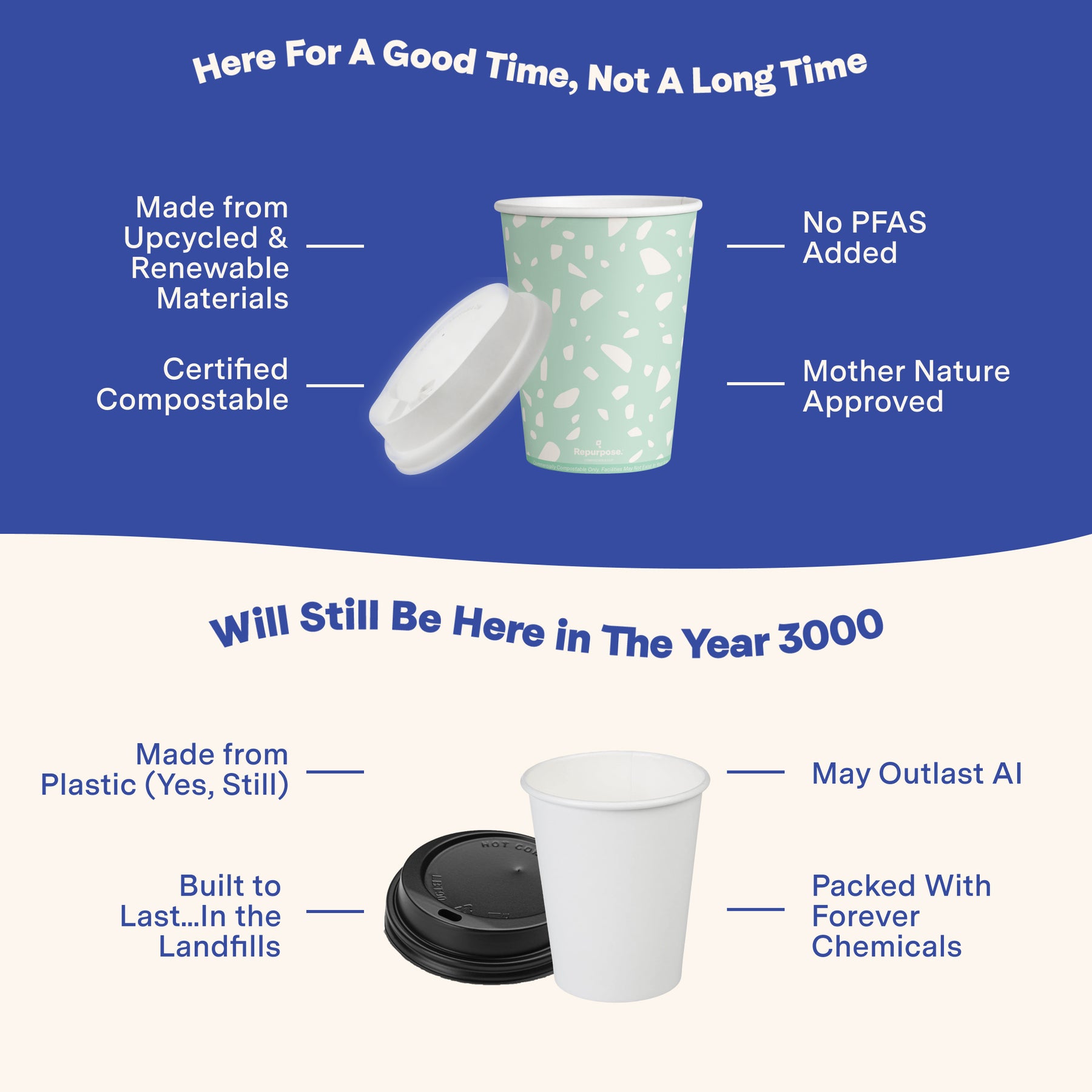
Conventional options like plastic can take hundreds of years to decompose and may pollute land and water.
- Compostable products reduce landfill waste
- Plastic items release harmful chemicals
- Compostables support soil health when composted properly
- Plastic often ends up in oceans and harms wildlife
Cost Considerations
Compostable cups and plates usually cost more than plastic or foam ones. The price varies by material and brand.
Buying in bulk can help lower the cost. Think about the long-term savings from waste reduction and environmental benefits.
- Compostable items can cost 10% to 50% more
- Plastic options are cheaper upfront
- Consider waste disposal fees for plastics
- Compostable waste may lower landfill costs
User Experience
Compostable cups and plates feel different than plastic. Some are sturdier, while others may be thinner.
Many compostable options handle hot and cold drinks well. Plastic sometimes melts or warps with heat.
- Compostable items often have a natural look and feel
- Plastic is usually smooth and shiny
- Compostable cups may absorb liquids if not coated
- Plastic resists leaks but adds to pollution
Tips For Buying Compostable Cups And Plates
Choosing compostable cups and plates helps reduce waste. It is important to pick the right products for your needs.
Use these tips to find compostable items that break down easily and work well for your events or daily use.
Assessing Product Claims
Check the labels to see if the cups and plates are truly compostable. Look for certifications from trusted groups.
Some products say “biodegradable,” but this does not always mean they compost quickly or safely.
- Look for certifications like ASTM D6400 or EN 13432
- Read the product description carefully
- Ask sellers about composting times and materials
Choosing Reputable Brands
Buy from brands known for making quality compostable products. This reduces the chance of false claims.
Research customer reviews and brand history before buying compostable cups and plates.
- Check if the brand shares product testing results
- Look for brands with clear composting instructions
- Choose brands that use renewable materials
Checking Local Composting Facilities
Not all compostable cups and plates break down in home compost bins. Check local compost rules.
Find out if local facilities accept these products and how to prepare them for composting.
- Ask if industrial composting is needed
- Confirm if cups and plates must be clean or free from food waste
- Learn about drop-off locations or pick-up services

Credit: naturezway.com
Proper Disposal And Composting Practices
Choosing compostable cups and plates helps reduce waste. Proper disposal is key to making sure they break down correctly.
Composting these items needs care. Learning the right ways can protect the environment and support recycling efforts.
Home Composting Tips
Not all compostable cups and plates break down well at home. Look for products labeled for home composting.
Cut large items into smaller pieces to speed up composting. Add enough moisture and mix your compost regularly.
- Check if the product is home-compostable
- Break items into small pieces before composting
- Keep your compost moist but not wet
- Turn the compost pile to add oxygen
- Avoid composting coated or plastic-lined items
Commercial Composting Guidelines
Most compostable cups and plates break down faster in commercial facilities. These places use higher heat and special processes.
Check if your local composting program accepts these items. Follow their rules for sorting and disposal.
- Confirm your local facility accepts compostable products
- Separate compostable items from trash and recycling
- Remove food residue to help processing
- Use only certified compostable products
Avoiding Contamination
Contamination can stop composting. Keep non-compostable waste away from compostable cups and plates.
Rinse cups and plates lightly if needed. Avoid mixing plastic or metal with compostable items.
- Do not mix plastic or metal with compostables
- Rinse off food scraps before composting
- Use clear bins to separate compostable waste
- Educate others on proper disposal methods
Frequently Asked Questions
What Materials Make Compostable Cups And Plates?
Compostable cups and plates are made from plant-based materials like cornstarch, sugarcane bagasse, and bamboo. These materials break down naturally in composting environments, reducing landfill waste and environmental impact.
How To Verify If Cups And Plates Are Truly Compostable?
Look for certifications like ASTM D6400 or EN 13432 on packaging. These standards ensure the product meets compostability criteria and will biodegrade safely in industrial composting facilities.
Can Compostable Cups And Plates Be Used For Hot Beverages?
Yes, many compostable cups and plates are designed to handle hot liquids. However, check product specifications to ensure they resist heat without melting or leaking.
Are Compostable Cups And Plates Better Than Recyclable Ones?
Compostable items break down naturally in composting systems, reducing landfill waste. Recyclable products depend on recycling facilities, which may not always be available or efficient.
Conclusion
Choosing the right compostable cups and plates helps protect the environment. Check for clear labels to ensure items break down properly. Consider materials like PLA or bagasse for better composting. Think about the event size and type when selecting products.
Proper disposal is key to making a real difference. Small choices add up to big changes. Keep it simple, practical, and eco-friendly. Your decisions today help build a greener tomorrow.