
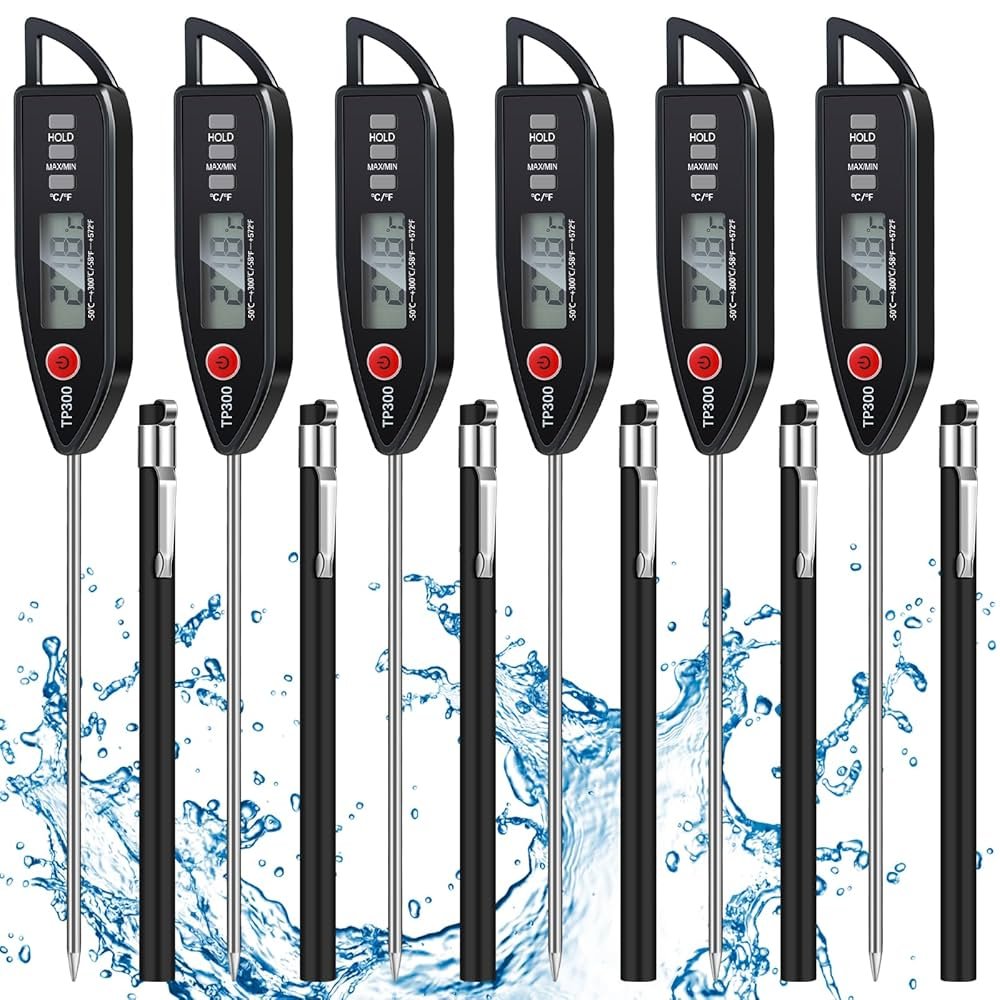
Choosing the right kitchen thermometer probe can make all the difference in cooking perfectly every time. If you’ve ever struggled with guessing if your meat is done or worried about food safety, this guide is for you.
You’ll learn how to pick a probe that fits your cooking style and gives you accurate results quickly. Keep reading, and you’ll discover simple tips that will boost your confidence in the kitchen and help you serve meals your family will love.
Types Of Kitchen Thermometer Probes
Choosing the right kitchen thermometer probe helps you cook food safely and perfectly. Different probes suit different cooking styles and foods.
Here are the main types of kitchen thermometer probes you can use in your kitchen.
Instant-read Thermometers
Instant-read thermometers give quick temperature readings in seconds. They are great for checking meat and other foods fast.
These probes are not left in the food while cooking. You insert the probe, read the temperature, and then remove it.
- Fast and easy to use
- Good for grilling and roasting
- Not suitable for slow cooking
Leave-in Probes
Leave-in probes stay inside the food during cooking. They help monitor temperature without opening the oven or grill.
These probes connect to a display outside the oven. You can watch the temperature rise while the food cooks.
- Ideal for slow cooking and smoking
- Prevents heat loss by avoiding oven opening
- Usually heat-resistant and durable
Dual Probe Thermometers
Dual probe thermometers have two probes for measuring two foods or two parts of one food. They offer more cooking control.
They are useful when cooking different meats at once or checking both the inside and outside temperature.
- Monitor two temperatures at the same time
- Good for complex meals
- Often come with wireless or digital displays

Credit: www.kitchenconservatory.com
Key Features To Consider
Choosing the right kitchen thermometer probe is important for safe cooking. It helps check food temperature accurately.
Look at several features before buying. They affect how well the probe works in your kitchen.
Accuracy And Precision
Accuracy means how close the probe measures to the true temperature. Precision shows how consistent the readings are.
Choose a probe with accuracy within 1 or 2 degrees. This helps ensure your food is cooked safely and tastes good.
- Look for probes tested by food safety groups
- Check if the probe shows consistent results
- Avoid cheap probes with wide temperature ranges
Temperature Range
Check the temperature range the probe can measure. It should cover all types of food you cook.
Some probes only measure low heat, while others handle very high temperatures for grilling or frying.
- For general use, choose -10°C to 250°C (14°F to 482°F)
- For grilling, pick probes that go above 300°C (572°F)
- Make sure the probe fits in your oven or grill
Response Time
Response time is how fast the probe shows the temperature after you put it in food.
Faster response helps you avoid overcooking or undercooking your food.
- Look for probes with response times under 10 seconds
- Faster probes give quicker feedback for safety
- Slow probes may cause guesswork and errors
Material And Durability
Choosing a kitchen thermometer probe means thinking about its material and durability. A strong probe lasts longer and works better in the kitchen.
The right material can handle heat and moisture. This keeps the probe safe and accurate while you cook.
Probe Material
Most probes use stainless steel because it is strong and safe for food. This metal does not rust easily and cleans well.
Some probes have plastic parts for easier handling. But the main part that touches food should be metal for safety.
- Stainless steel resists rust and stains
- Metal probes are safe with all foods
- Plastic handles help with grip and heat protection
Waterproof And Heat Resistance
A good kitchen thermometer probe must resist water and heat. This keeps it working in hot, wet cooking conditions.
Waterproof probes avoid damage from spills and cleaning. Heat resistance stops the probe from bending or breaking in high temperatures.
- Look for probes labeled as waterproof
- Heat resistance means the probe works in ovens and grills
- Durable probes save money by lasting longer
Ease Of Use
Choosing a kitchen thermometer probe that is easy to use makes cooking safer and more enjoyable. A simple design helps you check food temperature quickly and accurately.
Look for features that reduce confusion and speed up your cooking process. Comfort and clear information are key to ease of use.
Display Readability
A clear display helps you read temperatures fast, even in bright or low light. Large numbers and backlighting improve visibility.
Some displays show temperature in both Celsius and Fahrenheit. This can be handy if you follow recipes from different sources.
- Look for large, bright digits
- Choose a backlit screen for dark kitchens
- Check if it shows Celsius and Fahrenheit
Probe Length And Flexibility
The probe should be long enough to reach the center of thick foods safely. A flexible probe bends easily without breaking.
This helps you check different types of food, like roasts, chicken, or thick casseroles, with ease and safety.
- Choose a probe at least 4 to 6 inches long
- Look for a flexible, heat-resistant cable
- A sturdy tip helps get accurate readings
User Interface And Controls
Simple buttons and controls make using the thermometer easier. Avoid models with many small or confusing buttons.
Look for easy-to-press buttons and clear labels. Some thermometers beep or flash when food reaches the set temperature.
- Choose large, clearly marked buttons
- Look for simple temperature setting options
- Alerts help you know when cooking is done
Connectivity And Smart Features
Choosing a kitchen thermometer probe with good connectivity makes cooking easier. Smart features help you monitor food without watching the stove.
Wireless connections let you check temperatures from a distance. Smart tools can send alerts and save cooking data.
Bluetooth And Wi-fi Options
Bluetooth thermometers connect directly to your phone. They work well in small kitchens and close ranges.
Wi-Fi thermometers connect to your home network. This lets you check food temperature from anywhere in the house.
- Bluetooth is simple and uses less power
- Wi-Fi covers larger distances
- Wi-Fi needs a stable internet connection
- Bluetooth is easy to pair with phones
App Integration
Many smart probes come with apps that show temperature in real time. These apps can save cooking history and send alerts.
Apps help set target temperatures and timers. You get notified when food reaches the right heat.
- Monitor multiple probes at once
- Get alerts on your phone or tablet
- Save and review past cooking sessions
- Adjust settings without touching the device
Power Source And Battery Life
Choosing a kitchen thermometer probe means thinking about its power source. The power source affects how long the device works and how easy it is to use.
Battery life is important for uninterrupted cooking. A good battery keeps your thermometer ready when you need it most.
Battery Type
Many kitchen thermometers use different battery types. Common types include alkaline and lithium batteries. Alkaline batteries are cheap and easy to find. They work well but may need frequent replacement. Lithium batteries last longer and perform better in cold environments.
- Alkaline batteries are affordable and common
- Lithium batteries last longer and are more reliable
- Some thermometers use coin cell batteries for compact design
Rechargeable Options
Rechargeable kitchen thermometers have built-in batteries. You can charge them using USB cables or docks. These models save money over time. They also reduce waste from disposable batteries.
- Rechargeable probes use lithium-ion batteries
- Charging takes a few hours for full power
- Some come with charging stands for easy storage
Price Range And Budget
Choosing a kitchen thermometer probe depends on your budget. Prices vary from low-cost to expensive models.
Knowing your price range helps you find the right balance between features and cost.
Affordable Options
Affordable kitchen thermometer probes usually cost less than $20. They work well for simple cooking needs.
These models often have basic features but still provide accurate temperature readings.
- Easy to use and read
- Simple digital or analog display
- Good for everyday cooking
- May lack advanced features like wireless connectivity
High-end Models
High-end probes cost $50 and above. They offer extra features for serious cooks.
These probes may include wireless options, faster readings, and more precise sensors.
- Bluetooth or Wi-Fi connectivity
- Multiple probes for different foods
- Longer battery life
- Durable and high-quality materials
Top Brands To Consider
Choosing the right kitchen thermometer probe helps you cook food safely. Some brands are known for making quality and reliable products.
Looking at popular and new brands can help you find a probe that fits your needs and budget.
Popular And Trusted Brands
These brands have been around for a long time. They make probes that many people trust for accuracy and durability.
- ThermoWorks: Known for fast and precise readings.
- Weber: Offers probes designed for grilling and smoking.
- Lavatools: Popular for easy-to-read displays and sturdy build.
- Taylor: Provides affordable options with good accuracy.
- Maverick: Often used by professionals and home cooks alike.
Emerging Brands
New brands bring fresh ideas and features to kitchen thermometer probes. They often focus on smart technology and modern design.
- MEATER: Wireless probes with app integration for ease.
- Inkbird: Affordable smart probes with good customer reviews.
- Govee: Offers probes with Bluetooth and Wi-Fi options.
- iGrill: Provides probes that connect to mobile devices.
- NutriChef: Focuses on user-friendly and budget-friendly models.
User Reviews And Ratings
User reviews and ratings help you choose the best kitchen thermometer probe. They show real experiences from buyers.
Reading many opinions can guide you to the most reliable and easy-to-use probes.
Where To Find Reliable Reviews
Look for reviews on trusted shopping sites and cooking forums. These places have honest feedback from many users.
Check websites that specialize in kitchen tools. They often test and compare different thermometer probes.
- Major online stores like Amazon and Walmart
- Cooking and food blogs with product tests
- Video reviews on YouTube for real use cases
- Specialized review sites for kitchen gadgets
Common User Feedback
Users often comment on the accuracy and speed of the thermometer. These are key points for kitchen use.
Many users mention how easy the probe is to clean and store. Durability also appears frequently in reviews.
- Accuracy of temperature readings
- Speed of temperature detection
- Ease of cleaning the probe
- Durability and build quality
- Length and flexibility of the cable
- Readability of the display or app connection

Credit: www.goodhousekeeping.com
Where To Buy
Choosing a kitchen thermometer probe is easier when you know where to shop. You can find them in many places both online and in physical stores.
Each option has its own benefits. Online stores offer more variety. Physical stores let you see the product before buying.
Online Retailers
Online shops have a large selection of kitchen thermometer probes. You can read reviews from other buyers. This helps you pick a good product.
Many online retailers offer fast shipping. You can compare prices easily. Some sites also provide detailed product descriptions and videos.
- Amazon
- Walmart online
- Home improvement websites
- Kitchen specialty stores online
Physical Stores
Buying in a physical store lets you hold the kitchen thermometer probe. You can check its size and weight. This helps you decide if it feels right.
Staff in stores can answer your questions. You may also find discounts or bundles. Local stores often have trusted brands available.
- Kitchen supply shops
- Big box retailers like Target or Walmart
- Home improvement stores
- Department stores with kitchen sections

Credit: jgsuperstore.com
Frequently Asked Questions
What Is The Best Kitchen Thermometer Probe Type?
The best kitchen thermometer probe depends on your cooking needs. Instant-read probes are ideal for quick checks. Leave-in probes suit slow cooking. Choose one with accurate temperature range and fast response for best results.
How Do I Know My Probe Is Accurate?
Test your probe by placing it in ice water. It should read 32°F (0°C) within a few seconds. If it’s off, calibrate according to the manufacturer’s instructions or consider replacing it.
Can I Use A Probe For All Cooking Types?
Not all probes fit every cooking style. Instant-read probes work well for grilling and roasting. Leave-in probes are better for smoking or slow cooking. Choose a probe designed for your specific cooking method.
Are Wireless Kitchen Thermometer Probes Reliable?
Yes, wireless probes offer convenience and accuracy. They let you monitor temperature remotely via smartphone apps. Ensure the probe has good range and battery life for optimal performance.
Conclusion
Choosing the right kitchen thermometer probe helps cook food safely and well. Think about accuracy, speed, and ease of use. Durable materials ensure your tool lasts long. A clear display makes reading temperatures simple. Pick a probe that fits your cooking style and budget.
Good tools bring confidence and better meals. Take your time to compare options before buying. This small device can make a big difference in your kitchen.