

Are you tired of guessing measurements while cooking or baking? Choosing the right kitchen scale can make all the difference in getting your recipes just right.
But with so many options out there, how do you pick one that gives you the accuracy you need? This guide will help you understand what features to look for, so you can confidently weigh your ingredients every time. Keep reading to discover simple tips that will make your cooking more precise and enjoyable.
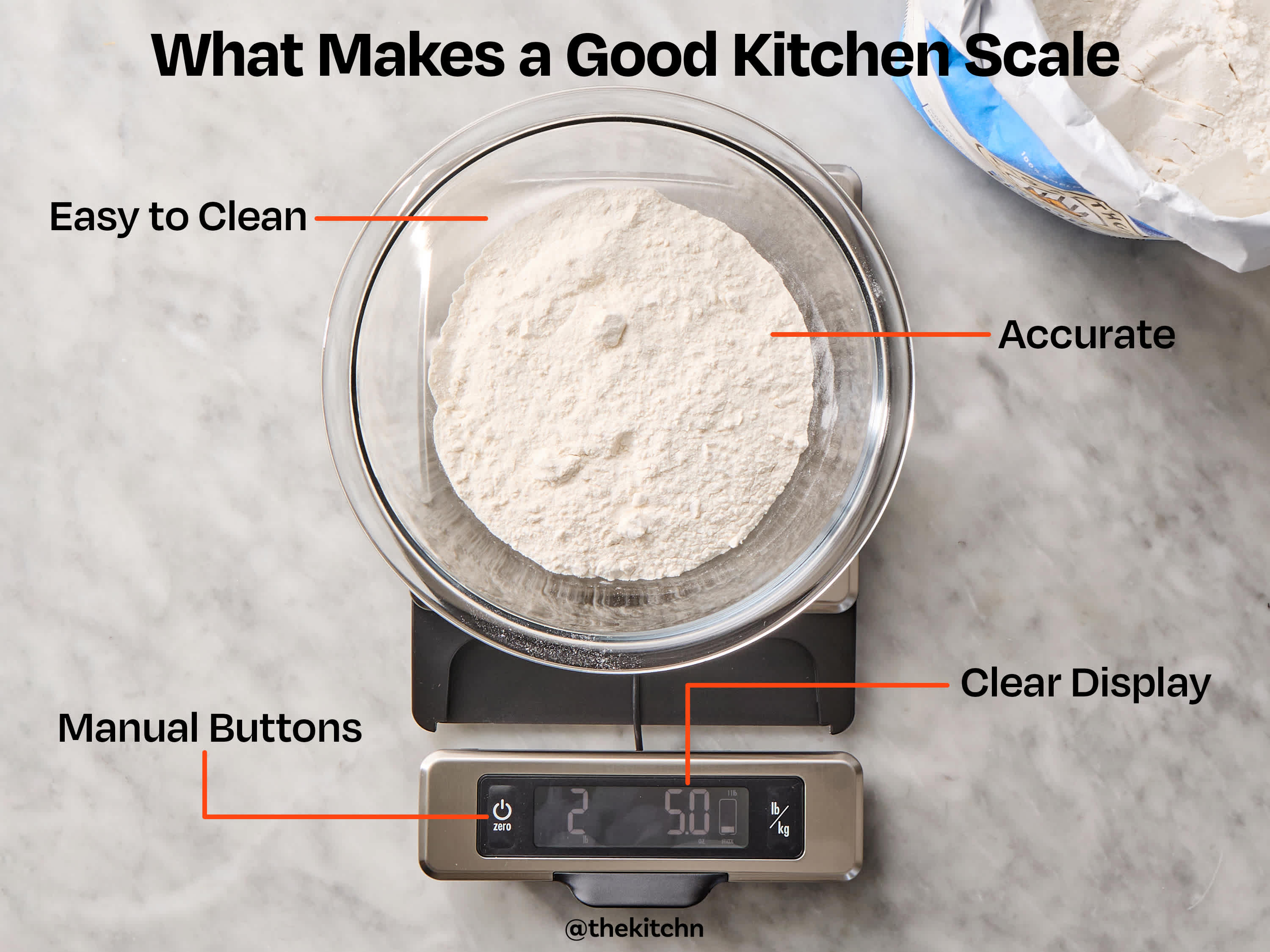
Credit: www.thekitchn.com
Types Of Kitchen Scales
Choosing the right kitchen scale helps you measure ingredients accurately. Different types of scales offer various features and precision levels.
Understanding the types of kitchen scales makes it easier to pick one that fits your cooking style and needs.
Digital Vs. Analog
Digital kitchen scales use electronic sensors to measure weight. They show the exact number on a screen.
Analog scales use a dial and a pointer to show weight. They do not need batteries or electricity.
- Digital scales offer precise readings
- Analog scales are simple and durable
- Digital scales often have tare functions
- Analog scales can be harder to read exactly
Mechanical Scales
Mechanical scales use springs to measure weight. The weight pushes on a spring, moving a pointer on a dial.
They do not require batteries and are easy to use. Mechanical scales are good for simple tasks.
- Durable and low maintenance
- Less precise than digital scales
- Easy to read for rough measurements
- Good for dry ingredients and larger amounts
Balance Scales
Balance scales compare the weight of an item to known weights. They use two plates and a beam.
These scales are very accurate but need manual adjustment. They are less common in modern kitchens.
- Provide very precise measurements
- Do not need electricity or batteries
- Require calibration with weights
- Best for those who want exact accuracy
Key Features To Consider
Choosing the right kitchen scale helps you cook and bake with accuracy. It saves time and reduces waste by measuring ingredients correctly. Look for key features that match your needs and cooking style.
This guide covers three important features: capacity and precision, units of measurement, and tare functionality. These features affect how well your scale performs in the kitchen.
Capacity And Precision
Capacity means the heaviest weight your scale can measure. Precision means how small the scale can measure weight changes. Choose a scale with enough capacity and high precision for your cooking needs.
- Capacity: Most kitchen scales measure up to 5 kg or 11 lbs.
- Precision: Look for scales with 1-gram or 0.1-ounce increments.
- High precision helps with baking and portion control.
- Lower precision is fine for rough measurements.
Units Of Measurement
A good kitchen scale shows weight in different units. This helps you follow recipes from any source. Check if the scale switches units easily and clearly shows the display.
| Unit | Common Use |
| Grams (g) | Most recipes and baking |
| Ounces (oz) | US recipes and portioning |
| Pounds (lb) | Larger weights and meat |
| Milliliters (ml) | Liquid measuring (if supported) |
Tare Functionality
The tare function resets the scale to zero. It lets you weigh ingredients in a container without counting the container’s weight. This feature improves accuracy and saves time.
- Place an empty bowl on the scale.
- Press the tare button to reset to zero.
- Add your ingredient and read the net weight.
- Use tare repeatedly to weigh multiple ingredients in one bowl.
Material And Design
Choosing the right material and design is key for a kitchen scale’s accuracy. Good materials keep the scale steady and precise.
A well-thought design supports easy use and reliable measurements every time you cook or bake.
Durability
Durable materials help your kitchen scale last longer and stay accurate. Metal and tempered glass are strong choices.
A solid design avoids damage from drops or spills. This keeps the sensors safe and working well.
- Stainless steel resists rust and wear
- Tempered glass handles heat and pressure
- High-quality plastic can resist cracks and scratches
Ease Of Cleaning
Choose materials that clean easily to keep your scale hygienic. Smooth surfaces stop food from sticking.
Designs with fewer crevices reduce spots where dirt can hide. This saves time and effort during cleaning.
- Glass tops wipe clean quickly with a cloth
- Sealed buttons prevent moisture damage
- Flat surfaces avoid crumbs and spills getting trapped
Storage Options
Good design includes easy storage to save kitchen space. Slim and compact shapes fit small spots well.
Some scales have hooks or stands to keep them safe and ready to use. Look for lightweight models for quick moves.
- Thin profiles slide into drawers
- Hooks for hanging on kitchen walls
- Lightweight build for easy carrying and storage
Price And Brand Considerations
Choosing the right kitchen scale means thinking about both price and brand. These factors affect accuracy and how long your scale lasts. A careful choice helps you get good value and reliable measurements.
Some brands offer affordable options that still work well. Others focus on top quality but cost more. Knowing what fits your needs and budget helps you pick the best scale.
Budget-friendly Options
Many budget kitchen scales provide good accuracy for everyday use. These models usually have basic features and simple designs. They fit well for home cooks who weigh ingredients occasionally.
- Look for scales with stainless steel or tempered glass surfaces.
- Check if the scale has a tare function to reset weight easily.
- Choose models with clear digital displays for easy reading.
- Read user reviews to learn about real accuracy and durability.
Reputable Brands
Well-known brands often invest in better technology and testing. This leads to more precise scales that last longer. They usually offer warranties and customer support.
| Brand | Price Range | Key Features |
| Brand A | $20 – $50 | High precision, tare function, durable build |
| Brand B | $30 – $70 | Large display, multiple units, stainless steel platform |
| Brand C | $40 – $90 | Calibration option, battery saver, sleek design |
User-friendly Features
Choosing a kitchen scale means looking for features that make it easy to use. A user-friendly scale helps you measure ingredients without mistakes.
Look for clear displays, simple buttons, and smooth operation. These features save time and reduce confusion in the kitchen.
Display Readability
A readable display shows numbers clearly. A bright, large screen helps you see the weight at a glance. Backlit displays are good for dim kitchens.
- Choose scales with large, clear digits
- Look for backlit or high-contrast screens
- Avoid small or cluttered displays
Button Layout
Buttons should be easy to find and press. A simple layout reduces mistakes and speeds up use. Avoid scales with too many or tiny buttons.
| Feature | Why It Matters | Example |
| Large Buttons | Easier to press without error | Tare and unit buttons spaced apart |
| Clear Labels | Prevents confusion about functions | Buttons labeled “Tare,” “Unit” |
| Simple Layout | Faster operation in busy kitchens | Only essential buttons visible |
Ease Of Use
The scale should work smoothly from start to finish. Features like auto shut-off and tare function add convenience. A lightweight design helps you move it easily.
- Look for an easy-to-press tare button
- Choose a scale with quick auto shut-off
- Pick a lightweight and stable model
- Check if the scale switches units easily

Credit: perfectdealz.co.za
Calibration And Maintenance
A kitchen scale must be accurate to measure ingredients correctly. Calibration and maintenance help keep the scale precise. Without care, the scale can give wrong readings.
Regular checks and cleaning extend the life of your scale. This guide explains how to keep your kitchen scale accurate and well-maintained.
Keeping Scale Accurate
Calibration adjusts the scale to show the correct weight. Most kitchen scales need calibration after moving or long use. Follow the scale’s manual for exact steps.
Use a known weight, like a calibration weight or a common item with a set weight, to check accuracy. If the scale is off, calibrate it until it shows the right weight.
- Turn on the scale and let it zero out
- Place a calibration weight on the scale
- Adjust the scale to match the weight
- Repeat to confirm accuracy
Regular Cleaning Tips
Clean the scale often to prevent dirt and spills from affecting its parts. Use a soft cloth and mild cleaner to avoid damage. Never submerge the scale in water.
Keep the weighing platform free from sticky food or dust. Clean the surface after each use for best results.
- Turn off the scale before cleaning
- Use a damp cloth with mild soap
- Wipe dry with a soft towel
- Avoid harsh chemicals or abrasive materials
- Check and clean under the platform if possible
Additional Tips And Tricks
Choosing a kitchen scale with good accuracy helps with better cooking and baking results.
Here are some extra tips to test accuracy and understand smart features in kitchen scales.
Testing For Accuracy
Check the scale’s accuracy by using known weights or common items.
- Use coins or packaged food with exact weights.
- Place the item gently in the center of the scale.
- Compare the reading with the known weight.
- Repeat the test several times for consistency.
- Reset or calibrate the scale as needed.
Keep in mind that small differences can happen with cheap scales.
Smart Features
| Feature | Benefit |
| Tare Function | Subtracts container weight for net weight |
| Unit Conversion | Easily switch between grams, ounces, and pounds |
| Auto-Off | Saves battery when not in use |
| Bluetooth | Syncs data with apps for tracking |
Choose features that fit your cooking style and needs.

Credit: www.ufinebattery.com
Frequently Asked Questions
What Features Ensure Kitchen Scale Accuracy?
Look for high precision sensors and a low minimum weight capacity. Calibration options and stable platforms also improve accuracy.
How Important Is Calibration For Kitchen Scales?
Calibration guarantees consistent, precise measurements. Regular calibration corrects inaccuracies caused by wear or environmental changes.
Should I Choose Digital Or Mechanical Kitchen Scales?
Digital scales offer better accuracy and easy reading. Mechanical scales are less precise but don’t need batteries.
How Does Capacity Affect Kitchen Scale Accuracy?
A scale’s max capacity should suit your needs. Using a scale near its limit may reduce accuracy.
Conclusion
Choosing the right kitchen scale ensures precise cooking and baking. Focus on accuracy, capacity, and easy-to-read displays. A scale with tare function saves time and effort. Consider size and design for your kitchen space. Digital scales often provide better accuracy than analog ones.
Quality batteries or rechargeable options keep the scale ready. Taking time to pick the best scale improves your kitchen results. Simple steps lead to consistent and tasty meals every time. Trust your scale, and enjoy cooking with confidence.