

Have you ever wondered why some homemade bread turns out hard and dense, while others come out soft and fluffy every time? The secret to perfect bread lies in a few simple techniques that you can easily master.
Imagine pulling a warm, pillowy loaf from your oven—its soft crumb melting in your mouth with every bite. If you want to learn how to bake bread that’s irresistibly soft and fluffy, this guide is for you. Keep reading, and you’ll discover practical tips that will transform your baking and make your bread the star of every meal.

Credit: www.youtube.com
Choosing The Right Ingredients
Soft and fluffy bread starts with the right ingredients. Choosing quality items affects taste and texture.
Each ingredient plays a special role in making bread light and tender. Understanding them helps you bake better.
Importance Of Quality Flour
Flour is the main ingredient in bread. It provides structure and texture. Using good flour gives soft bread.
Choose flour with the right protein content. Bread flour has more protein, making bread chewy and fluffy.
Role Of Yeast In Bread Baking
Yeast helps bread rise by producing gas. This gas makes the dough expand and become airy.
- Use fresh yeast for best results.
- Check yeast expiration date before use.
- Warm water helps activate yeast faster.
- Avoid hot water to prevent killing yeast.
Choosing The Best Sweeteners
| Sweetener | Effect on Bread |
| Sugar | Feeds yeast, adds sweetness |
| Honey | Moisturizes and adds flavor |
| Molasses | Gives rich color and taste |
| Maple Syrup | Natural sweetness and aroma |
Choose sweeteners that fit your flavor preference. They help yeast grow and improve bread softness.
Mastering The Dough
Baking soft and fluffy bread starts with the dough. The dough needs care and attention. Small changes can make a big difference.
Understanding how to handle the dough helps you get better bread. Focus on water temperature, kneading, and resting.
Optimal Water Temperature
Water temperature affects yeast activity. Yeast works best in warm water. Too hot water can kill yeast. Cold water slows it down.
Use water between 95°F and 110°F (35°C to 43°C). Check with a thermometer or by touch. It should feel warm, not hot.
- Below 70°F (21°C): Yeast works slowly
- 95°F to 110°F (35°C to 43°C): Ideal yeast activity
- Above 130°F (54°C): Yeast dies
Achieving The Perfect Knead
Kneading develops gluten in the dough. Gluten traps air and gives bread its texture. Knead long enough but not too long.
Use the heel of your hand to push and fold the dough. Turn it and repeat. The dough should be smooth and elastic.
- Start with soft, sticky dough
- Knead for 8 to 10 minutes
- Stop when dough is smooth and stretchy
- Too little kneading = dense bread
- Too much kneading = tough bread
Proper Dough Resting Techniques
Resting lets the dough rise and develop flavor. The yeast produces gas, making the dough fluffy. Cover the dough to keep it moist.
Place the dough in a warm, draft-free area. Let it rest until it doubles in size. This usually takes 1 to 2 hours.
- Cover dough with a damp cloth or plastic wrap
- Keep at 75°F to 85°F (24°C to 29°C)
- Rest time depends on room temperature
- Do not rush the rising process
Enhancing Softness And Fluffiness
Soft and fluffy bread is a favorite for many. It feels light and tender with every bite.
Simple ingredients and techniques help create this texture. Adding fats, milk, and eggs makes a big difference.
Incorporating Fats For Tenderness
Fats like butter, oil, or shortening coat flour proteins. This stops gluten from forming too much, making bread softer.
- Butter adds a rich taste and soft crumb
- Vegetable oil keeps bread moist for longer
- Shortening creates a tender, flaky texture
Using Milk For Moisture
Milk adds moisture and helps bread stay soft. It also helps with browning and flavor.
| Milk Type | Effect on Bread |
| Whole Milk | Rich flavor and soft crumb |
| Skim Milk | Less fat, still adds moisture |
| Buttermilk | Tangy flavor and tender texture |
The Power Of Eggs In Bread
Eggs add structure and richness to bread. They help trap air, making the bread rise well.
Egg benefits include:
- Improving dough strength
- Adding color to crust and crumb
- Boosting softness and fluffiness
Proving And Shaping Techniques
Proving and shaping are important steps for soft and fluffy bread. These steps help the dough rise and form properly.
Good proving and shaping improve the bread’s texture and make it look nice.
Ideal Proving Environment
Dough needs a warm and humid place to prove well. This helps the yeast work faster and the dough rise.
The temperature should be around 75°F to 85°F (24°C to 29°C). Humidity prevents the dough surface from drying out.
- Use a warm spot in your kitchen
- Cover dough with a damp cloth or plastic wrap
- Place dough near a warm oven or on top of a radiator
- Use a proofing box or bowl with warm water for humidity
Shaping Dough For Uniformity
Shaping dough well gives bread a nice structure and even texture. It also helps the bread rise evenly.
Gently press the dough to remove big air bubbles. Fold it tightly to create surface tension.
- Lightly flour your work surface
- Press the dough flat to push out air
- Fold the dough edges to the center
- Roll or tuck the dough into a smooth ball or loaf shape
Preventing Overproofing
Overproofing makes dough collapse and lose its soft texture. Watch the dough closely during proving.
Check the dough by gently pressing it. If the dough springs back slowly, it is ready. If it does not spring back, it is overproofed.
- Set a timer to track proving time
- Keep dough in the ideal temperature range
- Test dough with a gentle poke before baking
- Bake as soon as the dough is ready to keep softness
Baking For Perfection
Baking soft and fluffy bread is a skill anyone can learn. It takes attention to detail and good techniques.
Small changes in the baking process make a big difference in the bread’s texture and taste.
Preheating The Oven Correctly
Always preheat your oven before baking bread. A hot oven helps the bread rise quickly and bake evenly.
Set the oven to the correct temperature and wait at least 20 minutes before putting the dough inside.
- Check the oven thermometer for accuracy
- Do not open the door during preheating
- Use the recommended temperature in your recipe
Using Steam For Crisp Crust
Adding steam in the oven creates a crisp crust and keeps the inside soft. Steam delays the crust from hardening too fast.
You can add steam by placing a pan of water at the bottom of the oven or spraying water inside before baking.
- Use a metal pan for water, not glass
- Pour hot water carefully to avoid burns
- Spray water with a spray bottle just before baking
Determining Bake Time
Bake time depends on the bread size and oven temperature. Check the bread near the end of the baking time.
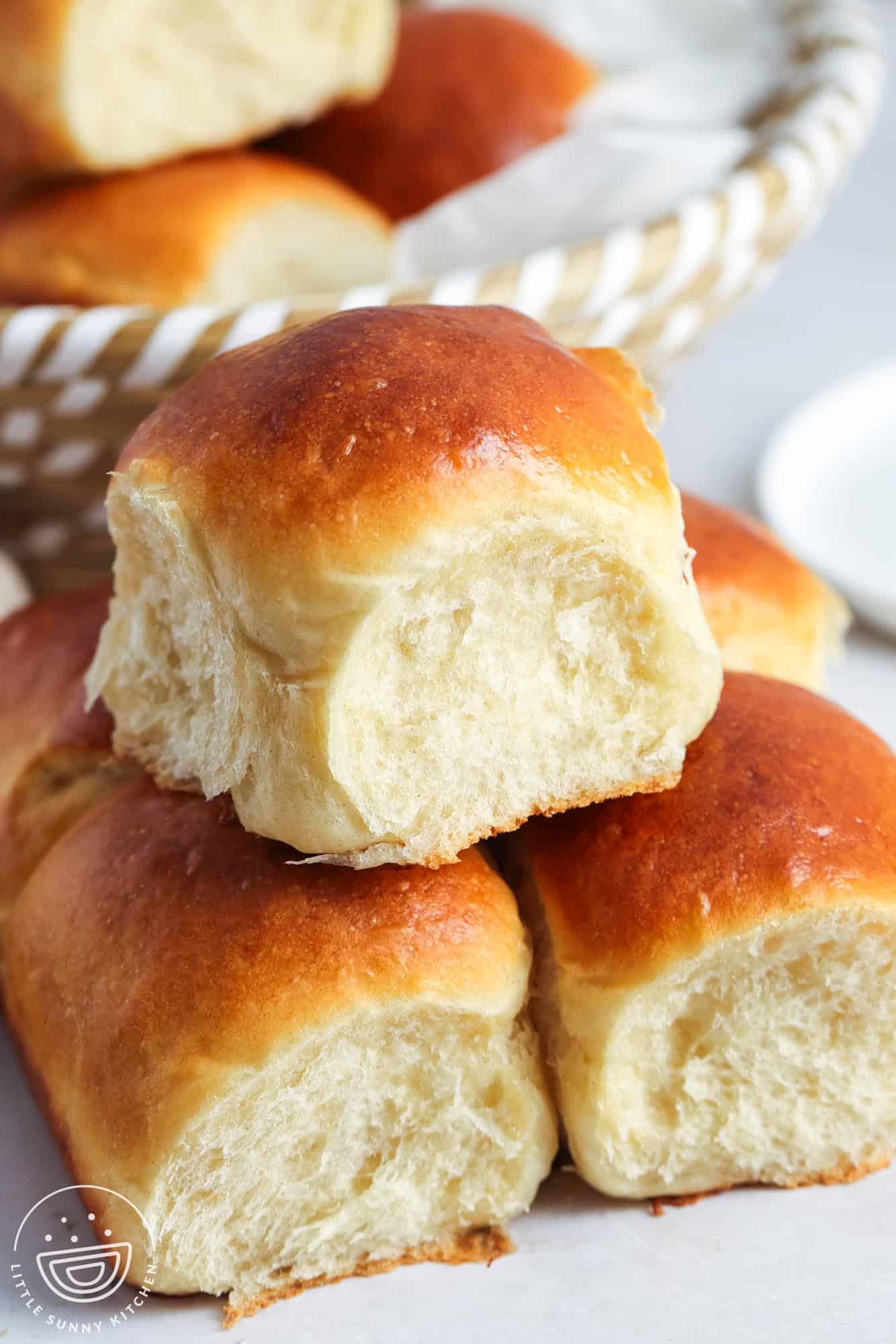
The bread is done when it sounds hollow after tapping the bottom or has a golden-brown crust.
- Use a timer to avoid overbaking
- Test the bread by tapping the bottom
- Adjust time if bread is too pale or too dark
Credit: littlesunnykitchen.com
Troubleshooting Common Issues
Baking bread soft and fluffy can be tricky. Some common problems make bread dense or uneven.
This guide helps fix issues like dense bread, soggy bottoms, and uneven texture.
Dealing With Dense Bread
Dense bread often means the dough did not rise enough or the flour was too heavy.
- Use fresh yeast to ensure good fermentation.
- Let the dough rise in a warm place until it doubles in size.
- Do not add too much flour; stick to the recipe measurements.
- Knead the dough well to develop gluten for structure.
- Avoid overbaking, which can dry out the bread and make it dense.
Avoiding Soggy Bottoms
Soggy bottoms happen when the bread does not bake fully or the pan traps moisture.
| Cause | How to Fix |
|---|---|
| Underbaking | Bake longer and check the internal temperature (should be 190-210°F). |
| Using too much liquid | Measure liquids carefully and reduce slightly if needed. |
| Pan type | Use a metal or dark-colored pan for better heat conduction. |
| Cooling on a flat surface | Cool bread on a wire rack to let steam escape. |
Fixing Uneven Texture
Uneven texture means the crumb has large holes or is too tight in places.
- Mix ingredients evenly to avoid dry spots.
- Do not over-knead; stop once dough is smooth and elastic.
- Allow dough to rest and rise fully between kneading.
- Shape dough carefully to keep air pockets even.
- Check oven temperature; uneven heat can cause texture issues.
Storing And Preserving Freshness
Baking bread soft and fluffy is only the first step. Storing bread correctly keeps it fresh longer. Good storage stops bread from drying out or getting moldy.
Following simple tips helps keep your bread soft and tasty for days. Learn how to cool, store, and refresh your bread properly.
Proper Cooling Techniques
Let bread cool completely on a wire rack after baking. Cooling stops moisture buildup inside the loaf. It also prevents the crust from getting soggy.
Do not cover bread while it is hot. Trapping heat causes condensation. This makes the bread soft but wet, which spoils texture.
Best Storage Practices
Store bread in a cool, dry place away from direct sunlight. Use breathable containers like paper bags or cloth bread bags. Plastic bags keep moisture but can make crust soft.
If you want to keep bread for more than two days, freezing is best. Slice bread before freezing so you can thaw only what you need.
- Use paper or cloth bags for short-term storage
- Keep bread in a bread box or cupboard
- Freeze bread in airtight bags for long-term storage
- Slice before freezing for easy use
Reviving Day-old Bread
Day-old bread can be soft again with simple tricks. Warm the bread in the oven to bring back freshness. Avoid microwaving as it makes bread tough.
Wrap bread in foil and heat it at 350°F (175°C) for 10-15 minutes. This adds moisture back and softens the crust.
- Preheat oven to 350°F (175°C)
- Wrap bread in aluminum foil
- Heat for 10-15 minutes
- Let cool slightly before slicing

Credit: www.youtube.com
Frequently Asked Questions
How Do I Make Bread Soft And Fluffy?
To make bread soft and fluffy, use high-protein flour and hydrate the dough well. Knead thoroughly and allow proper rising time. Avoid overbaking and use fats like butter or oil to enhance softness.
What Is The Best Flour For Fluffy Bread?
High-protein bread flour is best for fluffy bread. It develops gluten well, giving the bread structure and softness. You can also mix all-purpose flour with bread flour for a lighter texture.
How Long Should I Knead Dough For Soft Bread?
Knead dough for 8 to 10 minutes by hand or 5 to 7 minutes with a mixer. Proper kneading develops gluten, which traps air and makes the bread soft and airy.
Why Is Proofing Important For Fluffy Bread?
Proofing allows yeast to ferment and produce gas, making dough rise and become airy. Proper proofing time results in lighter, softer bread with a tender crumb.
Conclusion
Baking soft and fluffy bread takes practice and patience. Use fresh ingredients and follow steps carefully. Keep dough warm for better rise and texture. Avoid over-kneading to keep bread light and airy. Let the bread cool before slicing to keep it soft.
Enjoy homemade bread with your favorite toppings or meals. Soft, fluffy bread is worth the effort every time. Try these tips again to improve your baking skills. Happy baking!