
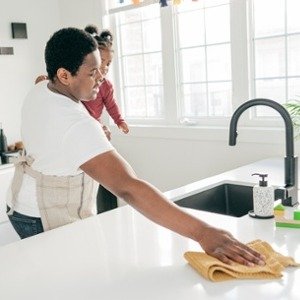
Your kitchen countertop is more than just a workspace—it’s where you prepare meals for yourself and your loved ones. But how often do you stop to think about the germs lurking there?
Keeping your countertops truly clean and sanitized is key to protecting your health and making your kitchen safer. You’ll discover simple, effective ways to sanitize your kitchen countertops quickly and confidently. By the end, you’ll know exactly how to keep your kitchen spotless and germ-free every day.
Ready to transform your cleaning routine? Let’s get started!
Importance Of Sanitizing Countertops
Sanitizing kitchen countertops helps keep your cooking area clean. It stops germs and bacteria from spreading.
Clean countertops protect your family from foodborne illnesses. It also keeps your kitchen looking fresh and safe.
Preventing Cross-contamination
Sanitizing stops germs from raw meat, vegetables, or other foods spreading to other surfaces. This reduces the risk of illness.
- Use separate cutting boards for meat and vegetables
- Clean and sanitize after each use
- Wipe spills immediately to avoid bacteria growth
Maintaining Kitchen Hygiene
Regular sanitizing keeps your kitchen neat. It removes food residues and dirt that attract pests.
| Sanitizing Benefit | Effect |
| Removing bacteria | Prevents food poisoning |
| Cleaning spills | Stops mold and mildew |
| Keeping surfaces dry | Reduces pest attraction |
Protecting Food Quality
Clean countertops keep food fresh and tasty. Dirt and germs can change the flavor and safety of your meals.
- Use a disinfectant safe for kitchen surfaces
- Allow the sanitizer to sit for a few minutes
- Rinse if needed to avoid chemical residues
Credit: academy-marble.com
Common Germs Found In Kitchens
Kitchens are places where germs can spread easily. Many germs live on countertops. They can cause sickness if not cleaned properly.
Knowing the common germs helps you clean better. This keeps your family safe from infections.
Salmonella
Salmonella is a bacteria found in raw meat and eggs. It can cause food poisoning with stomach cramps and fever. It spreads when juices touch countertops.
E. Coli
E. coli lives in raw meat and unwashed vegetables. This germ causes diarrhea and stomach pain. It spreads through contaminated surfaces.
Norovirus
Norovirus causes stomach flu and spreads quickly. It can live on kitchen counters for days. Touching dirty surfaces can make you sick.
Listeria
Listeria grows on cold foods like cheese and deli meat. It can cause serious illness in pregnant women and older adults. It spreads through contaminated surfaces.
Common Kitchen Germs Table
| Germ | Source | Health Risk |
| Salmonella | Raw meat, eggs | Food poisoning |
| E. coli | Raw meat, vegetables | Diarrhea |
| Norovirus | Contaminated surfaces | Stomach flu |
| Listeria | Cold foods | Serious illness |
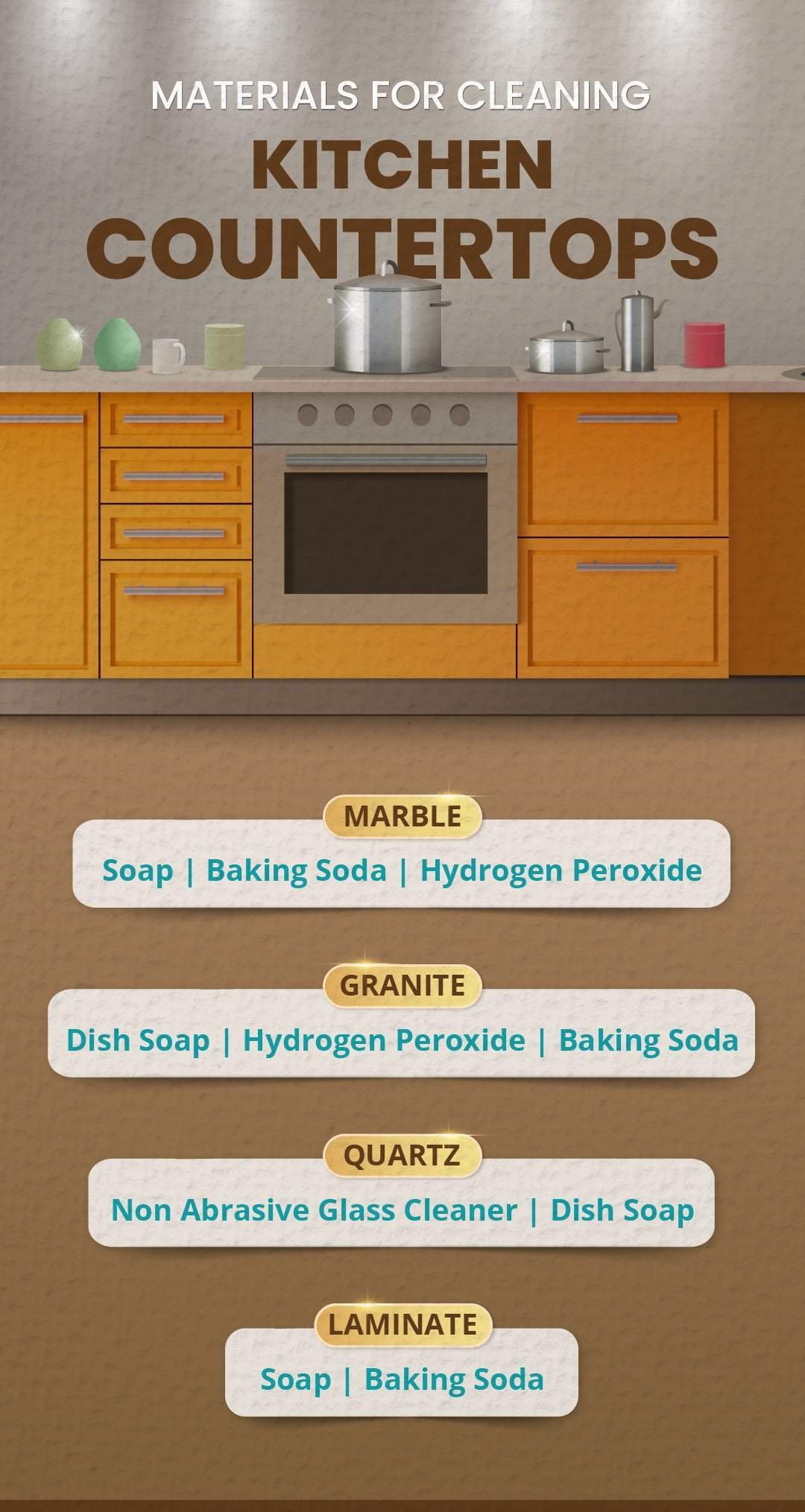
Choosing The Right Cleaning Products
Keeping kitchen countertops clean is important for health. Choosing the right products helps remove germs safely.
Some cleaners use natural ingredients. Others rely on chemicals. Knowing the difference helps you pick what works best.
Natural Vs. Chemical Cleaners
Natural cleaners use plant-based or simple ingredients. Chemical cleaners often have stronger substances to kill germs fast.
- Natural cleaners are gentle on surfaces and skin.
- Chemical cleaners can remove tough stains quickly.
- Natural options may take longer to work.
- Chemical products need careful handling and storage.
Product Safety And Effectiveness
Check product labels for safety information and directions. Some cleaners can damage certain countertop materials.
| Type of Cleaner | Safe for Granite | Safe for Laminate | Effectiveness on Germs |
| Natural (vinegar, baking soda) | No | Yes | Moderate |
| Chemical (bleach, ammonia) | Yes, if diluted | Yes | High |
| Commercial disinfectants | Yes | Yes | Very High |
Preparing The Countertop
Keeping your kitchen countertop clean helps stop germs from spreading. Start by getting the surface ready. This makes the sanitizing process more effective.
Focus on clearing and cleaning before using any disinfectant. This removes dirt and food bits that can hide bacteria.
Clearing The Surface
Remove all items from the countertop. This includes appliances, utensils, and any food. A clear surface lets you clean every part thoroughly.
- Take off dishes and small kitchen tools
- Move large appliances like toasters or mixers
- Clear away crumbs and spilled food
- Throw away any trash or expired items
Initial Cleaning
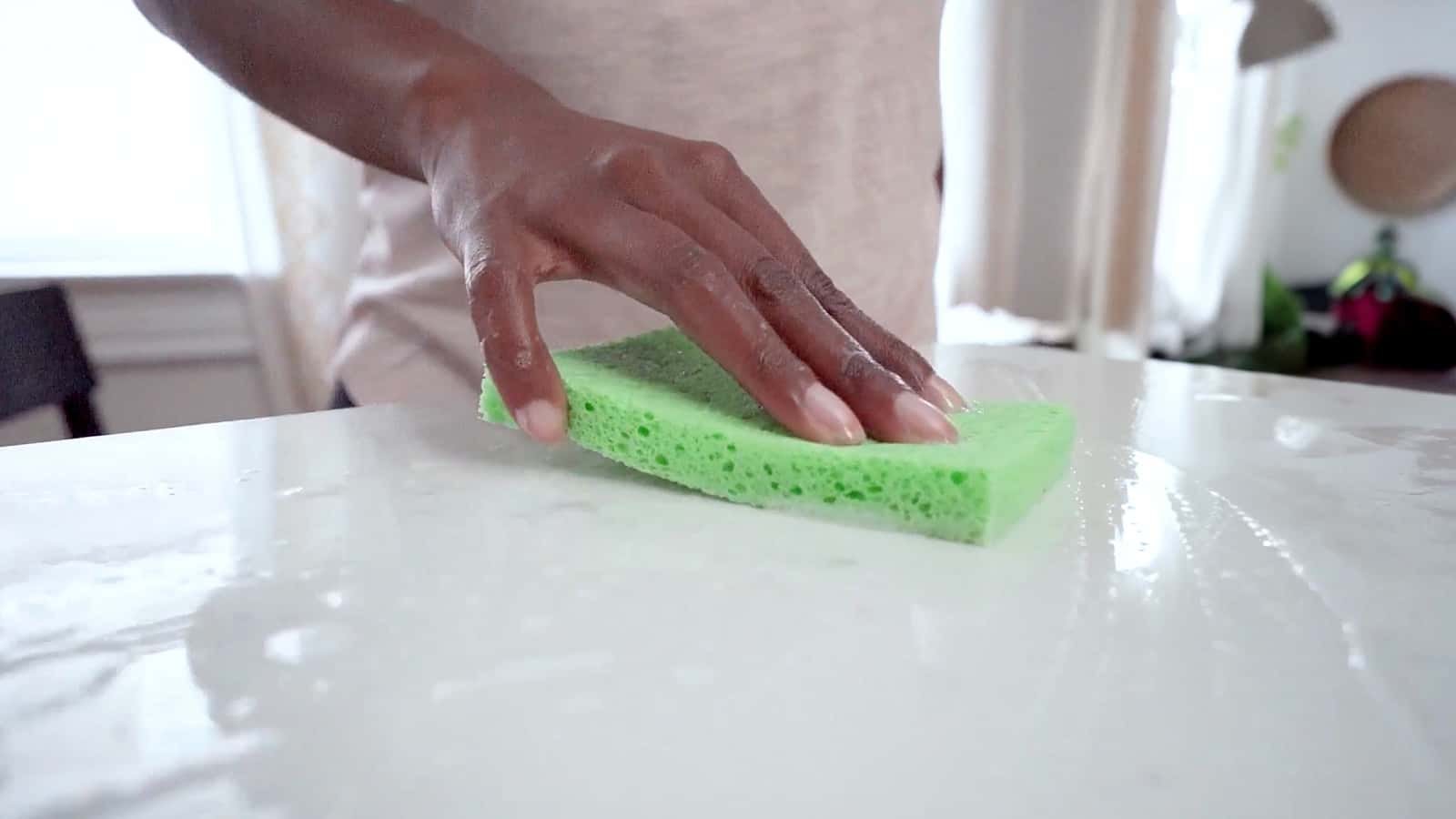
Wipe the countertop with warm, soapy water. This removes grease and dirt. Use a clean cloth or sponge and rinse it often.
| Cleaning Supplies | Purpose |
| Warm water and dish soap | Remove dirt and grease |
| Clean cloth or sponge | Apply soap and wipe surface |
| Dry towel | Dry the countertop before sanitizing |
Step-by-step Sanitization Process
Sanitizing kitchen countertops is important to keep your kitchen clean and safe. Follow these easy steps to do it properly.
This guide helps you sanitize countertops using a safe and effective method. Keep your kitchen healthy with these tips.
Applying The Sanitizer
Start by choosing a sanitizer that is safe for kitchen surfaces. Spray or apply it evenly across the countertop.
Make sure to cover all areas, especially spots where food is prepared often. Use enough sanitizer to keep the surface wet.
- Use a clean spray bottle or cloth
- Apply the sanitizer evenly
- Cover the entire countertop surface
Allowing Proper Contact Time
Let the sanitizer sit on the countertop for the right amount of time. This allows it to kill germs effectively.
Check the sanitizer label for the recommended time. Usually, it needs to stay wet for at least one to five minutes.
- Do not wipe off immediately
- Keep the surface wet during the wait
- Follow the time instructions on the label
Wiping And Drying
After the sanitizer has worked, wipe the countertop with a clean cloth or paper towel. Remove any leftover liquid.
Let the surface air dry if possible. Dry countertops stay cleaner and are safer for food preparation.
- Use a clean cloth or paper towel
- Wipe until the surface is dry
- Allow air drying for extra safety

Credit: unitedgranitepa.com
Tips For Maintaining A Germ-free Kitchen
Keeping your kitchen clean helps stop germs from spreading. A clean kitchen keeps your family safe and healthy.
Sanitizing countertops is an important part of kitchen hygiene. Follow simple steps to keep surfaces germ-free every day.
Regular Cleaning Schedule
Clean your kitchen countertops often to remove dirt and bacteria. A regular routine makes cleaning easier and more effective.
- Wipe surfaces daily with warm, soapy water.
- Use a disinfectant spray at least twice a week.
- Clean spills immediately to prevent germs from growing.
- Replace kitchen cloths and sponges regularly.
- Dry surfaces fully after cleaning to stop bacteria.
Handling Food Safely
Safe food handling reduces germs on your countertops. Follow clear rules to avoid cross-contamination.
| Action | Reason |
| Use separate cutting boards | Prevents bacteria from raw meat spreading |
| Wash hands before and after food prep | Stops germs from moving to surfaces |
| Sanitize knives and tools often | Keeps tools clean and germ-free |
| Avoid placing cooked food on raw food plates | Prevents contamination from raw juices |
| Store food in sealed containers | Protects food and counters from germs |
Mistakes To Avoid
Sanitizing kitchen countertops keeps your kitchen safe and clean. Avoid common mistakes that reduce cleaning power.
Using the right methods helps stop germs and bacteria from spreading. Learn what to avoid for the best results.
Using Abrasive Cleaners
Abrasive cleaners can scratch and damage your countertop surface. These scratches create spots where germs hide.
Use gentle cleaners made for your countertop type. Avoid scrub pads or powders that are too rough.
- Do not use steel wool or rough scrubbing pads
- Choose mild soap or disinfectant sprays
- Check cleaner labels for surface safety
Ignoring Contact Time
Sanitizers need time to kill germs. Wiping them off too soon stops the process.
Read instructions to know how long to leave the sanitizer on the surface. Wait before drying or rinsing.
- Let sanitizer sit for at least 1 to 5 minutes
- Do not rinse immediately after applying
- Allow surface to air dry if possible
Credit: www.pinesol.com
Frequently Asked Questions
How Often Should I Sanitize Kitchen Countertops?
Sanitize kitchen countertops daily to prevent bacteria buildup. After food preparation, especially raw meat, clean surfaces promptly. Regular sanitation reduces the risk of cross-contamination and ensures a hygienic kitchen environment.
What Is The Best Sanitizer For Kitchen Countertops?
Use a bleach solution or commercial kitchen disinfectant for effective sanitization. Ensure the product is food-safe and follow label instructions. Avoid harsh chemicals that can damage surfaces or leave harmful residues.
Can Natural Ingredients Sanitize Kitchen Countertops?
Yes, natural ingredients like vinegar and hydrogen peroxide can sanitize surfaces. They kill many bacteria and are safe for most countertops. However, avoid using vinegar on natural stone like granite or marble to prevent damage.
Should I Clean Before Sanitizing Countertops?
Always clean countertops first to remove dirt and debris. Sanitizing works best on clean surfaces as dirt can shield germs. Use soap and water before applying any sanitizer for effective results.
Conclusion
Sanitizing kitchen countertops keeps your cooking space safe and clean. Use the right cleaners to remove germs and bacteria. Clean spills quickly to avoid stains and buildup. Regular wiping helps maintain a fresh and healthy kitchen. Simple steps make a big difference in food safety.
Keep your countertops shining and germ-free every day. A clean kitchen supports your family’s health and comfort. Small actions lead to a cleaner, safer home environment.