
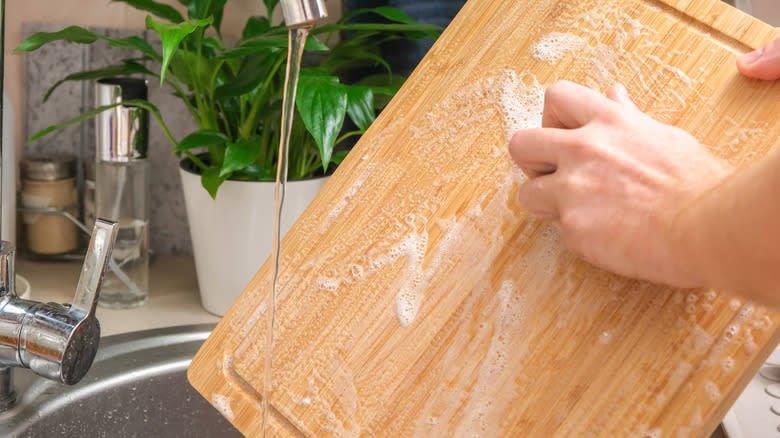
Your cutting board is a kitchen essential, but it can also harbor harmful bacteria if not cleaned properly. You might think a quick rinse is enough, but that’s not always true.
Knowing how to sanitize cutting boards regularly can protect you and your loved ones from foodborne illnesses. You’ll discover simple, effective ways to keep your cutting boards spotless and safe every time you cook. Keep reading to learn easy steps that will make a big difference in your kitchen hygiene.
Types Of Cutting Boards
Cutting boards come in different materials. Each type needs special care to stay clean and safe.
Knowing how to sanitize your board helps stop germs. This guide explains how to clean wooden, plastic, and glass boards.
Wooden Boards
Wooden boards are strong and gentle on knives. They absorb moisture, so cleaning must be thorough.
Use hot, soapy water right after use. Dry them quickly to stop bacteria growth. Avoid soaking or putting them in the dishwasher.
- Wash with mild soap and warm water
- Sanitize with vinegar or diluted bleach
- Dry with a clean towel and air dry
- Oil regularly to prevent cracks
Plastic Boards
Plastic boards are easy to clean and dishwasher-safe. They do not absorb liquids like wood does.
Use hot water and soap after every use. You can sanitize plastic boards with a bleach solution or in the dishwasher.
- Scrub with soap and hot water
- Sanitize with diluted bleach or dishwasher
- Replace if deep cuts appear
Glass And Other Materials
Glass boards are hard and easy to clean. They do not hold bacteria but can dull knives.
Clean with hot, soapy water or dishwasher. Other materials like bamboo need similar care as wood boards.
- Wash with soap and hot water
- Sanitize with vinegar or dishwasher
- Handle with care to avoid chips
- Bamboo boards need oiling like wood
Importance Of Regular Sanitization
Cutting boards come into contact with many foods and germs. Cleaning them often keeps your kitchen safe.
Regular sanitization stops harmful bacteria from spreading on your cutting boards.
Preventing Cross-contamination
Cross-contamination happens when germs move from one food to another. This can cause illness.
Cleaning cutting boards stops germs from raw meat, vegetables, or other foods from mixing.
- Wash boards after each use with hot soapy water
- Use different boards for meat and vegetables
- Sanitize boards with a mild bleach solution or vinegar
Ensuring Food Safety
Sanitizing cutting boards lowers the risk of foodborne illnesses. Germs can grow on dirty boards.
Keeping boards clean protects you and your family from harmful bacteria like salmonella and E. coli.
- Clean boards immediately after cutting raw foods
- Dry boards well to prevent bacteria growth
- Replace boards if they have deep cuts or cracks
Extending Board Lifespan
Regular cleaning and sanitizing help cutting boards last longer. Dirt and bacteria can damage the board.
Taking care of your cutting board saves money and keeps it safe to use.
- Use gentle cleansers to avoid harming the surface
- Oil wooden boards often to prevent cracking
- Store boards in a dry place to stop warping
Daily Cleaning Routine
Keeping your cutting boards clean every day stops germs from growing. A simple routine helps protect your food.
Use easy cleaning steps after each use. This keeps your kitchen safe and fresh.
Soap And Water Method
Wash your cutting board with hot water and soap after each use. Scrub all surfaces well to remove food bits.
Rinse the board with clean water. Dry it with a clean towel or air dry to stop bacteria growth.
Vinegar Solution
Use white vinegar to kill germs naturally. Spray or wipe vinegar on the board’s surface after washing.
Let it sit for a few minutes. Then rinse with water and dry. Vinegar helps remove odors and bacteria.
Baking Soda Scrub
Sprinkle baking soda on the board for a gentle scrub. Add a little water to make a paste.
Use a sponge or brush to scrub the board. Rinse well with water and dry to finish the cleaning.
Credit: www.foodnetwork.com
Deep Cleaning Techniques
Cutting boards can hold bacteria even after washing. Deep cleaning helps remove germs and stains. Regular sanitizing keeps your kitchen safe.
Different materials need different cleaning methods. Use the right technique for plastic or wooden boards. This prevents damage and ensures cleanliness.
Hydrogen Peroxide Rinse
Hydrogen peroxide kills bacteria and is safe for cutting boards. Use it to rinse boards after washing with soap. It helps remove germs you cannot see.
Pour 3% hydrogen peroxide over the board. Let it sit for a few minutes. Rinse well with warm water before drying.
Bleach Solution For Plastic Boards
Plastic boards can handle a mild bleach solution. It kills tough bacteria and cleans deep stains. Avoid using bleach on wooden boards.
Mix one tablespoon of bleach with one gallon of water. Soak the plastic board in the solution for a few minutes. Rinse well with water and air dry.
- Use only on plastic or non-porous boards
- Never mix bleach with other cleaners
- Wear gloves to protect your skin
Salt And Lemon For Wooden Boards
Wood boards need gentle cleaning to avoid damage. Salt and lemon help scrub and sanitize naturally. This method also removes odors from the wood.
Sprinkle coarse salt on the board. Rub with half a lemon in circular motions. Let it sit for a few minutes. Rinse with warm water and dry thoroughly.
- Use coarse salt for better scrubbing
- Lemon juice acts as a natural disinfectant
- Dry the board well to prevent warping
Drying And Storage Tips
Keeping cutting boards clean is key to food safety. Drying and storing them right helps stop germs from growing.
This guide covers the best ways to dry and store your cutting boards after cleaning.
Air Drying Vs. Towel Drying
Air drying is safer than towel drying because it avoids spreading bacteria with cloths. Letting boards dry naturally stops moisture buildup.
- Air Drying: Place boards upright in a dish rack or lean them against a wall. This lets air flow on all sides.
- Towel Drying: Use a clean, dry towel if you must dry quickly. Make sure the towel is fresh and only used for this purpose.
Proper Storage Practices
Storing cutting boards properly keeps them dry and clean. Avoid stacking wet boards to prevent mold and bacteria.
| Storage Method | Benefit | Tip |
| Vertical Storage | Allows air circulation | Use a rack with gaps |
| Separate Compartments | Prevents cross-contamination | Store boards by type |
| Dry, Cool Area | Reduces moisture buildup | Avoid humid places |
Signs Of Wear And Replacement
Cutting boards need regular cleaning and care to stay safe. Over time, they show wear that affects hygiene.
Knowing when to replace your cutting board helps keep your kitchen clean and food safe.
Deep Grooves And Stains
Deep grooves appear from knives cutting into the board. These grooves can trap bacteria and dirt.
Stains can come from food like beets or spices. They may also hold germs if not cleaned well.
- Grooves are hard to clean thoroughly
- Stains may not go away even after washing
- Both can cause bad smells and unsafe food
Cracks And Warping
Cracks can form when the board dries out or is dropped. These cracks hold bacteria and moisture.
Warping happens if the board gets wet often and dries unevenly. A warped board sits uneven and is hard to clean.
- Cracks let germs hide deep inside
- Warped boards can slip and cause accidents
- Both signs mean it is time to replace the board
Eco-friendly Sanitizing Options
Sanitizing cutting boards keeps your kitchen safe and clean. Using eco-friendly options helps protect the environment.
Many natural ingredients and DIY cleaners can sanitize without harsh chemicals. These options are gentle and effective.
Natural Ingredients
Natural ingredients like vinegar and lemon are great for cleaning cutting boards. They kill germs and remove stains naturally.
These items are safe for your family and break down easily in the environment. They do not leave harmful residues.
- White vinegar helps kill bacteria and deodorizes
- Lemon juice acts as a natural bleach and freshener
- Baking soda scrubs off stains and odors
- Salt adds extra scrubbing power and helps absorb moisture
Diy Cleaners
You can make your own cutting board sanitizer using simple ingredients. These cleaners save money and reduce waste.
Mixing vinegar, lemon juice, or baking soda with water creates safe and effective solutions for regular use.
- Mix equal parts white vinegar and water in a spray bottle
- Spray the cutting board and let it sit for 5 minutes
- Rinse with warm water and dry with a clean cloth
- Make a paste of baking soda and water for tough stains
- Rub the paste on the board, then rinse and dry

Credit: www.youtube.com
Common Mistakes To Avoid
Sanitizing cutting boards is important to keep food safe. Many people make mistakes that can harm the board or leave germs behind.
Knowing what to avoid helps keep your cutting boards clean and lasting longer.
Overusing Harsh Chemicals
Using strong chemicals often can damage your cutting board. These chemicals can wear down the surface and leave harmful residues.
It is better to use mild cleaners or natural sanitizers like vinegar or diluted bleach. Always rinse well after cleaning.
- Avoid bleach concentrations higher than recommended
- Do not use ammonia or oven cleaners on boards
- Never mix cleaning chemicals together
- Rinse cutting boards thoroughly after sanitizing
Neglecting Regular Maintenance
Not cleaning cutting boards often lets bacteria grow. Regular maintenance keeps them safe and in good shape.
Always wash your cutting boards after each use. Dry them fully and check for deep cuts where germs hide.
- Wash boards with soap and hot water after use
- Dry boards completely to prevent mold
- Sand or replace boards with many deep cuts
- Oil wooden boards regularly to keep them from cracking
Credit: www.thekitchn.com
Frequently Asked Questions
How Often Should I Sanitize Cutting Boards?
Sanitize cutting boards after every use to prevent bacteria buildup. Regular cleaning ensures food safety and reduces contamination risks. For heavy use, sanitize more frequently to maintain hygiene.
What Is The Best Sanitizer For Cutting Boards?
A mixture of one tablespoon bleach per gallon of water is effective. Vinegar and hydrogen peroxide also work well for natural sanitizing. Choose a sanitizer safe for food contact surfaces.
Can I Sanitize Wooden Cutting Boards?
Yes, wooden boards can be sanitized using diluted bleach or vinegar solutions. Avoid soaking wood to prevent warping. Dry thoroughly after sanitizing to maintain durability.
How Do I Prevent Cross-contamination With Cutting Boards?
Use separate boards for raw meats and vegetables. Clean and sanitize boards immediately after use. Color-coded boards help keep foods separate and safe.
Conclusion
Regularly cleaning cutting boards keeps your kitchen safe and healthy. Use simple steps like washing with soap and hot water. Sanitize with vinegar or a mild bleach solution. Let boards dry completely before storing them. Replace boards when they become too worn or cracked.
Clean boards prevent germs from spreading to your food. Keep this routine to protect your family every day. Safe cutting boards make cooking easier and cleaner. A little care goes a long way in the kitchen.