
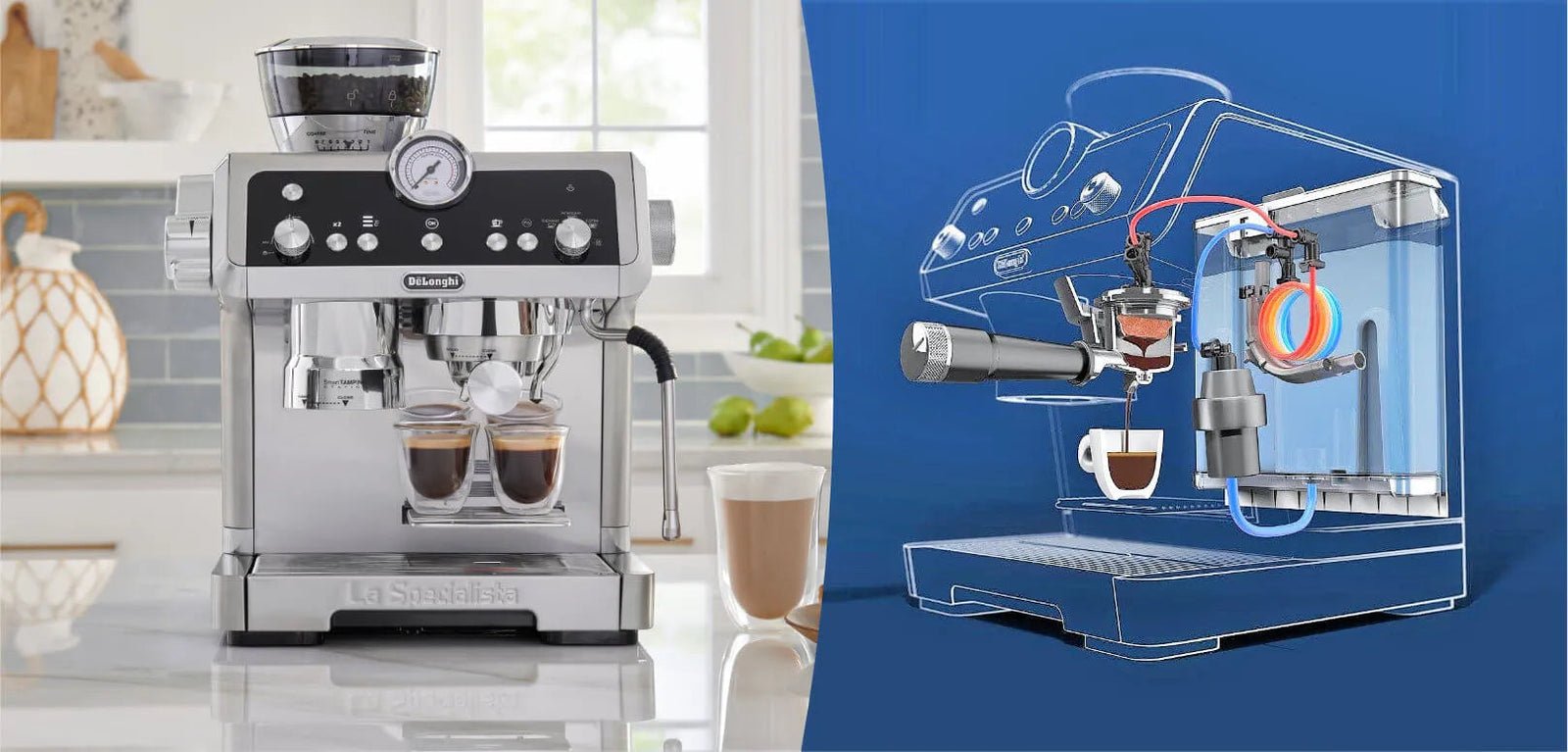
Choosing the right espresso machine can change the way you enjoy coffee every day. Imagine waking up to a perfect cup, made just the way you like it, without leaving your kitchen.
But with so many options out there, how do you pick the one that fits your taste, budget, and lifestyle? This guide will help you cut through the noise and find the espresso machine that feels like it was made just for you.
Keep reading, and soon, your mornings will never be the same.
Types Of Espresso Machines
Choosing the right espresso machine depends on the type you need. Each machine offers different control and ease of use.
This guide explains the main types of espresso machines. You can learn what fits your skill and lifestyle best.
Manual Machines
Manual machines need you to control every step. You grind, tamp, and pull the shot yourself.
They give full control over the brewing process. It takes skill and practice to make great espresso.
- Requires hand-pumping to create pressure
- Offers full control of extraction time
- Needs experience to use well
- Often more affordable but slower
Semi-automatic Machines
Semi-automatic machines use an electric pump to create pressure. You still control when to start and stop the shot.
This type balances control and convenience. Many home users prefer it to learn espresso making.
- Electric pump controls pressure
- User starts and stops extraction
- Allows some customization
- Requires grinding and tamping
Automatic Machines
Automatic machines control the water flow for you. You just press a button to get a perfect shot.
They reduce the chance of mistakes. You still grind and tamp the coffee before brewing.
- Electric pump with automatic water flow
- Starts and stops shot automatically
- Requires grinding and tamping
- Good for consistent espresso
Super-automatic Machines
Super-automatic machines do everything for you. They grind, tamp, brew, and even clean.
They are easy to use and fast. These machines cost more but save time.
- Built-in grinder and tamper
- Automatic brewing and cleaning
- Minimal user effort needed
- Ideal for quick espresso
Pod Espresso Machines
Pod machines use pre-packaged coffee pods or capsules. You insert a pod and press a button.
This type is very simple and fast. It offers less control over coffee taste but is very convenient.
- Uses coffee pods or capsules
- Easy and fast brewing
- Less control over strength and flavor
- Great for beginners and busy users
Key Features To Consider
Choosing the right espresso machine can improve your coffee experience. Knowing key features helps you pick the best one.
This guide explains important features to check before buying an espresso machine.
Boiler Types
The boiler heats water to make espresso. There are different types of boilers in machines.
Single boilers heat water for coffee or steam but not both at once. Dual boilers allow both at the same time.
- Single boiler: cheaper, slower for steaming milk
- Heat exchanger: fast, good for milk drinks
- Dual boiler: precise temperature, good for heavy use
Pressure Levels
Pressure pushes water through coffee grounds to make espresso. It affects taste and crema.
Look for machines with pressure around 9 bars. Some have pressure control for better results.
- Low pressure: weak coffee
- High pressure: bitter taste
- 9 bars: ideal pressure for espresso
Grinder Integration
Some machines have built-in grinders. Fresh grinding improves coffee flavor.
Integrated grinders save space but may be less powerful than standalone ones.
- Built-in grinder: convenience, less noise
- Separate grinder: more control over grind size
- Consider your space and budget
Temperature Control
Consistent temperature is key for good espresso. Machines with temperature control give better taste.
Some machines let you adjust temperature. Others keep it steady automatically.
- Manual control: choose exact temperature
- Automatic control: steady heat without effort
- Look for stable temperature systems
Water Reservoir Capacity
The water tank size affects how often you refill. Larger tanks suit heavy coffee drinkers.
Small tanks save space but need frequent refills. Choose based on your daily coffee needs.
- Small (less than 1 liter): good for few cups
- Medium (1-2 liters): fits most home uses
- Large (over 2 liters): ideal for many cups or office use
Budget Considerations
Choosing the right espresso machine depends a lot on your budget. Machines come in many price ranges to fit different needs.
Knowing what each price range offers helps you pick the best machine for your money.
Entry-level Options
Entry-level espresso machines cost less and are good for beginners. They are simple to use and need less space.
These machines usually have fewer features but still make good espresso for daily use.
- Lower price, usually under $300
- Basic controls and settings
- Compact size for small kitchens
- Good for learning espresso basics
Mid-range Choices
Mid-range espresso machines offer more features and better build quality. They cost between $300 and $700.
These machines often include temperature control, stronger pumps, and more customization options.
- More control over brewing settings
- Improved durability and materials
- Better steam wands for milk frothing
- Ideal for regular espresso drinkers
High-end Machines
High-end espresso machines cost over $700. They offer precision, durability, and professional features.
These machines are perfect for coffee lovers who want top quality at home or small cafes.
- Advanced temperature and pressure controls
- Stainless steel and high-quality parts
- Customizable brewing profiles
- Often include built-in grinders
Size And Space Requirements
Choosing an espresso machine means thinking about its size. You need to know how much space it will take on your counter. Some machines are large and need more room. Others are small and fit easily.
Space is important to keep your kitchen neat. It also helps you use the machine comfortably. Let’s look at two key points: countertop space and portability options.
Countertop Space
Measure your countertop before buying an espresso machine. Check width, depth, and height. Some machines are tall and wide. Others are compact. Choose one that fits well and leaves room for other items.
| Machine Type | Average Width | Average Depth | Average Height |
| Traditional Espresso Machine | 12 inches | 14 inches | 15 inches |
| Compact Espresso Machine | 7 inches | 9 inches | 10 inches |
| Super-Automatic Machine | 9 inches | 16 inches | 14 inches |
Portability Options
Think about where you want to use the machine. Some machines are heavy and stay in one place. Others are lightweight and easy to move. Portability can matter if you want to use the machine in different rooms or take it outside.
- Lightweight machines weigh less than 10 pounds.
- Portable models often have handles for easy carrying.
- Some machines run on batteries or can plug into a car adapter.
- Check if the machine fits in your storage space when not used.
Ease Of Use And Maintenance
Choosing an espresso machine means thinking about how easy it is to use daily. Maintenance is also key to keep it working well.
A machine that is simple to clean and operate saves time and avoids frustration.
Cleaning And Descaling
Regular cleaning and descaling keep espresso machines fresh and prevent damage. Machines with clear cleaning guides make this easier.
- Empty and rinse the drip tray daily.
- Clean the portafilter and group head after each use.
- Descale every 1 to 3 months depending on water hardness.
- Use recommended cleaning solutions for best results.
- Check the machine’s manual for specific cleaning steps.
User-friendly Interfaces
Machines with simple controls let you make espresso without confusion. Clear buttons and displays help you select settings fast.
| Feature | Benefit |
| Touchscreen | Easy to navigate options and customize drinks |
| Button Controls | Quick access to common functions |
| Indicator Lights | Show when cleaning or refilling is needed |
| Pre-set Programs | One-touch brewing for beginners |

Credit: www.independent.co.uk
Brand Reputation And Customer Support
Choosing the right espresso machine means looking beyond features. Brand reputation shows the quality you can expect. Customer support ensures help when you need it.
Good brands build trust with consistent performance. Reliable support saves time and frustration during problems or maintenance.
Why Brand Reputation Matters
A strong brand usually means good design and durable parts. Customers tend to share honest reviews about their experiences. This feedback helps you pick a machine that lasts.
- Well-known brands often use high-quality materials.
- Established companies invest in product testing.
- Positive reviews show customer satisfaction.
- Trusted brands maintain consistent product performance.
The Role Of Customer Support
Customer support helps with installation, repairs, and questions. Quick responses reduce downtime and keep your espresso machine working well. Some companies offer guides, videos, or phone help.
| Support Feature | Benefit |
| Phone and Email Help | Fast answers to your questions |
| Online Manuals | Easy access to instructions |
| Video Tutorials | Step-by-step repair guides |
| Warranty Services | Free or discounted repairs |
Best Espresso Machines For Different Needs
Choosing the right espresso machine depends on your needs and where you will use it. Different settings require different features and sizes.
This guide helps you find the best espresso machine for home use, office environments, and professional barista settings.
Home Use
Espresso machines for home use focus on simplicity and compact size. They should be easy to use and clean.
Look for machines with basic settings and good quality to make fresh coffee quickly.
- Compact design fits small kitchens
- Simple controls for beginners
- Affordable price range
- Easy to clean parts
Office Environments
Espresso machines in offices need to serve many people fast. They should be durable and easy to use.
Machines with larger water tanks and bean hoppers reduce refilling time and keep coffee flowing.
- High capacity for many cups
- Quick brewing time
- Simple operation for all employees
- Low maintenance requirements
Professional Barista Settings
Professional espresso machines offer precise controls and strong build quality. They support advanced techniques.
Look for machines with adjustable temperature, pressure, and multiple group heads for high volume.
- Multiple group heads for speed
- Customizable settings for flavor
- Durable materials for daily use
- Built-in steam wands for milk frothing

Credit: www.coffeeness.de
Sustainability And Energy Efficiency
Choosing the right espresso machine means thinking about its impact on the environment. Sustainability and energy efficiency are important factors.
Energy-efficient machines save electricity and reduce waste. Sustainable machines use materials that last longer and are easier to recycle.
Energy Consumption
Look for espresso machines that use less power. Some models have energy-saving modes that turn off the machine when not in use.
Lower energy use helps reduce your electricity bill and lowers your carbon footprint.
- Choose machines with automatic shut-off
- Look for energy star ratings or certifications
- Use machines with efficient heating elements
Materials And Build Quality
Machines made from durable materials last longer and create less waste. Stainless steel and aluminum are good options.
Avoid machines with many plastic parts. Plastic breaks easily and is harder to recycle.
- Choose machines with metal bodies
- Avoid cheap plastics that wear out fast
- Pick brands that offer repair services
Water Usage And Waste
Efficient espresso machines use less water for brewing and cleaning. This saves water and reduces waste.
Some machines recycle leftover water or use it for steam, cutting down on waste.
- Choose machines with water-saving features
- Look for models that reuse heat or water
- Regularly clean machines to keep efficiency high
Recyclability And End-of-life
Think about what happens to the machine when it breaks or is old. Machines that are easy to recycle reduce landfill waste.
Choose brands that offer take-back or recycling programs.
- Check if parts are recyclable
- Look for machines designed for easy disassembly
- Support companies with recycling options
Additional Accessories And Tools
Choosing the right espresso machine is important. Accessories and tools improve your coffee experience.
These tools help you make better espresso and keep your equipment clean and ready.
Milk Frothers
Milk frothers create foam for lattes and cappuccinos. They come in electric and manual types.
Good frothers heat milk evenly and make smooth foam. Choose one that matches your needs.
- Electric frothers are quick and easy to use
- Manual frothers need more effort but cost less
- Some espresso machines include built-in frothers
Tamper And Knock Box
A tamper presses coffee grounds evenly in the portafilter. This helps water flow properly.
A knock box is for discarding used coffee pucks. It keeps your workspace clean and tidy.
- Tampers come in different sizes to fit your portafilter
- Knock boxes have soft edges to avoid noise and damage
- Both tools are essential for daily espresso making
Espresso Cups And Saucers
Espresso cups are smaller than regular cups. They keep espresso hot and show its color.
Saucers catch drips and make serving easier. They also add style to your coffee setup.
- Choose cups made of thick ceramic for heat retention
- Standard size is 2 to 3 ounces for espresso
- Saucers protect surfaces and hold spoons or sugar packets
Tips For Making Perfect Espresso
Making perfect espresso takes attention to detail. Small steps in preparation can change the flavor a lot.
Grinding, tamping, and extraction time are key parts of a good espresso. Each step affects the taste and texture.
Grinding Techniques
Grind size controls how water flows through the coffee. Use a fine grind for espresso machines.
- Grind just before brewing to keep freshness.
- Use a burr grinder for even grind size.
- Adjust grind if espresso tastes sour or bitter.
- Too coarse grind makes weak espresso.
- Too fine grind causes over-extraction and bitterness.
Tamping Methods
Tamping presses the coffee grounds evenly in the portafilter. This helps water pass through at the right speed.
- Use about 30 pounds of pressure.
- Keep the tamper level and flat.
- Wipe excess grounds from edges.
- Practice consistent pressure every time.
Extraction Time
Extraction time is how long water stays in contact with coffee. It affects strength and flavor.
| Extraction Time | Effect on Espresso |
| 20-25 seconds | Ideal balance of flavor and strength |
| Less than 20 seconds | Under-extracted, sour taste |
| More than 25 seconds | Over-extracted, bitter taste |

Credit: coffeekev.com
Frequently Asked Questions
What Factors Should I Consider When Choosing An Espresso Machine?
Consider your budget, machine type, ease of use, and maintenance needs. Also, think about coffee quality, size, and features like grinders or steam wands.
Which Espresso Machine Type Suits Beginners Best?
Automatic or semi-automatic machines are ideal for beginners. They offer ease of use with consistent results and require less skill than manual machines.
How Important Is Machine Size And Design In Selection?
Size matters if kitchen space is limited. Choose a design that fits your space and complements your kitchen decor for convenience and aesthetics.
Should I Prioritize Built-in Grinders In Espresso Machines?
Built-in grinders ensure fresher coffee and convenience. However, separate high-quality grinders can offer better grind control and quality.
Conclusion
Choosing the right espresso machine takes some thought and care. Think about your budget, space, and how often you will use it. Pick a machine that fits your needs and skill level. Remember, a good espresso machine makes coffee time more enjoyable.
Take your time and compare options before deciding. Your perfect cup is just a machine away. Enjoy every sip!