
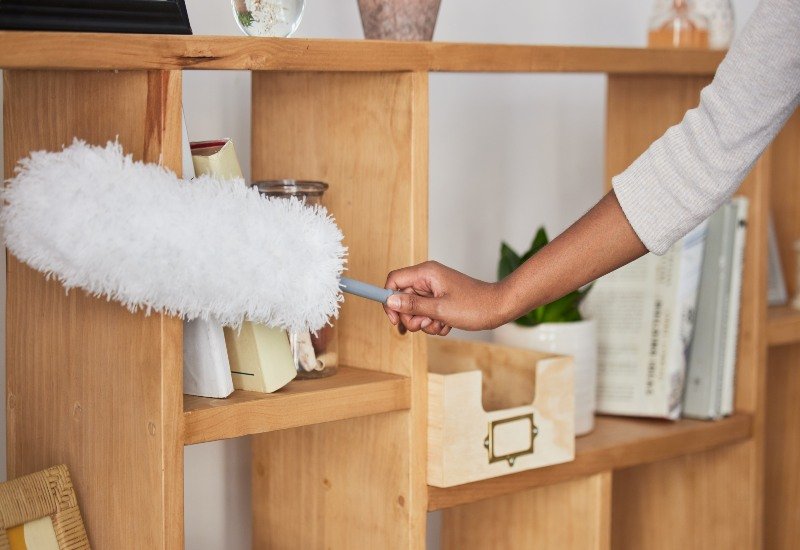
Are your shelves gathering dust faster than you can clean them? Dusting shelves might seem like a simple chore, but doing it efficiently can save you a lot of time and effort.
Imagine having sparkling shelves without the hassle or the mess. In this post, you’ll discover easy and practical tips that make dusting quicker and more effective. Ready to transform your cleaning routine and enjoy a fresher, cleaner space? Keep reading—you won’t want to miss these simple tricks!

Credit: www.embellishology.com
Choosing The Right Tools
Dusting shelves is easier when you use the right tools. Different tools work best for various surfaces and dust types.
Picking the right dusting tool saves time and keeps shelves cleaner longer.
Microfiber Cloths
Microfiber cloths trap dust better than regular cloths. They are soft and gentle on shelves. These cloths do not scratch surfaces.
- Use dry microfiber cloths for light dusting.
- Dampen cloths slightly for sticky dust.
- Wash cloths regularly to keep them effective.
Dusting Brushes
Dusting brushes reach corners and tight spots. Soft bristles pick up dust without damage. Brushes come in many sizes for different needs.
| Brush Type | Best Use | Care Tips |
| Soft Bristle Brush | Delicate surfaces | Clean with mild soap |
| Stiff Bristle Brush | Heavy dust and dirt | Remove debris after use |
| Extendable Handle Brush | High shelves | Store dry |
Feather Dusters
Feather dusters are light and easy to use. They work well for quick dusting. Feathers attract dust but may spread it if not used carefully.
- Shake duster outside after each use.
- Use in gentle sweeping motions.
- Avoid on very dusty surfaces.
Preparing The Area
Dusting shelves is easier when the area is ready. Taking time to prepare helps clean quickly and well.
Clear space and protect surfaces before you start dusting. This keeps things safe and clean.
Clearing The Shelves
Remove all items from the shelves before dusting. This lets you clean every spot without missing areas.
Put items on a table or floor area nearby. Make sure the space is large enough to hold everything safely.
- Take fragile items off first
- Group small items together
- Place heavy items on a stable surface
- Keep items in sight to avoid losing them
Protecting Surfaces
Cover surfaces under the shelves to catch falling dust. This prevents extra cleaning and protects furniture.
Use cloths, newspapers, or plastic sheets. These materials stop dust from spreading and make cleanup easier.
- Lay a soft cloth to avoid scratches
- Use old newspapers for easy disposal
- Secure covers with tape to keep them in place
- Check covers for holes before starting
Dusting Techniques
Dusting shelves is an easy way to keep your home clean. Using the right techniques makes the job faster and better.
Good dusting removes dirt from all surfaces and hard-to-reach areas. Try these methods to improve your dusting routine.
Top-to-bottom Approach
Start dusting from the top shelves and move downwards. This way, any dust falling will be cleaned later.
Use a soft cloth or duster to wipe surfaces gently. Do not rush to avoid spreading dust into the air.
Circular Motion
Use small circular movements when dusting flat surfaces. This helps lift dust instead of pushing it around.
- Keep the cloth slightly damp for better dust pickup.
- Cover all areas by overlapping your circles.
- Focus on corners and edges where dust collects.
- Change or wash your cloth often to avoid spreading dust.
Reaching Tight Spaces
Use tools like cotton swabs, small brushes, or compressed air to clean narrow gaps.
| Tool | Best Use |
|---|---|
| Cotton Swabs | Cleaning corners and small crevices |
| Small Brush | Removing dust from vents and slats |
| Compressed Air | Blowing dust out of keyboards and electronics |

Credit: www.reddit.com
Tackling Stubborn Dust
Dust on shelves can be hard to remove, especially in corners and tight spaces. Using the right cleaning solutions helps clear stubborn dust quickly.
Two natural cleaning options work well: vinegar solutions and baking soda paste. Both are safe and effective for most surfaces.
Using Vinegar Solutions
Vinegar mixes easily with water to create a powerful dust remover. It dissolves dirt and breaks down grime on shelves.
- Mix equal parts of white vinegar and water in a spray bottle.
- Spray the solution lightly on dusty shelves.
- Wipe with a soft cloth in circular motions.
- Dry the surface with a clean cloth to avoid streaks.
- Repeat if dust remains in corners or edges.
Baking Soda Paste
Baking soda paste works well on tough dust and sticky buildup. It lifts dirt without scratching surfaces.
| Ingredient | Amount | Use |
|---|---|---|
| Baking soda | 2 tablespoons | Mix with water to form paste |
| Water | 1 tablespoon | Adjust to make thick paste |
| Soft cloth | – | Apply and wipe paste |
Apply the paste on dusty spots using a soft cloth. Let it sit for five minutes, then wipe off with a damp cloth. Dry the shelf completely.
Preventing Dust Build-up
Dust builds up quickly on shelves and makes your space look messy. Cleaning shelves often helps keep dust away.
Using simple tools and habits can stop dust from piling up. This keeps your home fresh and clean.
Regular Cleaning Routine
Set a schedule to dust shelves regularly. This stops dust from settling and getting harder to remove.
Use a soft cloth or microfiber duster to clean gently. Avoid rough materials that spread dust around.
- Dust shelves once or twice a week
- Wipe from top to bottom to catch all dust
- Clean corners and hard-to-reach spots
- Wash cloths often to remove dust fully
Air Purifiers
Air purifiers reduce dust by cleaning the air in your room. They catch dust particles before they land on shelves.
Choose an air purifier with a HEPA filter for best dust removal. Place it near dusty areas for better results.
- Run air purifiers daily for cleaner air
- Keep windows closed to limit dust entry
- Change filters regularly to keep purifier effective
- Combine with regular dusting for best results
Eco-friendly Dusting Options
Dusting shelves can be simple and green with the right tools. Using eco-friendly options helps protect the environment while keeping your home clean.
Choose natural products and reusable materials to reduce waste and avoid harsh chemicals. These choices are safe for your family and the planet.
Natural Cleaning Products
Natural cleaning products use ingredients like vinegar, baking soda, and lemon. These help remove dust without toxic chemicals.
- Mix equal parts water and white vinegar in a spray bottle.
- Add a few drops of lemon juice for a fresh scent.
- Use this solution to lightly spray shelves before wiping.
- Baking soda can clean tough spots when sprinkled on a damp cloth.
Reusable Cloths
Reusable cloths are better than disposable dusters. They save money and reduce trash.
| Cloth Type | Benefits | Care Tips |
| Microfiber | Traps dust well and gentle on surfaces | Wash with mild detergent, avoid fabric softener |
| Cotton | Soft and natural, good for light dusting | Machine wash with similar colors |
| Old T-shirts | Cost-effective and easy to reuse | Cut into squares, wash regularly |
Quick Dusting Hacks
Dusting shelves can take time if you do not have the right tools. Using simple household items helps clean faster. These hacks save effort and keep shelves neat.
Try these easy tips to dust shelves without much hassle. They work well for quick cleaning and help remove dust better than cloth alone.
Lint Rollers For Shelves
Lint rollers pick up dust and small debris quickly. They reach corners and tight spots easily. You can use them on wood, glass, or plastic shelves.
- Roll over the shelf surface gently to collect dust.
- Use fresh sheets for best results.
- Perfect for shelves with many small items.
- Good for quick daily dusting.
Dryer Sheets For Static
Dryer sheets reduce static electricity that attracts dust. Wiping shelves with a dryer sheet keeps dust from settling fast. They also add a fresh scent.
| Benefit | How to Use |
| Reduces static cling | Wipe shelves gently with a dryer sheet |
| Repels dust | Use after cleaning shelves with a cloth |
| Leaves fresh smell | Keep a sheet in dusty areas for scent |

Credit: us.cleadeep.com
Frequently Asked Questions
How Often Should I Dust Shelves For Best Results?
Dust shelves at least once a week to prevent dust buildup. Frequent dusting keeps surfaces clean and reduces allergens effectively.
What Tools Are Best For Dusting Shelves Efficiently?
Use microfiber cloths or electrostatic dusters for quick, effective dusting. These tools trap dust without spreading it around.
Should I Remove Items Before Dusting Shelves?
Yes, removing items ensures thorough dusting and prevents missing hidden dust. It also protects your belongings from damage.
How Can I Dust Shelves Without Spreading Dust?
Dust shelves gently using a damp microfiber cloth or static duster. Avoid vigorous wiping that can scatter dust particles.
Conclusion
Dusting shelves can be quick and easy with the right steps. Use soft cloths and gentle sprays to protect surfaces. Regular dusting keeps your space clean and fresh. Save time by working from top to bottom. Small habits make a big difference in home care.
Keep your shelves dust-free to enjoy a tidy room. Simple tips help maintain a neat and healthy environment. Start dusting smart today and feel the difference.