

Are you ready to unlock the full potential of your convection microwave? Whether you’re reheating leftovers or baking a fresh treat, knowing the right tips can save you time and improve your cooking results.
Imagine turning out perfectly crispy dishes without the hassle or guesswork. You’ll discover simple, practical tricks that make using your convection microwave easier and more effective. Keep reading to transform the way you cook and enjoy every meal!
Choosing The Right Settings
Using a convection microwave well starts with picking the right settings. Choosing the correct options helps cook food evenly and quickly.
Knowing how to adjust power levels and cooking modes makes a big difference in your cooking results.
Understanding Power Levels
Power levels control how strong the microwave heat is. Lower levels cook food slowly, and higher levels cook faster.
Use low power for gentle cooking and high power for quick heating. This helps avoid overcooking or undercooking your food.
- High (100%) power for boiling and fast cooking
- Medium (50-70%) power for simmering and reheating
- Low (10-30%) power for defrosting and softening
Selecting Cooking Modes
Convection microwaves have different cooking modes. Each mode uses microwave, convection heat, or both to cook food.
Pick the right mode based on what you want to cook and how crispy or tender you want it.
- Microwave mode:Best for reheating and simple cooking tasks.
- Convection mode:Uses hot air for baking and roasting.
- Combination mode:Mixes microwave and convection for faster cooking and crispiness.

Credit: www.youtube.com
Preheating Techniques
Using a convection microwave can save time and cook food evenly. Preheating is an important step to get the best results.
Knowing when and how to preheat helps you use your convection microwave better.
When And How To Preheat
Preheat the convection microwave before baking or roasting. This warms the oven to the right temperature.
Set the microwave to the desired temperature and let it run empty for 3 to 5 minutes. This prepares the cooking area.
- Always preheat for baked goods like cakes and cookies.
- Preheat before roasting meats or vegetables.
- Skip preheating for reheating leftovers or simple cooking.
- Use the convection mode, not the microwave-only mode, to preheat.
Benefits Of Preheating
Preheating helps your food cook evenly and reach the right texture. It also shortens cooking time.
Without preheating, food may cook unevenly or take longer. Some dishes may not rise or brown properly.
- Food cooks faster and more evenly.
- Better browning and crispiness.
- Improved texture in baked goods.
- Helps recipes turn out as expected.
Optimizing Cooking Times
Using a convection microwave can save you time in the kitchen. It cooks food faster than a regular microwave.
To get the best results, you need to adjust cooking times carefully. This helps avoid undercooked or burnt food.
Adjusting For Different Dishes
Each type of food cooks differently in a convection microwave. You should change cooking times based on the dish.
Dense foods like meat need longer cooking times. Lighter foods like vegetables cook faster.
- Use shorter times for thin or small items
- Increase time for thick or large items
- Check food halfway to avoid overcooking
- Follow recipe times as a starting guide
Using Timers Effectively
Timers help you avoid overcooking and burning. Set the timer based on the food type and size.
Pause and check food during cooking. Adjust time if needed for better results.
- Start with recommended cooking time
- Use short intervals to check food progress
- Reset timer if you add more cooking time
- Keep a cooking log for future reference
Credit: www.kitchenaid.com
Enhancing Flavor With Accessories
Using the right accessories can improve how your food tastes in a convection microwave. They help cook food evenly and keep flavors strong.
Choosing tools designed for microwave use makes cooking easier and better. Accessories like racks and trays also add new ways to prepare meals.
Using Microwave-safe Cookware
Select cookware that is safe for microwaves. Materials like glass, ceramic, and certain plastics work well. They keep food moist and help flavors stay fresh.
- Avoid metal cookware as it can cause sparks and uneven cooking.
- Use lids or covers to hold in steam and enhance taste.
- Choose containers that fit your microwave to allow good air flow.
- Check that cookware is labeled microwave-safe to avoid damage.
Incorporating Racks And Trays
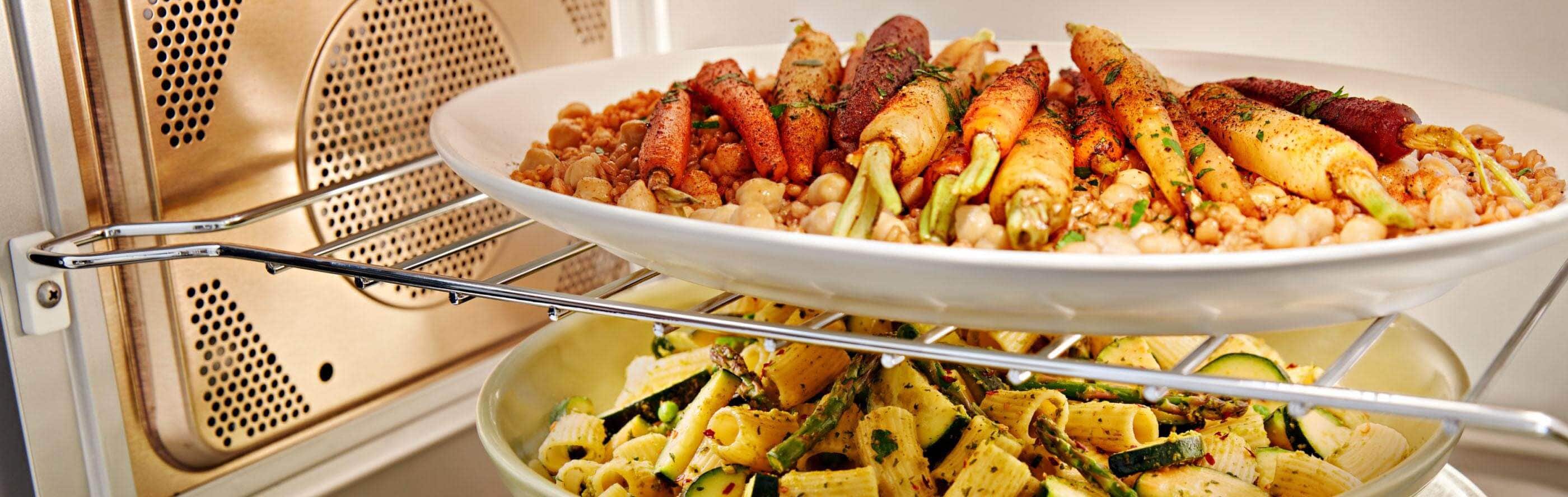
Racks and trays let you cook multiple items at once. They also help heat food evenly by letting hot air circulate around dishes.
| Accessory | Purpose | Benefit |
| Metal Rack | Elevates food | Allows air flow and even cooking |
| Perforated Tray | Holds small items | Keeps crispiness and texture |
| Silicone Mat | Non-stick base | Prevents food from sticking and burning |
Achieving Even Cooking
Cooking food evenly in a convection microwave can be a challenge. The hot air circulates to cook food faster, but some spots may cook more than others.
Using simple tips can help your food cook through and avoid cold or hot spots.
Rotating And Stirring Tips
Rotating your food helps heat spread evenly. Stirring breaks up cold spots and moves hot areas around. This is especially useful for soups and sauces.
- Pause cooking midway to stir liquids or mix food.
- Turn solid foods like casseroles to expose all sides to heat.
- Cut large pieces into smaller, even sizes for quick cooking.
- Use microwave-safe lids to keep moisture while rotating and stirring.
Utilizing Turntables
Turntables rotate food automatically. This helps heat reach all sides. It reduces the chance of cold spots without extra effort.
| Tip | Benefit |
| Place food in the center | Ensures even spinning and heat distribution |
| Use round or oval dishes | Helps food rotate smoothly on the turntable |
| Keep the turntable clean | Prevents food from sticking or blocking rotation |
| Check turntable function before cooking | Avoids uneven cooking if it does not rotate |
Maintaining Your Microwave
Keeping your convection microwave clean and well-maintained helps it last longer. Regular care also ensures it works safely and efficiently.
Simple maintenance tasks can prevent common problems. This guide shows you how to care for your microwave properly.
Cleaning And Care Tips
Clean your microwave often to stop food build-up and smells. Use a soft cloth and mild detergent for the best results.
Do not use harsh cleaners or metal scrubbers. They can damage the microwave’s surface and parts.
- Wipe the inside after each use to remove spills
- Clean the glass turntable with warm soapy water
- Use a damp cloth to clean the door seals gently
- Keep the vents free from dust and grease
- Use a microwave-safe cover to reduce splatters
Regular Maintenance Checks
Check your microwave regularly for signs of damage or wear. Fix small problems early to avoid costly repairs.
Look at the door latch and seals to make sure they close tightly. Inspect the power cord for any cracks or frays.
- Test the door latch to ensure it locks firmly
- Check the turntable spins smoothly without noise
- Listen for unusual sounds during operation
- Examine the exterior for dents or cracks
- Replace parts only with manufacturer-approved items
Safety Precautions
Using a convection microwave can save time and cook food evenly. Safety is important to avoid accidents or damage.
Follow simple safety tips to protect yourself and your appliance.
Avoiding Metal Utensils
Metal objects can cause sparks inside the microwave. This can damage the oven or start a fire.
Do not use metal plates, forks, or aluminum foil in the convection microwave.
- Use microwave-safe glass or ceramic dishes
- Check that utensils have no metal parts
- Remove any metal twist ties from food packages
Preventing Overheating
Overheating can damage food and the microwave. It may also cause burns or fires.
Set the cooking time and power level correctly. Do not leave the microwave unattended while cooking.
- Follow recipe or manual time suggestions
- Use shorter cooking times for small portions
- Pause and check food to avoid overheating
Exploring Recipe Ideas
Using a convection microwave opens many cooking possibilities. You can try quick meals or more complex dishes.
This guide shares ideas to help you cook with ease and explore new flavors.
Simple Meals To Try
Start with easy recipes that cook well in a convection microwave. These meals save time and taste great.
- Microwave baked potatoes with a crispy skin
- Steamed vegetables for a healthy side dish
- Grilled cheese sandwiches with melted cheese
- Quick chicken breast with herbs and spices
- Reheated leftovers that stay moist and fresh
Advanced Recipes For Experts
Try these recipes if you want to explore the full power of your convection microwave. They need more skill but offer rich flavors.
| Recipe | Main Ingredients | Cooking Tip |
| Roast Chicken | Whole chicken, garlic, lemon | Use convection mode for even browning |
| Lasagna | Pasta sheets, cheese, tomato sauce | Cover with foil to avoid drying |
| Baked Salmon | Salmon fillets, dill, lemon slices | Cook at medium heat for tender texture |
| Vegetable Casserole | Mixed vegetables, cream, cheese | Stir halfway through cooking |
Credit: www.tataneu.com
Frequently Asked Questions
How Do I Preheat A Convection Microwave Properly?
Preheat by setting the microwave to convection mode at the required temperature. Let it run for 3-5 minutes before cooking. This ensures even heat distribution and better cooking results.
Can I Use Metal Cookware In A Convection Microwave?
Yes, metal cookware is safe in convection mode. Avoid using metal in regular microwave mode to prevent sparks. Always check your microwave’s manual for specific guidelines.
What Foods Cook Best In A Convection Microwave?
Convection microwaves excel at baking, roasting, and crisping foods. Try baking cakes, roasting vegetables, or cooking chicken for crispy, evenly cooked meals.
How Do I Clean A Convection Microwave Effectively?
Use a damp cloth with mild detergent to clean the interior. Avoid harsh chemicals. Clean the fan and vents regularly to maintain performance and hygiene.
Conclusion
Using a convection microwave can save time and cook food evenly. Always follow the tips for best results and safety. Experiment with different settings to find what works best. Clean the microwave regularly to keep it working well. Enjoy tasty meals made quickly with your convection microwave.
Keep practicing and you will get better every day. Simple steps lead to great cooking results.