
Your wooden cutting board is a kitchen essential, but keeping it clean and fresh can be tricky. Over time, it can absorb odors, stains, and bacteria from your food.
What if you could refresh it naturally, without harsh chemicals? Using lemon to clean your wooden cutting board is a simple, effective way to remove grime and smell, while keeping your board safe and healthy. You’ll discover easy steps to restore your cutting board’s shine and freshness—ready to make your cooking safer and more enjoyable.
Keep reading to learn how to make your wooden cutting board look and smell like new again!
Benefits Of Cleaning With Lemon
Cleaning wooden cutting boards with lemon is a natural way to keep them fresh. Lemon helps remove stains and odors without harsh chemicals.
Using lemon is simple, safe, and good for the environment. It also helps keep your cutting board in great condition for a long time.
Natural Antibacterial Properties
Lemon has natural acids that kill many germs and bacteria. This makes it a good cleaner for cutting boards that touch food.
Using lemon helps reduce harmful bacteria without using strong chemicals. It keeps your kitchen safer and cleaner.
Removes Stains And Discoloration
The acid in lemon juice breaks down stains on wooden boards. It helps remove marks from fruits, vegetables, and meats.
Rubbing lemon on the board brightens the wood and makes it look fresh again.
Eliminates Odors
Wooden boards can absorb strong smells from food. Lemon neutralizes these odors and leaves a fresh scent.
This helps keep your cutting board smelling clean and ready for any food.
Eco-friendly And Safe
Lemon is a natural cleaner that does not harm the environment. It is safe to use around food and children.
Using lemon reduces the need for chemical cleaners, making your kitchen greener and safer.
Helps Maintain Wood Quality
Lemon juice cleans without drying out the wood. It helps keep the cutting board smooth and strong.
Regular lemon cleaning can extend the life of your wooden cutting board.
:max_bytes(150000):strip_icc()/GettyImages-2195439933-114e75009db444fd816a82aeb8f7a5a8.jpg)
Credit: www.southernliving.com
Preparing Your Cutting Board
Cleaning wooden cutting boards with lemon helps remove stains and odors. Proper preparation of the board makes the process easier and more effective.
Start by clearing the board of any food scraps and rinsing it with warm water. This step helps to loosen debris before deep cleaning.
Remove Food Particles
Scrape off leftover food using a plastic or wooden spatula. Avoid metal tools that may scratch the surface of your board.
Rinse With Warm Water
Rinse the board under warm running water to wash away loose particles. Do not soak the board as excess water can cause damage.
Dry The Board
Use a clean towel to dry the board well. A dry surface allows lemon juice to work better in cleaning and deodorizing.
Gather Cleaning Supplies
- Fresh lemon or lemon juice
- Coarse salt (optional for scrubbing)
- Clean cloth or sponge
- Warm water
Protect Your Workspace
Place a clean towel or mat under your cutting board. This keeps your countertop dry and prevents slipping during cleaning.
Choosing The Right Lemon
Cleaning wooden cutting boards with lemon is natural and effective. Picking the right lemon helps you get the best results.
Not all lemons are the same. Some are juicier, while others have thicker skins. Knowing which lemon to use is important.
Look For Fresh Lemons
Fresh lemons are firm and heavy for their size. They have bright yellow skin without brown spots or wrinkles.
Choose Juicy Lemons
Juicy lemons give more cleaning power. Soft lemons with a slight give when squeezed usually have more juice.
Consider Lemon Size And Type
| Lemon Type | Size | Best Use |
| Eureka | Medium to Large | Good for juice and zest |
| Meyer | Small to Medium | Sweeter, less acidic |
| Lisbon | Medium | Common for cleaning |
Check Lemon Skin Quality
- Choose lemons with smooth skin for more juice.
- Avoid lemons with thick or rough skin.
- Bright color means ripe and ready to use.
Avoid Lemons With Mold Or Damage
Do not use lemons that show mold or have soft, dark spots. These can spoil your cleaning process and smell bad.
Step-by-step Cleaning Process
Wooden cutting boards need regular cleaning to stay safe and fresh. Lemon is a natural cleaner that removes stains and odors.
This guide shows you how to clean your wooden cutting board using lemon in easy steps.
Slicing The Lemon
Start by choosing a fresh lemon. Cut it into halves or thick slices to use on the board.
Use a sharp knife and cut carefully to avoid juice spills while handling.
Applying Lemon To The Board
Rub the lemon slice directly on the surface of the cutting board. Press gently to release the juice.
Cover the entire board with lemon juice, focusing on stained or smelly areas.
- Use the lemon pulp to scrub tough spots
- Make sure the juice spreads evenly
- Let the lemon juice sit on the board for 5 minutes
Scrubbing Techniques
Use the lemon slice like a scrubber, rubbing in circular motions. This helps lift dirt and stains.
If needed, sprinkle some coarse salt on the board before scrubbing for extra cleaning power.
- Apply gentle pressure to avoid damaging the wood
- Focus on deep cuts and stains
- Scrub for 2 to 3 minutes
Rinsing And Drying
Rinse the cutting board with warm water to remove lemon juice and loosened dirt. Avoid soaking the board.
Dry the board completely with a clean towel. Stand it upright to air dry fully before storing.
- Do not put the board in the dishwasher
- Keep the board dry to prevent cracks
- Repeat cleaning as needed for freshness
Removing Stubborn Stains
Wooden cutting boards can develop tough stains from fruits, vegetables, and meat. These stains may look hard to remove with regular washing. Using natural ingredients like lemon helps clean and brighten the wood safely.
Lemon works as a natural bleach and deodorizer. You can combine it with other household items to remove deep stains and keep your cutting board fresh.
Using Lemon And Salt
Lemon and salt together create a gentle scrubbing paste. This paste helps lift stains and remove odors from wooden boards.
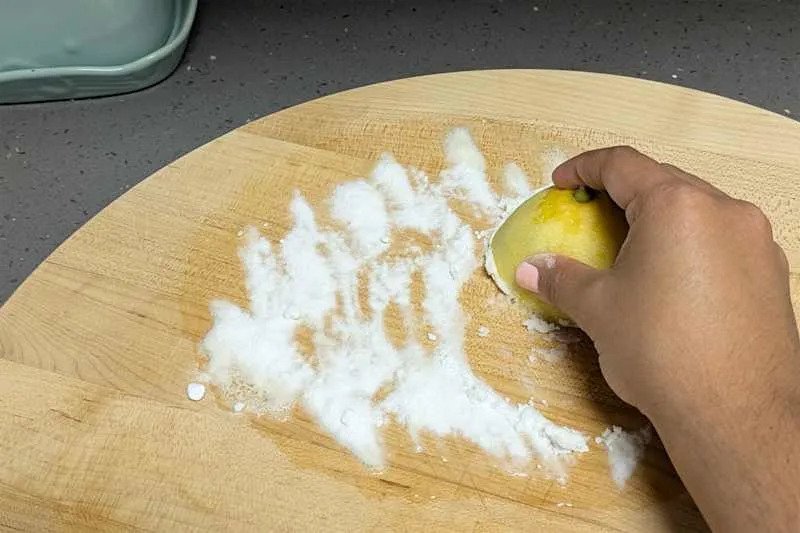
- Cut a lemon in half.
- Sprinkle coarse salt evenly over the stained area.
- Rub the lemon half over the salt and stain using firm pressure.
- Let the mixture sit on the board for 5 minutes.
- Rinse the board with warm water and dry with a clean towel.
Combining Lemon With Baking Soda
Baking soda adds extra cleaning power when mixed with lemon juice. This combination forms a mild abrasive paste that breaks down stubborn stains effectively.
| Ingredient | Amount | Purpose |
| Lemon Juice | 2 tablespoons | Natural bleach and deodorizer |
| Baking Soda | 1 tablespoon | Gentle abrasive to lift stains |
Mix the lemon juice and baking soda to form a paste. Apply it to the stained areas and scrub with a sponge or cloth. Leave it for 10 minutes, then rinse with warm water. Dry your board well to prevent cracking.

Credit: www.aol.com
Maintaining Your Wooden Cutting Board
Wooden cutting boards need proper care to stay clean and last long. Using lemon is a natural way to keep your board fresh and safe.
Regular cleaning and oiling help prevent cracks and stains. These steps keep your board smooth and ready for use.
Regular Cleaning Routine
Clean your wooden cutting board after each use to remove germs and odors. Lemon works well to sanitize and freshen the surface.
- Sprinkle coarse salt on the board.
- Cut a lemon in half and rub it over the salt-covered surface.
- Let it sit for 5 minutes to kill bacteria.
- Rinse the board with warm water.
- Dry thoroughly with a clean towel.
Oiling The Board
Oiling keeps the wood from drying out and cracking. Use food-safe mineral oil for best results.
| Oiling Steps | Description |
| Clean the board | Make sure the board is dry and free of food particles. |
| Apply oil | Pour a small amount of mineral oil on the surface. |
| Rub oil in | Use a soft cloth to spread oil evenly. |
| Let it soak | Leave the oil to absorb for a few hours or overnight. |
| Wipe excess | Remove any leftover oil with a clean cloth. |
Common Mistakes To Avoid
Cleaning wooden cutting boards with lemon is a simple and natural way to remove stains and odors. Using lemon correctly keeps your board fresh and safe.
Some common mistakes can damage your wooden board or reduce lemon’s cleaning power. Avoid these errors to protect your cutting board.
Using Lemon Without Salt Or Baking Soda
Lemon alone does not scrub away tough stains or bacteria completely. You need a mild abrasive like salt or baking soda.
Salt or baking soda helps lemon scrub off dirt and germs gently without harming the wood.
- Lemon juice cleans and deodorizes
- Salt or baking soda scrubs and removes stains
- Use them together for best results
Soaking The Board In Lemon Juice
Do not soak your wooden cutting board in lemon juice. Too much moisture can cause the wood to warp or crack.
Apply lemon juice with a cloth or cut lemon half, rub it on the surface, then rinse quickly.
Skipping Oil Treatment After Cleaning
After cleaning with lemon, the wood can dry out and become brittle. Always apply food-safe oil to keep it smooth.
Oiling prevents cracks and extends the life of your cutting board.
Using Lemon On Plastic Or Non-wood Surfaces
Lemon cleaning works well on wood but can damage some plastics or coated surfaces. Test a small spot first.
Always check your board’s material before using lemon to avoid discoloration or damage.
Not Rinsing And Drying Properly
Leaving lemon juice or salt residue on the board can cause sticky spots or attract dirt. Always rinse well after cleaning.
Dry the board completely with a clean towel to prevent mold and wood damage.

Credit: homewithgraceandjoy.com
Additional Natural Cleaning Alternatives
Wooden cutting boards need gentle care to stay clean and last long. Using natural ingredients helps keep them safe and fresh.
Lemon is great, but other natural cleaners can help remove stains and odors without harsh chemicals.
Baking Soda Paste
Baking soda is a mild abrasive that cleans and deodorizes wood. It removes stains and freshens the board.
Mix baking soda with water to make a thick paste. Rub it on the board, then rinse well.
White Vinegar Spray
White vinegar kills bacteria naturally. It also helps remove smells from wooden boards.
Spray vinegar on the board and let it sit for a few minutes. Wipe clean with a damp cloth.
Coarse Salt Scrub
Coarse salt works as a scrub to remove stuck-on food and dirt. It also helps dry out moisture.
Sprinkle salt on the board and rub with half a lemon or a damp cloth. Rinse off after scrubbing.
Olive Oil Conditioning
After cleaning, olive oil helps keep wood from drying out and cracking. It also adds shine.
Apply a small amount of olive oil to the board and rub it in with a soft cloth.
Frequently Asked Questions
How Does Lemon Clean Wooden Cutting Boards Effectively?
Lemon’s natural acidity breaks down stains and kills bacteria. It deodorizes and removes odors without harsh chemicals. Its antibacterial properties keep boards hygienic and fresh. Lemon also brightens wood surfaces, restoring their natural look safely.
Can Lemon Prevent Bacteria On Wooden Cutting Boards?
Yes, lemon’s citric acid inhibits bacterial growth on wood. It reduces harmful microbes and sanitizes the surface naturally. Regular lemon cleaning keeps your cutting board safer for food preparation. It’s an eco-friendly alternative to chemical disinfectants.
How Often Should I Clean Wooden Boards With Lemon?
Clean wooden boards with lemon weekly or after cutting raw meat. Frequent cleaning prevents stains, odors, and bacterial buildup. For heavy use, lemon cleaning after every few uses is best. This maintains hygiene and extends board lifespan.
Is Lemon Safe For All Types Of Wooden Cutting Boards?
Lemon is safe for most wooden boards but avoid very soft woods. Test on a small area first to prevent discoloration. Avoid soaking boards in lemon juice for too long. Proper rinsing and drying after lemon use protect the wood.
Conclusion
Cleaning wooden cutting boards with lemon keeps them fresh and safe. The lemon’s natural acid removes stains and kills germs well. This method is simple, uses items you already have, and avoids harsh chemicals. Regular cleaning with lemon helps your board last longer and smell better.
Try this easy step to keep your kitchen tools clean every day. A clean cutting board means healthier meals and less worry. Give your wooden board some natural care with lemon today.