
Are you ready to take your cooking to the next level? Using a convection oven can make your meals tastier, cook faster, and save energy.
But if you’re not sure how to get the best results, it’s easy to feel overwhelmed. Don’t worry—this guide will give you simple, practical tips to master your convection oven. By the end, you’ll know exactly how to use it to create delicious dishes every time.
Keep reading to unlock the full power of your convection oven!
Benefits Of Convection Ovens
Convection ovens use a fan to circulate hot air inside the oven. This helps cook food evenly and faster than regular ovens.
Many cooks prefer convection ovens because they save time and improve food texture.
Even Cooking And Browning
The fan in a convection oven spreads heat evenly around the food. This stops hot spots and uneven cooking.
Foods like cookies and roasted vegetables get a nice, even brown color on all sides.
Faster Cooking Times
Convection ovens cook food faster because the hot air moves quickly. This speeds up heat transfer to the food.
You can often reduce cooking time by 25% compared to a regular oven.
Energy Efficiency
Because food cooks faster, convection ovens use less energy. The oven does not need to stay on as long.
This makes convection ovens a good choice for saving electricity and lowering bills.
Better Texture And Crispiness
The moving hot air helps dry the surface of food. This creates a crispy outer layer on baked or fried items.
Meats, pastries, and roasted foods often come out crispier and more delicious.
Multiple Dishes At Once
You can cook several dishes at the same time in a convection oven. The fan keeps air flowing around all pans.
This makes it easier to prepare meals quickly without mixing flavors.
Choosing The Right Temperature
Using the right temperature in a convection oven is key for good cooking results. It helps food cook evenly and saves time.
Different recipes need different temperatures. Knowing how to adjust temperature helps you get perfect meals.
Lower Temperatures Cook Food Gently
Convection ovens cook faster than regular ovens. Using lower temperatures prevents burning or drying out food.
Try reducing the recipe temperature by 25°F (about 15°C) to avoid overcooking.
Use Moderate Heat For Most Dishes
Many baked goods and roasted foods cook well at 325°F to 375°F. This range balances speed and even cooking.
Moderate heat helps keep food moist and cooks it through without burning the outside.
High Heat For Crisp And Brown
High temperatures, like 400°F and above, help create crispy textures and brown food quickly.
Use high heat for roasting vegetables or cooking pizzas to get a nice crust.
Check Your Oven’s Temperature Accuracy
Ovens can have different temperature accuracy. Use an oven thermometer to check real heat inside.
Adjust the oven settings if needed to match the recommended cooking temperature.
Adjust Cooking Time With Temperature Changes
Lower temperature means longer cooking time. Higher temperature means shorter time.
- Reduce temperature by 25°F to 30°F
- Check food earlier than usual
- Use a timer to avoid overcooking
Adjusting Cooking Times
Convection ovens cook food faster than regular ovens. The hot air circulates around food to cook it evenly.
Knowing how to adjust cooking times helps you avoid overcooking or undercooking your meals.
Reduce Cooking Time
Since convection ovens use circulating hot air, food cooks quicker. Usually, reduce the cooking time by 25% from the recipe time.
Lower The Temperature
Lower the oven temperature by 25 degrees Fahrenheit to prevent burning or drying out food. This helps food cook evenly at a gentle heat.
Check Food Early
Start checking your food 5 to 10 minutes before the recipe time ends. Use a timer to avoid forgetting.
- Look for golden brown color
- Test doneness with a fork or thermometer
- Adjust time for larger or smaller portions
Use This Table For Quick Reference
| Original Oven Time | Convection Oven Time |
| 30 minutes | 22 minutes |
| 45 minutes | 34 minutes |
| 60 minutes | 45 minutes |
| 90 minutes | 68 minutes |

Credit: www.youtube.com
Using The Right Cookware
Choosing the right cookware helps you cook better in a convection oven. The right materials and shapes improve heat flow and cooking results.
Not all cookware works well in convection ovens. Some absorb heat fast, others slow it down. Knowing which to use makes cooking easier.
Use Shallow Pans
Shallow pans let hot air circulate around the food. This helps cook food evenly and crisp up the outside.
- Use baking sheets with low sides
- Choose roasting pans without lids
- Avoid deep pans that block airflow
Pick Metal Cookware
Metal pans conduct heat well in convection ovens. Aluminum and stainless steel are good choices.
These metals help food cook faster and brown nicely. Avoid glass or ceramic if you want crisp results.
Avoid Dark Or Nonstick Cookware
Dark pans absorb more heat, which can burn food in convection ovens. Nonstick pans may stop heat flow evenly.
- Choose lighter-colored pans for even cooking
- Use nonstick only for delicate foods
- Check if your cookware is oven-safe at high temperatures
Use Cookware With Flat Bottoms
Flat bottoms let pans sit evenly on the oven rack. This helps heat reach the food properly.
Warped or uneven pans can block air and cause uneven cooking.
Use Oven-safe Glass Or Ceramic Carefully
Glass and ceramic cook slower in convection ovens. Use them for casseroles or slow-cooked dishes.
Make sure they are marked oven-safe and avoid sudden temperature changes to prevent cracking.
Positioning Racks For Even Cooking
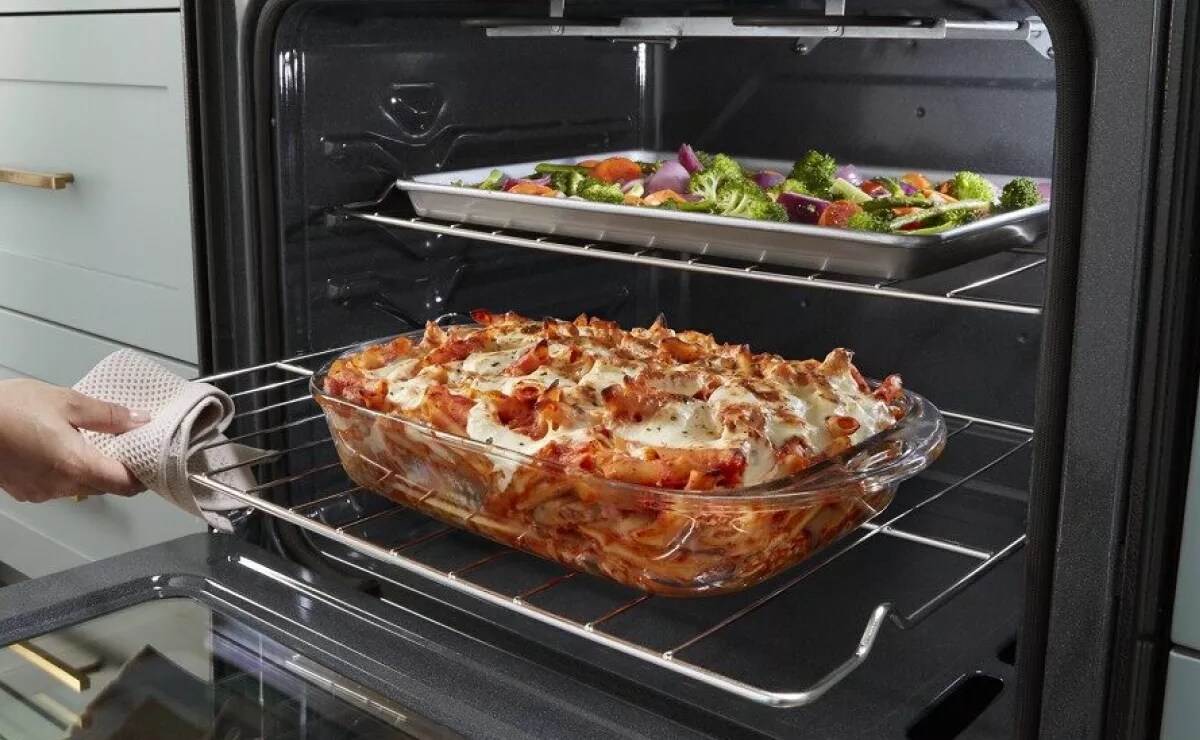
Using a convection oven means hot air moves around your food. This helps cook food faster and more evenly. How you place the racks inside matters a lot.
Good rack positioning allows heat to flow well. This stops some parts of your food from being undercooked or burnt.
Spacing Between Racks
Leave enough space between racks. This lets hot air reach all sides of your food. Crowded racks block air flow and cause uneven cooking.
- Keep at least 2 to 3 inches between racks
- Avoid placing racks too close to the oven walls
- Use fewer racks for bigger items to give air room
Best Rack Positions For Different Foods
| Food Type | Rack Position | Reason |
| Cookies and small baked goods | Middle rack | Even heat surrounds them |
| Roasts and large meats | Lower rack | Close to heat source, cooks well inside |
| Vegetables and casseroles | Upper or middle rack | Good air circulation and browning |
| Multiple trays | Space racks evenly | Allows hot air to flow between trays |
Avoid Blocking Air Vents
Air vents help move hot air inside the oven. Keep racks and pans away from vents. This lets air flow freely for even cooking.
Tip:Use pans that fit well on racks. Avoid large pans that block vents.
Credit: www.maytag.com
Preheating For Optimal Results
Preheating your convection oven is key to cooking food evenly. It helps reach the right temperature before you start baking or roasting.
Skipping preheating can cause uneven cooking and affect food texture. Let’s explore tips to preheat correctly.
Set The Correct Temperature
Always set your oven to the recipe’s recommended temperature. Convection ovens cook faster, so use the exact temperature for best results.
Wait until the oven signals it is fully preheated. This ensures the heat is consistent inside the oven.
Give Enough Time To Preheat
Preheating usually takes 10 to 15 minutes. Check your oven manual for exact times since models differ.
Do not open the oven door during preheating. This lowers the temperature and makes the process longer.
Use A Oven Thermometer
Built-in oven gauges can be inaccurate. Use an oven thermometer to check the real temperature inside.
Place the thermometer in the center of the oven and wait for it to read the set temperature before cooking.
Avoid Overcrowding The Oven
Do not put too many dishes in the oven at once. Air needs space to circulate for even heat distribution.
- Leave space between pans
- Use only recommended rack positions
- Cook in batches if needed
Adjust Cooking Times After Preheating
Start timing your food only after the oven is fully preheated. This helps avoid undercooked or burnt meals.
Remember, convection ovens cook food faster. Reduce the cooking time by 25% from traditional oven recipes.
Utilizing Convection Settings
Convection ovens use fans to circulate hot air. This helps food cook faster and more evenly.
Using the convection setting can change how you prepare your meals. It is important to know how to adjust your cooking times and temperatures.
Adjust Temperature And Time
Convection ovens cook food more quickly. Lower the temperature by 25°F (about 15°C) from your recipe. Also, check food earlier than usual to avoid overcooking.
Use The Right Cookware
Choose low-sided or rimless pans. This allows air to flow around the food. Dark or metal pans work well because they absorb heat better.
- Use baking sheets instead of deep pans
- Avoid glass cookware that blocks airflow
- Choose shallow pans for roasting
Arrange Food For Even Cooking
Place food in a single layer. Leave space between items for air to circulate. Avoid overcrowding the oven rack.
When To Use Convection Settings
| Food Type | Use Convection | Use Regular Bake |
| Roasted Vegetables | Yes | No |
| Cookies | Yes | Sometimes |
| Breads | No | Yes |
| Casseroles | No | Yes |
| Whole Chicken | Yes | No |
Avoid Common Mistakes
Do not use convection for delicate baked goods like cakes. Avoid opening the oven door often. This lets heat escape and slows cooking.
Avoiding Common Mistakes
Using a convection oven can improve cooking results and save time. Still, some common mistakes can affect the outcome. Learning how to avoid these errors helps you cook better meals.
This guide covers key tips to prevent mistakes when using your convection oven. Follow these to get even cooking and delicious food every time.
Not Adjusting Temperature And Time
Many people use the same temperature and time as a regular oven. This causes food to burn or dry out. Convection ovens cook faster because of the fan.
Lower the temperature by about 25°F (15°C) and check food earlier. This keeps food moist and avoids overcooking.
Overcrowding The Oven
Too much food inside blocks the hot air flow. This stops even cooking and causes cold spots. Leave space around food so air can circulate well.
- Use shallow pans to help air move freely
- Cook in batches if needed
- Do not stack trays close together
- Keep at least 2 inches between food and oven walls
Ignoring Proper Cookware
Not all cookware works well in convection ovens. Thick or dark pans absorb too much heat and may burn food. Glass and metal pans are better choices.
| Cookware Type | Recommended | Not Recommended |
| Metal pans | Yes | No |
| Glass pans | Yes | No |
| Cast iron | No | Yes |
| Dark, non-stick pans | No | Yes |
Not Using The Right Rack Position
Placing food too high or low in the oven changes how it cooks. Use the middle rack for most dishes. This spot gets the best air circulation and heat.
Tip:Use the middle rack for baking cookies, roasting vegetables, and cooking meats. Adjust only if your recipe says otherwise.
Cleaning And Maintenance Tips
Keeping your convection oven clean helps it work well and last longer.
Regular maintenance prevents problems and keeps your food tasting good.
Clean After Each Use
Wipe spills and crumbs inside the oven after every use. Use a soft cloth and warm water.
This stops buildup that can burn or cause smoke later.
Use The Right Cleaning Products
- Choose mild soaps or cleaners made for ovens.
- Avoid harsh chemicals that can damage the oven’s surface.
- Do not use steel wool or abrasive pads inside the oven.
- Check your oven’s manual for recommended cleaners.
Clean Oven Racks And Trays
Remove racks and trays to wash separately. Use warm soapy water and a sponge.
Dry them well before putting them back in the oven.
Check And Clean The Fan Regularly
The fan helps cook food evenly. Dust and grease can build up on it.
Follow these steps to keep the fan clean:
- Unplug the oven before cleaning.
- Remove the fan cover if possible.
- Use a soft brush or cloth to wipe away dust and grease.
- Replace the cover securely before using the oven again.
Perform Regular Deep Cleaning
| Cleaning Task | Frequency | Tips |
| Interior walls | Monthly | Use baking soda paste for tough stains |
| Door glass | Weekly | Use a glass cleaner or vinegar solution |
| Exterior surfaces | Weekly | Wipe with a damp cloth to remove fingerprints |
| Fan and vents | Every 3 months | Clean dust and grease carefully |

Credit: www.yuementrading.com
Frequently Asked Questions
What Temperature Should I Set For Convection Oven Baking?
Set your convection oven temperature 25°F lower than conventional ovens. This adjustment prevents overcooking and ensures even baking results.
How Do I Adjust Recipes For A Convection Oven?
Reduce baking temperature by 25°F and check food earlier. Convection ovens cook faster and more evenly than traditional ovens.
Can I Use A Convection Oven For Roasting Meat?
Yes, convection ovens are ideal for roasting. They circulate hot air, producing crispy, evenly browned meat with juicy interiors.
Is Preheating Necessary For Convection Ovens?
Preheating is recommended for convection ovens to stabilize temperature. It ensures consistent cooking and better results for most dishes.
Conclusion
Using a convection oven can make cooking faster and better. Adjust temperatures and times for best results. Try different recipes to see how it works. Keep the oven clean for good performance. Practice helps you cook with more confidence. Enjoy tasty meals made with less effort.
Simple tips make your cooking more fun and easy.