
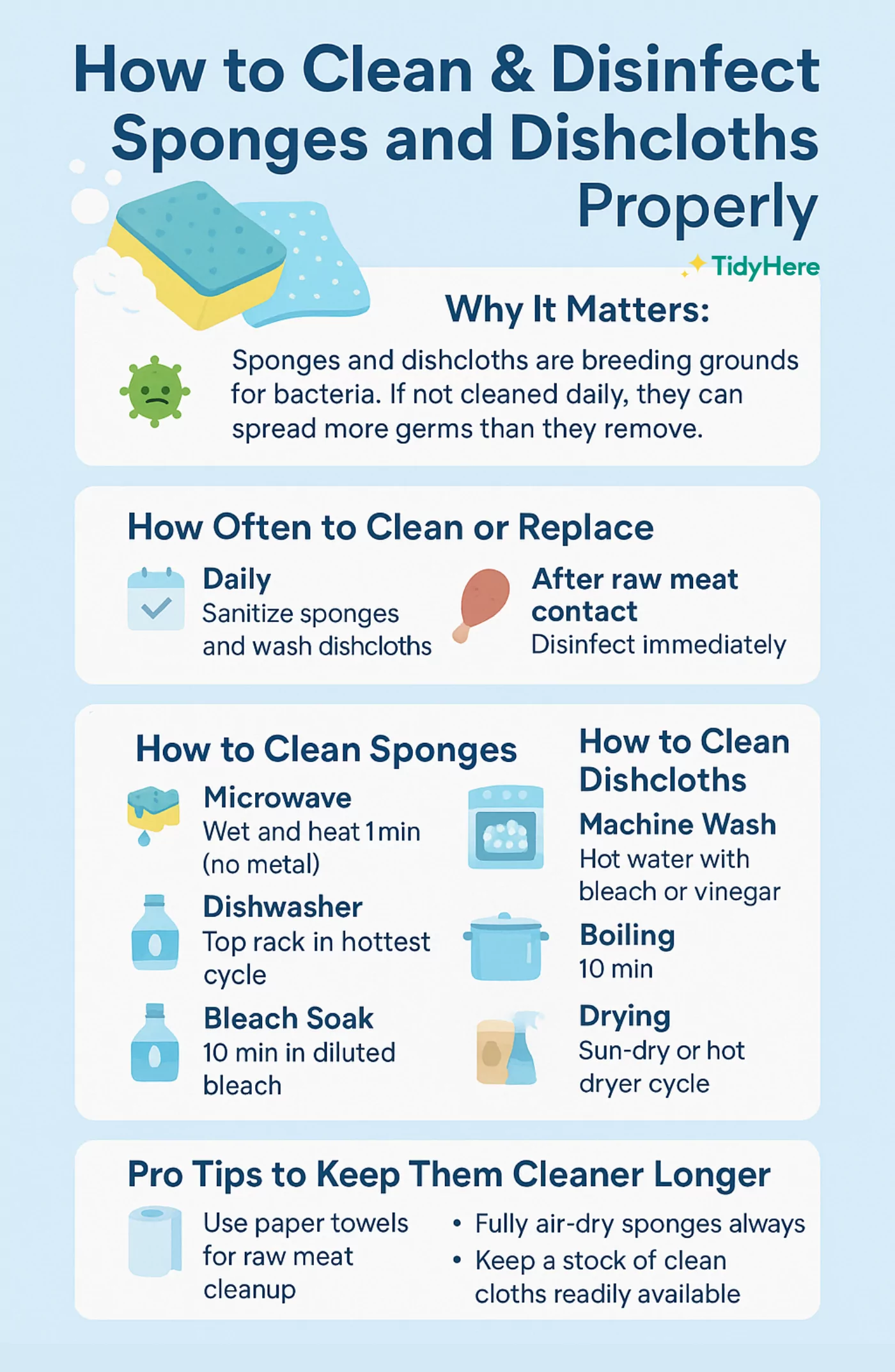
Your kitchen sponge is one of the dirtiest items in your home, even if it looks clean. It can harbor harmful bacteria that might put your health at risk.
But what if you could easily sanitize it without harsh chemicals? Using vinegar is a simple, natural way to keep your sponge fresh and safe. You’ll learn how to quickly and effectively sanitize your kitchen sponges with vinegar, helping you protect your family and maintain a cleaner kitchen every day.
Keep reading to discover the easy steps you can start using right now.

Credit: tidyhere.com
Benefits Of Using Vinegar For Sanitizing
Vinegar is a natural and safe way to clean kitchen sponges. It helps kill germs and bacteria effectively.
Using vinegar is simple and saves money compared to chemical cleaners. It is also good for the environment.
Kills Harmful Bacteria
Vinegar has acetic acid that kills many types of bacteria. It helps make your sponge safer to use.
Regular use of vinegar can reduce the spread of germs in your kitchen. This lowers the risk of foodborne illness.
Removes Odors
Kitchen sponges often smell bad after use. Vinegar helps remove these unpleasant odors naturally.
Fresh-smelling sponges make your kitchen feel cleaner and more comfortable to work in.
Safe And Non-toxic
Vinegar is safe to use around food and children. It does not contain harsh chemicals.
This makes vinegar a good choice for sanitizing items you use daily, like kitchen sponges.
Easy To Use And Affordable
You only need plain white vinegar to clean your sponges. It is easy to find in stores.
Vinegar is inexpensive and lasts a long time. This helps save money on cleaning supplies.
Choosing The Right Vinegar
Using vinegar is a simple way to sanitize kitchen sponges. Picking the right vinegar helps make cleaning more effective.
This guide compares white vinegar and apple cider vinegar. It also looks at organic and non-organic choices.
White Vinegar Vs. Apple Cider Vinegar
White vinegar has a strong smell but is very good at killing germs. Apple cider vinegar smells milder and has some extra natural acids.
- White vinegar is cheaper and easy to find.
- Apple cider vinegar has a gentle scent and may leave less residue.
- Both types can kill bacteria on sponges.
- White vinegar is usually stronger for cleaning.
- Apple cider vinegar is a good choice if you prefer natural smells.
Organic Vs. Non-organic Options
| Type | Description | Benefits | Considerations |
|---|---|---|---|
| Organic Vinegar | Made from organic crops without pesticides. | May have fewer chemicals and natural qualities. | Often costs more and might have a different taste. |
| Non-organic Vinegar | Made from standard crops, may use pesticides. | More affordable and widely available. | Good for general cleaning purposes. |
Choosing organic vinegar can be better for your health and the environment. Non-organic vinegar still cleans well and costs less.
Preparing Your Kitchen Sponge
Cleaning your kitchen sponge well is important before sanitizing it with vinegar. Proper preparation removes dirt and food bits. This helps vinegar work better and keeps your sponge fresh longer.
Start by focusing on rinsing and clearing the sponge. This simple step makes the sanitizing process more effective and safe for your kitchen use.
Rinsing The Sponge
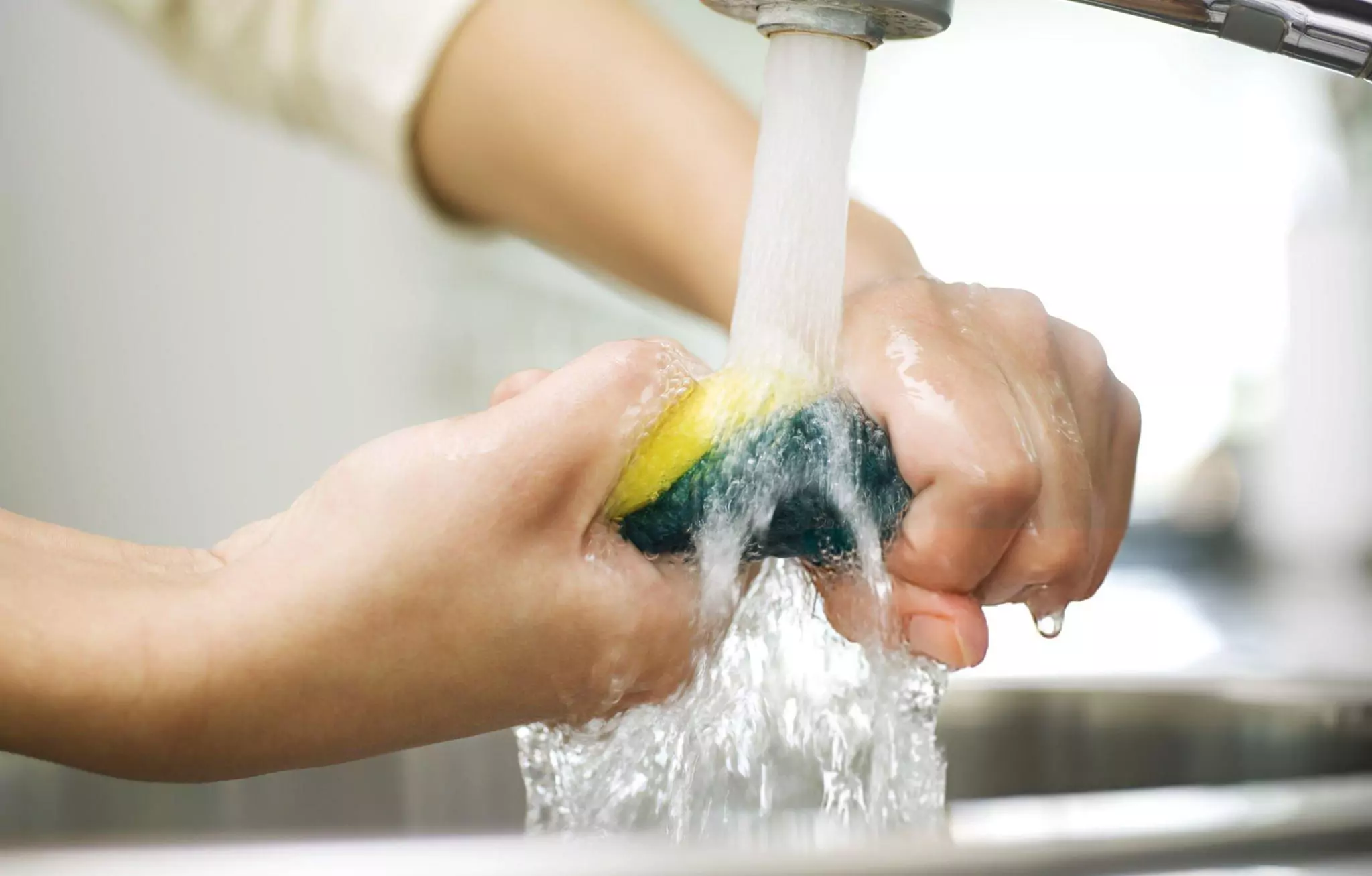
Rinsing your sponge removes loose dirt and soap residue. Use warm water and squeeze the sponge several times. This will wash away grease and small debris that can trap bacteria.
- Hold the sponge under running warm water.
- Squeeze it firmly to release trapped particles.
- Repeat until water runs clear from the sponge.
- Do not use hot water as it may damage the sponge.
Removing Food Particles
Food scraps stuck in the sponge can cause bad smells and germs. Removing these pieces helps the sponge stay cleaner and last longer.
| Common Food Particles | How to Remove |
|---|---|
| Rice and grains | Rinse under running water and squeeze repeatedly |
| Vegetable peels | Use fingers to pull out stuck pieces gently |
| Grease and oils | Apply a drop of dish soap and rinse well |

Credit: tidyhere.com
Vinegar Soaking Method
Cleaning kitchen sponges is important to keep germs away. Vinegar is a natural cleaner you can use. It helps remove bacteria from sponges safely.
The vinegar soaking method is simple. You soak the sponge in a vinegar solution to kill germs and freshen it up.
Diluting Vinegar With Water
Vinegar is strong and can damage sponges if used full strength. You should dilute it with water to make a safe cleaning solution.
A common ratio is one part vinegar to two parts water. This mix cleans well without hurting the sponge.
- Use white vinegar for best results
- Mix 1 cup vinegar with 2 cups water
- Pour solution into a clean bowl or container
Soaking Duration Tips
How long you soak the sponge matters. Soaking too short won’t clean well. Too long may wear out the sponge.
Soak the sponge for at least 5 minutes. For deeper cleaning, soak up to 30 minutes. After soaking, rinse the sponge well.
- Minimum soak time: 5 minutes
- Maximum soak time: 30 minutes
- Rinse sponge with clean water after soaking
- Let the sponge dry completely before reuse
Microwave Sanitization Technique
Sanitizing kitchen sponges with vinegar and heat is an easy way to kill germs. The microwave method uses vinegar’s cleaning power with microwave heat.
This technique helps remove bacteria and keep your sponge fresh for longer use.
Combining Vinegar And Heat
Start by soaking your kitchen sponge in a bowl filled with white vinegar for five minutes. Vinegar breaks down grease and kills some bacteria.
After soaking, place the wet sponge in the microwave. Heat it on high for two minutes. The heat helps vinegar work better to kill germs inside the sponge.
- Soak sponge in vinegar for 5 minutes
- Place sponge in microwave while still wet
- Heat on high for 2 minutes
- Let sponge cool before removing
Safety Precautions
Microwaving a sponge can be risky if you do not follow safety rules. Wet sponges heat safely, but dry ones can catch fire.
| Safety Tips | Details |
|---|---|
| Keep sponge wet | Always soak sponge before microwaving to prevent fire. |
| Use microwave-safe bowl | Soak sponge in a bowl that can go in the microwave. |
| Do not overheat | Limit heating time to 2 minutes to avoid damage. |
| Handle with care | Let sponge cool before touching; it can be very hot. |
Credit: tidyhere.com
Boiling Method With Vinegar
Kitchen sponges can hold many germs and bacteria. Cleaning them is important for a healthy kitchen.
Boiling with vinegar is a simple way to sanitize sponges using heat and natural acid.
Steps For Boiling
Follow these steps to clean your sponge with boiling vinegar water safely and effectively.
- Fill a pot with enough water to cover the sponge.
- Add one cup of white vinegar to the water.
- Bring the mixture to a rolling boil on the stove.
- Place the sponge in the boiling vinegar water carefully.
- Let the sponge boil for 5 minutes to kill germs.
- Remove the sponge with tongs and let it cool down before use.
Effectiveness Of Heat
| Temperature | Effect on Bacteria |
|---|---|
| 100°C (212°F) | Kills most bacteria and germs quickly |
| Boiling time 5 minutes | Ensures deep cleaning of sponge fibers |
| Vinegar acidity | Helps break down grime and reduces odor |
Maintaining A Clean Sponge
Kitchen sponges can hold many germs and bacteria. Cleaning them often helps keep your kitchen safe.
Using vinegar to sanitize sponges is an easy and natural way to kill germs.
Frequency Of Sanitizing
Sanitize your kitchen sponge at least two times per week. This stops germs from building up.
If you use the sponge a lot, clean it every day. This keeps it fresh and safe to use.
- Sanitize after heavy use
- Replace sponges every 1-2 weeks
- Look for signs of wear or smell
Storage Best Practices
Store sponges where they can dry quickly. A wet sponge stays dirty and grows bacteria.
Keep sponges in a clean holder that allows air flow. Avoid closed containers or sinks.
- Use a sponge holder with holes
- Place sponge away from sink water
- Allow sponge to dry between uses
Common Mistakes To Avoid
Sanitizing kitchen sponges with vinegar is simple but easy to get wrong. Mistakes can reduce cleaning power or cause safety issues.
Learn which errors to avoid to keep your sponge clean and safe for use.
Over-saturating The Sponge
Soaking the sponge too much can leave it too wet. This stops vinegar from working well and keeps germs alive.
- Use enough vinegar to cover the sponge but not flood it.
- After soaking, squeeze the sponge to remove excess liquid.
- Let the sponge dry fully before using again.
Ignoring Safety Measures
Vinegar is safe but still needs care when used to clean sponges. Avoid contact with eyes and skin.
| Safety Tip | Reason |
| Wear gloves | Protect skin from irritation |
| Do not mix vinegar with bleach | Produces harmful gases |
| Rinse sponge well after sanitizing | Remove vinegar taste and smell |
| Keep vinegar out of reach of children | Prevent accidental ingestion |
Frequently Asked Questions
How Does Vinegar Sanitize Kitchen Sponges Effectively?
Vinegar kills bacteria and germs due to its acetic acid content. It penetrates sponge fibers and eliminates harmful microbes. This natural sanitizer is safe, eco-friendly, and inexpensive for kitchen use. Regular vinegar soaking keeps sponges hygienic and reduces bad odors.
How Long Should I Soak Sponges In Vinegar?
Soak kitchen sponges in vinegar for at least 5 to 10 minutes. This duration allows vinegar to break down bacteria and sanitize effectively. For deeper cleaning, soak up to 30 minutes, then rinse well and air dry for best results.
Can Vinegar Replace Commercial Sponge Sanitizers?
Yes, vinegar is a natural and cost-effective alternative to commercial sanitizers. It’s non-toxic, readily available, and works well to disinfect kitchen sponges. However, vinegar may not remove tough grease or stains like some chemical products.
How Often Should I Sanitize Kitchen Sponges With Vinegar?
Sanitize kitchen sponges with vinegar at least twice a week. Frequent cleaning reduces bacterial buildup and unpleasant odors. Replace sponges every 1 to 2 weeks for optimal kitchen hygiene and safety.
Conclusion
Sanitizing kitchen sponges with vinegar keeps your kitchen clean. It kills many germs and removes odors well. This method is simple and uses ingredients you already have. Regular cleaning helps avoid bacteria buildup and keeps sponges safe to use. Try this easy step to make your kitchen healthier.
Clean sponges mean safer dishes and less chance of illness. Keep your kitchen fresh and your family protected with this quick tip.