
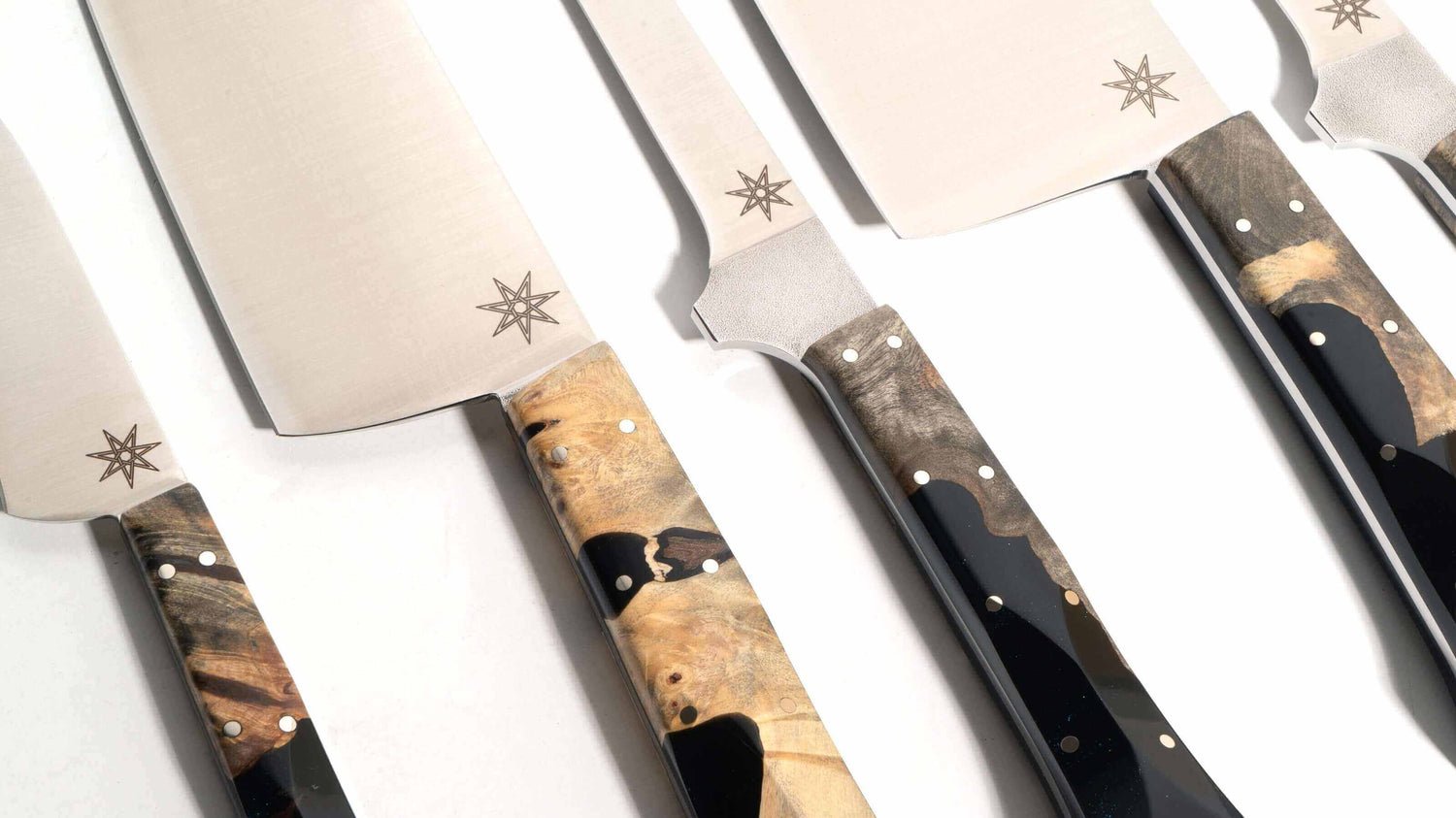
Choosing the right chef knife set can change the way you cook forever. Imagine slicing, dicing, and chopping with knives that feel just right in your hand—making every meal easier and more enjoyable.
But with so many options out there, how do you pick the perfect set for your kitchen? This guide will help you cut through the confusion and find the knives that fit your style and needs. Keep reading to discover simple tips that will make your cooking sharper and more satisfying.
Credit: www.victorinox.com
Choosing The Right Knife Material
Picking the right material for your chef knife set affects its sharpness and durability. Each material has unique traits that suit different cooking needs.
Understanding the benefits and features of common knife materials can help you make a smart choice for your kitchen.
Stainless Steel Benefits
Stainless steel knives resist rust and stains well. They need less maintenance and keep a good edge for a long time. These knives are great for everyday use in busy kitchens.
Carbon Steel Advantages
Carbon steel knives are very sharp and easy to sharpen. They hold their edge better than many other materials. These knives develop a natural patina that can protect against rust.
- Sharper and easier to sharpen
- Holds edge longer
- Develops protective patina
- Requires careful cleaning and drying
Ceramic Knife Features
| Feature | Description |
|---|---|
| Sharpness | Extremely sharp edge for precise cuts |
| Weight | Very lightweight, reduces hand fatigue |
| Durability | Resistant to rust and acids |
| Care | Can chip or break if dropped, needs careful use |

Credit: www.bbcgoodfood.com
Essential Knives In A Set
A good chef knife set has several important knives. Each knife helps with different kitchen tasks.
Knowing the uses of each knife helps you pick the right set for your cooking needs.
Chef’s Knife Uses
The chef’s knife is the most used knife in the kitchen. It is great for chopping, slicing, and dicing.
This knife works well on vegetables, fruits, and meats. It has a sharp, wide blade for many tasks.
Paring Knife Importance
The paring knife is small and easy to control. It is perfect for peeling and trimming fruits and vegetables.
Use it for detailed work like removing seeds or cutting small items. It helps with precise cuts.
Bread Knife Functions
The bread knife has a long blade with saw-like teeth. It cuts through bread without crushing it.
This knife also works well on cakes and soft fruits with tough skins. It slices cleanly through crusts.
Utility Knife Role
The utility knife is medium-sized and very versatile. It is used for cutting sandwiches, meats, and vegetables.
This knife fits tasks that are too big for a paring knife but too small for a chef’s knife.
Handle Comfort And Grip
Choosing a chef knife set means thinking about handle comfort. A good grip helps you cut safely and easily.
Comfort reduces hand fatigue. It lets you work longer without pain or slipping.
Material Options
Knife handles come in many materials. Each offers different comfort and grip qualities.
Wood handles feel warm and natural. Plastic handles are light and easy to clean. Metal handles look sleek but can be slippery.
- Wood: Comfortable, classic, needs care
- Plastic: Durable, water-resistant, less grip
- Metal: Strong, stylish, can be slippery
- Rubber: Soft, non-slip, easy to hold
Ergonomic Design
Ergonomic handles fit your hand shape. They reduce strain and improve control.
Look for handles with curves that follow your fingers. Textured surfaces help prevent slipping.
- Curved shapes support natural grip
- Textured or rubber grips stop slips
- Balanced weight eases cutting effort
Maintenance Tips
Proper care keeps handles comfortable and safe. Clean them after each use.
Avoid soaking wood handles in water. Dry all handles well to stop damage and slipping.
- Hand wash knives, avoid dishwashers
- Wipe dry handles immediately
- Use mineral oil on wood handles
- Check for cracks or loose parts often
Blade Size And Weight
Choosing the right blade size and weight is key for a good chef knife set. These factors affect how comfortable and effective your cutting is.
A blade that fits your needs helps you cook faster and safer. Think about what you will use the knives for most.
Choosing Appropriate Length
Blade length affects how you cut and what foods you can handle. Short blades are good for small tasks and detail work.
Longer blades work well for slicing large vegetables and meats. Pick a length that feels natural in your hand.
- Short blades: 6 inches or less for precision
- Medium blades: 7 to 8 inches for general use
- Long blades: 9 inches or more for big cuts
Weight Impact On Control
Heavier knives give more power but can tire your hand fast. Lighter knives are easier to move and control.
Choose a weight that lets you cut steadily without strain. Practice with different knives to find what fits you.
- Heavy knives help with tough foods
- Light knives allow quick, precise cuts
- Medium weight balances power and ease
Balance Between Blade And Handle
Good balance means the knife feels steady and safe. The blade and handle should share the weight evenly.
A balanced knife reduces wrist strain and improves cutting accuracy. Test knives to feel their balance before buying.
- Blade-heavy knives need more wrist effort
- Handle-heavy knives may feel awkward
- Well-balanced knives offer control and comfort
Knife Sharpness And Maintenance
Choosing the right chef knife set means thinking about sharpness and care. Sharp knives make cooking safer and easier.
Good maintenance helps keep knives sharp and lasts longer. Let’s look at some key tips to keep your blades in top shape.
Factory Sharpening Quality
Knives come sharpened from the factory, but the quality varies. High-quality factory sharpening means the blade is ready to use right away.
Check if the edge is even and smooth. Poor factory sharpening can cause uneven cuts and dull quickly.
Sharpening Tools And Techniques
Keeping knives sharp needs the right tools. Use these tools for best results:
- Whetstones for precise sharpening
- Honing rods to realign edges
- Electric sharpeners for quick fixes
- Sharpening systems with guides for angle control
Sharpen slowly and evenly. Avoid applying too much pressure to protect the blade.
Proper Storage Methods
| Storage Method | Benefits | Tips |
| Knife block | Protects blades | Clean regularly |
| Magnetic strip | Saves space | Place knives carefully |
| Knife sheath | Prevents damage | Use when traveling |
| Drawer insert | Organized storage | Keep blades separated |
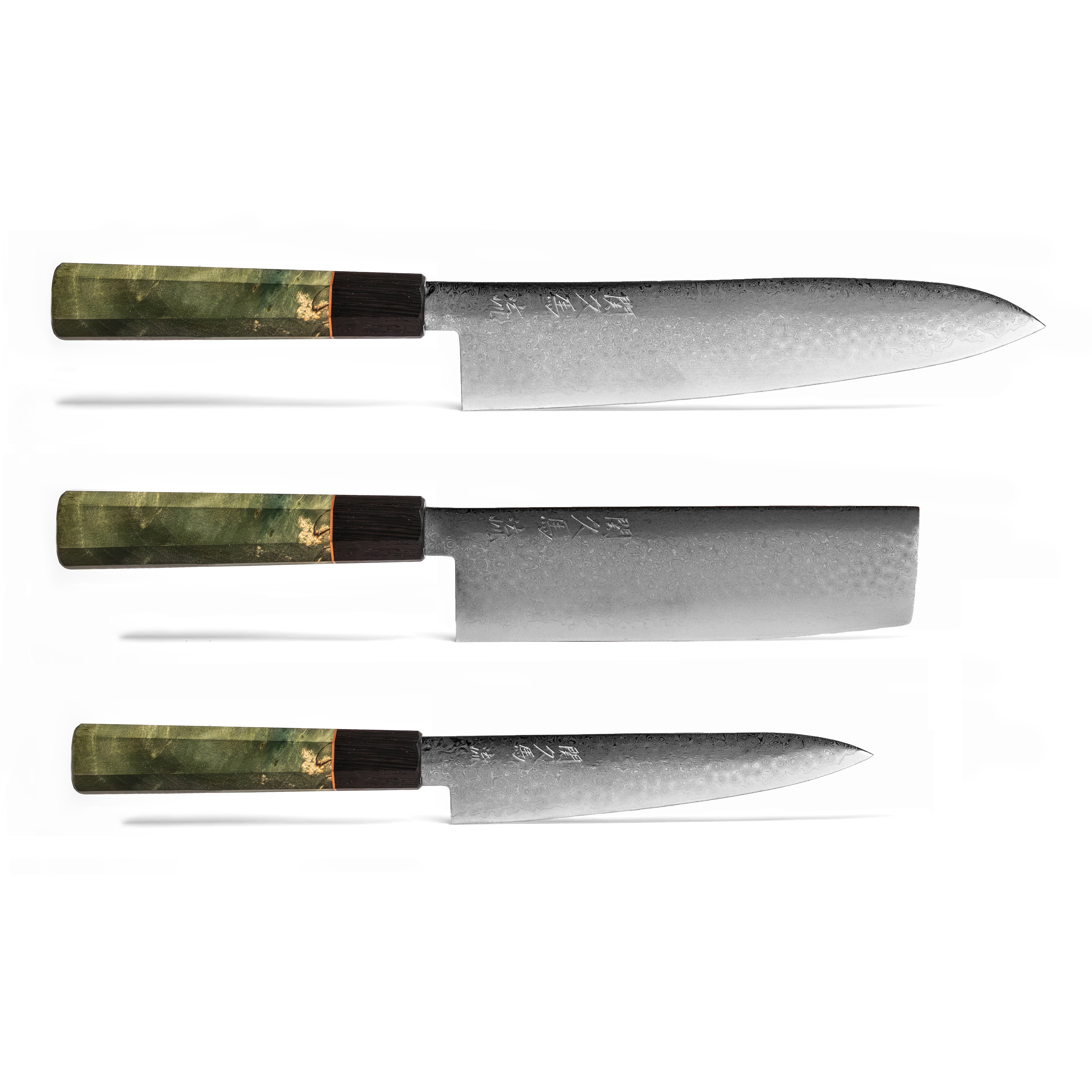
Credit: oishya.com
Budget Considerations
Choosing the right chef knife set depends a lot on your budget. Knowing how much to spend helps you find the best value.
Think about what you need from your knives before deciding on a price. This helps avoid spending too much or too little.
Entry-level Vs Professional Sets
Entry-level sets cost less and suit beginners. They often have fewer knives and simpler materials.
Professional sets cost more but offer better steel and handles. These last longer and perform well.
- Entry-level sets: good for light kitchen work
- Professional sets: made for frequent, heavy use
- Professional knives usually need more care
Long-term Investment Value
Buying quality knives can save money over time. Sharp knives last longer and cut better.
Cheap knives may dull fast or break. You might spend more replacing them often.
- High-quality steel holds sharpness
- Good handles feel comfortable for years
- Proper care extends knife life
Where To Find Deals
Look for discounts at kitchen stores or online shops. Sales happen during holidays or special events.
Check customer reviews to avoid poor-quality knives on sale. Some stores offer bundle prices for sets.
- Compare prices from different sellers
- Watch for seasonal sales and clearance offers
- Buy from trusted brands or retailers
Brands And Warranty
Choosing the right chef knife set means paying attention to the brand and warranty. These factors help ensure you get quality and support. A good brand usually means better materials and design.
Warranty coverage protects your purchase from defects and damage. It also shows the maker’s confidence in their product. Knowing what support is available helps you make a smart choice.
Reputable Manufacturers
Look for brands known for quality and durability. Some brands have a long history of making kitchen knives. These brands use good steel and strong handles. They also test knives for sharpness and balance.
- Global
- Wüsthof
- Shun
- Victorinox
- Zwilling J.A. Henckels
Warranty Coverage
Warranties vary by brand and product. Some offer limited lifetime warranties. Others cover only certain defects. Read the warranty details before buying. Know what is included and excluded.
| Brand | Warranty Type | Coverage Details |
| Wüsthof | Limited Lifetime | Defects in material and workmanship |
| Shun | Limited Lifetime | Blade and handle defects |
| Victorinox | 3 Years | Manufacturing defects only |
| Global | Limited Lifetime | Factory defects and sharpening |
| Zwilling | Limited Lifetime | Defects in materials and workmanship |
Customer Support
Good customer support helps with repairs and questions. Check if the brand has easy contact options. Look for phone, email, or chat support. Some brands offer free sharpening or repairs.
- Fast response times
- Clear warranty claim process
- Helpful online resources
- Local service centers
- Replacement policies
Frequently Asked Questions
What Factors To Consider When Choosing A Chef Knife Set?
When selecting a chef knife set, consider the material, balance, and comfort. High-quality stainless steel blades ensure durability and sharpness. Ergonomic handles provide comfort during extended use. Also, look for a set that suits your cooking style and includes essential knives like a chef’s knife, paring knife, and serrated knife.
Why Is Blade Material Important In Chef Knives?
Blade material affects a knife’s durability, sharpness, and maintenance. Stainless steel is popular for its rust resistance and easy maintenance. High-carbon steel offers excellent sharpness but requires regular care to prevent rust. Ceramic blades are incredibly sharp but can be brittle.
Choose a material that matches your cooking needs and maintenance preference.
How Do I Maintain A Chef Knife Set?
Proper maintenance extends the lifespan of your knives. Hand wash knives with mild detergent and dry immediately. Use a honing steel regularly to maintain sharpness. Store knives in a knife block or on a magnetic strip to prevent damage. Avoid cutting on hard surfaces like glass or stone to preserve the blade’s edge.
What Is The Ideal Size For A Chef’s Knife?
A chef’s knife typically ranges from 6 to 12 inches. An 8-inch knife is versatile and suitable for most tasks. It offers a good balance between control and cutting area. Choose a size that feels comfortable in your hand and suits your cooking style.
Personal preference plays a significant role in selecting the right size.
Conclusion
Choosing the right chef knife set makes cooking easier and more fun. Focus on comfort, blade quality, and the knives you use most. Think about your budget and how often you cook. A good set lasts long and helps you cut safely.
Take your time to find what fits your kitchen best. Happy cooking!