
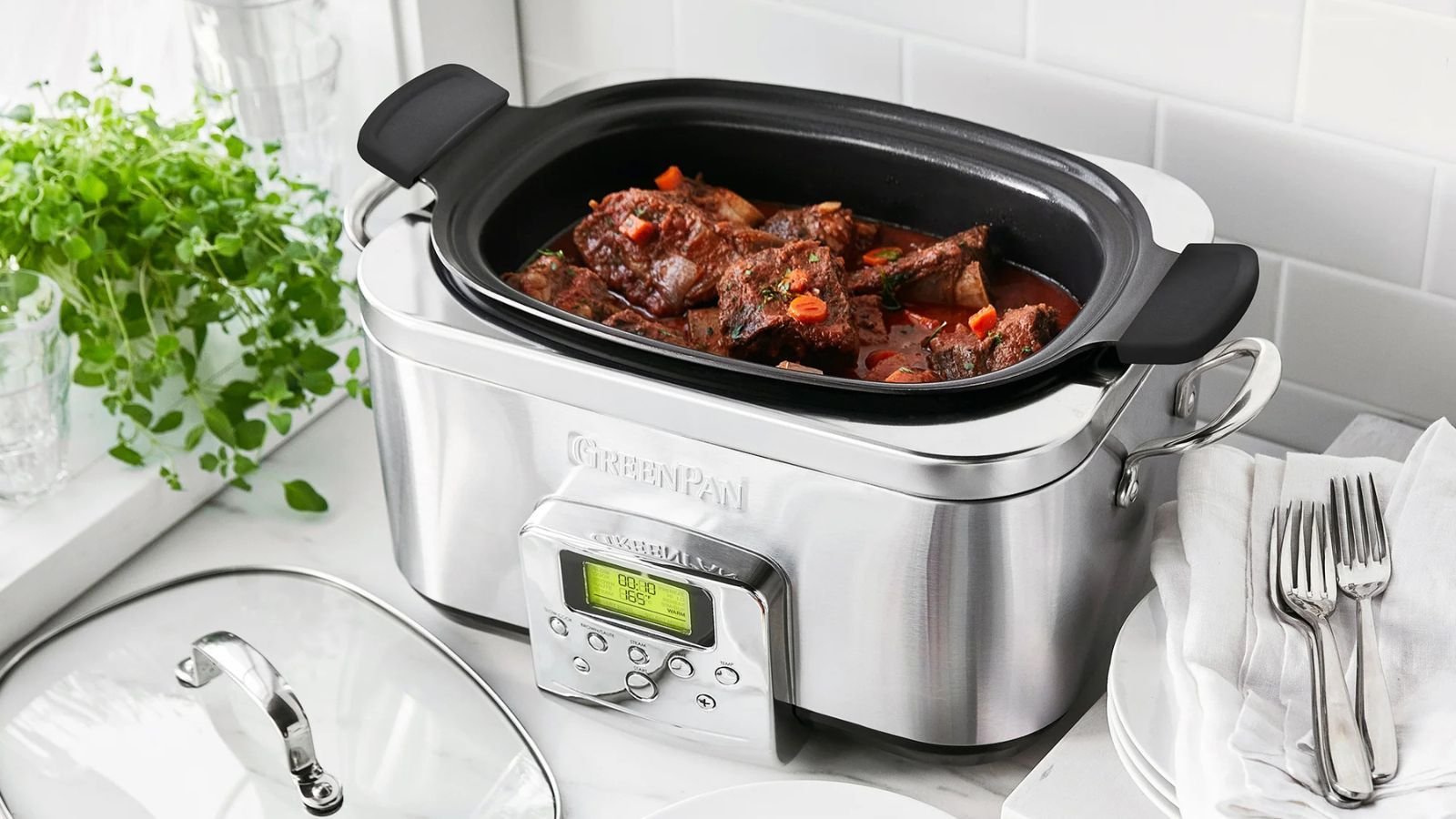
Are you ready to make mealtime easier and more delicious? Using your slow cooker the right way can transform simple ingredients into mouthwatering meals with little effort.
But do you really know which slow cooker settings work best for your favorite dishes? Choosing the wrong setting can lead to overcooked or undercooked food—and nobody wants that. You’ll discover the best slow cooker settings to get perfect results every time.
Keep reading, and unlock the secret to stress-free, flavorful meals that save you time and keep your family happy.
Credit: www.tasteofhome.com
Slow Cooker Basics
Slow cookers are kitchen tools that cook food at low heat for a long time. They help make meals tender and flavorful.
Understanding how slow cookers work and their features helps you use them well for many dishes.
How Slow Cookers Work
A slow cooker heats food gently over several hours. It uses a low, steady heat to cook ingredients inside a sealed pot.
- The cooker has a heating element around a ceramic pot.
- The pot holds the food and keeps heat inside.
- A lid covers the pot to trap steam and moisture.
- Heat cooks food slowly, breaking down tough parts.
- This method keeps food moist and soft.
Common Features
| Feature | Description |
| Settings | Usually Low, High, and Keep Warm options. |
| Timer | Allows setting cooking time before it switches to warm. |
| Removable Pot | Easier to clean and serve food from. |
| Lid | Locks in heat and moisture during cooking. |
| Size | Varies from small (2 quarts) to large (8 quarts) pots. |
Key Slow Cooker Settings
Slow cookers have different settings to control cooking speed and temperature. Knowing these settings helps you cook meals perfectly every time.
Each setting suits different types of food and cooking times. Let’s explore the main slow cooker settings and their uses.
Low Setting
The low setting cooks food gently over a long time. It usually heats between 190°F and 200°F (88°C to 93°C).
This setting is perfect for tough meats and soups that need several hours to become tender.
- Cooking time: 6 to 10 hours
- Best for stews and roasts
- Keeps flavors and moisture well
High Setting
The high setting cooks food faster at a temperature of about 300°F (149°C). It reduces cooking time by half compared to low.
| Feature | Low Setting | High Setting |
|---|---|---|
| Temperature | 190°F – 200°F | 300°F |
| Cooking Time | 6 to 10 hours | 3 to 5 hours |
| Best For | Tough meats, soups | Quick meals, vegetables |
Keep Warm Mode
Keep Warm mode keeps cooked food at a safe temperature until serving. It usually holds food around 145°F (63°C).
- Use after cooking finishes
- Prevents food from cooling too fast
- Not for cooking or reheating raw food
Choosing Settings For Different Meals
Slow cookers have different settings to cook meals properly. Choosing the right setting helps food taste better.
Each type of meal needs a special temperature and time to cook well in a slow cooker.
Soups And Stews
Soups and stews need long, slow cooking to blend flavors. Use low settings for best results.
High settings work if you need to cook faster but may not develop full flavor.
- Low setting: 6 to 8 hours
- High setting: 3 to 4 hours
- Keep lid closed to keep heat in
Meat And Poultry
Meat and poultry become tender with slow, even heat. Use low setting for tough cuts.
High setting works for smaller pieces or when time is short. Avoid overcooking to keep meat juicy.
- Low setting: 6 to 10 hours for large cuts
- High setting: 3 to 5 hours for small pieces
- Use a thermometer to check doneness
Vegetables And Sides
Vegetables cook faster and can get mushy if cooked too long. Use high setting for best texture.
Low setting works if you want soft, well-cooked vegetables. Add vegetables later when cooking meat.
- High setting: 1.5 to 3 hours
- Low setting: 3 to 5 hours for softer texture
- Add delicate vegetables near the end
Desserts
Desserts like puddings and cakes need gentle heat to cook evenly. Use low setting for best results.
High setting may work for some recipes but watch cooking time carefully to avoid burning.
- Low setting: 2 to 4 hours for most desserts
- High setting: 1 to 2 hours for quick recipes
- Stir desserts if recipe says so

Credit: www.independent.co.uk
Tips For Perfect Slow Cooker Results
Using a slow cooker can make meal prep easy and tasty. Getting the best results means understanding a few key tips.
This guide helps you learn how to layer ingredients, set timing and temperature, and avoid common mistakes.
Layering Ingredients
How you place ingredients in the slow cooker affects cooking. Dense items take longer to cook than soft ones.
- Put root vegetables like carrots and potatoes at the bottom.
- Place meat on top of the vegetables.
- Add delicate vegetables and herbs near the end of cooking.
- Do not overfill the slow cooker; fill about two-thirds full.
Timing And Temperature
Slow cookers usually have low and high settings. Each setting changes the cooking time.
| Setting | Approximate Cooking Time |
| Low | 6 to 8 hours |
| High | 3 to 4 hours |
Use low for tough meats to make them tender. High setting works well for quicker meals.
Avoiding Common Mistakes
Watch out for these frequent errors to improve your slow cooker dishes:
- Do not lift the lid while cooking; it loses heat.
- Avoid adding frozen meat directly; thaw first.
- Use enough liquid to prevent drying out.
- Cut ingredients evenly for uniform cooking.
Adjusting Settings For Slow Cooker Types
Slow cookers come in different styles and sizes. Each type needs different settings for the best results.
Knowing how to adjust your slow cooker can improve your meal’s taste and texture. This guide explains key differences.
Traditional Vs. Programmable
Traditional slow cookers have simple controls, usually just low, high, and warm settings. Programmable models offer timers and automatic switches.
- Traditional cookers need manual setting changes and monitoring.
- Programmable cookers allow you to set cooking time and temperature precisely.
- Programmable models switch to warm mode automatically to keep food safe.
- Use traditional cookers for basic recipes without timing needs.
- Choose programmable cookers for complex recipes or when you are away.
Size Considerations
Slow cookers come in sizes from small (1.5 quarts) to large (8 quarts or more). Size affects cooking time and food quantity.
| Size | Best Use | Setting Tips |
| Small (1.5-3 quarts) | For singles or couples | Reduce cooking time by 30 minutes |
| Medium (4-6 quarts) | Small families | Use recipe times as written |
| Large (7-8+ quarts) | Big families or gatherings | Increase cooking time by 30-60 minutes |
Enhancing Flavors With Setting Choices
Slow cookers let you prepare meals with rich, deep flavors. Choosing the right setting helps bring out the best taste.
Different heat levels affect how ingredients blend and develop flavors. Using the right setting can make your meals tastier.
Maximizing Tenderness
Low heat settings cook food slowly, breaking down tough fibers. This makes meat and vegetables soft and tender.
High settings cook faster but may not create the same tenderness. Use low for tougher cuts and longer cook times.
- Cook tough meat on low for 6-8 hours
- Use high for quick meals with tender cuts
- Check tenderness by testing with a fork
Balancing Moisture
Slow cooker settings control how much liquid stays in the pot. Low heat keeps moisture inside longer, preventing dryness.
High heat causes more steam to escape. Add extra liquid if cooking on high to keep food juicy and flavorful.
- Use low setting to retain natural juices
- Add broth or sauce if using high heat
- Keep the lid closed to trap moisture
Credit: www.kitchenparade.com
Frequently Asked Questions
What Are The Basic Slow Cooker Settings?
Slow cookers typically have three basic settings: low, high, and warm. The low setting is used for slow, gentle cooking, while the high setting speeds up the process. The warm setting keeps the meal at a safe temperature without cooking it further.
How Do I Choose The Right Setting?
Choose the low setting for longer cooking times to tenderize tough meats. Use the high setting for quicker meals. If your dish is ready but not yet time to eat, switch to the warm setting to maintain temperature without overcooking.
Can I Adjust The Settings During Cooking?
Yes, you can adjust settings based on your schedule or meal requirements. If you need to speed up cooking, switch from low to high. For precise timing, monitor your dish and switch to warm if it’s done early.
What Meals Are Best For The Low Setting?
Meals like stews, soups, and tougher cuts of meat benefit from the low setting. This setting allows flavors to meld and meats to become tender. Low heat is ideal for recipes requiring long cooking times for optimal taste and texture.
Conclusion
Choosing the right slow cooker setting makes cooking simple and tasty. Low heat works well for long, slow meals that need time to develop flavor. High heat speeds up cooking when you are in a hurry. Keep in mind the type of food and recipe instructions.
This helps you avoid overcooking or undercooking your meal. Experiment with settings to find what fits your schedule and taste. Slow cookers bring convenience and flavor together in one pot. Enjoy easy meals with the best slow cooker settings every time.