
Are you ready to make your kitchen greener and save money at the same time? Reusable food wraps are a smart choice, but using them the right way can make all the difference.
Imagine keeping your food fresh longer, cutting down on waste, and enjoying an easy, hassle-free cleanup. You’ll discover simple tips that help you get the most out of your reusable wraps. Keep reading to learn how to protect your food and the planet without extra effort.
Choosing The Right Wrap
Reusable food wraps are great for keeping food fresh. Picking the right one is important for efficiency.
Consider materials, sizes, shapes, and sustainability when choosing your food wraps.
Material Types
Reusable wraps come in different materials. The most common are beeswax, silicone, and fabric.
- Beeswax wraps are natural and moldable.
- Silicone wraps are durable and flexible.
- Fabric wraps are washable and soft.
Size And Shape Options
Reusable wraps come in various sizes and shapes. Choose one that fits your food items well.
Smaller wraps are good for snacks. Larger ones cover bowls or sandwiches.
- Square wraps fit sandwiches.
- Round wraps fit bowls.
- Large wraps cover bread loaves.
Sustainability Factors
Consider sustainability when choosing wraps. Look for materials that are eco-friendly.
Some wraps are biodegradable. Others can be recycled or reused many times.
- Biodegradable wraps break down naturally.
- Reusable wraps reduce waste.
- Recyclable wraps can be processed again.
Preparing Wraps For Use
Reusable food wraps help reduce waste in your kitchen. Before using, prepare them well for best results.
Good preparation keeps wraps clean and easy to use. It also helps the wraps last longer.
Cleaning Before First Use
Clean your wraps to remove dust or residues from making and packaging. Use gentle care to keep them safe.
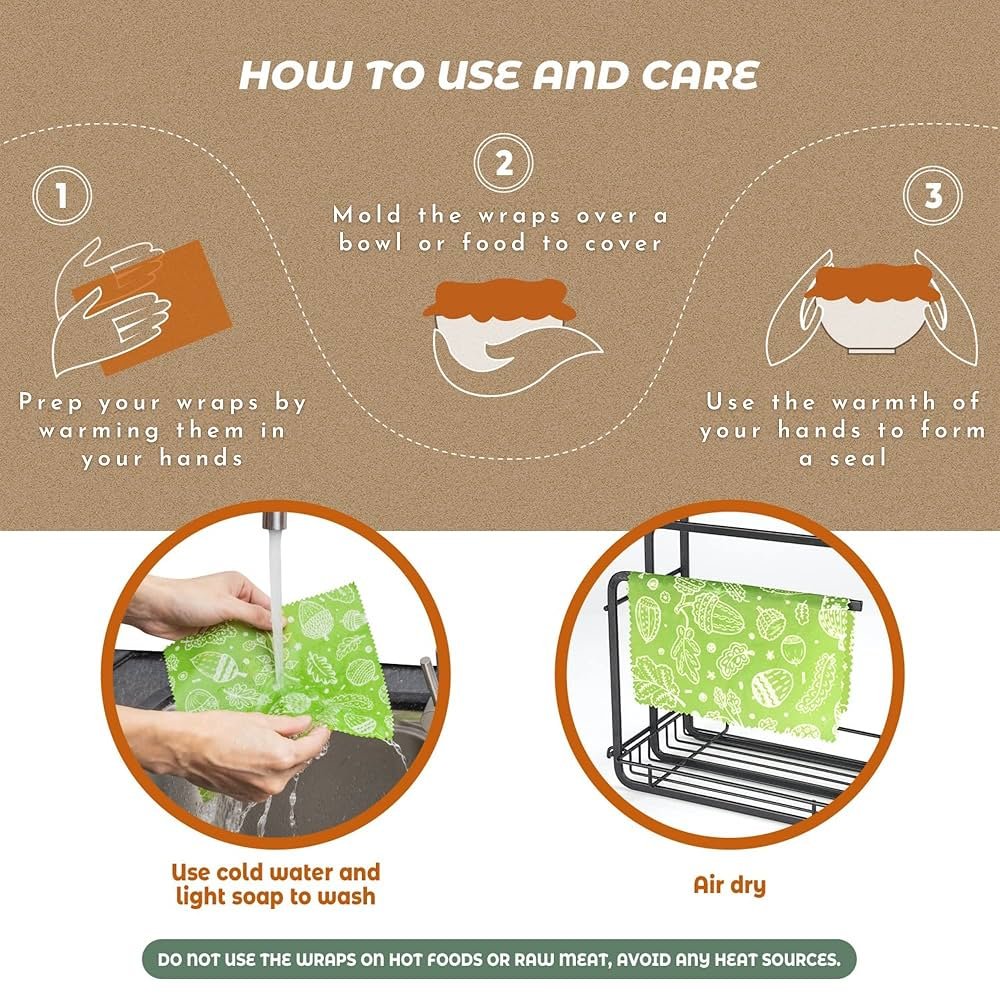
Wash wraps with cool water and mild soap. Avoid hot water because it can damage the wrap.
- Use a soft cloth or sponge to wipe gently
- Rinse well to remove all soap
- Let the wraps air dry completely before use
Conditioning Techniques
Conditioning your wraps can improve their stickiness and flexibility. This step makes them easier to handle.
Rub the wrap with a small amount of natural oil. This adds moisture and helps it cling better to food and containers.
- Use food-safe oils like coconut or jojoba oil
- Apply a thin layer with a clean cloth
- Wipe off extra oil to avoid messiness
- Store wraps flat or rolled, not folded, to keep shape
Wrapping Techniques
Reusable food wraps help keep food fresh without waste. Using the right wrapping techniques saves food and prevents messes.
Good wrapping protects food and makes storage easier. Learn simple ways to wrap different foods well.
Sealing Different Food Types
Wrap dry foods tightly to keep air out. For moist foods, use a looser wrap to avoid crushing.
Fruits and vegetables need gentle wrapping to prevent damage. Wrap sandwiches tightly to keep fillings inside.
- Use a snug wrap for bread and baked goods
- Fold loosely around leafy greens
- Wrap cut fruits with enough space for air
- Cover cheese with a single layer to avoid drying
Avoiding Leaks And Spills
Prevent leaks by folding wraps firmly at the edges. Make sure the wrap covers the entire food item.
Check the wrap for holes before use. Use extra layers around wet foods or sauces to stop spills.
- Press edges tightly to seal liquids
- Use wraps with no tears or holes
- Add a layer under foods with sauces
- Store wrapped items upright when possible
Layering For Extra Protection
Layer wraps for extra strength when storing strong-smelling or wet foods. Multiple layers keep food fresh longer.
Use one layer for light foods. Add a second or third layer for heavy or juicy items to prevent leaks and odors.
- Wrap lightly for dry snacks
- Add layers for meat or fish
- Use thicker wraps or multiple layers for leftovers
- Remove layers carefully to reuse wraps

Credit: ekvee.in
Cleaning And Maintenance
Reusable food wraps help reduce waste and keep food fresh. Proper cleaning and care keep them safe to use.
Good maintenance extends the life of your wraps. It also keeps them smelling fresh and free from germs.
Washing Tips
Wash reusable wraps gently with cool water and mild soap. Avoid hot water as it can damage the wrap’s coating.
Use a soft sponge or cloth to clean the surface. Do not scrub hard or use abrasive cleaners.
- Rinse thoroughly to remove all soap
- Do not use dishwasher or washing machine
- Clean soon after use to prevent stains
Drying And Storage
Air dry your wraps by hanging or laying them flat. Avoid direct sunlight to prevent warping or fading.
Store wraps in a cool, dry place. Keep them rolled or folded loosely to avoid creases.
- Do not store wraps while damp
- Keep away from heat sources
- Use a storage box or cloth bag
Extending Wrap Lifespan
Handle wraps gently to avoid tears and cracks. Avoid contact with sharp objects or hot surfaces.
Use the wraps multiple times by cleaning after each use. Rotate between wraps to reduce wear.
- Keep wraps away from oily or sticky foods
- Replace wraps once they lose stickiness
- Follow care instructions on the label
Creative Uses Beyond Food
Reusable food wraps are great for packing snacks. They can do much more than just hold food. These wraps are flexible and easy to clean.
You can use them in many ways around the house and outside. Here are some ideas to use reusable wraps creatively.
Organizing Small Items
Reusable wraps can keep small items together and easy to find. They work well for tiny objects that often get lost.
Wrap things like buttons, jewelry, or craft supplies to keep them safe. You can label the wraps with a marker to know what is inside.
- Store earrings and rings for travel
- Keep sewing needles and threads in one place
- Hold small office supplies like paper clips or pins
- Group small toys or puzzle pieces
Travel And Outdoor Uses
Reusable wraps are handy on trips and outdoor activities. They protect items from dirt and moisture.
Use them to keep toiletries, chargers, or snacks organized in your bag. They help reduce plastic waste while traveling.
- Wrap soap bars or small bottles
- Keep electronics dry and dust-free
- Store leftover snacks securely
- Use as a quick cover for small gear

Credit: ekvee.in
Troubleshooting Common Issues
Reusable food wraps can last a long time with proper care. Sometimes, you may face small problems. Fixing these issues helps you use wraps efficiently.
This guide covers common issues like sticky residue and tears. Use simple tips to keep your wraps in good condition.
Sticky Residue Removal
Sticky residue can build up after using reusable wraps. This makes them less sticky and hard to use. Clean the wrap gently to remove residue.
Use mild soap and warm water to wash the wrap. Avoid harsh chemicals that can damage it. Dry the wrap completely before storing.
- Wash with mild soap and warm water
- Use a soft cloth or sponge
- Do not use strong detergents or bleach
- Air dry completely before use or storage
Fixing Tears And Damage
Tears or holes reduce the wrap’s usefulness. Small tears can be fixed at home. Use simple repairs to extend wrap life.
Patch small tears with food-safe tape or sew gently with a needle and thread. Avoid large tears as they may need replacement.
- Use food-safe tape for small holes
- Sew carefully with needle and thread
- Avoid stretching the wrap too much
- Replace wraps with large damage
Eco Benefits Of Reusable Wraps
Reusable food wraps help protect food and reduce waste. They replace single-use plastic wraps that harm the environment.
Using these wraps can save resources and keep our planet cleaner. They are a small step with big benefits.
Reducing Plastic Waste
Reusable wraps cut down the need for disposable plastic films. Plastic waste often ends up in oceans and landfills.
By using reusable wraps, less plastic trash is created. This helps protect animals and keeps nature clean.
- Reduces plastic bags and cling wrap use
- Decreases landfill and ocean pollution
- Supports a cleaner environment for wildlife
Lowering Carbon Footprint
Making plastic wrap uses a lot of energy and oil. Reusable wraps need less energy over time.
Using wraps many times lowers the carbon released in making new plastic products. This helps fight climate change.
- Less oil and energy used in production
- Fewer plastic products made and thrown away
- Supports cleaner air and less greenhouse gases

Credit: www.katmakes.com
Frequently Asked Questions
How Do Reusable Food Wraps Save Money Long-term?
Reusable food wraps reduce the need for disposable plastic wraps. They last for months, cutting down frequent purchases. This lowers household costs while reducing waste, making them an economical choice for food storage.
What Materials Are Best For Reusable Food Wraps?
Beeswax-coated cotton wraps are popular for their natural antibacterial properties. Silicone wraps offer flexibility and durability. Choose materials that are eco-friendly, easy to clean, and safe for food contact to maximize efficiency.
Can Reusable Wraps Preserve Food Freshness Effectively?
Yes, reusable wraps create a breathable seal that keeps food fresh. They prevent moisture loss and protect against odors. Proper wrapping techniques ensure fruits, vegetables, and leftovers stay fresh longer than plastic wraps.
How Should I Clean Reusable Food Wraps Properly?
Clean wraps with cool water and mild soap to preserve their coating. Avoid hot water as it can damage the wrap’s wax layer. Let them air dry completely before storing for reuse.
Conclusion
Reusable food wraps save money and reduce waste. Clean them gently after use. Store them in a cool, dry place. Use wraps that fit your food size. Avoid wrapping hot or wet items directly. These simple steps keep wraps fresh longer.
Small efforts make a big difference. Start using reusable wraps today. Protect the planet one wrap at a time.