

Are you making the most of your smart induction cooktop? These high-tech kitchen helpers can save you time and energy, but only if you keep a close eye on how they work.
Monitoring your cooktop isn’t just about safety—it’s about getting the best cooking results every time. You’ll discover simple tips to track your cooktop’s performance, avoid common mistakes, and make your cooking experience smoother and smarter. Ready to unlock the full potential of your smart induction cooktop?
Let’s dive in.

Credit: karinearappliances.com
Choosing The Right Cooktop
Picking a smart induction cooktop is important for your kitchen. The right model makes cooking easy and safe.
Consider key features and compare popular models to find the best fit for your needs.
Key Features To Look For
Smart induction cooktops come with various features. Knowing what to look for helps you choose wisely.
- Power settings: Choose cooktops with multiple levels for precise cooking.
- Safety features: Look for auto shut-off and child lock options.
- Connectivity: Some models connect to apps for remote control.
- Surface material: Easy-to-clean surfaces save time and effort.
Comparing Popular Models
There are many popular models available. Compare them based on features and price.
| Brand | Model | Key Features | Price Range |
| Brand A | Model X | Wi-Fi enabled, auto shut-off | $$$ |
| Brand B | Model Y | Child lock, multi-zone cooking | $$ |
| Brand C | Model Z | Easy clean surface, energy efficient | $ |
Setting Up Your Cooktop
Setting up your smart induction cooktop correctly helps it work well. Proper setup keeps your kitchen safe and cooking smooth.
Follow simple steps to install and adjust your cooktop for best results. This guide shows you how to prepare your cooktop.
Proper Installation Tips
Place your cooktop on a flat, stable surface. Check the countertop material supports induction heat.
Leave enough space around the cooktop for ventilation. Avoid placing it near water sources or heat-producing devices.
- Follow the manufacturer’s instructions closely
- Use a dedicated electrical circuit
- Keep the cooktop away from flammable materials
- Ensure the cooktop is level to avoid spills
Calibrating Temperature Controls
Calibrate the temperature controls before you start cooking. This step helps your cooktop heat food evenly.
Use a kitchen thermometer to check if the temperature matches the display. Adjust settings if needed for accuracy.
- Turn on the cooktop and set a test temperature
- Place the thermometer on the cooking surface
- Compare the thermometer reading with the cooktop display
- Adjust the temperature controls if there is a difference
- Repeat this process until readings match closely
Tracking Cooking Performance
Smart induction cooktops help you cook with precision. Tracking cooking performance improves your results.
By watching key factors, you can avoid overcooking or undercooking food. This saves time and energy.
Using Built-in Sensors
Many smart induction cooktops have built-in sensors. These sensors detect temperature and cooking progress.
They adjust heat automatically to keep food cooking evenly. Sensors also alert you if the pot is empty or too hot.
- Temperature sensors measure the pan’s heat
- Automatic heat adjustment prevents burning
- Alerts notify if the pot is empty or overheating
Monitoring Heat Distribution
Even heat distribution is important for good cooking. Some cooktops show heat zones on the surface.
You can check if your pot heats evenly or if some parts are cooler. This helps you move the pot or change settings.
- Check the cooktop’s display for heat zone patterns
- Move the pot to balance heat if needed
- Use cookware that fits the induction zone well
Maintaining Safety And Efficiency
Smart induction cooktops use magnetic fields to heat pots quickly. They are safe and energy efficient when used right. Regular checks help keep them working well.
Watching for problems early and using energy wisely can save money and avoid accidents. Follow simple tips to keep your cooktop safe and efficient.
Detecting Malfunctions Early
Look for changes in how your cooktop works. Strange noises or error messages can mean a problem. Fixing small issues quickly stops bigger damage.
Check the surface for cracks or burns. Make sure pots sit flat and match the cooktop size. These checks help your cooktop run smoothly and safely.
- Listen for unusual sounds while cooking
- Watch for error codes on the display
- Inspect the glass surface for cracks or damage
- Use cookware that fits the cooktop size
- Clean spills promptly to avoid sensor issues
Energy-saving Practices
Smart induction cooktops use less energy than gas or electric stoves. Use the right pot size to save power. Turn off the cooktop early to use leftover heat.
Keep the cooktop clean. Dirt can block sensors and cause extra energy use. Use the cooktop’s timer and power settings to control energy better.
- Match pot size to the cooking zone
- Turn off heat a few minutes before food is done
- Use the timer to avoid wasting electricity
- Keep the cooktop surface clean and dry
- Use lower power settings for simmering or warming
Integrating Smart Features
Smart induction cooktops offer many helpful features. They make cooking easier and safer.
To get the most from your cooktop, you need to connect and control it well. This guide shows how.
App Connectivity Options
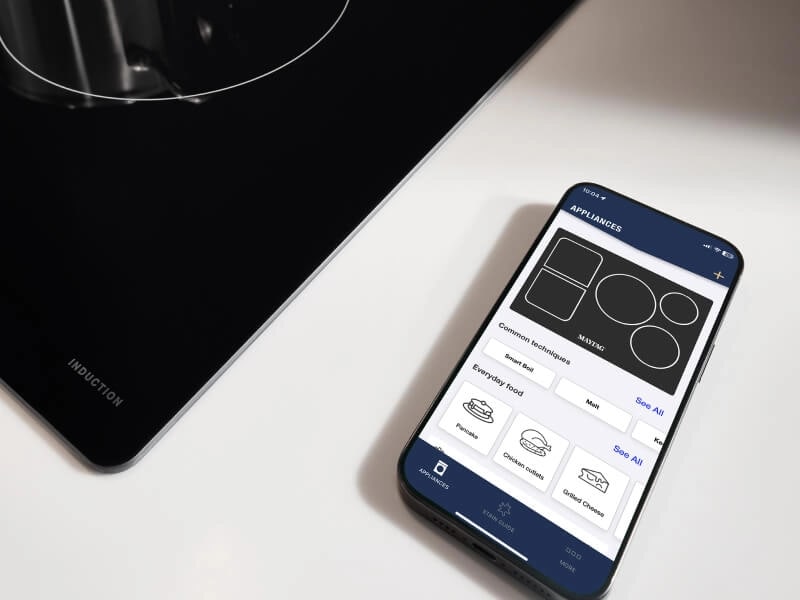
Many smart cooktops connect to mobile apps. These apps help you monitor and control the cooktop.
Apps often show temperature, cooking time, and alerts. You can adjust settings from your phone.
- Check if your cooktop supports iOS and Android apps
- Use Wi-Fi or Bluetooth to link your device
- Set up notifications for safety alerts
- Track cooking progress remotely
Voice Control Setup
Voice control lets you use your cooktop hands-free. It works with assistants like Alexa or Google.
To use voice control, link your cooktop to your smart home system. Then, learn the commands.
- Enable the cooktop skill in your voice assistant app
- Connect the cooktop to the same Wi-Fi network
- Use simple voice commands to start, stop, or adjust heat
- Ensure your voice assistant understands your commands clearly
Credit: www.maytag.com
Troubleshooting Common Issues
Smart induction cooktops may sometimes show problems during use. Knowing how to watch and fix these issues helps keep your cooktop working well.
This guide covers easy ways to handle error codes and reset your cooktop when needed.
Handling Error Codes
Your cooktop shows error codes to tell you about problems. Each code means a specific issue that needs attention.
Check the user manual to understand the meaning of each code. Fixing the problem depends on the code shown.
- Clean the surface if the code signals a sensor problem.
- Make sure the cookware is suitable for induction.
- Check for damaged power cords or plugs.
- Turn off the cooktop and let it cool if it overheats.
- Contact support if the error code repeats or is unknown.
Resetting The Cooktop
Resetting your induction cooktop can clear errors and restore normal function. It is a simple step to try before seeking help.
To reset, unplug the cooktop or turn off the circuit breaker. Wait a few minutes, then power it back on.
- Unplug the cooktop from the power source.
- Wait for at least two minutes to allow full reset.
- Plug it back in or switch the power on.
- Turn on the cooktop and check if the problem is gone.
Extending Cooktop Lifespan
Smart induction cooktops offer fast and efficient cooking. Taking care of them helps keep their performance steady.
Simple habits can extend the life of your cooktop. Proper cleaning and careful use are key.
Regular Cleaning Techniques
Clean your cooktop after each use. This stops food and spills from hardening and causing damage.
Use soft cloths and mild cleaners. Avoid harsh chemicals and rough scrubbing that can scratch the surface.
- Wait until the cooktop cools down before cleaning
- Use a damp cloth with gentle soap
- Remove spills immediately to prevent stains
- Use a non-abrasive scraper for burnt food
- Dry the surface well to avoid water marks
Avoiding Common Damages
Handle your cooktop carefully to avoid cracks or breaks. Avoid placing heavy items on it.
Use cookware that matches the induction cooktop’s size and material. This ensures proper heating and less stress on the device.
- Do not slide pots and pans across the surface
- Use flat-bottomed cookware for even heat
- Avoid spills of sugary or acidic foods
- Keep metal utensils away from the surface to prevent scratches
- Turn off the cooktop when not in use
:max_bytes(150000):strip_icc()/faw-hamilton-beach-portable-single-induction-cooktop-rkilgore-0072-f393d96c7f814c338e1fad1dfa841bfc.jpeg)
Credit: www.foodandwine.com
Frequently Asked Questions
How Do I Monitor Temperature On Smart Induction Cooktops?
Smart induction cooktops feature built-in sensors to track temperature. Use the cooktop’s display or app to view real-time temperature. This helps prevent overheating and ensures precise cooking.
Can I Control Smart Induction Cooktops Remotely?
Yes, most smart induction cooktops connect to Wi-Fi. You can monitor and adjust settings remotely via a smartphone app. This adds convenience and improves cooking safety.
What Safety Features Help Monitor Smart Induction Cooktops?
Smart cooktops include automatic shut-off, pan detection, and child locks. These features prevent accidents by stopping heat if no pan is detected or if unsafe conditions arise.
How Often Should I Check My Smart Induction Cooktop’s Performance?
Regularly check your cooktop’s sensors and software updates. Monthly monitoring ensures accuracy and helps maintain optimal cooking performance and safety.
Conclusion
Smart induction cooktops need regular checks to work well. Keep an eye on temperature settings and clean spills right away. Use the cooktop’s smart features to track cooking times easily. Watch for any unusual sounds or errors. These small steps help your cooktop last longer and cook better.
Stay attentive and enjoy safe, efficient cooking every day.