
Your kitchen counters are the heart of your cooking space, but they can also harbor germs after meal prep. If you want to keep your family safe and your kitchen fresh, knowing how to properly sanitize your counters is a must.
You’ll discover simple, effective steps to clean and disinfect your surfaces quickly. Stick with me, and you’ll never worry about hidden bacteria in your kitchen again. Ready to make your counters spotless and safe? Let’s get started!
Importance Of Sanitizing Kitchen Counters
Sanitizing kitchen counters after cooking keeps your kitchen clean. It stops harmful germs from spreading.
Clean counters protect your family from foodborne illnesses. This simple step helps keep everyone healthy.
Preventing Cross-contamination
Raw foods like meat and vegetables can carry bacteria. These germs can spread to other foods if counters are not cleaned.
Sanitizing stops these bacteria from moving around your kitchen. It keeps your food safe to eat.
Reducing Foodborne Illness Risks
Bacteria on counters can cause food poisoning. This can lead to stomach pain, vomiting, or worse.
Cleaning counters lowers the chance of sickness. It protects children, elderly, and people with weak immune systems.
Maintaining A Clean Kitchen Environment
A clean kitchen feels fresh and looks nice. It makes cooking more pleasant and safer.
Regular sanitizing stops stains and bad smells. It also helps keep pests like ants and cockroaches away.
Protecting Kitchen Tools And Appliances
Dirty counters can harm your knives, cutting boards, and small appliances. Bacteria and grime build-up causes damage.
Sanitizing helps keep your kitchen tools clean and safe. This extends their life and keeps them working well.
Credit: www.lisabronner.com
Common Kitchen Contaminants
Kitchen counters often have germs after cooking. These germs come from raw food and dirty surfaces.
Knowing common kitchen contaminants helps you clean your counters better. This keeps your food safe.
Bacteria From Raw Meat
Raw meat has bacteria like Salmonella and E. coli. These bacteria can spread to counters.
Always wipe and disinfect counters after touching raw meat. Use separate cutting boards for meat.
Food Residue And Particles
Food crumbs and spills stay on counters after cooking. They can grow mold or attract pests.
Clean counters with soap and water to remove food bits. Dry the surface well to stop mold growth.
Cross-contamination From Utensils
Used utensils can carry germs from one food to another. This spreads bacteria on counters.
Wash knives, spoons, and other tools before placing them on counters again. Use clean cloths to wipe surfaces.
Cleaning Chemical Residues
Some cleaning sprays leave harmful chemicals on counters. These can mix with food and cause illness.
Use kitchen-safe cleaners and rinse counters well after cleaning. Avoid harsh chemicals near food areas.
Mold And Mildew
Moisture on counters can cause mold and mildew growth. Mold spores can make you sick.
Keep counters dry and clean. Use vinegar or baking soda to remove any mold spots safely.
Materials Needed For Sanitizing
Keeping kitchen counters clean is important after cooking. Sanitizing helps remove germs and bacteria. Using the right materials makes this task easier and more effective.
This guide shows essential supplies for sanitizing kitchen counters. It also lists natural alternatives you can use safely.
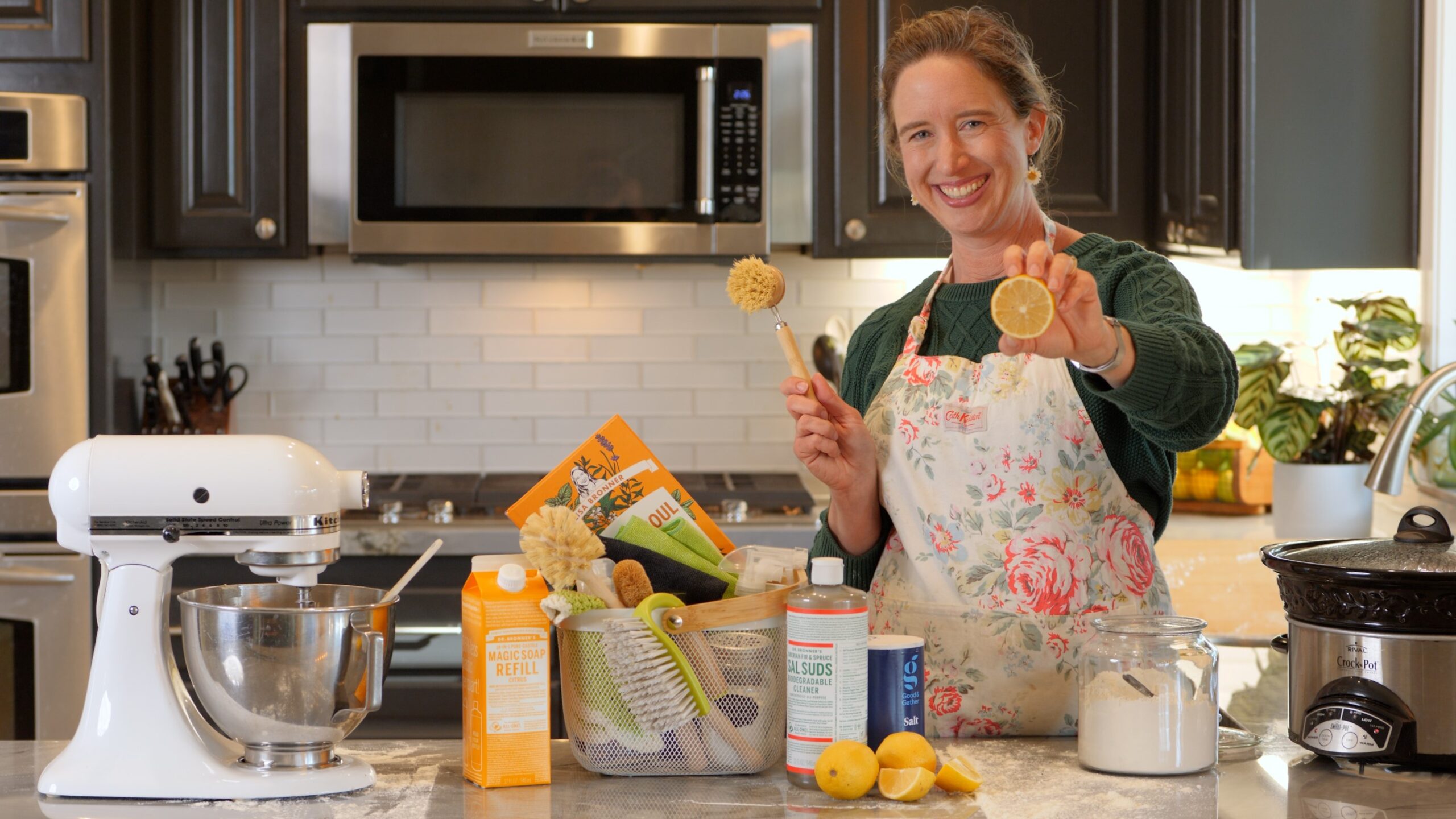
Essential Cleaning Supplies
You need a few basic items to sanitize your kitchen counters properly. These items kill germs and keep surfaces safe for food preparation.
- Dish soap to remove grease and dirt
- Clean cloths or sponges for wiping
- Spray bottle for applying sanitizer
- Disinfectant or sanitizer approved for kitchen use
- Gloves to protect your hands
- Paper towels for drying
Using these supplies together helps clean and sanitize counters effectively after cooking.
Natural Alternatives
Natural products can also sanitize kitchen counters. They are safe and easy to find. Many people prefer them to chemical cleaners.
- White vinegar mixed with water to kill germs
- Lemon juice for its antibacterial properties
- Baking soda for scrubbing and deodorizing
- Essential oils like tea tree or lavender for extra cleaning power
Mix vinegar and water in a spray bottle to clean counters. Use lemon juice or essential oils for added freshness and sanitation.
Step-by-step Sanitizing Process
Sanitizing kitchen counters after cooking helps keep your food safe. It removes germs and bacteria.
Follow these steps to clean and sanitize your kitchen counters properly.
Clear And Declutter
Remove all items from the counter. Put away dishes, utensils, and food containers.
Clearing the surface makes it easier to clean every part of the counter.
Wipe Down With Soap And Water
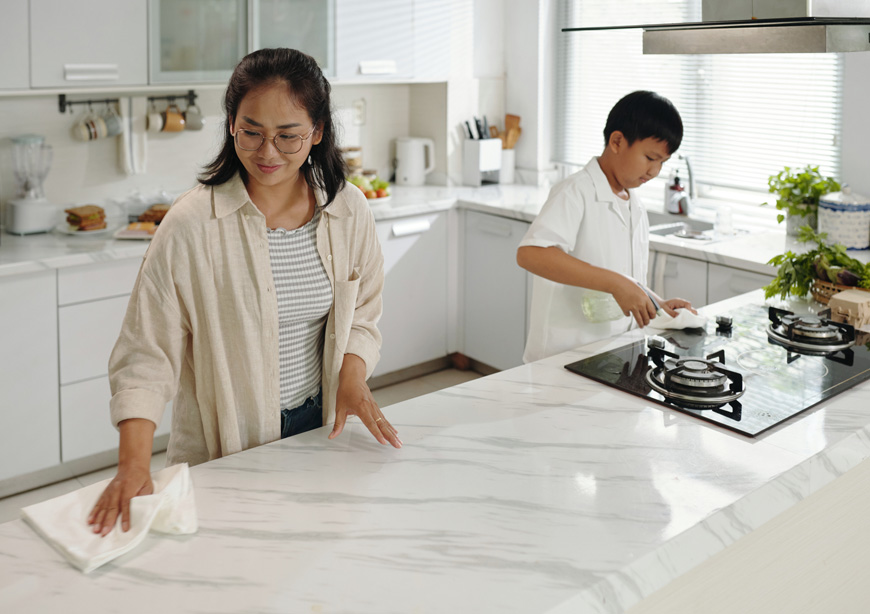
Use a clean cloth or sponge with warm water and dish soap. Wipe the entire counter surface.
This step removes dirt, grease, and leftover food particles from cooking.
Apply Sanitizing Solution
Use a safe kitchen sanitizer or a mix of 1 tablespoon bleach with 1 gallon water. Spray or wipe it on the counter.
Make sure the surface stays wet with the solution for at least 1 minute to kill germs.
Allow To Air Dry
Let the counter air dry completely. Do not wipe it off too soon.
Air drying helps the sanitizer work properly and keeps your counter safe.
Tips For Effective Sanitizing
Sanitizing kitchen counters after cooking helps stop germs and bacteria. It keeps your kitchen safe and clean.
Using the right cleaning methods makes sanitizing easier and more effective. Follow simple tips to do it well.
Frequency Of Cleaning
Clean your kitchen counters every time you finish cooking. Wipe off spills and crumbs right away.
Sanitize counters at least once a day or more if you cook often. This stops bacteria from growing.
- Wipe counters after each meal preparation
- Sanitize before and after handling raw food
- Clean spills immediately to avoid stains
- Deep clean counters weekly
Proper Use Of Cleaning Solutions
Choose cleaning solutions that kill germs but are safe for kitchen surfaces. Follow the instructions on the label.
Use the right amount of solution. Too little may not clean well. Too much can leave harmful residues.
- Use diluted bleach or commercial kitchen sanitizers
- Apply solution with a clean cloth or spray bottle
- Let the solution sit for the recommended time
- Rinse with water if needed to remove residue
- Wear gloves to protect your hands
Credit: www.kirkstone.co
Avoiding Common Mistakes
Cleaning kitchen counters after cooking is important for safety and hygiene. Many people make mistakes that reduce cleaning effectiveness. Avoiding these errors helps keep your kitchen clean and safe.
This guide shows two common mistakes to watch for when sanitizing your kitchen counters.
Overlooking Hard-to-reach Areas
Many forget to clean corners, edges, and underneath appliances. These spots collect crumbs and bacteria. Dirt in these areas can spread germs to the whole counter.
Always move small appliances and clean behind and under them. Use a brush or cloth to reach tight corners and edges.
- Lift appliances before cleaning
- Use soft brushes for corners
- Wipe edges with a damp cloth
- Check under counters regularly
Mixing Incompatible Cleaners
Mixing different cleaning products can cause harmful fumes or reduce cleaning power. For example, bleach and ammonia create toxic gases. These gases can harm your health and damage surfaces.
Use one cleaner at a time. Read labels to check if cleaners are safe to use together. Choose products that work well alone for kitchen counters.
- Do not mix bleach with ammonia
- Avoid combining vinegar and bleach
- Use mild dish soap for daily cleaning
- Follow product instructions carefully
Maintaining A Clean Kitchen Routine
Keeping your kitchen counters clean is important for a safe cooking space. After cooking, sanitize surfaces to remove germs and food residue.
A clean kitchen helps prevent illness and keeps your home fresh. Follow simple daily and monthly steps to keep counters spotless.
Daily Cleaning Habits
Clean your kitchen counters every day after cooking. Wipe off crumbs and spills before they dry. Use warm, soapy water to remove grease.
After washing, apply a kitchen-safe sanitizer. Let it sit for a few minutes to kill bacteria. Dry the surface with a clean cloth.
- Clear counters of food and dishes
- Use warm water and mild soap to wipe
- Apply sanitizer designed for kitchen use
- Allow sanitizer to air dry or wipe with a clean cloth
- Clean cloths or paper towels should be fresh
Monthly Deep Cleaning
Once a month, do a thorough cleaning of your kitchen counters. Remove all items to clean every inch. Pay attention to edges and corners.
Use a stronger cleaning solution safe for your counter material. Rinse well and dry completely. This removes buildup that daily cleaning misses.
- Empty counters completely
- Use a deep cleaner or a mix of vinegar and water
- Scrub edges and backsplash areas
- Rinse with clean water to avoid residue
- Dry with a microfiber cloth to prevent streaks
- Replace items only after counters are fully dry

Credit: www.carawayhome.com
Benefits Of A Clean Kitchen
Keeping your kitchen counters clean after cooking is very important. It helps stop germs and dirt from spreading.
A clean kitchen makes your home safer and more pleasant to use every day.
Reduces Risk Of Foodborne Illness
Sanitizing counters removes harmful bacteria and viruses. These germs can cause food poisoning.
Cleaning well after cooking helps keep your family healthy and safe.
Prevents Cross-contamination
Dirty counters can spread bacteria from raw foods to cooked foods. This is called cross-contamination.
Sanitizing stops this spread and keeps your meals safe to eat.
Keeps Kitchen Looking Fresh And Tidy
A clean kitchen looks nice and inviting. It feels good to cook in a tidy space.
Regular cleaning keeps counters free from stains, crumbs, and spills.
Extends Life Of Kitchen Surfaces
Food acids and spills can damage counters over time. Dirt can cause scratches and stains.
Cleaning and sanitizing regularly helps your counters stay new longer.
Frequently Asked Questions
How Do I Sanitize Kitchen Counters Properly?
Use a disinfectant spray or a mixture of bleach and water. Apply it evenly and let it sit for a few minutes. Wipe the surface with a clean cloth. This kills most bacteria and viruses effectively.
What Household Items Can Sanitize Kitchen Counters?
Common items like vinegar, bleach, and hydrogen peroxide work well. Vinegar is natural but less effective against viruses. Bleach solutions are stronger and kill most germs. Always dilute bleach properly and rinse the surface afterward.
How Often Should Kitchen Counters Be Sanitized?
Sanitize counters after every cooking session, especially when handling raw meat. Regular cleaning prevents bacteria buildup. For busy kitchens, sanitize multiple times daily to maintain hygiene and reduce contamination risks.
Can I Use Natural Products To Sanitize Counters?
Yes, natural products like vinegar and lemon juice have mild antibacterial properties. They are safer but less effective against viruses. For thorough sanitization, use approved disinfectants alongside natural cleaners.
Conclusion
Sanitizing kitchen counters keeps your cooking space safe and clean. Use warm, soapy water to remove dirt first. Then apply a safe disinfectant to kill germs. Wipe surfaces with a clean cloth and let them air dry. Regular cleaning helps stop bacteria from spreading.
A clean kitchen means healthier meals and fewer worries. Simple steps make a big difference every day. Keep these tips in mind after cooking. Your kitchen will stay fresh and safe for your family.