
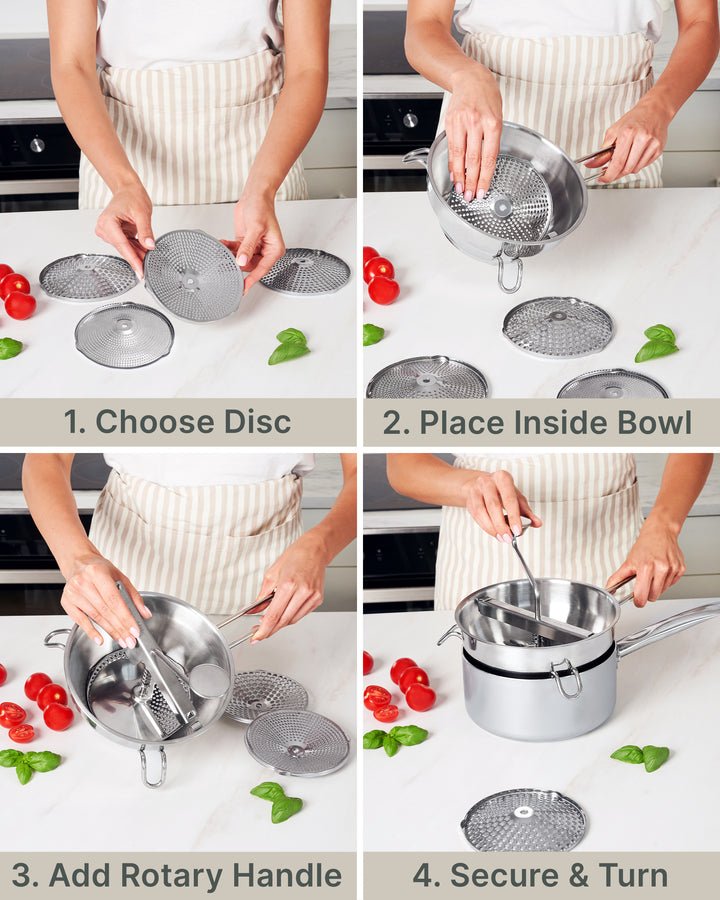
Choosing the right food mill can change the way you prepare meals. Whether you love making sauces, soups, or baby food, the right tool makes the job easier and faster.
But with so many options out there, how do you know which one fits your kitchen and your needs? In this guide, you’ll discover simple tips to pick a food mill that saves you time, gives you perfect results, and feels just right in your hands.
Keep reading to find out how to make your cooking smoother and more enjoyable!
Understanding Food Mills
A food mill is a kitchen tool used to mash and strain soft foods. It helps make smooth sauces, purees, and soups.
Food mills work by pressing food through a screen or sieve. This removes seeds, skins, and fibers.
There are manual and electric food mills. Manual mills need hand-cranking. Electric mills use power to do the work.
Manual mills are simple and quiet. Electric mills are faster but cost more and need electricity.
- Manual mills are good for small jobs
- Electric mills are better for large batches
- Choose based on your cooking needs
Material And Durability
Food mills come in different materials like stainless steel, plastic, and aluminum. Stainless steel is strong and lasts long.
Plastic mills are lighter and less expensive. Aluminum mills can wear out faster and may react with acidic foods.
- Stainless steel is durable and easy to clean
- Plastic is lightweight but less durable
- Avoid aluminum if you cook acidic foods often
Size And Capacity
Food mills come in different sizes. Small mills hold about one to two cups. Large mills hold four cups or more.
Think about how much food you cook. Choose a size that fits your typical cooking amounts.
- Small size is good for small meals
- Medium size fits most cooking needs
- Large size is best for big batches
Ease Of Cleaning
Cleaning a food mill can take time. Some parts come apart easily for washing. Others are harder to clean.
Check if the mill parts are dishwasher safe. Choose a design that is simple to clean to save time.
- Look for removable parts
- Dishwasher safe parts save cleaning time
- Avoid models with many small pieces

Credit: www.restaurantsupply.com
Types Of Food Mills
Food mills help make smooth sauces, purees, and mashed foods. They come in different types with various features.
Choosing the right food mill depends on how you plan to use it. This guide explains key types to help you decide.
Manual Vs. Electric
Manual food mills use hand cranks to crush food. They need physical effort but give you control over the process.
Electric food mills work automatically. They save time and energy, especially for large amounts of food.
- Manual mills are quiet and easy to clean
- Electric mills are faster and need less effort
- Manual mills are good for small jobs
- Electric mills handle large batches well
Plastic Vs. Metal Materials
Food mills come in plastic or metal. Each material has pros and cons to consider before buying.
Plastic mills are lightweight and often less costly. Metal mills are stronger and last longer.
- Plastic is easy to handle and dishwasher safe
- Metal resists heat and heavy use better
- Metal may be heavier and pricier
- Plastic can stain or absorb odors
Key Features To Consider
Choosing the right food mill makes cooking easier. A good mill helps prepare smooth sauces, soups, and baby food.
Look at important features before buying. This guide covers size, cleaning, and design.
Size And Capacity
Food mills come in different sizes. Pick one that fits your cooking needs.
Small mills are good for small batches. Large mills handle more food at once.
- Small size: easy to store, good for occasional use
- Medium size: fits most home cooking needs
- Large size: best for big meals or frequent use
Ease Of Cleaning
Cleaning a food mill should be simple and quick. Choose one that breaks down easily.
Look for dishwasher-safe parts. Smooth surfaces and fewer small pieces help too.
- Removable parts for easy washing
- Dishwasher safe materials
- Simple design without many crevices
Ergonomic Design
An ergonomic food mill feels comfortable to use. It reduces hand strain during long tasks.
Look for handles with good grip and stable bases. This makes milling safer and easier.
- Non-slip handles for better control
- Stable base to prevent slipping
- Lightweight but sturdy materials

Credit: www.reddit.com
Comparing Blade And Disk Options
Choosing the right food mill depends on the blade and disk types. These parts affect how well the mill works.
Understanding the differences helps you pick a mill that fits your cooking needs and food textures.
Interchangeable Disks
Many food mills come with interchangeable disks. These disks have different hole sizes for varied textures.
Using different disks lets you make smooth purees or coarse mashed foods easily.
- Small holes create smooth, fine purees
- Medium holes work well for sauces and soups
- Large holes are good for chunky foods
Blade Sharpness And Durability
Blade sharpness is key for easy food milling. Sharp blades cut food better and need less force.
Durable blades last longer and stay sharp after many uses. Look for blades made from strong materials like stainless steel.
- Sharp blades reduce effort and time
- Durable blades resist rust and damage
- High-quality blades provide consistent results
Performance And Efficiency
Choosing the right food mill can save time and effort in the kitchen. Performance and efficiency are key factors to consider.
A good food mill works smoothly and processes food quickly. It should deliver consistent results every time.
Smoothness Of Operation
A food mill should turn easily without much force. Smooth operation means less strain on your hands and wrists.
Look for models with well-fitted parts and a comfortable handle. These features help the mill turn quietly and smoothly.
- Check if the crank moves without sticking
- Choose a handle that fits your hand well
- Ensure the base is stable during use
Speed And Consistency
Speed matters when you need to process large amounts of food. A fast mill saves cooking time.
Consistency means the food is milled evenly every time. This gives better texture and taste to your dishes.
- Choose a mill with sharp, durable blades
- Look for adjustable settings for different textures
- Test if the mill processes food uniformly
Budget And Value
Choosing a food mill means thinking about your budget and what you get for the price. You want a tool that lasts and works well without costing too much.
Understanding price and value helps you pick the best food mill for your kitchen needs. Let’s look at how to balance cost and features.
Price Range Considerations
Food mills come in many price ranges. Low-cost options are good for light use. Mid-range mills offer better build and more features. High-end models last longer and have more parts.
Think about how often you will use the food mill. If you use it a lot, spend more on quality. If you use it once in a while, a cheaper model may work fine.
- Low price: Basic features, plastic parts
- Mid price: Stainless steel, more size options
- High price: Heavy-duty, multiple attachments
Cost Vs. Features
More expensive food mills often have better materials and more parts. These features can make the mill easier to clean and use. They may also last longer.
Less costly mills may lack some features but still do the main job. Decide which features you really need to avoid paying for extras you won’t use.
- Stainless steel bowls are more durable than plastic
- Different disk sizes let you process various foods
- Easy-to-clean parts save time
- Non-slip bases add safety
Brand And Warranty
Choosing the right food mill involves checking its brand and warranty. These factors show the product’s quality and trust.
A good brand often means reliable performance and lasting use. A solid warranty protects your purchase and offers support.
Reputable Brands
Pick a food mill from brands known for good kitchen tools. These brands use quality materials and have good reviews.
Trusted brands often test their products well and fix design issues quickly. This gives you a better user experience.
- Check brand history in kitchen tools
- Look for positive customer feedback
- Choose brands with clear product details
Warranty And Customer Support
A good warranty shows the brand stands behind its product. It covers defects and problems for a set time.
Reliable customer support helps if you have questions or need parts. It makes your buying safer and easier.
- Look for at least a one-year warranty
- Check what the warranty covers
- Choose brands with easy contact options
- Read about customer support quality

Credit: www.restaurantsupply.com
User Reviews And Testimonials
Choosing the right food mill can be easier by reading what other users say. Reviews and testimonials show real experiences. They help find the best fit for your needs.
Users share both good and bad points about food mills. This information can guide you to avoid problems and choose a quality product.
Common User Complaints
Some users mention food mills that are hard to clean after use. Small parts can trap food and take time to wash.
Other complaints include difficulty in assembling the mill. Some models do not fit well on bowls or pots, causing spills.
- Food gets stuck in small holes, making cleaning tough
- Parts are hard to put together or take apart
- Mill does not stay stable on bowls or pots
- Handles or parts feel weak or flimsy
Positive Feedback Highlights
Many users praise food mills for making smooth sauces and purees quickly. The mills help save time in the kitchen.
Users like models that are easy to clean and fit well on different containers. Strong handles and sturdy parts add to satisfaction.
- Produces smooth texture for sauces and baby food
- Simple to clean with removable parts
- Fits securely on pots and bowls
- Durable handles and solid construction
Final Selection Tips
Choosing the right food mill can make cooking easier and faster. Focus on what matters most before buying.
Consider your needs and budget to find the best fit for your kitchen.
Prioritizing Needs
Think about how often you will use the food mill. Choose one that suits your cooking style.
Ask yourself what types of foods you will process. Some mills work better for soft foods, others for tougher ones.
- Daily use requires a durable and easy-to-clean model
- Occasional use may allow for a simpler, less costly mill
- Check if the size fits your kitchen space
- Look for adjustable settings if you want different textures
Balancing Features And Budget
Food mills come with various features that can raise the price. Decide which features are essential.
Stick to your budget but avoid models that lack basic quality. A good mill lasts longer and works better.
- Compare materials: stainless steel lasts longer than plastic
- Look for extra discs if you want more texture options
- Consider ease of cleaning to save time
- Check if parts are dishwasher safe for convenience
Frequently Asked Questions
What Is A Food Mill Used For In Cooking?
A food mill purees and strains fruits, vegetables, and sauces. It removes seeds and skins, making smooth textures. It’s ideal for soups, baby food, and jams. It works manually, preserving flavor and nutrients effectively.
How Do I Choose The Right Food Mill Size?
Select a food mill size based on batch quantity. Small mills suit home cooking, while larger ones fit commercial needs. Consider storage space and frequency of use. Choose a size that balances capacity with convenience.
Which Materials Are Best For Durable Food Mills?
Stainless steel is durable, rust-resistant, and easy to clean. Plastic mills are lightweight but less durable. Cast iron offers sturdiness but requires maintenance. Choose stainless steel for long-lasting, hygienic performance.
Can Food Mills Replace Blenders Or Food Processors?
Food mills create smoother textures by removing seeds and skins. Blenders and processors chop and blend but don’t strain. For purees and sauces without pulp, a food mill is better. It preserves texture and flavor naturally.
Conclusion
Choosing the right food mill makes cooking easier and more fun. Think about size, material, and blade types. Pick one that fits your kitchen and cooking needs. A good food mill saves time and gives smooth results. Simple tools can create great meals.
Use what feels best for you. Enjoy fresh, homemade food with less effort. Your cooking will thank you.