
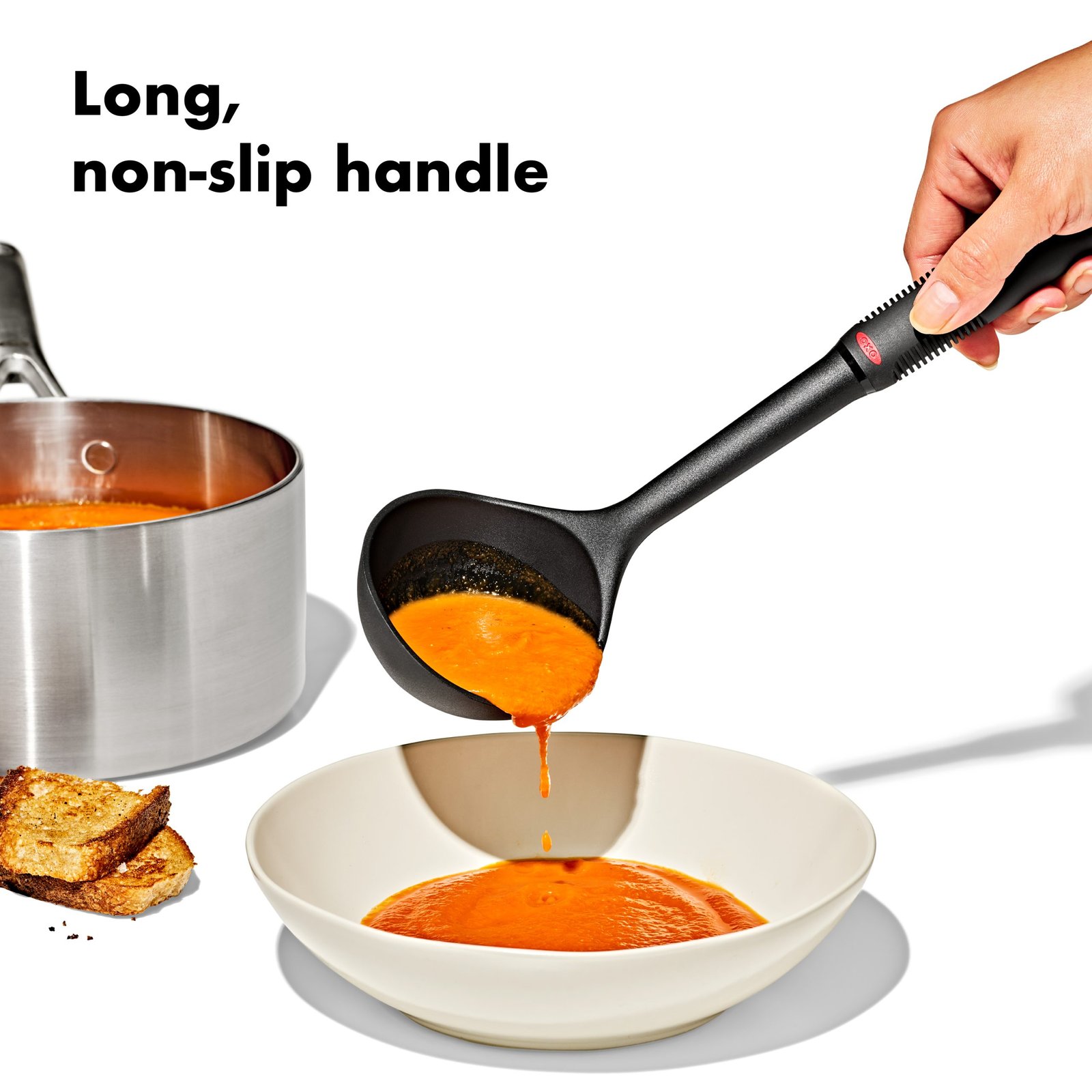
Have you ever struggled to serve soup without making a mess? Or wondered if you’re using your ladle the right way?
Knowing how to use a ladle properly can make a big difference in your kitchen. It helps you serve food smoothly, avoid spills, and impress your guests. You’ll discover simple tips and tricks that anyone can follow. Ready to master this essential kitchen tool and make your cooking experience easier?
Keep reading—you’ll be glad you did.
Choosing The Right Ladle
Choosing the right ladle makes cooking easier and safer. It helps you serve food without mess.
Different ladles suit different tasks. Pick one that fits your cooking style and needs.
Material Considerations
Ladles come in many materials. Each type has benefits and limits for cooking.
Metal ladles last long but can get hot. Plastic ones stay cool but may melt.
- Stainless steel: strong and heat resistant
- Silicone: safe for non-stick pans
- Plastic: lightweight but less heat safe
- Wood: gentle on cookware but harder to clean
Size And Shape Options
Ladles come in different sizes and shapes. Size affects how much soup or sauce you serve.
Shape matters for the type of food. Deep bowls hold liquids well. Flat edges help with scooping.
- Small ladles: good for sauces and dressings
- Medium ladles: best for soups and stews
- Large ladles: ideal for serving punch or large batches
- Slotted ladles: drain liquid while serving solids
Basic Gripping Techniques
Using a ladle correctly helps you serve food with ease and safety. Holding it well reduces spills and makes cooking smoother.
Good grip techniques depend on the ladle shape and size. Learning these basics improves your kitchen skills.
Comfortable Hold
Hold the ladle handle firmly but not too tight. A relaxed grip keeps your hand comfortable for longer use.
Place your thumb on top of the handle. Wrap your fingers around it for balance and control.
- Use your dominant hand for better control
- Keep your wrist straight to avoid strain
- Rest the ladle bowl against your forearm for support
Adjusting For Different Ladle Types
Different ladles need different grips. A small ladle uses a light touch. A big ladle needs a stronger hold.
Long-handled ladles require holding closer to the bowl for stability. Short handles work well with a full grip.
- For deep ladles, hold near the middle for balance
- Flat ladles need a steady grip to scoop liquids
- Adjust your hand position to the ladle’s weight and size
Scooping And Pouring
A ladle is a useful kitchen tool for serving liquids and soups. It helps scoop and pour food easily.
Knowing how to use a ladle well can make cooking and serving faster and cleaner.
Efficient Scooping Methods
Hold the ladle by its handle firmly. Dip the bowl of the ladle fully into the liquid.
Lift the ladle slowly to avoid spilling. Use a steady hand to scoop the right amount.
- Dip the ladle straight down for a full scoop
- Use the edge of the pot to scrape excess liquid
- Keep the ladle level while lifting
Avoiding Spills
Pour liquids slowly and close to the target container. This reduces splashing and spills.
Use the ladle’s edge to guide the flow. Tilt the ladle gently to control pouring speed.
- Hold the ladle near the pot’s edge to steady it
- Pour over the container’s edge or bowl side
- Pause if the liquid flows too fast

Credit: www.alder.in
Serving Soup And Stew
Using a ladle helps serve soup and stew easily. It lets you scoop liquids without spills.
A ladle is perfect for handling hot dishes safely and neatly.
Even Portion Distribution
Use the ladle to scoop the same amount of soup each time. This keeps servings fair and balanced.
Dip the ladle fully into the pot for a full scoop. Lift it slowly to avoid spilling.
- Hold the ladle steady when lifting from the pot
- Fill the ladle to the brim for consistent portions
- Pour slowly into bowls to control the flow
Maintaining Presentation
Pour soup gently to keep the bowl clean and neat. Avoid splashing on the edges.
Use the ladle’s curved edge to guide the liquid into the bowl smoothly. This keeps the serving looking nice.
- Wipe the ladle’s edge before serving each bowl
- Pour near the center of the bowl for better presentation
- Serve hot soup immediately to keep it fresh
Serving Sauces And Gravies
Using a ladle helps you serve sauces and gravies neatly. It allows you to control the amount poured onto food.
A ladle makes serving easier and keeps your dish looking clean and tasty.
Controlling Pouring Speed
Hold the ladle steady to control how fast the sauce pours. Pour slowly for even coverage.
Move the ladle closer or farther from the plate to change flow speed. Practice helps pour just right.
- Hold the handle firmly
- Pour slowly for thin layers
- Pour faster for larger amounts
- Adjust height to control flow
Preventing Drips
To avoid drips, tilt the ladle back after pouring. This stops extra sauce from falling.
Wipe the ladle edge with a cloth before setting it down. This keeps your serving area clean.
- Tilt ladle away from plate after pouring
- Use a cloth to wipe the edge
- Hold ladle over bowl when not pouring

Credit: www.prestige.co.uk
Serving Punch And Drinks
Using a ladle makes serving punch and drinks easy and neat. It helps pour liquids without spilling.
A ladle allows you to scoop the right amount of drink each time. This keeps the serving process smooth and clean.
Managing Liquid Levels
Keep an eye on the liquid level in the bowl or punch container. This prevents the ladle from hitting the bottom.
Fill the ladle gently to avoid splashes. Slowly lift the ladle to the glass to pour without spilling.
- Check liquid depth before scooping
- Lower ladle slowly into the drink
- Avoid stirring too much to keep liquid clear
- Lift ladle carefully to prevent drips
Ensuring Consistent Servings
Use the same ladle every time to keep serving sizes equal. This helps guests get fair portions.
Fill the ladle fully before pouring. Pour the drink steadily into each glass to avoid spills.
- Choose a ladle size that fits your serving cups
- Fill the ladle to its full capacity
- Pour slowly and evenly into each glass
- Keep track of how many servings you serve
Cleaning And Maintenance
Keeping your ladle clean helps it last longer and stay safe to use. Regular cleaning removes food residue and prevents germs.
Proper care also keeps your ladle looking good and working well for every cooking task.
Proper Cleaning Techniques
Clean your ladle right after use to stop food from hardening. Wash it with warm, soapy water to remove grease and bits.
Use a soft sponge or cloth to avoid scratching the surface. Rinse well to remove soap and dry with a clean towel.
- Wash with warm water and mild dish soap
- Use a soft sponge or cloth only
- Rinse thoroughly to remove soap
- Dry immediately to avoid water spots
- For wooden ladles, apply mineral oil occasionally
Storage Tips
Store your ladle in a dry place to prevent rust or mold. Hanging it allows air to circulate and keeps it dry.
Keep ladles separate from sharp tools to avoid damage. Use hooks or utensil holders for easy access and safety.
- Hang ladle on a hook after drying
- Keep in a utensil holder with other spoons
- Store wooden ladles away from moisture
- Avoid stacking heavy items on top
- Check regularly for signs of wear or damage

Credit: www.amazon.com
Frequently Asked Questions
What Is The Main Purpose Of Using A Ladle?
A ladle is designed for serving soups, stews, sauces, and liquids. Its deep bowl helps scoop and transfer hot or cold liquids easily and safely without spills.
How Do You Properly Hold A Ladle?
Hold the ladle by its handle with a firm grip. Use your dominant hand and keep the bowl angled to control pouring and prevent drips.
Can A Ladle Be Used For Thick And Thin Liquids?
Yes, ladles work well for both thick and thin liquids. Their deep bowl holds enough to serve stews, soups, sauces, or punch efficiently.
What Materials Are Ladles Commonly Made From?
Ladles are usually made from stainless steel, plastic, silicone, or wood. Each material suits different uses, such as heat resistance or non-stick surfaces.
Conclusion
Using a ladle makes cooking and serving easier and neater. It helps scoop soups, stews, and sauces without spills. Practice pouring slowly to avoid messes. Choose the right ladle size for your dish. Clean it well after each use to keep it safe.
A ladle is a simple tool but very useful in the kitchen. Try these tips, and enjoy your meals more. Simple tools can improve your cooking experience a lot.